Support

Museum of the City of Leon

About

In the very heart of the colorful Mexican city of León, there is a place where the history of the state of Guanajuato comes alive—the famous León City Museum. Housed in a magnificent colonial-style historical building, this cultural institution offers guests a fascinating journey through time, covering the region's path from prehistoric eras to rapid modernity.
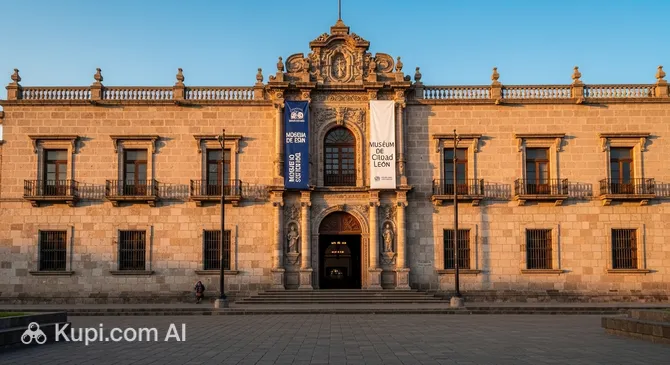
Museum of the City of León. Source: Kupi.com AI

This museum in Mexico is rightfully considered one of the most important heritage preservation centers. Its halls house unique collections: from ancient archaeological finds and Roman mosaics to exquisite medieval sculptures and numismatic rarities. Every interior detail and every exhibit tells its own story, highlighting the city's status as a vital cultural hub.

Thanks to the high level of organization of its exhibitions and attention to detail, the León City Museum has become a popular attraction for both locals and international tourists. Here, ethnography intertwines with art, creating a cohesive and deep panorama of provincial life over many centuries.

Contacts

To clarify details before your visit or to organize a group tour, you can use the official contact information of the institution.

Address Hermanos Aldama 136, Centro, 37000 León de los Aldama, Gto., Mexico
Phone +52 477 714 5022
Website museodelaciudaddeleon.org.mx

What to Do

Visitors to the museum can look forward to a walk through seven thematic halls, each dedicated to a specific stage in the development of civilization. Here, you can see firsthand magnificent Roman mosaics with mythological themes, ancient edicts, and monumental steles. The Medieval halls provide a special aesthetic pleasure, housing exquisite ivory products, Romanesque capitals, and the famous Mozarabic cross.

Art lovers will appreciate the collection of paintings and sculptures from the Renaissance and Baroque eras. Information panels and interactive elements make the exhibition clear and interesting even for those who are not history experts. Photography (without flash) is allowed, so you can capture the most impressive artifacts for your personal collection of memories.

For family visits, the museum offers educational programs that introduce children to ancestral heritage in an accessible way. After a cultural immersion, it's pleasant to visit the cozy museum gift shop or head to one of the coffee shops located within walking distance in the historical quarter.

Getting There

The museum is conveniently located in the very heart of the city's historical center at Hermanos Aldama 136. If you are already walking through the center, the path from the Cathedral or the main square will take no more than 5–10 minutes at a leisurely pace. For those who prefer comfort, taxis and popular ride-sharing services are always available to quickly drop you at the entrance from anywhere in the city.

For travelers arriving from other regions via the Del Bajío airport, a taxi ride will take about 30–40 minutes, while public transport takes about an hour. If you arrive at the central bus station, the museum can be reached by taxi in just 10–15 minutes. Rental car owners should keep in mind that streets in the historical district are quite narrow, so it's better to leave your car in one of the nearby paid parking lots and continue on foot.

History & Facts

The history of this cultural space began back in 1869, when, against the backdrop of large-scale reforms and growing interest in local archaeology, the museum first opened its doors within the walls of the former San Marcos monastery. Since then, it has become the main guardian of the region's memory, gathering evidence of human life over a colossal period—from the Paleolithic to the present day.

A significant milestone in the institution's life occurred in 1987, when management was transferred to the government of the State of Guanajuato. This allowed for the systematization of collections and the strengthening of scientific research. In 2007, the museum found its current home in the magnificent Pallares Building, which is an architectural treasure in itself and perfectly complements the spirit of the exhibits displayed within.

Among the most valuable treasures of the collection are artifacts from the Roman era, including unique edicts of Emperor Augustus and altars dedicated to ancient gods. The medieval period is represented by rare works such as the Mozarabic cross and 11th-century ivory reliefs, which have miraculously survived to our times, enduring changes of eras and rulers.

Time Needed

To explore all seven halls without rushing and soak in the atmosphere of the historic mansion, most tourists need between 1.5 and 2.5 hours. This is usually enough time to get acquainted with the key archaeological finds and appreciate the elegance of the medieval sculptures.

If you are an enthusiast who likes to study every information board in detail or plan to use an audio guide, you should set aside about 3 hours for your visit. The museum's compact size makes it easy to fit into a morning or afternoon stroll through the historical center.

Working Hours

The museum is open to visitors throughout the week, except for Mondays. From Tuesday to Friday, the exhibitions are accessible from 10:00 AM to 5:00 PM. On weekends—Saturday and Sunday—the museum's doors are open in the first half of the day, from 10:00 AM to 2:00 PM.

Please note that the schedule may change on public holidays, so we strongly recommend checking the official website or confirming the current opening hours by phone before your visit.

Nearby

Visiting the museum is just one part of an exciting route through the city center. The surrounding area is rich with interesting spots that will help make your day even more fulfilling, especially if you are traveling with family or seeking variety after immersing yourself in history.

Name Distance (km)
ACUARIO KEIKO 0.3
Acuarium 1.7
Acuario Q-Pez Diaz 2.1
Acuario Pepe Pez 3.1
Renta de juegos mecánicos 4
El Parque de la Selva 4.4
Univer Zoo 5.3
XVENTURES 5.5
Sealand León 6.5
Flip Out Leon 6.6

Reached the end of the page?

That means the route is fully explored