Support

Museu de Historia Natural

About

In the heart of Maputo lies one of the country's most impressive architectural and scientific treasures — the Museum of Natural History. It is a leading scientific institution showcasing the rich natural and cultural heritage that Mozambique is proud of. The museum is housed in a magnificent historic building constructed in 1911 in an exquisite Neo-Manueline style, reminiscent of the Portuguese colonial era.
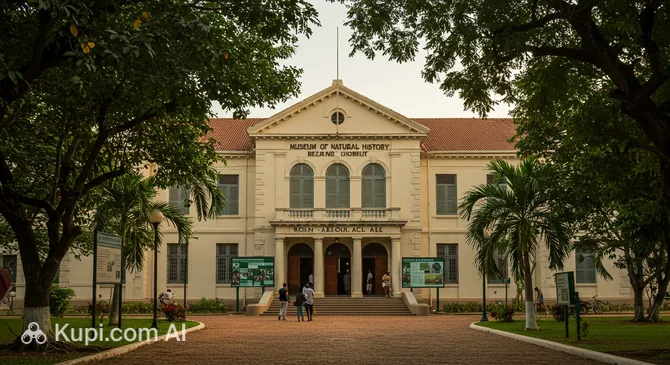
Museum of Natural History
Museum of Natural History. Иллюстрация. Источник: Kupi.com AI

Inside, visitors are greeted by fascinating collections covering zoology, geology, and anthropology. Here, you can see expertly taxidermied African savanna inhabitants: majestic lions, giraffes, and rhinoceroses. One of the museum's centerpieces is the extremely rare taxidermied coelacanth — an ancient fish that became a true sensation in the world of biology.

A point of particular scientific pride is the museum's unique elephant embryo collection, which demonstrates the different stages of their development. This collection is unparalleled in the world and attracts researchers from across the globe. Additionally, the museum halls feature rich ethnographic collections that reveal the life and traditions of local tribes through their music, art, and everyday objects.

Contacts

To confirm up-to-date information before your visit, you can use the museum's official resources.

How to contactContact
Address2HFP+4Q7, Travessia de Zambeze, Maputo, Mozambique
Websitemhnm.uem.mz

What to Do

A visit to the museum is, first and foremost, a visual journey through African wildlife. You can examine detailed, large-scale zoological dioramas featuring life-sized elephants, buffaloes, and other savanna dwellers. Be sure to find the display with the coelacanth — the legendary "living fossil" — and study the famous series of models showing elephant embryo development, which is a truly rare sight.

In the geology department, it's worth paying attention to the brilliant specimens of minerals and rocks. This is an excellent opportunity to learn more about the country's mineral wealth, including bauxite and rare metals. even if you don't speak Portuguese (in which most descriptions are written), the visual displays and the antique atmosphere of the halls make the exhibition clear and engaging.

For culture lovers, we recommend stopping by the anthropology section. It houses traditional musical instruments, ritual masks, and ancient weapons. You can conclude your visit with a walk around the museum building itself to admire its whimsical architectural details and take atmospheric photos against the Manueline facade.

Getting There

The museum is located in the heart of the city at Travessia de Zambeze. Thanks to its central location, it is easily accessible on foot from many areas of the "concrete city" (the capital's central district). If you are staying at one of the popular hotels downtown, the walk will take no more than 15–20 minutes.

For those who prefer comfort, a taxi is the best option. A trip from Maputo Airport, located approximately 10–15 km away, takes about 20 minutes depending on traffic. The fare from central hotels usually ranges from 200 to 500 Mozambican meticals.

You can also use local public transport — minibuses known here as "chapas". Look for routes that pass through the main streets to stops in the Zambeze area. If you are traveling by rental car, parking space is usually available near the museum building.

Ближайший город: Maputo

History & Facts

The history of this scientific center began on June 6, 1913. It was originally established as the Provincial Museum through the initiative of Portuguese captain Alberto Graça. The first collections were housed in a local school, but the exhibits eventually grew so large that they required a dedicated, majestic building.

In the early 1930s, the museum moved to its current premises — a magnificent mansion built in 1911 in the Neo-Manueline style. In those years, the institution was named after Dr. Alvaro de Castro, a Governor-General who actively supported the preservation of the region's natural heritage. Over the decades, the museum evolved from a modest provincial exhibition into the country's primary national institute of natural history.

One of the most significant events in its recent history was its centennial anniversary, which the museum celebrated solemnly in 2013. Despite political shifts and periods of change, the building has retained its authenticity, continuing the educational mission established in the early 20th century when the building also served as a primary school.

The museum's collections have been curated for over a century. They house extremely rare evidence of evolution, such as a taxidermied coelacanth — a fish that scientists long believed had gone extinct millions of years ago until it was rediscovered off the coast of Africa in 1938. This makes the museum not just a repository of antiquities, but a vital link in global science.

Time Needed

To leisurely explore all the halls and see the zoology, anthropology, and geology collections, an average visitor will need about 1–2 hours. This is ample time to examine the detailed animal dioramas and study the unique exhibits.

If you are particularly interested in ethnography or plan to read the information boards thoroughly, your visit may take longer. However, given the compact nature of the halls, the museum is perfect for a morning or afternoon excursion that can easily be combined with a walk to other attractions in the city center.

Working Hours

Currently, the Museum of Natural History is temporarily closed (CLOSED_TEMPORARILY). It is important to keep this in mind when planning your city route.

As the operating status may change, we strongly recommend checking for updates regarding its reopening on the museum's official website or confirming the details with local tour operators before your visit.

Nearby

A stroll around the Museum of Natural History allows you to dive even deeper into the colonial architecture and modern culture of the capital. Several iconic landmarks are located nearby, perfectly complementing your itinerary.

NameDistance
Teachers' Garden0.2 km
Tree House0.4 km
Palace of Marriages0.7 km
The Backroom0.9 km
El Patron Restaurant0.9 km
SALT Restaurant0.9 km
Maputo Shopping Centre1.3 km

Reached the end of the page?

That means the route is fully explored