Support

Ondangwa Airport

About the Airport

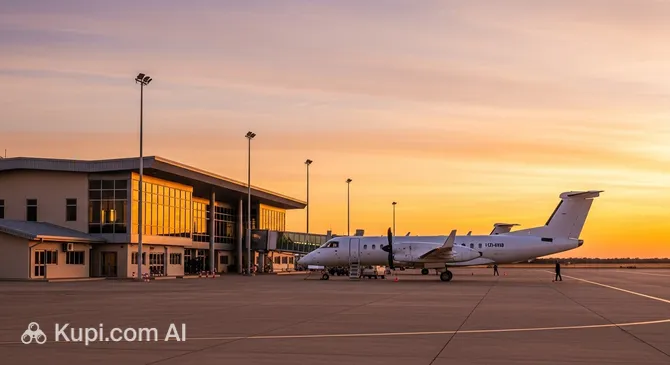
Ondangwa Airport. Source: Kupi.com Binoculars

Ondangwa Airport, officially known as Andimba Toivo ya Toivo Airport, serves as the main air gateway to the northern regions of Namibia. Originally established as a military facility, today it has transformed into a vital civil transport hub linking the densely populated north of the country with the capital and other key locations. This air harbour plays a key role not only in the development of tourism but also in supporting the region's business activity, offering travellers a convenient and fast way to reach the heart of the Ovamboland culture.

IATA Code OND
ICAO Code FYOA
City Ondangwa
Distance to centre About 5 km
Status Domestic
Annual Passengers No reliable current data
Popular Airlines FlyNamibia, Airlink
Schedule Online Flight Board "Ondangwa Airport"

Despite its modest size, the airport in Ondangwa is an example of efficient regional aviation infrastructure. Its asphalt runway, measuring nearly 3,000 metres in length, is capable of accommodating various types of aircraft, ensuring reliable connections with other parts of the country. The main and most popular destination is the route to the capital's Windhoek-Eros Airport, operated by the airline FlyNamibia. For travellers arriving here, the airport offers basic amenities, and its proximity to the city makes the transfer to a hotel or the next destination quick and convenient.

Contact Information

  • Official Website: The most complete and up-to-date information on services and flight schedules for Ondangwa airport can be found on the official portal of the managing body, Namibia Airports Company (NAC): www.airports.com.na.
  • Helpline: For prompt information regarding airport operations, you can call the number: +264 65 240 444.
  • Airport Address: The airport is located at: Main Road C46, Ondangwa, Namibia.
  • Email: For written enquiries, it is recommended to use the contact form on the official Namibia Airports Company website.
  • Social Media: News and important announcements are published on the official NAC social media pages. We recommend subscribing to stay updated.
  • Lost Luggage Information: If you experience loss or damage to your luggage, you must immediately contact your airline's Lost & Found service directly within the airport terminal.
  • Passenger Support Contacts: For general questions and on-site assistance, you can always approach the staff at the information desk in the arrival/departure hall.

How to Get to the Airport

Getting to Ondangwa Airport (OND) from the centre of the eponymous city is quite simple, as it is located just a few kilometres away. The journey does not take much time, and the choice of transport allows you to find an option for any budget. The main methods are taxis, rental cars, and private transfers.

Taxis and Private Transfers are the most convenient and popular way to get to the airport. Many private taxis operate in the city of Ondangwa. The trip from the city centre to the terminal usually takes no more than 10–15 minutes. Important tip: negotiate the fare with the driver in advance, as not all vehicles are equipped with meters. Prices are generally quite affordable. For greater comfort, you can book a private transfer through your hotel or a local travel agency — you will be picked up at the appointed time and delivered directly to the airport entrance.

Public Transport in its classic sense (regular city buses, metro, or trains to the airport) is absent in Ondangwa. However, for the most budget-conscious travellers, there is the option to use shared taxis (known locally as "combis"). This is the cheapest way to travel, but it may not be the most comfortable or fastest. Minibuses do not always enter the airport grounds, and you may have to walk a short distance from the nearest stop.

Car Rental is an excellent choice for those planning to explore the northern regions of Namibia on their own. If you already have a rental car, you will easily reach the airport by following the signs. The road is simple and not congested. Many rental companies allow you to return the car directly at the airport before departure, which is very convenient.

For travellers arriving in their own or rented vehicle, parking is provided at Ondangwa Airport. There are zones for both short-term and long-term parking. The car park is usually not overcrowded and is considered safe, but, as everywhere, it is advisable not to leave valuables inside the vehicle.

Terminals and Map

Ondangwa Airport (OND) is a small and compact regional airport, so navigating through it will not cause any difficulties for travellers. Its infrastructure is simple and functional, making pre-flight procedures quick and convenient.

The airport operates one passenger terminal, which handles both domestic and the few international flights available. All infrastructure is concentrated in one building, so there is no need to transfer between terminals. The departure and arrival zones are located next to each other, allowing you to easily orient yourself immediately upon arrival or before departure.

The layout of the terminal is intuitive: upon entering the building, you will immediately see the check-in counters. After receiving a boarding pass and checking in luggage, passengers proceed to the security screening area, beyond which lies a small departure lounge. Thanks to the airport's compact size, the entire journey from the entrance to the boarding gate takes minimal time.

Check-in and security control here generally proceed very quickly — significantly faster than in major international hubs. Nevertheless, it is recommended to arrive at the airport approximately 1.5 hours before a domestic flight to complete all formalities without rushing. Orienting yourself in the terminal is easy thanks to signs, but getting lost here is practically impossible due to its simple and logical layout.

Airport History

The history of Ondangwa Airport (OND) is unique and closely intertwined with key events in the history of Namibia. Originally, it was founded not as a civil facility, but as a strategic military airbase for the South African Air Force in the 1970s during the War of Independence. During that period, the base in Ondangwa served as one of the main strongholds, providing air support and logistics for military operations in the northern part of the country.

After Namibia gained independence in 1990, the military facility was demilitarised and transferred to the management of civil authorities. From that moment, its transformation into a passenger airport began, designed to link the densely populated northern regions with the capital and the rest of the world, as well as to stimulate the local economy.

A key stage in the modern history of the airport was a large-scale reconstruction completed in 2015. As part of this ambitious project, a completely new, modern passenger terminal and an extended runway were built. This modernisation allowed the airport to accept larger aircraft, including the Airbus A319 family, which significantly increased its capacity and commercial appeal.

Today, Ondangwa Airport is the second busiest in the country after the capital's Hosea Kutako International Airport. Its transformation from a strictly military facility into a modern civil transport hub is a vivid symbol of development and peaceful construction in independent Namibia. It plays a critically important role in ensuring transport accessibility for business and tourism in the northern regions of the country.

Services and Facilities

Ondangwa Airport (OND) is an important regional transport hub in the north of Namibia, serving the city of Ondangwa and its surroundings. Given its size, the range of services here is basic but sufficient for a comfortable wait for your flight.

Dining and Shops: In the terminal, you will find a few options to have a snack or drink coffee, such as a small café or snack bar. Shopping opportunities are generally limited to a kiosk where you can purchase souvenirs, press, and essential items.

Lounges and Amenities: A general waiting area is available for all passengers. The presence of separate VIP lounges is unlikely, so it is worth checking with your airline representatives for clarification. Access to Wi-Fi may be paid or limited in time. There are power outlets in the terminal for charging electronic devices, but their number may be small.

Financial and Medical Services: ATMs for cash withdrawal may be installed at the airport. A currency exchange point may also be present, but for more complex banking operations, it is recommended to visit bank branches in the city. Basic first aid is available in the airport building, but there are no specialised medical centres.

Services for Special Categories of Passengers: The airport is equipped for the needs of passengers with disabilities, but to receive special assistance, such as escorting or providing a wheelchair, it is necessary to contact your airline in advance. There may not be specialised mother and child rooms or play areas in the terminal.

Accommodation and Business Services: There are no hotels directly on the airport territory. The nearest hotels and guest houses are located in the city of Ondangwa. There are no dedicated conference rooms or business centres at the airport; for business meetings, it is better to use the services of hotels in the city.

Where to Eat

Ondangwa Airport (OND) is a small regional air hub, so dining options here are quite limited and designed to meet the basic needs of travellers. Do not expect a wide variety of restaurants and cafés as you would in major international airports.

Typically, all services are concentrated in the one main terminal building. Here, in the area before security control (landside), a small cafeteria or kiosk usually operates. In its assortment, you can find hot and cold drinks, such as coffee, tea, and bottled water, as well as packaged snacks: crisps, chocolate, and biscuits. Sometimes simple sandwiches or local pastries are available — this is a good option for a quick snack before a flight.

For a full lunch or dinner, choices will likely be absent. Although you are unlikely to get deeply acquainted with the cuisine of Namibia here, sometimes popular local snacks can be found on sale, for example, biltong (dried meat).

Passengers with special dietary needs (vegetarians, vegans, as well as those requiring gluten-free or Halal food) are strongly advised to bring food with them. Specialised meals at Ondangwa Airport are generally not offered.

Café opening hours are usually tied to the flight schedule and may be limited. Therefore, if you are counting on a more substantial meal, it is better to eat at one of the establishments in the city of Ondangwa before travelling to the airport.

Travel Tips

Travelling through Ondangwa Airport (OND) will be easier and more pleasant if you plan all the details in advance. Here are some useful tips to help you orient yourself and avoid unnecessary stress.

Arrival Time and Check-in. The airport primarily serves domestic and regional flights. It is recommended to arrive at least 1.5–2 hours before departure. This time is sufficient to calmly check in at the counter, drop off luggage, and pass through security. To save time, use online check-in if your airline provides this option.

Passing Control. Procedures at regional airports usually go faster than at major hubs. Nevertheless, be ready to present your boarding pass and documents. For hand luggage, follow standard rules: liquids in containers up to 100 ml must be packed in a transparent bag, and sharp objects and other prohibited items should be checked into luggage immediately. When entering Namibia, customs control may require a declaration form to be filled out — keep your documents handy.

Seat Selection and Transfers. If you want to admire the landscapes of northern Namibia from the air, choose a window seat. When booking tickets with a connection, pay attention to the transfer time — allow at least 1.5–2 hours, especially if a change of terminal or repeated security screening at another airport is involved.

Economy and Waiting. Prices for food and drinks at airports are usually higher than in the city. You can bring an empty water bottle with you and fill it after the security zone, as well as light snacks that do not require special storage conditions. In the event of a flight delay, contact your airline representative first. Depending on the duration of the delay, you may be provided with vouchers for food or drinks.

Airports in nearby cities

Reached the end of the page?

That means the route is fully explored