Support

Rooikop Airport

About the Airport

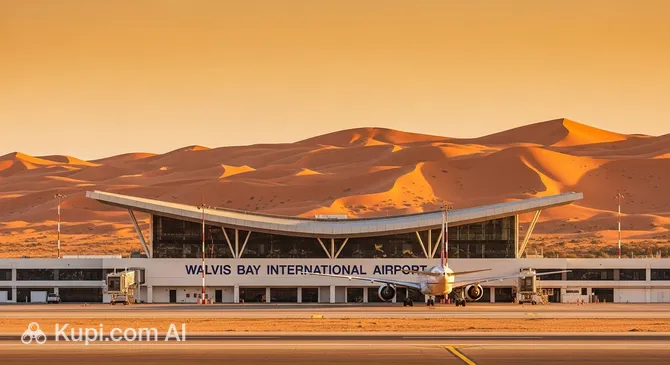
Rooikop Airport. Source: Kupi.com Binoculars

Rooikop Airport is not merely a transport hub, but a true gateway to the world of wildlife and the ocean expanses of Namibia. Located amidst rugged sands, it serves as the starting point for those eager to witness the majestic dunes of the Namib and the mysterious Skeleton Coast. Here, where the desert heat meets the cool Atlantic breeze, begins your breathtaking journey through one of Africa's most picturesque corners.

IATA Code WVB
ICAO Code FYWB
City Walvis Bay
Distance to centre 15 km
Status International
Passengers per year ~120,000 people
Schedule View on flight board

Features and advantages of the airport

Rooikop Airport distinguishes itself with its compactness and efficiency, making it extremely convenient for travellers who value their time. Following a major reconstruction completed in 2016, the terminal meets all modern requirements for comfort and safety. Thanks to the low passenger traffic, there are practically no queues here, and completing all formalities takes mere minutes.

A key advantage is its strategic location: the airport is just a 15-minute drive from Walvis Bay and half an hour from the popular resort of Swakopmund. Furthermore, due to its history as a military base, Rooikop boasts one of the longest and highest-quality runways in the region, capable of accommodating large aircraft even in the challenging weather conditions characteristic of the coastal zone.

Contact Information

For your convenience, we have compiled the main contact information for Walvis Bay Airport (WVB). We recommend verifying the data on official resources before your trip.

  • Official Website: The airport is managed by the Namibia Airports Company (NAC). Current information can be found on their website: www.airports.com.na.
  • Information Desk Phone: For general enquiries, you can call: +264 64 271 251.
  • Address: Walvis Bay Airport, Rooikop, Walvis Bay, Namibia.
  • Email: To contact the managing company, Namibia Airports Company, you can use the email: info@airports.com.na.
  • Lost Luggage Information: Issues regarding lost or damaged luggage are handled by airline representatives. Please contact your airline's counter in the arrivals hall.
  • Passenger Support Service: For assistance directly at the airport, please approach the information desk or use the main helpline number.

How to get to the airport

Rooikop Airport (WVB), serving the main port city of Namibia, is located approximately 15 kilometres east of the centre of Walvis Bay. There are several ways to get from the city to the airport and back, each with its own features.

Taxi and Private Transfer

This is the most popular and reliable way to get to the airport. A taxi ride from the city centre takes about 15-20 minutes. The cost of the trip is usually around 150-250 Namibian Dollars (NAD), but it is always recommended to confirm the price with the driver before starting the journey. You can book a car through your hotel or use local taxi companies. A pre-booked private transfer guarantees a fixed price and a meet-and-greet service, which is particularly convenient.

Car Rental

For travellers who value independence and plan to explore the surroundings, renting a car is the ideal option. Many international and local rental companies have counters directly at Rooikop Airport. The rental cost for a compact sedan starts from approximately 500-700 NAD per day, while a four-wheel drive (4x4), recommended for travel across the country, will cost more. Having your own transport will give you the freedom to move throughout the region, from Swakopmund to the Namib Desert.

Public Transport

It is worth noting that there is no regular bus service between the centre of Walvis Bay and the airport. In Namibia, shared taxis are often used for intercity and suburban trips, but for tourists with luggage, this option may not be very convenient or predictable in terms of time. If you decide to use such transport, be prepared for a longer journey and several stops along the way.

Airport Parking

If you are arriving at the airport in your own or a rented vehicle, parking is available. Both short-term and long-term parking options are offered. The parking area is located in immediate proximity to the terminal, making it convenient for departing passengers.

Terminals and Map

Rooikop Airport (WVB), serving the city of Walvis Bay and its surroundings in Namibia, is a modern and compact aviation hub. Its key feature is simplicity and convenience for passengers, due to the presence of only one passenger terminal. This building serves both domestic and international flights, eliminating the need for complex transfers.

The terminal layout is intuitively clear. The building is designed so that all key zones are within walking distance of each other. Navigation is simplified to the maximum thanks to clear signs in English. Departure and arrival zones are located in the same building but are smartly separated to optimise passenger flows. You won't have to worry about how to get from one part of the airport to another — everything is under one roof.

The departure procedure is standard: after entering the terminal, you find yourself in the general area with check-in counters. After completing check-in and dropping off luggage, passengers proceed to pre-flight security screening, followed by a small but comfortable waiting lounge. The arrival zone is equally simple: after disembarking the aircraft, passengers immediately enter the baggage claim hall and pass through passport control (for international flights), after which they exit into the general meeting area.

Thanks to the airport's compact size and low passenger traffic, completing all formalities usually takes significantly less time than in major international hubs. Check-in and security checks generally proceed quickly, but it is nevertheless recommended to arrive at the airport in advance — 1.5-2 hours before an international flight and 1-1.5 hours before a domestic one.

The main advice for navigating Rooikop Airport is simply to follow the signs. It is practically impossible to get lost here. The absence of multiple terminals and long walkways makes travelling through this airport maximally comfortable and predictable, allowing you to avoid unnecessary stress before your flight.

Airport History

The history of Rooikop Airport is inextricably linked with the military past and strategic importance of the city of Walvis Bay. It was originally founded as an air force base for the South African Air Force (SAAF) under the name Rooikop (translated from Afrikaans as "Red Head" or "Red Hill"). For many years, the base played a key role in ensuring air control over the coastal territories and the Atlantic coast.

After Namibia gained independence and the subsequent transfer of Walvis Bay to its jurisdiction, a new chapter in the airport's history began. It was converted for civil use to serve the region's growing needs for passenger and cargo transport. A key stage of development was the large-scale reconstruction and modernisation completed in 2016. During the works, a new runway capable of accommodating large long-haul aircraft was built, and a modern passenger terminal was erected.

This transformation allowed Rooikop Airport to obtain the status of an international airport, the second in the country after the capital's Hosea Kutako Airport. Thanks to modernisation, the tourist flow to the region has increased significantly, as travellers can now fly in directly, bypassing Windhoek, to explore famous places such as the Skeleton Coast and the Namib Desert. Today, the airport successfully combines civil functions with its role as a base for the Namibian Air Force, remaining an important transport hub for both tourism and logistics closely linked to the seaport of Walvis Bay.

Services and Amenities

Rooikop Airport (WVB), serving the popular coastal city of Walvis Bay, is a modern and compact terminal. Despite its size, it provides passengers with all necessary services for a comfortable wait for their flight.

Before departure, you can have a snack or drink coffee in the local café, as well as purchase souvenirs to remember Namibia by, or goods in the small duty-free shop. This is an excellent place to buy last-minute gifts or travel necessities.

For the convenience of travellers, Wi-Fi is available in the airport building, and there are power outlets for charging electronic devices in the waiting lounges. Passengers wishing to spend time in a quieter environment can use the services of the VIP lounge, which offers an elevated level of comfort.

The terminal houses ATMs and a currency exchange point, making it easy to resolve financial matters upon arrival or before departure. Also, for emergencies, a first aid post operates at the airport.

The airport is equipped to serve passengers with reduced mobility. It is recommended to notify the airline in advance regarding the need for special assistance. For travellers with small children, mother and child rooms are provided.

There are no hotels or conference halls on the airport territory. However, just a few minutes' drive away, in the city of Walvis Bay, there are numerous accommodation options to suit any taste and budget, as well as business centres at major hotels.

Where to Eat

When planning a flight through Walvis Bay Airport (WVB), it is important to consider that this is a small regional airport. The choice of establishments here is limited, but finding something for a snack or a full lunch before departure is quite possible. Typically, all dining options are concentrated in one location.

In the main terminal building, in the public area (`landside`, before passing security control), there is usually a small café or restaurant operating. Here passengers can relax while waiting for their flight. The menu generally includes simple and filling dishes: sandwiches, salads, pastries, and hot meals, such as burgers or pasta. For a quick snack, muffins, crisps, and chocolate bars are perfect. If you have time, you can order a more substantial meal.

Among local specialities, you might sometimes find `biltong` (dried meat) or `droëwors` (dried sausages) — an excellent option to get acquainted with the cuisine of Namibia right at the airport. As for beverages, the café offers a selection of refreshing drinks, juices, tea, and coffee.

Special dietary requests, such as vegetarian, vegan, or gluten-free dishes, may be difficult to satisfy due to the limited assortment. While simple salads or fruits are usually on the menu, if you have strict dietary restrictions or require Halal meals, it is more reliable to bring food with you. Prices at the airport are generally higher than the average in the city, which is standard practice for aviation hubs. The establishment's opening hours are usually tied to the flight schedule, so it will remain open until the last flights depart.

Traveller Tips

When planning a departure from Rooikop Airport, which serves the city of Walvis Bay, use these tips to ensure your journey begins smoothly and without stress. Although it is a relatively small and quiet airport, advance preparation is always beneficial.

It is recommended to arrive at Rooikop Airport approximately 2 hours before a domestic flight and 2.5-3 hours before an international one. This time will be sufficient to pass all pre-flight formalities without rushing, even if small queues arise.

The check-in and security control process here usually goes faster than in major hubs. Nevertheless, keep your passport, tickets, and other necessary documents ready. To save time, use online check-in if your airline provides such an option. When choosing a seat on the plane, consider that flying over Namibia can offer unforgettable views of deserts and the coastline, so a window seat (especially not over the wing) is an excellent choice. An aisle seat is suitable for those who value the ability to stand up freely during the flight.

Rules for carrying hand luggage are standard: liquids in containers no larger than 100 ml (packed in a transparent bag), and no sharp objects or other prohibited items. Be sure to pack all valuables, documents, necessary medication, a portable charger, and fragile souvenirs in your hand luggage.

Customs control upon departure from Namibia generally concerns declaring currency (if amounts exceed established limits) and the export of certain goods. If you have purchased expensive souvenirs, especially made of precious minerals (such as diamonds) or items falling under the CITES convention (concerning flora and fauna), ensure you have all necessary permits and receipts. It is best to clarify current customs regulations on official resources in advance.

Passengers with transfers should carefully study the information on their ticket: whether baggage will need to be collected and re-checked at the transit airport. Transfers happen rarely at Rooikop Airport, but if you have a connecting flight, follow the "Flight Transfers/Connections" signs upon arrival at the next airport.

In case of a flight delay, remain calm. Contact your airline's counter for information about the new departure time and what services (meals, drinks) you are entitled to. Ensure your phone is charged to monitor flight status updates via the airline's app or the airport website.

Reached the end of the page?

That means the route is fully explored