Support

Cardboard Cathedral

About

This architectural masterpiece, officially known as the Transitional Cathedral, has become one of the most recognizable buildings in the city of Christchurch. Designed by the famous Japanese architect Shigeru Ban, the cathedral is a unique structure built from cardboard tubes, wood, and steel. It is the world's first large-scale church of its kind and has become a symbol of hope and sustainable development for the whole of New Zealand.
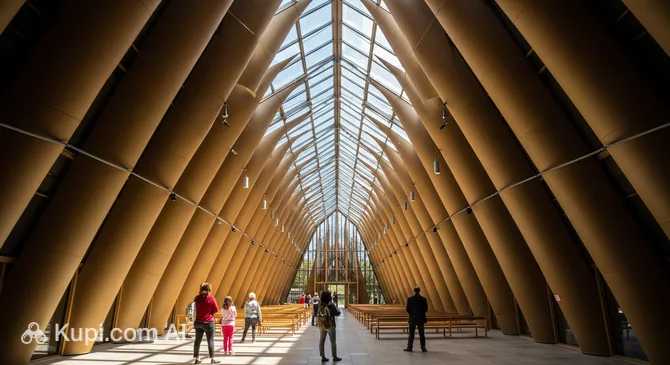
Cardboard Cathedral
Cardboard Cathedral. Иллюстрация. Источник: Kupi.com AI

The building has a striking A-frame shape and reaches a height of 21 meters. Its foundation and supports consist of eight shipping containers, while the roof is made of translucent polycarbonate, creating a sense of lightness and space inside. One of the main aesthetic features is the multi-colored stained glass windows, whose triangular motifs echo the architectural style of the original Gothic cathedral that once stood on the main square.

The Cardboard Cathedral can accommodate 700 visitors and is not just a temporary structure but a full-fledged community space. Despite the unusual materials, the building fully complies with strict seismic standards, demonstrating an innovative approach to construction in regions with high geological activity.

Contacts

To plan your visit or check for special events, you can use the official contact details for the Cardboard Cathedral.

How to contactContact
Address234 Hereford Street, Christchurch Central City, Christchurch 8011, New Zealand
Phone+64 3 366 0046
Websitewww.cardboardcathedral.org.nz

What to Do

Inside the Cardboard Cathedral, visitors will find a fascinating world of modern geometry. Here, you can see in detail how 98 massive cardboard tubes form the building's vault and appreciate the unique furniture: the pulpit and pews are also made of this eco-friendly material. Be sure to look at the rose window — a modern interpretation of classical stained glass that fills the hall with vibrant colors on a sunny day.

In addition to sightseeing, it's worth attending one of the musical programs. Thanks to its shape and materials, the building has excellent acoustics, making it a popular venue for choir performances and chamber concerts. In the evening, the cathedral is transformed: the light streaming from within through the gaps between the tubes turns it into a giant glowing lantern, providing a wonderful opportunity for unique photos.

For those seeking spiritual solitude, the cathedral is open for services and private reflection. A walk through the main nave with its polished concrete floor allows you to experience the scale of engineering and feel the spirit of resilience that Shigeru Ban's architecture brought to this city.

Getting There

The landmark is located at 234 Hereford Street, in the heart of the central city district. The cathedral is very easy to reach on foot if you are already in the center or walking near Cathedral Square. The walk from the main tourist streets takes only a few minutes.

For those who prefer public transport, the Metro Christchurch bus network is ideal. Several stops on Hereford St serve the main city routes. You can also take the famous historic tram, which stops within walking distance of the building.

If you are coming from the airport, it is most convenient to book a taxi or use a shuttle service, which takes about 20–30 minutes depending on traffic. Parking zones are available nearby for drivers, though they may be time-limited in the city center.

Ближайший город: Christchurch

History & Facts

The history of this unique structure is inextricably linked to the tragic 2011 earthquake, which severely damaged the city's old Anglican cathedral. As a temporary solution, Japanese architect Shigeru Ban proposed an innovative building project pro bono (free of charge). His idea was to use accessible and eco-friendly materials to quickly restore the city's cultural and spiritual life.

Construction began in July 2012 and took only five months. The cathedral was the first major public building erected in the center after the disaster and became a powerful symbol of rebirth. Although it was originally intended to last about 20–50 years, its exceptional design and durability led locals to reconsider its status — it is now considered a permanent architectural icon.

Interestingly, Shigeru Ban, who received the Pritzker Prize for his humanitarian projects, once said: "Even a building made of cardboard can be eternal if people love it." Today, the Cardboard Cathedral is officially recognized as one of the most significant 21st-century architectural achievements in New Zealand.

Time Needed

A leisurely tour of the cathedral's architecture and interior usually takes about 45 minutes to 1 hour. This is plenty of time to explore the unusual design details, look at the stained glass windows, and take high-quality photos.

If you plan to attend a service or one of the musical concerts regularly held here, you should allow about 2 hours. The cathedral has a wonderful energy, so many tourists prefer to stay longer just to sit in silence and enjoy the unique atmosphere of the place.

Working Hours

The doors of the Cardboard Cathedral are usually open to visitors daily, roughly from 9:00 AM to 5:00 PM. However, since the building is an active church and a popular concert venue, the schedule may change due to services, weddings, or private events.

We strongly recommend checking the current schedule on the official website before your visit. Please remember that during religious services, access for sightseeing tours may be limited out of respect for the congregation.

Nearby

Exploring the area around the cathedral will allow you to dive deeper into the city's atmosphere and see how historical heritage sits alongside modern projects. Many interesting sites are within a short walk.

NameDistance
Smokey T's0.4 km
Christchurch Tram0.4 km
The Last Word0.5 km
Regent Street Christchurch0.5 km
Cathedral Square0.6 km
Pomeroy's Old Brewery Inn0.8 km
Bridge of Remembrance0.8 km

Reached the end of the page?

That means the route is fully explored