Support

Palmerston North Airport

About the Airport

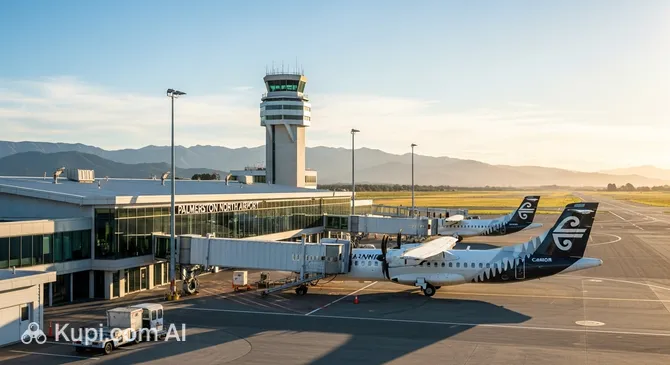
Palmerston North Airport. Source: Kupi.com Binoculars

Palmerston North Airport (PMR), known as the gateway to the Manawatu-Whanganui region, represents a significant transport hub on the North Island of New Zealand. Its history began in 1931 with a modest grass airfield, which over time evolved into a modern airport complex. Today, it serves not only commercial flights but also acts as a base for pilot training and the country's Air Force. Despite its official designation as "international", the airport predominantly operates domestic flights, connecting the region with New Zealand's major cities.

IATA Code PMR
ICAO Code NZPM
City Palmerston North
Distance to Centre 5 km
Status International (predominantly domestic flights)
Annual Passengers approx. 687,000 (2019)
Popular Airlines Air New Zealand, Qantas Airways, Singapore Airlines.
Schedule "Palmerston North Airport" Online Board

Palmerston North Airport is valued by travellers for its compactness, convenience, and rapid check-in process. Located just a few minutes' drive from the city centre, it provides easy access to the region's main attractions and business hubs. The terminal offers all necessary services for a comfortable wait, including cafes, shops, and wireless internet access. The airport plays a key role in the economic and tourism life of the central North Island, serving as a starting point for exploring the natural beauty and academic centres for which Palmerston North is famous.

Contact Information

  • Official Website: www.pnairport.co.nz
  • Inquiries Phone: +64 6 351 4415
  • Address: Airport Drive, Milson, Palmerston North 4442, New Zealand
  • Email: customerservice@pnairport.co.nz
  • Social Media: The airport actively maintains pages on social networks, such as Facebook. Links to official accounts can be found on their website.
  • Lost Baggage Information: For issues regarding lost or damaged luggage, it is recommended to contact your airline's representative directly.
  • Passenger Support Contacts: For general support and answers to questions, you may use the airport's main phone number or email address.

How to Get to the Airport

Getting to Palmerston North Airport (PMR) from the city centre of Palmerston North is effortless due to its close proximity—just 5-6 kilometres from the business district. The journey usually takes no more than 15 minutes. Travellers have access to several convenient transport options, including public buses, taxis, shuttles, and rental cars.

The most economical way to reach the airport is by using the public bus. Routes serviced by the company Horizons connect the airport with the central bus station and other key points in the city. This is an excellent choice for travellers with light luggage. The bus ride takes about 20-25 minutes, and the ticket cost is usually just 2-4 New Zealand Dollars (NZD). We recommend checking the current schedule on the carrier's official website in advance, as the frequency of trips may vary.

For those who value comfort and speed, a taxi or pre-booked shuttle is the ideal solution. A taxi ride from the city centre to the terminal takes just 10-15 minutes and costs approximately 25-35 NZD. This is the fastest method, particularly convenient if you have a lot of luggage or are travelling in a group. Shared shuttles offer a good balance between price and convenience, delivering passengers door-to-door. The cost of a seat in a shuttle usually varies from 15 to 25 NZD per person, though the trip may take slightly longer due to stops for other tourists.

If you plan to explore the picturesque surroundings or embark on a grand journey across New Zealand, renting a car would be the best choice. Counters for several major car rental companies are located directly within the airport building. You can both pick up and drop off the car immediately before departure, ensuring maximum flexibility in planning your route. The road from the city is simple and well-marked with signs.

For travellers arriving in their own or rented vehicles, convenient parking is provided on the territory of Palmerston North Airport. Both short-term parking for quick drop-offs and pick-ups, and long-term parking zones for those leaving their car for several days, are available. The cost depends on the duration of parking. It is a safe and reliable way to leave your transport for the duration of your trip.

Terminals and Map

Palmerston North Airport (PMR) is a modern and compact regional airport distinguished by a simple and intuitive structure. Travellers need not worry about complex navigation, as there is just one terminal serving all domestic flights.

The terminal building is designed to ensure maximum convenience for passengers. The space is logically divided into two main zones: departures and arrivals. Check-in counters and baggage drop-off points are located on the left side of the terminal (when facing the entrance), while the arrivals area with baggage claim belts is on the right. There are no transfers between terminals, as all operations are concentrated under one roof.

Check-in and security screening procedures at Palmerston North Airport generally proceed quickly and simply, which is a major advantage of smaller airports. On average, all formalities take no more than 15-20 minutes. Nevertheless, it is recommended to arrive at the airport approximately 60 minutes before departure to check in luggage and pass through security without haste.

Navigation inside the terminal is extremely clear thanks to distinct signs in English. All key zones—from check-in counters to boarding gates and baggage claim—are within a few minutes' walk of each other. Getting lost here is practically impossible, making the airport experience comfortable even for first-time visitors.

Airport History

The history of Palmerston North Airport (PMR) began in 1931, when the Milson Aerodrome was opened on this site. Initially, it served as a base for the local aero club and a venue for aviation enthusiasts. Commercial operations began in 1936 with the launch of regular flights by Union Airways, marking the first step towards transforming the aerodrome into an important transport hub.

The airport received a significant boost in development during World War II, when it was placed under the management of the Royal New Zealand Air Force (RNZAF) and used as a training base. This period led to substantial improvements in infrastructure, including runways and hangars. After the war, civil transport resumed with renewed vigour, and in 1952, a new terminal was built to cope with the growing passenger flow.

A key moment in the airport's modern history was the reconstruction of 1992. During the works, the main runway was extended to 1,902 metres, allowing it to accommodate jet aircraft such as the Boeing 737. This opened new opportunities for expanding the route network and increasing passenger numbers, strengthening Palmerston North's status as an important regional aviation centre.

The latest major modernisation was completed in 2003. Within the framework of this project, a modern and spacious terminal meeting all international standards was constructed. Today, Palmerston North Airport serves as a bustling aerial gateway to the Manawatu region, playing an important role not only in tourism but also in supporting business and academic connections, serving the country's key domestic destinations.

Services and Amenities

Palmerston North Airport (PMR) offers passengers all necessary amenities for a comfortable wait for their flight in a modern and compact terminal. Despite its size, the airport is well-equipped to meet the needs of travellers.

You can have a snack before your flight or drink a coffee at Cafe Ignition, which offers various dishes, light bites, and beverages. There is also a shop in the terminal where you can purchase souvenirs, books, magazines, and travel essentials.

Free Wi-Fi is available throughout the terminal, allowing you to stay connected or work while waiting for departure. Special stations and power outlets located in the waiting lounges are provided for charging electronic devices.

For passengers travelling business class or holding loyalty programme memberships, the Air New Zealand Koru Lounge is open. It offers a more secluded atmosphere, complimentary beverages, snacks, and work zones. Additionally, the airport offers the option to rent conference rooms for business meetings.

Other useful services include ATMs for cash withdrawals. Special parents' rooms equipped with changing tables are available for travellers with small children. In case of necessity, basic medical assistance can be obtained at the airport.

The airport is fully adapted for passengers with reduced mobility. Ramps, accessible restrooms, and special parking are provided. Passengers requiring assistance are advised to notify their airline in advance.

Although there are no hotels directly on the airport grounds, in the city of Palmerston North, located just a few minutes' drive away, you can find numerous accommodation options to suit any taste and budget.

Where to Eat

Palmerston North Airport (PMR) is a regional aviation hub, so the selection of establishments here is compact but sufficient to comfortably pass the time before departure. The main and sole place where you can eat and drink is The Atrium Café & Bar, located in the main terminal building.

The café is situated in the public area (landside), prior to security control, which is convenient for both departing passengers and those seeing them off. It is located in a spacious and bright atrium offering a view of the runway, creating a pleasant atmosphere for waiting.

The menu at The Atrium Café & Bar offers options for both a quick snack and a more substantial meal. In the display case (cabinet food), you will always find fresh sandwiches, rolls, salads, as well as a variety of pastries, cakes, and muffins. For those wishing to have a full lunch, there is a menu with hot dishes, which usually includes soups, burgers, classic New Zealand meat pies, and fish and chips.

The establishment strives to cater to different dietary needs. Vegetarian and gluten-free options are usually available. It is best to check with the staff regarding the availability of vegan or Halal dishes. The price range is average for New Zealand airports: a cup of coffee will cost approximately 5-6 NZD, and a hot dish around 20-30 NZD. The café's operating hours are adapted to the flight schedule: it opens one hour before the first morning flight and closes after the departure of the last evening flight.

Travel Tips

Travelling through the airport of Palmerston North is generally a quick and convenient process, typical of regional airports in New Zealand. To ensure your trip goes smoothly, make use of these tips. For domestic flights, it is recommended to arrive at the airport 60-90 minutes before departure. This time is quite sufficient to check in luggage, pass security control, and reach the boarding gate without rushing.

To save time, always use online check-in for your flight, which is offered by all major airlines flying from Palmerston North. This will allow you to proceed immediately to baggage drop or, if you are travelling light, directly to screening. Security control here usually proceeds faster than in large international hubs, but the rules are standard: be prepared to remove laptops and liquids in containers up to 100 ml from your carry-on luggage.

When choosing a seat on the plane, consider that flights over New Zealand are often accompanied by breathtaking views. A window seat will give you the opportunity to enjoy the landscapes of the North Island. An aisle seat will be more convenient if you want more legroom or plan to leave the cabin quickly upon arrival. Do not pack fresh fruits, vegetables, or products of animal origin in your carry-on luggage, as the country has strict biosecurity rules which may apply even on domestic routes.

If you have a transfer in Palmerston North, do not worry. The airport is compact, and moving between boarding gates takes just a few minutes. Clarify with the airline at check-in whether your luggage will be transferred automatically to your final destination. Typically, on domestic flights, this happens without your involvement, but it is better to be safe. For international transit passengers, it is important to remember customs control: you will have to declare all food items, plant materials, and outdoor equipment (for example, tents or hiking boots). Failure to comply with this requirement may result in large fines.

To save money, book flight tickets and airport parking in advance. Bring an empty water bottle to fill after passing screening, and light snacks, as the choice of food in small airports may be limited and prices higher. In case of a flight delay, first contact your airline representative for information on the new departure time and your rights to compensation (for example, meal vouchers). The airport offers free Wi-Fi, which will help you stay connected and pass the waiting time.

Reached the end of the page?

That means the route is fully explored