Support

Niamey Airport

About the Airport

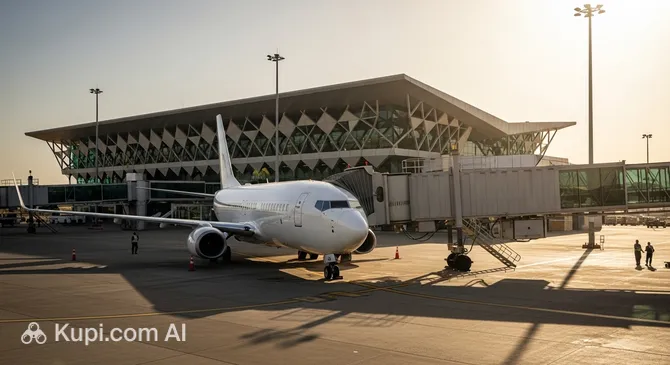
Niamey Airport. Source: Kupi.com Binoculars

Diori Hamani International Airport is not merely a transport hub, but a true aerial gateway to the heart of the Sahel, where travellers take their first steps on the soil of Niger. This compact yet vital hub connects the vast expanses of the desert with the dynamic rhythm of the modern capital, offering guests authentic African hospitality immediately upon landing. Following a large-scale reconstruction, the airport has become a symbol of the country's renewal, combining the functionality of modern technology with unique local flair.

IATA Code NIM
ICAO Code DRRN
City Niamey
Distance to Centre About 10–12 km
Status International
Annual Passengers About 360,000 – 450,000
Schedule Current flight board available on the official website

Airport Features and Highlights

Niamey Airport distinguishes itself from giant international hubs by its compactness and clear navigation, allowing passengers to complete all formalities without unnecessary bustle. One of the most memorable details of the terminal is a replica of a dinosaur skeleton found in Niger; this unique exhibit welcomes guests in the main hall and immediately immerses them in the atmosphere of the region's ancient history. Thanks to recent modernisation, the terminal building features modern glazing, improved air conditioning systems, and updated waiting areas, including a comfortable VIP pavilion for official delegations and business travellers.

Contact Information

  • Official Website: Current information on flight schedules, services, and airport news can be found on the official website: www.aeroport-niamey.net.
  • Information Desk Phone: For inquiries and consultations, you can call: +227 20 73 25 17.
  • Airport Address: Route de Goudel, BP 1096, Niamey, Niger.
  • Email: For written enquiries, it is recommended to use the contact form on the airport's official website, as there is no dedicated public email address.
  • Social Media: We recommend checking for official airport pages on social networks, links to which may be posted on its website, to receive the latest updates.
  • Lost Luggage Information: For all issues related to lost or damaged luggage, please contact your airline's Lost & Found service first and foremost.
  • Passenger Support Contacts: For general questions not related to a specific airline, you may use the main airport information desk phone number.

How to Get to the Airport

Getting to Diori Hamani International Airport (NIM), the main air hub of Niger's capital, from the city centre of Niamey is quite simple. The airport is located approximately 12 kilometres southeast of the centre, and the journey usually takes from 15 to 30 minutes depending on traffic conditions. The primary and most popular methods of transport for tourists are taxis and pre-booked transfers.

Taxi and Transfer

Taxis are the most common and convenient way to reach the airport. You can easily find cars throughout the city. Key point: be sure to agree on the fare with the driver before the journey begins, as taximeters are rarely used. The cost of a taxi ride from the city centre is usually between 5,000 and 10,000 CFA Francs (XOF), but the price may vary depending on the time of day and your bargaining skills. Payment is made in cash. For greater convenience and peace of mind, you can book a transfer through your hotel or a specialised service. This guarantees a fixed price and a meeting with the driver at the appointed time, which is particularly convenient when travelling with a lot of luggage or at night.

Car Rental

If you prefer to drive yourself, car rental desks operate in Niamey and directly at the airport. This option gives maximum freedom of movement, but it is worth noting that navigation in the city can be challenging for first-time visitors. Ensure you have an International Driving Permit and are familiar with local traffic regulations.

Airport Parking

Parking is provided for those arriving at the airport in their own or rented vehicles. There are both short-term and long-term parking zones located in the immediate vicinity of the terminal.

Public Transport

Direct public transport routes, such as regular city buses to the airport, are practically non-existent in Niamey. Although shared taxis (bush taxis) operate around the city, they are not always convenient for travelling with luggage and may require several transfers. Therefore, for tourists who value time and comfort, this option is not optimal.

Terminals and Map

Diori Hamani Airport in Niamey (NIM) is a modern and compact aviation hub that has been significantly modernised. Currently, all passenger flights — both international and domestic — are handled in one main terminal. This makes navigation for travellers extremely simple and intuitive, eliminating the need to search for transfers between different buildings.

The terminal structure is logical and complies with international standards. It is divided into two main levels:

  • Ground Floor is designed for arriving passengers. Here you will find passport control zones, baggage claim belts, and customs inspection. After completing all formalities, you enter the general hall where you can find taxi counters, currency exchange, and hotel representatives.
  • Second Floor is the departure zone. Passengers arrive here for flight check-in and baggage drop-off, followed by security screening and passport control before entering the waiting area with the gates.

Due to the airport's small size, completing all pre-flight procedures usually does not take much time. Nevertheless, it is recommended to arrive at the airport at least 2-3 hours before an international flight departure. During periods of high traffic, such as when flights to Europe are departing, queues at check-in and security may be longer, so a small buffer of time is advisable.

To navigate the terminal, simply follow the signs, which are in French and English. Since all services and boarding gates are in one building, getting lost is virtually impossible. Airport staff are ready to assist, although knowing a few phrases in French can be useful. Overall, Niamey airport leaves an impression of a convenient and well-organised transit point that does not require complex logistical manoeuvres from tourists.

History of the Airport

The history of the main airport of Niamey, bearing the name of the country's first president Hamani Diori, is inextricably linked with the history of Niger itself. The airport was founded in the mid-20th century, originally as a military airfield during the time when the country was still part of French West Africa. After Niger gained independence in 1960, the facility began actively transforming into the main civil aviation hub, receiving its current name in honour of the significant political figure.

In the 1970s, the airport became an important hub for the now-defunct pan-African airline Air Afrique, which facilitated its integration into the international air transport network. For decades, it played a key role in connecting the capital with European cities, primarily Paris, and the capitals of neighbouring African states. At the same time, it retained its strategic military importance, servicing both civil and military transport aircraft.

The largest modernisation in the airport's history took place in the 2010s. Within the framework of a massive project, work was carried out to reconstruct the runway, update air navigation equipment, and, most importantly, build a new modern passenger terminal. This reconstruction allowed for a significant increase in the airport's capacity, improved passenger comfort levels, and brought the infrastructure in line with international ICAO flight safety standards.

Interesting fact: thanks to its strategic location in the Sahel region, Niamey Airport (NIM) is often used as a logistical base for international humanitarian missions. Today, it continues to remain not only the country's main aerial gateway but also an important symbol of its connection with the rest of the world, reflecting the stages of its development from the colonial era to the present day.

Services and Amenities

Diori Hamani International Airport (Niamey), the main air hub of Niger, offers passengers all necessary services for a comfortable wait before their flight. The terminal houses cafes and small restaurants where you can have a snack or a full meal, trying dishes of both local and European cuisine. Additionally, there are shops where you can purchase souvenirs, travel goods, and products in the Duty Free zone.

Waiting lounges are equipped for passenger relaxation. Those who prefer a higher level of comfort can utilise the services of the VIP lounge, which offers a secluded atmosphere, snacks, and beverages. Wi-Fi is available throughout the terminal, allowing you to stay connected. Charging stations for electronic devices are also provided for the convenience of travellers.

The airport operates currency exchange points and ATMs, which is particularly convenient for foreign tourists arriving in the country. To address health-related issues and provide first aid, a medical point operates within the terminal, ready to assist if necessary.

The airport administration cares for passengers with special needs. A mother and child room is provided for travellers with small children. Passengers with reduced mobility are provided with the necessary assistance and escort, and the terminal infrastructure is adapted for their convenient movement.

Although there are no hotels directly on the airport grounds, several hotels of varying comfort levels are located in the immediate vicinity, easily accessible by taxi. For business travellers, business centre services or conference rooms may be available, but it is recommended to clarify this information in advance at the airport information desk.

Where to Eat

Niamey Airport (NIM) offers passengers basic but sufficient dining options while waiting for a flight. Although the selection of establishments is not as vast as in major international hubs, you can find both a light snack and a full lunch here.

The majority of cafes and a small restaurant are located in the public departure zone (landside), before passport control and security screening. This is convenient for those seeing off or meeting passengers. The menus at these establishments usually include sandwiches, pastries, hot and cold beverages, as well as simple dishes of local and European cuisine. After passing security control, in the sterile zone (airside), the selection is usually limited to a small bar counter where you can buy drinks and packaged snacks.

If you wish to try something from the local cuisine, look for brochettes — small meat skewers that are popular street food in Niger. For a full meal, the restaurant in the main zone is best, where you can order rice, meat, or fish dishes. For a quick bite, sandwiches or pastries from the cafe are ideal.

Regarding special dietary requirements, finding Halal dishes will not be difficult, as this is the standard for the region. However, finding vegetarian, vegan, or gluten-free options may present challenges. The assortment is limited, so passengers with strict dietary restrictions are recommended to carry their own snacks. Prices at the airport are generally higher than the city average. Opening hours of establishments are usually tied to the schedule of international flights.

Tips for Travellers

To ensure your journey through Niamey Airport goes as smoothly as possible, take advantage of our tips. Despite not being the largest airport, planning in advance will help avoid unnecessary stress.

Arrival Time and Check-in. We recommend arriving at the airport at least 2-3 hours before international flights and 1.5-2 hours before domestic ones. This will give you enough time in case of unforeseen queues. If possible, use online check-in — this will save you time. Have all documents ready at the check-in counter and security control: passport, ticket, and visa (if required).

Hand Luggage and Seat Selection. Rules for carrying liquids are standard: containers up to 100 ml must be packed in a single transparent bag. Always keep valuables, documents, money, medication, and electronics in your hand luggage. When choosing a seat on the plane, consider that a window seat will offer beautiful views, especially when flying over the Sahara Desert, whilst an aisle seat allows you to stand up and stretch your legs freely.

Customs Control and Transfers. When passing through customs in Niger, be prepared to declare large amounts of currency and valuable items. If you have a connecting flight, clarify with the airline in advance whether you need to collect your luggage and check in again. Passengers with long layovers should check visa requirements for entering the city.

Saving Time and Money. To save money, bring an empty water bottle that can be filled after security screening, and light snacks. Currency exchange at the airport may not be favourable, so it is better to have a small amount of local CFA Francs with you or use an ATM. Booking an airport transfer in advance is often cheaper than finding a taxi on the spot.

If the Flight is Delayed. In case of a flight delay, first contact your airline representative for information on the departure status, as well as the possibility of receiving vouchers for food or drinks. Ensure your gadgets are charged, and have a book or downloaded films with you, as leisure opportunities at the airport may be limited. Keep all receipts — they may be needed to claim compensation from your insurance company.

Airports in nearby cities

Reached the end of the page?

That means the route is fully explored