Support

Ibadan Airport

About the Airport

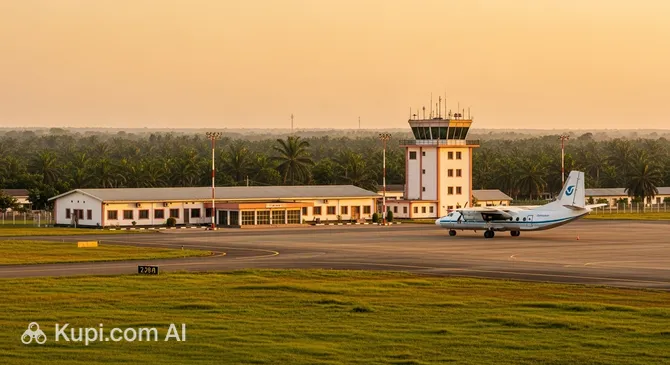
Ibadan Airport. Source: Kupi.com Binoculars

Ibadan Airport (IBA) is a welcoming aviation hub serving the capital of Oyo State and one of Nigeria's largest cities. Located in the Alakia district, it offers travellers a convenient alternative to the busy hubs of neighbouring Lagos, providing quieter and faster access to the country's south-west region. The airport plays a key role in the city's business and tourism sectors, connecting ancient Ibadan with the federal capital Abuja and other important economic centres. Thanks to its compact size and lack of hustle, starting a journey here is often cited as one of the most comfortable experiences in Nigeria.

IATA Code IBA
ICAO Code DNIB
City Ibadan
Distance to Centre About 15 km
Status Domestic
Annual Passengers About 50,000 – 80,000
Schedule Available on airline websites

Features and Benefits

The main advantage of Ibadan Airport is its intimate scale and functionality. Unlike huge international terminals, procedures here—from check-in to boarding—are surprisingly quick and stress-free. Passengers often note the friendliness of the staff and the absence of long queues, allowing you to arrive at the airport a little later than usual, saving precious time.

Airport infrastructure is constantly being modernised: in recent years, work has been undertaken to upgrade the runway and improve the lighting system, enhancing flight safety. Despite its domestic status, the airport has expansion potential and is ready to handle modern regional liners. For the convenience of travellers, parking and basic terminal services are provided, making the wait for a flight quite comfortable.

Contact Information

For the most up-to-date information about Ibadan Airport (IBA), it is recommended to consult the official resources of the Federal Airports Authority of Nigeria (FAAN), which manages this airport. Below are key contact details and communication guidelines.

  • Official Website: Information about Ibadan Airport is available on the official website of the managing body — the Federal Airports Authority of Nigeria (FAAN). Website address: faan.gov.ng.
  • Help Desk Phone: Current helpline numbers are best checked on the official FAAN website, as they may change.
  • Airport Address: Ibadan Airport, Alakia, Ibadan, Oyo State, Nigeria.
  • Email: For general enquiries, you can use the FAAN contact email: info@faan.gov.ng.
  • Social Media: Official FAAN pages on social networks (such as X/Twitter, Facebook) are often a good source of news and operational updates.
  • Lost Luggage Information: For issues regarding lost or damaged luggage, please contact the airline directly on which you flew. Airport staff do not handle passenger luggage tracking.
  • Passenger Support Contacts: For questions related to your ticket, flight schedule, or in-flight service, contact your airline's support service. For questions concerning the infrastructure and services of the airport itself, use the general FAAN contacts.

How to Get to the Airport

Ibadan Airport (IBA) is located relatively close to the city centre, making it convenient for arriving and departing travellers. There are several ways to get to the air hub from the centre of Ibadan, the capital of Oyo State in Nigeria. The choice depends on your budget, amount of luggage, and comfort preferences.

Taxis or Ride-Hailing Services are the simplest, fastest, and most reliable option. Popular mobile apps like Bolt or Uber operate actively in the city, offering transparent fares. You can also use regular taxis, but in this case, it is highly recommended to negotiate the fare with the driver in advance. On average, the journey from the centre to the airport takes 30 to 50 minutes, although during peak hours this time may increase due to traffic. This method is especially convenient if you are travelling with heavy luggage.

Public Transport in Ibadan is represented mainly by minibuses, locally called 'danfo', and shared taxis. There are generally no direct routes to the airport, so the trip will require several transfers and good orientation skills. Although this is the most budget-friendly method, it is the least comfortable and is not recommended for tourists, especially first-time visitors, or those with limited time or lots of items.

Car Rental and Parking. For those who value independence and plan to travel around the region, renting a car is an excellent solution. Both local and international rental companies operate in Ibadan. The airport provides parking for those arriving in their own or rented vehicles, where cars can be left for both short and long periods.

Terminals and Map

The Ibadan Airport (IBA) is a small and functional aviation hub distinguished by a simple and clear structure. It consists of one main terminal that serves all domestic flights. Thanks to its compactness, the airport is very convenient for passengers, as it is practically impossible to get lost here.

The terminal layout is intuitive. All key zones — check-in counters, security screening, the waiting hall, boarding gates, and the arrival area with baggage claim — are located in one building a short distance from each other. Since there is only one terminal, passengers do not need to worry about transfers between buildings. Departure and arrival zones are clearly separated but located in close proximity, making movement around the airport quick and comfortable.

Completing all pre-flight formalities usually does not take much time. Check-in and security screening are significantly faster than in major international hubs. Nevertheless, it is recommended to arrive at the airport approximately 1.5-2 hours before departure to check in luggage and go through all procedures without rushing. This buffer time allows you to avoid unnecessary stress in case of unforeseen circumstances.

To navigate the terminal, simply follow the standard signs. Airport staff are always ready to help and answer questions. The main recommendation for travellers is simply to follow the flow of passengers and pay attention to information boards. The airport's compactness is its main advantage, ensuring passengers a calm and quick start or end to their journey through Nigeria.

Airport History

The Ibadan Airport (IBA) has a rich history closely linked to the region's development. Its official opening took place on 3 June 1982 during the administration of President Shehu Shagari. The construction of the airport was an important step within the federal programme to improve Nigeria's transport infrastructure, designed to connect the country's major cities via air links.

Initially, the airport was designed to handle medium-sized aircraft, such as the Boeing 737, which was the standard for most domestic routes at the time. Since its opening, it has become a key transport hub for the capital of Oyo State, serving both business and private trips. Over the decades, various Nigerian airlines have been based here and operated flights, contributing to economic growth and population mobility.

Like many airports of its generation, Ibadan Airport has periodically undergone modernization stages to meet modern safety and comfort standards. The Federal Airports Authority of Nigeria (FAAN) has carried out work to upgrade the runway, renovate the terminal, and improve navigation equipment. Although the airport is not one of the largest in the country, its stable operation for over 40 years is its main achievement, ensuring uninterrupted air connectivity for one of Africa's most populous cities.

Services and Facilities

Ibadan Airport (IBA) provides passengers with a set of essential services necessary for a comfortable wait for their flight. In the terminal, you will find several small cafes and snack bars where you can have a snack, coffee, or soft drinks. There are also kiosks selling necessities and local souvenirs.

For a more comfortable wait, there are general lounges in the airport. Eligible passengers can use the VIP lounge services, offering a more private setting. Wi-Fi connectivity at the airport is limited, so it is recommended to use mobile data. Charging points for electronic devices may be available, but they are few, so it is better to bring a portable power bank.

ATMs for cash withdrawals may be available within the terminal building. Currency exchange points are generally absent, as the airport mainly serves domestic flights. In case of need, a first aid post operates at the airport.

Passengers with children and people with reduced mobility are recommended to notify their airline in advance about the need for special assistance. Airlines provide help with boarding and disembarking and can arrange for a wheelchair. Specialised mother and child rooms may not be provided, so it is worth checking information with the carrier.

There are no hotels or business centres on the airport territory itself. However, travellers can easily find suitable accommodation options in the city of Ibadan, which is a few minutes' drive away. Many large hotels in the city also offer conference rooms and business services for business trips.

Where to Eat

When planning a flight through Ibadan Airport (IBA), you will find several basic options for a snack or lunch before departure. It is important to understand that this is a small regional airport, so the choice of dining establishments here is limited compared to major international hubs, but quite sufficient to satisfy hunger.

Most food outlets are located in the main waiting hall, accessible to all passengers. Typically, these are small cafes and kiosks rather than full-service restaurants. Here you can buy soft drinks, bottled water, tea, coffee, and various snacks. For a quick bite, snacks popular in Nigeria are excellent: meat pies, fried puff-puff dough balls, or fried plantain chips.

If you are looking for something more substantial, hot meals can be ordered in some cafes. Most often, the menu features simple and popular local dishes, for example, Jollof rice with chicken or fried fish. This is a great opportunity to taste authentic Nigerian food before departure. Opening hours are usually tied to the flight schedule: they open in the morning and close after the last plane departs.

For passengers with strict dietary restrictions (vegans, vegetarians, or those on a gluten-free diet), finding suitable dishes may be difficult. Specialised menus are likely unavailable here, so it is recommended to bring food with you or check the ingredients directly with the staff. Prices at the airport are moderate but expectedly higher than in the city itself.

Travel Tips

To ensure your journey through Ibadan Airport goes as smoothly as possible, use these helpful tips. A thoughtful approach will help save time, stress, and even money.

Arrival Time: To avoid unnecessary rushing, plan to arrive at the airport at least 1.5-2 hours before departure. Since the airport serves domestic flights, this time will be sufficient to calmly go through all formalities, even if queues arise.

Check-in and Security: Check-in and security control procedures may take longer than expected. Prepare all necessary documents in advance: ID and a printed or electronic ticket. Be prepared that security staff may ask you to turn on your laptop or phone, so ensure they are charged.

Seat Selection: If possible, check in online and select your seat in advance. Window seats (A, F) are ideal for those who love admiring views, while aisle seats (C, D) are convenient if you plan to get up during the flight or want to be among the first to exit the plane.

Hand Luggage: Always keep your most valuable items in your hand luggage: documents, money, bank cards, electronics, and necessary medication. Remember standard restrictions: liquids in containers up to 100 ml packed in a transparent bag, as well as the absence of sharp objects and flammable items.

Connecting Passengers: If you have a connecting flight to another city in Nigeria, check with the airline whether your luggage will be automatically transferred to the next plane or if you need to collect and re-check it. Leave a sufficient time buffer between flights in case of unforeseen delays.

Saving Time and Money: Online check-in is the best way to save time at the airport. To avoid overpaying for food and drinks, bring a light snack and an empty water bottle, which can be filled after passing security.

Flight Delays: In case of a flight delay or cancellation, do not panic. Find your airline's counter or representative to find out the reason and next steps. Depending on the length of the delay, the airline may be obliged to provide you with drinks or meals. Be sure to keep all receipts for necessary expenses.

Reached the end of the page?

That means the route is fully explored