Support

Islamabad International Airport

About the Airport

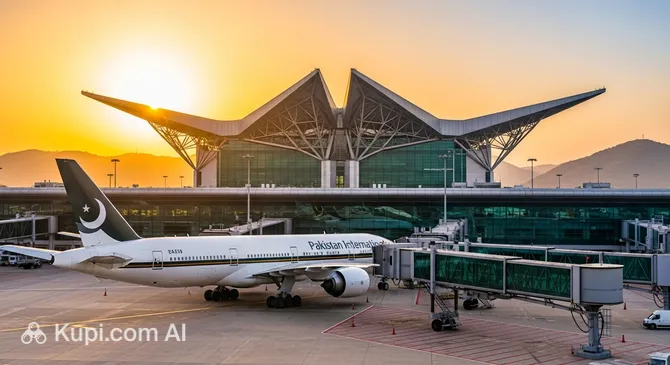
Islamabad International Airport. Source: Kupi.com Binoculars

Islamabad International Airport is not merely a transport hub but a true architectural symbol of modern Pakistan, having opened its doors in 2018. The unique terminal building, designed in the shape of the letter "Y", has become the new gateway to the capital, combining advanced technology with Eastern hospitality. For tourists, this is the ideal starting point: from here, it is easy to reach the business centre of Islamabad or begin a breathtaking journey to the majestic mountain peaks of the country's north.

IATA Code ISB
ICAO Code OPIS
City Islamabad
Distance to Centre approx. 30 km
Status International
Annual Passengers over 6 million (2023 data)
Schedule Online Flight Information

Airport Features and Advantages

Islamabad's new aviation hub has set high service standards in the region, becoming the first airport in Pakistan capable of handling the largest passenger airliner, the Airbus A380. Spacious halls and well-thought-out navigation make staying here comfortable even during long layovers.

Key amenities for travellers include:

  • Technology and Comfort: The terminal is equipped with 15 passenger boarding bridges, allowing passengers to board the aircraft directly from the building, bypassing bus transfers.
  • Developed Infrastructure: Inside the complex, there are Duty Free shops, various restaurants serving local and international cuisine, as well as comfortable business lounges.
  • Rest and Entertainment Zones: For those awaiting their flight, there is a small cinema, play areas for children, and prayer rooms. A transit hotel is also located on the premises.
  • Transport Accessibility: You can reach the city not only by taxi but also via the modern Metro Bus line, which connects the airport with key districts of Islamabad and Rawalpindi.

Contact Information

For your convenience, we have compiled the main contact information for Islamabad International Airport. We recommend checking the validity of the data on official resources before your trip.

  • Official Website: www.islamabadairport.com.pk. Here you will find flight schedules, information about services, and the latest airport news.
  • Help Desk Phone: +92-51-111-222-114. This is a universal number for information regarding flights, services, and general inquiries.
  • Address: New Islamabad International Airport Road, Islamabad, Rawalpindi, Punjab, Pakistan.
  • Email: For email communication, you can use the address info.isb@caapakistan.com.pk, however, for a prompt response, calling by phone is recommended.
  • Social Media: The airport may have official pages on social networks (e.g., Facebook, Twitter) where important updates for passengers are published.
  • Lost Luggage Information: In case of lost luggage, you should first contact the Lost and Found service of your airline, the counter for which is located in the arrivals hall.
  • Passenger Support Contacts: For general questions and support, you can contact the main airport help desk number.

How to Get to the Airport

There are several ways to get to Islamabad International Airport (ISB), which serves the capital of Pakistan and the neighbouring city of Rawalpindi. Choosing the best option depends on your budget, amount of luggage, and the time you have available. The journey from the centre of Islamabad usually takes 40 to 60 minutes, although this time may increase during peak hours.

The most economical and modern method is public transport, specifically the dedicated bus route known as the Metro Bus Service. These comfortable, air-conditioned buses run on a dedicated route, connecting the airport with key points in the city, including the Peshawar Mor interchange. This is an excellent choice for solo travellers and those travelling light, as the fare is minimal. The service intervals are quite short, allowing you to plan your trip without unnecessary worry.

For greater comfort, especially if you are travelling with family or a large amount of luggage, a taxi or ride-hailing service such as Uber or Careem, which are widely used in the city, is ideal. This is the most convenient "door-to-door" option. The cost of the trip will be significantly higher than the bus, but it ensures maximum convenience. It is recommended to use official taxi services or apps to avoid overcharging and to know the estimated cost in advance.

If you prefer complete independence in your movements, you can use a car rental service. Both local and international rental companies have offices at the airport and in the city. This option gives you the freedom to explore not only the capital but also its surroundings. For those arriving at the airport in their own or a rented vehicle, a spacious car park is provided. It offers zones for both short-term and long-term parking at reasonable rates.

Terminals and Map

Islamabad International Airport (ISB) is a modern and well-organised aviation hub designed with passenger convenience in mind. Its key feature is one main terminal that serves both international and domestic flights. This significantly simplifies navigation and eliminates the need to travel between different buildings.

The terminal structure is intuitive and divided into two main levels:

  • Level 2 (Upper Floor): Departure Zone. Check-in counters, border control, and security checkpoints are located here. After completing all formalities, passengers enter a spacious departure lounge with shops, cafes, and boarding gates.
  • Level 1 (Lower Floor): Arrival Zone. Passengers arrive here after landing. Immigration counters, baggage claim belts, and the customs area are located on this level.

Since all operations are concentrated under one roof, transferring between flights (for example, from international to domestic) does not require complex movements. Passengers simply need to follow the signs within the same building. Navigation in the airport is well thought out: there are clear signs everywhere in English and Urdu, as well as electronic screens with flight information.

It is recommended to arrive at the airport in advance to complete all pre-flight procedures. For international flights, allow at least 3 hours before departure, and for domestic flights, about 1.5-2 hours. During peak periods, such as during the Hajj season or holidays, waiting times at security and passport control may increase.

Navigation Tips:

  • Immediately upon entering the terminal building, find your flight number on the information screen to know which check-in counters to proceed to.
  • Keep your passport and boarding pass handy, as you may be asked to present them several times at different stages of control.
  • The terminal has a Y-shape with two piers for international flights and one for domestic, so pay close attention to the signs leading to your boarding gate.

Airport History

The history of Islamabad International Airport (ISB) is the story of a modern and ambitious project that radically changed aviation connectivity in the capital of Pakistan. Unlike many airports that have gone through decades of gradual renovations, ISB was created from scratch as the largest and most technologically advanced aviation hub in the country.

The idea of building a new airport for Islamabad arose back in the 1980s, as the old Benazir Bhutto International Airport could no longer cope with the growing passenger traffic and did not meet modern requirements. However, real steps were taken much later: construction began in 2007. The process took more than ten years, and during this time the project underwent many changes. Finally, on 3 May 2018, the airport officially opened for commercial flights, completely replacing its predecessor.

A key achievement was that Islamabad International Airport became the first airport in Pakistan to be built as a "greenfield project". This allowed it to be designed taking into account all modern standards. The complex includes a spacious passenger terminal, two parallel runways capable of handling the world's largest aircraft, including the Airbus A380, and 15 telescopic bridges, which was a significant step forward for the capital's aviation hub. The capacity at the time of opening was 15 million passengers per year with the possibility of expansion to 25 million.

Since opening, the airport has not undergone massive reconstruction, as it was originally built with state-of-the-art technology. Its architectural concept, according to some sources, was inspired by the form of a desert flower, giving the terminal building an elegant and recognisable look. Today, ISB is not just an important transport facility but also a symbol of infrastructure development in the region, serving the capital and the northern territories of the country.

Services and Facilities

Islamabad International Airport (ISB) offers passengers a wide range of modern services to make waiting for a flight as comfortable and productive as possible. In the spacious terminal, you will find various dining options: from restaurants offering local and international cuisine to cosy coffee shops and fast-food outlets. For shopping enthusiasts, there are Duty Free shops, as well as boutiques with souvenirs, clothing, and local handicrafts.

For passengers preferring enhanced comfort, the airport is equipped with VIP halls and business lounges. Here you can relax in a calm atmosphere, enjoy complimentary snacks and beverages, read the latest press, or work. Free Wi-Fi is available throughout the terminal, and numerous charging stations for electronic devices will allow you to stay connected at all times.

Financial matters can be easily resolved at the airport thanks to the presence of bank branches, ATMs, and 24-hour currency exchange points. To ensure the safety and health of passengers, a medical centre is available, ready to provide first aid. Families with small children will appreciate the mother and child rooms, where they can take care of their little ones in a quiet environment.

The airport is fully equipped for the needs of passengers with reduced mobility: ramps, lifts, and special washrooms are provided, and assistance services are available upon prior request. For business travellers, conference rooms may be available for meetings. If you have a long layover or an early flight, there are several hotels located near the airport offering convenient accommodation and transfers.

Where to Eat

At Islamabad International Airport (ISB), passengers will find diverse dining options capable of satisfying any taste and budget. Whether you are looking for a quick snack before departure or a full meal, there is plenty to choose from both in the general area and in the lounges after passing security control.

Most dining establishments are concentrated in the main terminal building. In the landside area (before security), accessible to all visitors, there are cafes and restaurants where you can sit quietly with those seeing you off. In the airside area (after security), in the domestic and international departure halls, there is a wide selection of fast-food outlets and coffee shops for those who have already completed check-in and passport control.

The menu at the airport varies from world-famous fast-food chains to restaurants offering local Pakistani cuisine. This is a great opportunity to try traditional dishes such as aromatic Biryani, hearty kebabs, or crispy samosas. For coffee and dessert lovers, there are coffee shops where you can order fresh pastries and sandwiches. All food offered at the airport is Halal. Vegetarians will also easily find suitable options, as many Pakistani dishes are prepared with vegetables and legumes.

If you are short on time, pay attention to the numerous kiosks and coffee stands offering takeaway food — an ideal option for a quick bite. For a leisurely meal, table-service restaurants are more suitable. Prices at the airport are generally higher than in the city, which is standard practice for such transport hubs. Most major restaurants and cafes operate 24/7 to serve passengers on all flights, including night flights.

Travel Tips

To ensure your journey through Islamabad International Airport goes smoothly and without unnecessary stress, make use of our tips. These recommendations will help you navigate the airport, save time, and prepare for various situations.

Arrival Time at the Airport. We advise arriving at the airport at least 3-4 hours before international flights and 2 hours before domestic flights. This will give you a sufficient buffer of time to complete all procedures, especially during peak hours when queues are possible.

Check-in and Security. To save time, use online check-in for your flight if your airline provides such a service. The security screening procedure in Islamabad can be multi-staged and thorough. Prepare your documents in advance, remove laptops and large electronic devices from your bags, and pack all liquids (not exceeding 100 ml each) in a separate transparent bag.

Seat Selection on the Aircraft. If you want to enjoy the views during takeoff and landing, choose a window seat. For those who value comfort, the ability to stretch their legs, or plan to get up frequently during the flight, an aisle seat is more suitable. It will also allow you to leave the cabin faster upon arrival.

Hand Luggage. Generally, sharp objects, flammable substances, and liquids in containers larger than 100 ml are prohibited in hand luggage. Electronic devices with lithium batteries (e.g., power banks) must be carried in hand luggage. Be sure to check the baggage rules of your specific airline to avoid unpleasant surprises.

Transfer Passengers. If you have a transit flight, follow the "Transit" or "Connecting Flights" signs. You will likely need to go through security control again. Ensure you have enough time between connecting flights — allow at least 2-3 hours.

Customs Control. When entering Pakistan, standard rules apply: the "Green Channel" for those with nothing to declare, and the "Red Channel" for those carrying goods exceeding established limits. Customs officers may conduct random baggage checks, so be prepared to answer their questions.

Saving Time and Money. Book your airport transfer online in advance to avoid inflated prices from private drivers on site. Prices for food and drinks at the airport are significantly higher, so you can bring an empty bottle and fill it with water after passing security control.

Flight Delays. In case of a flight delay, do not panic. First, contact your airline's representative counter to find out the reason and the estimated departure time. Depending on the duration of the wait, the airline is obliged to provide you with drinks, meals, and for long delays, hotel accommodation.

Reached the end of the page?

That means the route is fully explored