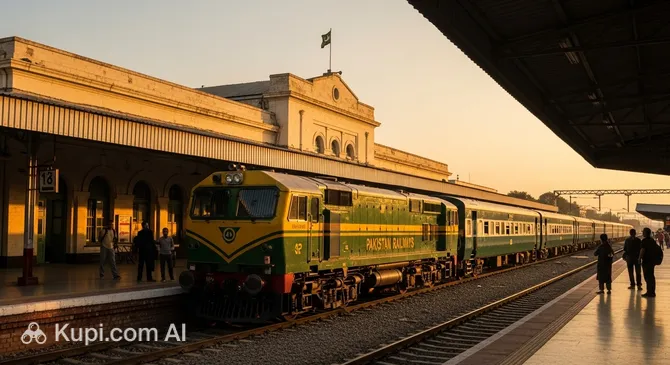
Rawalpindi Railway Station is not just a vital transport hub but also an architectural landmark, serving as the main railway gateway for the twin cities of Rawalpindi and Islamabad. Built during the British Empire era, the building combines historical charm with the functionality of a modern station. Trains depart daily from here to all corners of Pakistan, including Karachi, Lahore, Quetta, and Peshawar.
Passengers should be aware that the station has several platforms connected by an overhead pedestrian bridge. The main entrance is located on the side of the bustling Saddar district. Navigating inside is quite simple thanks to signage in English and Urdu; however, it can get very crowded during peak hours. For safety and convenience, we recommend checking your platform number in advance on the electronic display boards or at the information desk upon entry.
Contact Information
Official Website: pakrail.gov.pk (Pakistan Railways)
Helpline: 117 (Unified Railway Helpline) or +92 51 9270836
Address: Station Road, Saddar, Rawalpindi, Punjab, Pakistan
Opening Hours: Round the clock (24/7)
Luggage Storage Information: Service is available within the station building; it is recommended to check for available lockers with the duty officer.
Accessibility Information: The station is partially equipped with ramps, though passengers with reduced mobility may require assistance from staff or companions to move between platforms.
How to Get There
Getting to Rawalpindi Railway Station is quite simple, as it is located in the city centre. The most convenient and modern way is to use the Metrobus rapid transit system, which connects Islamabad and Rawalpindi. You need to get off at Saddar Station, which is a 10–15 minute walk from the railway station.
You can also use taxi services or popular ride-hailing apps (Careem, inDrive, Uber). A taxi ride from the centre of Islamabad will take about 30–40 minutes, depending on traffic. For short trips around the Saddar area, budget-friendly auto-rickshaws are convenient. If you are already in the Saddar market area, the station is easily accessible on foot.
Services and Amenities
The station offers a standard range of services for travellers. The main building houses ticket counters (for both immediate purchase and advance booking) and an information bureau. For waiting, there are general halls as well as separate upper-class Waiting Rooms for passengers with business class and sleeper tickets, which often feature air conditioning.
The premises include small kiosks selling food and newspapers, restrooms, and prayer rooms. Please note that free Wi-Fi may work intermittently, and power outlets for charging gadgets are best found in the waiting rooms or cafes. Cloak Room services are available but require a receipt to be issued.
Where to Eat
Small buffets and tuck shops operate directly on the platforms and within the station building. Here you can grab a quick snack, such as hot tea (doodh pati), soft drinks, biscuits, chips, or fresh samosas. This is a budget-friendly option where the average cost will be minimal.
If you have some time to spare, it is better to head outside the station to the Saddar district. Literally across the road, there are numerous establishments: from international fast-food chains (KFC, McDonald's) to local restaurants serving aromatic biryani, kebabs, and curries. In this area, you can find Halal food to suit every taste and budget, and many places remain open late into the night.
Station History
The history of Rawalpindi Railway Station dates back to 1881, when it was opened by the British colonial administration. The station played a key role in the logistics of British India, providing a link to the northern garrisons. The station building, designed in the majestic Indo-Saracenic style, has retained many original features of that era.
Over the past centuries, the station has undergone several stages of reconstruction and modernisation to meet contemporary requirements. Today, it stands as one of the most critical hubs in Pakistan's transport system, linking the capital with southern port cities and witnessing many of the region's historic events.
Passenger Tips
We recommend arriving at the station at least 45–60 minutes before your train departs. This time is needed for luggage security screening and ticket checks at the entrance. Be sure to carry a printed ticket and your identification document. Stay vigilant: the station is a crowded place, so keep a close watch on your belongings.
If you have a lot of luggage, you can use the services of licensed porters (coolies) in red uniforms; it is best to negotiate the cost in advance. Waiting at the station overnight is possible, but for greater comfort and safety, it is better to use the indoor Waiting Halls rather than staying on the open platform.
We use cookies and services to collect user information. This is essential for the functioning of the site and for marketing purposes. You can find out more in .
Other popular routes
Where travelers fly most — pick a route and check prices