Support

C.F. Secada Vignetta International Airport

About the Airport

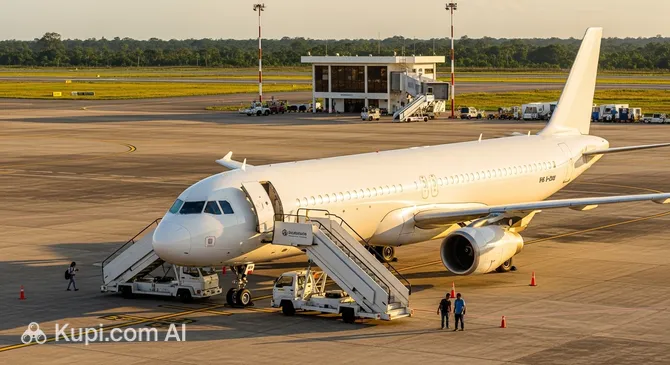
C.F. Secada Vignetta International Airport. Source: Kupi.com Binoculars

Coronel FAP Francisco Secada Vignetta International Airport is not merely a transport hub, but the true "aerial gateway" to the Peruvian Amazon. As Iquitos holds the title of the largest city in the world inaccessible by road, this air harbour becomes the first and most significant impression for travellers arriving to conquer the jungle. Descending the stairs, you will immediately feel the humid breath of the tropics and hear the characteristic hum of motokars waiting for passengers at the exit. This is a place where civilization meets wild nature, providing a vital link between the region and the rest of the world.

IATA Code IQT
ICAO Code SPQT
City Iquitos
Distance to Centre 7 km
Status International
Annual Passengers ~1,043,000

Airport Features and Advantages

Iquitos Airport possesses a unique atmosphere that is difficult to confuse with anywhere else. Its main advantage is its strategic importance: it operates around the clock and receives both scheduled flights from Lima, Pucallpa, and Tarapoto, as well as smaller aircraft departing deep into the jungle. The terminal, though small, is equipped with everything necessary for a comfortable wait, including air-conditioned halls, which is particularly valuable in the equatorial climate.

Among the services for passengers, it is worth noting the presence of the Caral VIP Lounge, where you can relax before your flight, as well as various souvenir shops. They sell authentic items made by local artisans from Amazonian materials, allowing you to buy gifts at the very last moment. The arrival zone adds a special local flavour: there are no jet bridges here, and the path from the aircraft to the terminal often involves a walk across the tarmac, allowing you to immediately immerse yourself in the Amazonian atmosphere.

Transport accessibility is another strong point. The airport is located just a 20–30 minute drive from the central Plaza de Armas. The main means of transport here are not the usual sedan taxis, but the nimble motokars (auto rickshaws), a ride on which becomes your first little adventure in Iquitos.

Contact Information

If you need to contact representatives of the Coronel FAP Francisco Secada Vignetta International Airport, you can use the following contact details. Please note that the airport is managed by Aeropuertos del Perú (AdP), so many contacts lead to their centralised services.

  • Official Website: You can find up-to-date information on flights, services, and regulations on the airport's page on the official AdP operator website.
  • Information Desk Phone: +51 (65) 22-8151
  • Airport Address: Av. José Abelardo Quiñones Km. 6, San Juan Bautista, Iquitos, Loreto, Perú.
  • Email: For general inquiries and requests, you can use the central customer support email of the operator AdP: atencionalcliente@adp.com.pe.
  • Social Media: Official news and updates from Aeropuertos del Perú are published on their Facebook page.
  • Lost Luggage Information: If your belongings were lost inside the terminal building, please contact the information desk at the airport. If the loss occurred on board the aircraft or luggage was lost during the flight, you must immediately contact your airline's representative office.
  • Passenger Support Contacts: For consultations and assistance, you can use the information desk phone or the feedback form on the official airport website.

How to Get to the Airport

Getting to Coronel FAP Francisco Secada Vignetta International Airport (IQT) from the city centre of Iquitos is quite simple, as it is located just 10 kilometres from the main square, Plaza de Armas. A journey to this unique part of Peru begins with choosing the transport that suits you best, and Iquitos offers several colourful options.

Taxis and Mototaxis are the most popular ways to get to the airport. A trip by regular taxi (carro) will take about 20-30 minutes depending on traffic and will cost approximately 25-35 Peruvian Soles. A more authentic and common option is the mototaxi, a three-wheeled motorcycle with a cabin for passengers. Such a trip will cost less, around 15-25 Soles, and will allow you to fully experience the local flavour. It is strongly recommended to agree on the fare with the driver in advance, before boarding, to avoid misunderstandings. Many hotels and lodges also offer transfer organisation for their guests, which is the most convenient and reliable option.

Public Transport in the form of route buses (colectivos) also runs in the direction of the airport. This is the most budget-friendly method, but it may not be very convenient if you have a lot of luggage. Routes can be confusing for tourists, so this option is more suitable for experienced travellers wishing to save money.

For those who prefer independence, car rental services are available in Iquitos. Several companies offer their services both in the city and directly at the airport. Next to the terminal, there is a car park where you can leave a car for the duration of your trip. However, it is worth noting that most travellers come to Iquitos for tours of the Amazon where a car is not required, so this option is less in demand.

Terminals and Map

Coronel FAP Francisco Secada Vignetta International Airport (IQT) is a compact and functional aviation hub that serves as the main gateway to the Peruvian Amazon. Its structure is extremely simple, making navigation convenient even for first-time visitors. The airport consists of one passenger terminal, which handles both domestic and rare international flights.

The terminal layout is intuitive. All key zones are located in a single building on one level, eliminating the need for long walks. Upon entering, you immediately find yourself in the public area, where the check-in counters and airline offices are located. To the left or right, depending on orientation, is the arrival area with the luggage reclaim belt. After completing registration, passengers proceed to security screening, followed by a small departure lounge with several boarding gates.

Since there is only one terminal, transitions between zones take minimal time. Departure and arrival areas are clearly separated but located in close proximity to each other. After passing security control, passengers enter the airside area where the gates are located. This zone is equipped with basic amenities, including small cafes and souvenir shops where you can purchase local crafts.

Registration and screening procedures at Iquitos Airport generally proceed quite quickly thanks to its small size. Nevertheless, during peak hours when several flights depart simultaneously, queues may form at check-in counters and security control. It is recommended to arrive at the airport 1.5–2 hours before a domestic flight to complete all formalities without rushing.

To navigate the airport, simply follow the standard signs. Thanks to the linear layout — from the entrance to check-in counters, then to the security zone and boarding gates — it is practically impossible to get lost here. The entire path from the building entrance to the gate can be covered in 10-15 minutes, not counting waiting time in queues.

Airport History

The history of Coronel FAP Francisco Secada Vignetta International Airport is closely linked to the unique geographical position of the city of Iquitos. Located in the very heart of the Peruvian Amazon and cut off from the rest of Peru by the road network, the city has always depended on air and river transport. The airport became a vital artery for it, connecting this remote region with the world.

The airport was officially opened for commercial flights in 1973, although a military airfield already existed on its site before that. It received its name in honour of Captain Francisco Secada Vignetta of the Peruvian Air Force, a hero and native of the Loreto region who died during the armed conflict of 1941. This act immortalised the memory of the pilot who contributed to the defence of the country.

A key stage in the airport's development was its modernisation to accommodate larger jet aircraft, such as the Boeing 737 and Airbus A320. This allowed for a significant increase in passenger flow and cargo turnover, which was critical for the growing economy and tourism industry of Iquitos. Prior to this, flights were mainly operated on small turboprop aircraft, making the journey longer and more expensive.

The airport's main achievement is not records in passenger numbers, but its status as an indispensable transport hub. It is the primary entry point to the Peruvian Amazon for thousands of tourists, scientists, and researchers from all over the world. Practically the entire history of modern tourism in this region, associated with jungle lodges and Amazon cruises, would be impossible without the stable operation of this airport. Its history is a story of the integration and development of a vast but isolated territory.

Services and Facilities

Coronel FAP Francisco Secada Vignetta International Airport (IQT) serves as the main aerial gateway to the Amazonian part of Peru. Despite its compact size, it offers passengers all the necessary services for a comfortable wait for their flight.

Restaurants and Shops: In the terminal, you will find several small cafes where you can have a snack with sandwiches, pastries, and a cup of local coffee. Souvenir shops are also open, selling handmade items from local tribes, textiles, and other authentic goods. Additionally, there are shops selling essential items.

Lounges and Wi-Fi: For a more comfortable wait, the airport features the Caral VIP Lounge, offering guests snacks, beverages, press, and a quieter atmosphere. Free Wi-Fi is available throughout the terminal, and charging stations for electronic devices are installed in the waiting halls.

Financial Services: ATMs and currency exchange points are located within the airport building. It is recommended to have some local cash (Peruvian Soles) with you for small expenses, although the exchange rate in the city may be more favourable.

Additional Services:

  • Medical Point: There is a first aid station on the premises for emergency cases.
  • For Passengers with Children: Changing tables are available in the restrooms.
  • For Passengers with Reduced Mobility: The airport is equipped with ramps and special restrooms. To receive assistance with boarding and moving around the terminal, it is recommended to notify your airline in advance.

Accommodation and Business Services: There are no hotels within the airport itself, however, many accommodation options are located a few minutes' drive by taxi or mototaxi in the city of Iquitos. There are no specialised conference rooms in the airport, but for business travellers needing a quiet place to work, the VIP lounge may be a suitable solution.

Where to Eat

Dining options at Coronel FAP Francisco Secada Vignetta International Airport (IQT) correspond to its status as an important but compact regional hub serving as the gateway to the Peruvian Amazon. Although the selection here does not compare with major capital airports, passengers can find several options to have a snack or a full meal before departing from Iquitos.

Before Security Control (Landside): The main dining establishments are located in the general hall of the airport. Here you will find a small cafeteria offering the widest range of options. This is the best place for a full meal. The menu usually includes sandwiches (sánguches), empanadas (filled pastries), baked goods, as well as simple hot dishes of Peruvian cuisine, for example, chicken with rice. Prices here are moderate by airport standards, but higher than in the city.

After Security Control (Airside): In the departure zone, the choice is more limited. As a rule, one or two small kiosks operate here. They are ideal for a quick snack. Passengers are offered packaged snacks, crisps, chocolate, soft drinks, water, and coffee. If you are hungry, it is recommended to eat before passing through security screening.

Local Cuisine and Dietary Options: To experience local flavours even at the airport, look out for freshly squeezed juices made from exotic Amazonian fruits such as aguaje or camu-camu. Sometimes you can find the famous juanes (rice with chicken wrapped in bijao leaves) for sale. Specialised vegetarian, vegan, or gluten-free menus are unlikely to be available here. However, vegetarians can usually find cheese sandwiches or vegetable empanadas, and for vegans, the most reliable choice would be fresh fruits, juices, and black coffee.

Most food outlets open a few hours before the first morning flight and close after the departure of the last evening aircraft. For a hearty lunch or dinner, the cafe in the main hall is best suited, while for buying a drink or a light snack before boarding, the kiosk in the departure zone is convenient.

Tips for Travellers

Travelling through the airport of Iquitos, the gateway to the Peruvian Amazon, is a unique experience. To ensure your trip goes smoothly, use these tips to help you navigate the airport and avoid unnecessary hassle.

Arrival Time at the Airport. Iquitos Airport is not very large, but it is better not to take risks. Arrive 2 hours before a domestic flight and 3 hours before an international one. This time will be enough to calmly go through all procedures, even if small queues arise.

Check-in and Security Control. Procedures here are standard, but staff may not always speak English. Check in for your flight online in advance to save time. Keep your passport and boarding pass close at hand. Security control usually proceeds quickly, but be prepared for a standard check of hand luggage.

Choosing a Seat on the Plane. If possible, choose a window seat. During takeoff and landing in Iquitos, breathtaking views of the endless Amazon jungle and the mighty river open up. This is your first or last chance to see this unique landscape from a bird's-eye view.

Hand Luggage. It is prohibited to carry liquids exceeding 100 ml, sharp objects, and other standard prohibited items in hand luggage. Be especially careful with souvenirs from Peru: ensure that you are not attempting to export rare plants, taxidermy animals, or unprocessed minerals without special permission. Keep receipts for all purchases.

Transit Passengers. Iquitos is rarely a transit point; most flights from here head to Lima. If you do have a connection, keep in mind that the airport is small and the choice of entertainment is limited. It is better to remain in the transit area if possible.

Customs Control. When entering the country, be prepared to declare new goods exceeding the established limit. Upon departure, customs officers may check your luggage for the illegal export of cultural assets or wildlife objects. Always transport antique items and souvenirs made of precious wood with the appropriate documents.

Saving Time and Money. Book a transfer to the city in advance or use the services of an official taxi at the airport to avoid inflated prices. Bring a reusable water bottle (it can be filled after security check) and a light snack, as prices in the airport are higher than in the city.

Flight Delays. In the tropical climate, delays due to weather are not uncommon. Download movies or books onto your devices. There are several cafes in the airport where you can wait. Keep your airline's contact details at hand and check the flight status on the online board to stay informed.

Reached the end of the page?

That means the route is fully explored