Support

Basco Airport

About the Airport

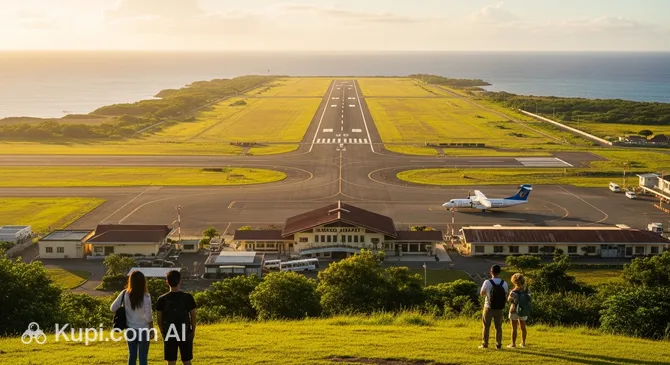
Basco Airport. Source: Kupi.com Binoculars

Basco Airport is not just a transport hub, but a true scenic stage where your introduction to the amazing world of the Batanes Islands begins. Located at the very foot of the majestic Mount Iraya, it offers passengers one of the most picturesque landings in the Philippines, where the runway seems to rise from the sea foam and emerald hills. This cosy air harbour is devoid of the hustle and bustle of huge metropolises, welcoming guests with a fresh ocean breeze and the sincere hospitality characteristic of the residents of this northern region.

IATA Code BSO
ICAO Code RPUO
City Basco
Distance to centre 1.5 km
Status Domestic
Annual Passengers Approx. 30,000 (seasonal fluctuations)
Schedule Check airline websites

Airport Features and Highlights

Despite its modest size, Basco Airport possesses a unique charm and a number of advantages that make arriving here comfortable and memorable:

  • Breathtaking views on landing: The approach to the airport is considered an attraction in itself. The aircraft passes in close proximity to Mount Iraya, revealing a breathtaking panorama of green cliffs, crashing waves, and the Basco Lighthouse to passengers.
  • Walking distance: The airport is located practically within the city limits. Many hotels and guesthouses can be reached in 5 minutes by tricycle or even on foot if you are travelling with light luggage.
  • Swift service: Thanks to the small number of flights, check-in, baggage drop-off, and security procedures take minimal time. There are almost no queues here.
  • Atmospheric architecture: The terminal building, although modern, blends harmoniously with the local landscape. Near the airport stands the famous "BATANES" installation, which has become a mandatory spot for the first photos taken by tourists upon arrival.
  • Viewing area: From the road adjacent to the airport, there is an excellent view of the runway, attracting aviation enthusiasts and photographers wishing to capture aircraft against the backdrop of the volcano.

Contact Information

You can contact representatives of Basco Airport (BSO) or find the necessary information in several ways. Given that this is a small regional airport, some communication channels common to major international hubs may be unavailable.

  • Official Website: The airport is under the management of the Civil Aviation Authority of the Philippines (CAAP). There is currently no separate official website for Basco airport.
  • Help Desk Phone: You can try contacting them at +63 78 533 3492. It is recommended to verify the validity of the number before calling, for example, through directory services or your airline.
  • Airport Address: National Road, Kayhuvokan, Basco, Batanes, Philippines.
  • Email: An official email address for general enquiries is not published. For urgent communication, it is better to use the telephone.
  • Social Media: The airport does not maintain official pages on social networks. Beware of unofficial accounts that may disseminate incorrect information.
  • Lost Luggage Information: For all issues related to lost, delayed, or damaged luggage, you must apply directly to the representative of the airline you flew with. Airport staff do not handle luggage tracing.
  • Passenger Support Contacts: For assistance directly at the airport, please approach the information desks or any staff member in the terminal.

How to Get to the Airport

Getting to Basco Airport (BSO) from the city of the same name is a simple and quick task, as the air harbour is located practically within the city limits. Due to the compact size of Batan Island, where Basco is located, all movements take minimal time, and the transport system, while specific, is very convenient for tourists.

Public Transport and Taxis: Tricycles

There are no buses, metro, or trains familiar to us on Batan Island. The main and most authentic mode of transport here are tricycles — motorcycles with a passenger sidecar. They serve as both public transport and taxis. A trip from anywhere in Basco city to the airport will take just 5–10 minutes. The fare is very affordable, but it is better to agree on the price with the driver in advance to avoid misunderstandings. Tricycles can be found everywhere, or you can ask your hotel staff to call transport for you.

Organised Transfers

Most hotels, inns, and guesthouses on the island offer their guests airport transfer services. Often this service is already included in the room rate or offered for a small additional fee. This is the most convenient option if you are travelling with a large amount of luggage. Transfers are usually carried out by minivan or jeepney.

Transport Rental

Renting motorbikes, scooters, and bicycles for independent exploration is popular on the island. If you already have a rented vehicle, you can easily drive it to the airport. This is a great option for those who value independence. Given the short distances, even a bicycle ride won't take much time.

Airport Parking

Basco Airport has a small parking area. It is intended mainly for motorcycles and a few cars. Leaving a vehicle here for the duration of a departure is usually not a problem, but long-term secure parking, as found in major airports, is not provided here.

Recommendations

The simplest and most economical way to get to the airport is to use the services of a tricycle. If you value comfort and are travelling with luggage, arrange a transfer with your hotel in advance. It is important to remember that Basco Airport is the main gateway to the Batanes Islands, and you can only get here from other regions of the Philippines, for example, from the cities of Laoag or Tuguegarao, by plane.

Terminals and Map

Basco Airport (BSO) is a small and compact airport serving the picturesque province of Batanes. Its structure is extremely simple: it consists of a single terminal used for both arriving and departing passengers. There is no separation into international and domestic flights, as the airport only handles local flights.

The airport layout is intuitive. Immediately after entering the building, you find yourself in a small check-in hall where the airline counters are located. The departure and arrival zones are separated but are within walking distance of each other within the same structure. Since there is only one terminal, there is no issue of transferring between them — everything is located in one place.

The Departure Zone includes several check-in counters and a small waiting area after passing security control. The Arrival Zone is a separate exit where passengers enter directly from the airfield (airbridges are not used here), and a small area for baggage claim. Do not expect large baggage carousels here — everything is organised simply and with a homely feel.

Completing all formalities usually does not take much time due to the low passenger flow. Flight check-in and security screening typically proceed quite quickly. Nevertheless, it is recommended to arrive at the airport approximately 1.5–2 hours before departure. This is because there are few flights, and most passengers arrive simultaneously, which can create a small queue.

Navigation at Basco Airport will not cause any difficulties even for an inexperienced traveller. It is practically impossible to get lost here. The main advice is simply to follow the flow of other passengers or standard signs. Airport staff are always ready to help and suggest directions. This is one of those rare airports where the atmosphere is calm and devoid of the bustle of major aviation hubs.

Airport History

The history of Basco Airport (BSO) is closely linked to key events of the 20th century. It was originally built by American military engineers before the start of World War II as a strategic airfield. Its location on the northernmost island of the Philippines, Batanes, made it an important point for controlling sea and air routes in the region.

With the outbreak of war in the Pacific, the airfield became one of the first targets of the Japanese army. On 8 December 1941, just hours after the attack on Pearl Harbor, Japanese troops landed on the island and captured the airfield, launching the invasion of the Philippines from this bridgehead. After the war ended, the facility was handed over to civil authorities and transformed into the main airport serving the province of Batanes and its capital — the city of Basco.

In recent decades, with the growth of tourist interest in the unique landscapes of Batanes, the airport has undergone a series of modernisations. Work has been carried out to improve the runway and terminal to accommodate a larger number of passengers. The government of the Philippines is implementing long-term plans for the further development of the airport, including the possibility of night flights and equipment for operation in all weather conditions, which will significantly increase the transport accessibility of the islands.

One of the interesting facts about Basco airport is its short runway, sandwiched between a hill and the sea. This makes landing and taking off a real challenge for pilots, especially with the strong winds characteristic of this region. Despite its modest size, the airport is not just a transport hub, but a true "lifeline" connecting the isolated province with the rest of the world and opening the way for travellers to some of the country's most picturesque landscapes.

Services and Amenities

Basco Airport (BSO) is a small and fairly simple air harbour serving as the main gateway to the picturesque Batanes Islands. It is important to understand that the airport's infrastructure corresponds to its regional status and is focused on meeting the basic needs of passengers, reflecting the secluded and peaceful character of this corner of the Philippines. You will not find the hustle of large international hubs here, which in itself sets the mood for a relaxed holiday.

Dining and Shopping. Opportunities for shopping and snacking at the airport are limited. Typically, there are a few small kiosks or stalls where you can buy simple snacks, soft drinks, and local souvenirs, such as handicrafts. Do not expect restaurants or large duty-free shops.

Waiting Areas and Facilities. A general waiting hall is provided for all passengers. There are no specialised VIP lounges or business lounges at the airport. Access to Wi-Fi will likely be absent or intermittent, and the number of power outlets for charging gadgets is very limited. It is strongly recommended to bring a portable charger (power bank) with you.

Financial and Medical Services. There are no bank branches or currency exchange points in the terminal building. It is best to exchange money in advance in Manila or another major city. ATMs can be found in the city of Basco itself, which is within walking distance. Only basic first aid services are available at the airport.

Additional Services. Specialised services, such as children's playrooms or business centres, are not provided at the airport. Passengers with reduced mobility should contact their airline in advance to arrange assistance and escort, as the infrastructure may not be fully adapted. Since the airport is located right in Basco city, many small hotels, guesthouses, and homestays are within a few minutes' walk or a short tricycle ride away.

Where to Eat

When planning a departure from Basco Airport (BSO), it is important to remember that this is a very compact regional airport serving the remote and scenic province of Batanes. Dining options here match its size and offer an authentic local experience rather than the variety found at major aviation hubs.

Most food establishments are located in the general area before security control (landside). You will not find international coffee chains or restaurants here. Instead, there are several small family-run kiosks and eateries (known as carinderias). They offer simple but hearty Filipino dishes, such as rice with meat, noodles, and various local snacks. This is an excellent and inexpensive option for a quick bite before a flight and a last chance to taste the local cuisine.

After passing security (airside), the selection is practically non-existent; sometimes a small stall with drinks and packaged snacks may be open. There are no full-service restaurants for a long lunch or bars in the airport. Finding specialised dishes—vegetarian, gluten-free, or Halal certified—is extremely unlikely here. Travellers with strict dietary requirements are strongly advised to bring food with them.

Prices at local kiosks are very affordable, which distinguishes Basco Airport favourably from most airports in the world. Opening hours depend entirely on the flight schedule: establishments open shortly before the first flight and close after the last departure. If you want a more substantial lunch, it is better to do so at one of the cafes in the city of Basco before travelling to the airport.

Tips for Travellers

The flight to Basco, the gateway to the scenic Batanes Islands, is already part of the adventure. To ensure your journey through the local airport goes as smoothly as possible, use our tips.

Check-in and Security. Basco Airport (BSO) is small and serves only domestic flights, so pre-flight procedures here are quite quick. Check-in counters open approximately 2-3 hours before departure, allowing you to drop off luggage and pass security screening without rushing, even during the peak tourist season. You will need identification and booking details for check-in.

Seat Selection. Flights to Batanes are operated by turboprop aircraft, which fly at a lower altitude than jet liners. This is your chance to enjoy stunning views! Be sure to choose a window seat. The landscapes on approach to the islands, with their rocky shores and green hills, are simply breathtaking.

Baggage Rules. Liquids in containers larger than 100 ml, sharp objects, and flammable substances are prohibited in carry-on luggage. Please note that overhead bins on small aircraft may be smaller than standard, so try to travel with compact hand luggage. Always keep all valuables, documents, and medicines with you.

Connecting Passengers. Basco Airport is not a transit hub. Most travellers fly here from Manila or Clark. If you have a connection scheduled at another airport on your way to the Philippines or back, allow sufficient time between flights (at least 3-4 hours), especially considering possible delays due to weather.

Customs Control. Since the airport serves exclusively domestic flights, there is no international customs control here. However, selective agricultural inspections may be conducted upon arrival to protect the unique ecosystem of the Batanes Islands.

Saving Time and Money. To save money, book flight tickets in advance, as quantities are limited and prices rise as the departure date approaches. Pack luggage according to the airline's allowances to avoid excess weight charges. The selection of food and drinks at the airport itself is limited, so you can bring a small snack with you.

Flight Delays. The weather in the Batanes Islands is unpredictable, and flights are often delayed or cancelled, especially during the rainy season (June to October). Be mentally prepared for schedule changes. Keep in touch with the airline representative, carry a portable charger and a book. Having travel insurance that covers flight cancellations is highly recommended.

Reached the end of the page?

That means the route is fully explored