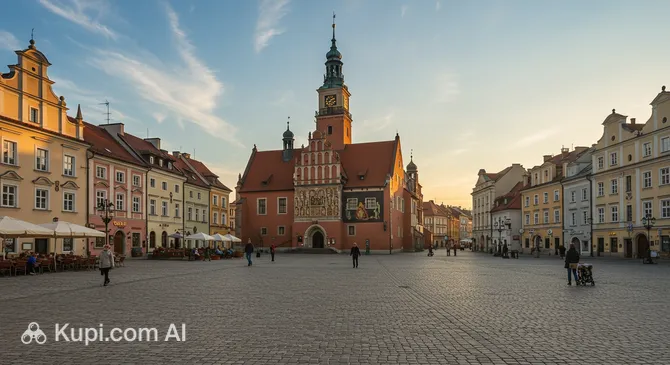
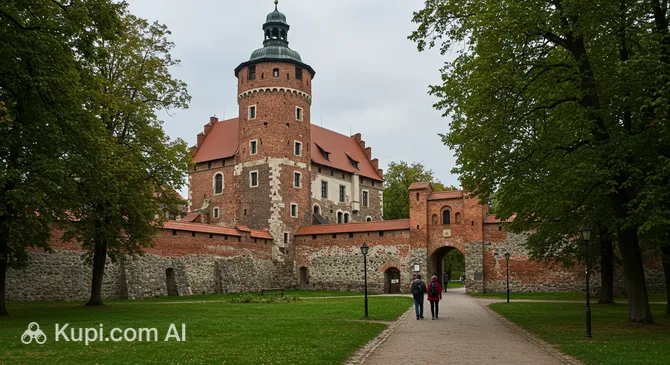
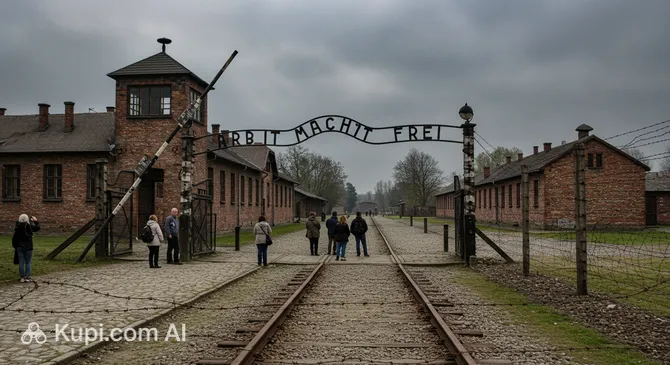
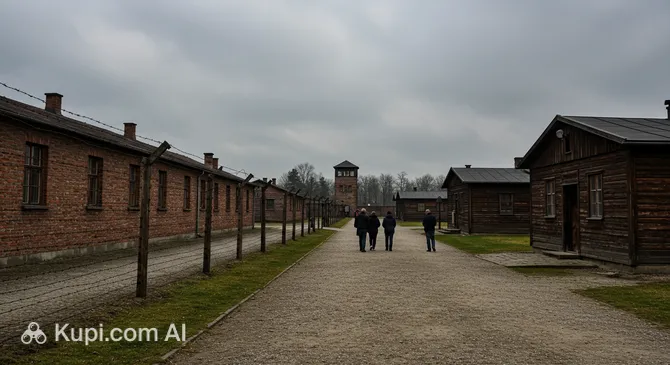
Oświęcim is a city in southern Poland, located in the Lesser Poland Voivodeship. This city, with a population of approximately 39,000, is known worldwide primarily for its profound and tragic historical significance related to the events of World War II.
Oswiecim. Illustration.
Source: Kupi.com AI
The main site drawing visitors from around the globe is the Auschwitz-Birkenau State Museum. This memorial complex, a UNESCO World Heritage site, serves as a reminder of the terrible events of the past and is an important center for education and remembrance.
Beyond the memorial, there are other sites of interest within the town of Oświęcim itself. These include the Jewish Museum and the Chevra Lomdei Mishnayot Synagogue, which tells the story of the city's rich pre-war Jewish history. You can also visit Oświęcim Castle, whose history dates back many centuries.
A visit to Oświęcim is undoubtedly a deeply emotional experience, but it is vital for understanding history and ensuring that such tragedies are never repeated. It is a place for reflection and for paying tribute to the memory of the victims.
The weather in Oświęcim is characterized by a temperate climate with clearly defined seasons. Summer, especially in July and August, offers the warmest days with average temperatures around 19-20°C, while maximum values can reach 24-25°C. These months also see the highest amount of rainfall, averaging 3-4 mm, with about 13-15 rainy days. Winters, from December to February, are quite cool, with average temperatures around 0-2°C and night frosts down to -1°C or -2°C. Winter precipitation is moderate, about 2 mm, and often falls as snow. Spring and autumn are transitional seasons with gradual temperature changes.
Overall, expect a warm summer with occasional rain and cool winters with moderate precipitation. For more detailed information on weather conditions and to get an up-to-date forecast, you can visit the Oświęcim Climate page.
Average monthly temperature
Average monthly precipitation
Interesting Facts
Oświęcim is a city with centuries of history that is today known to the world primarily in connection with the tragic events of the mid-20th century. However, beyond this heavy legacy, the city has other, lesser-known chapters in its biography and interesting features that might surprise a traveler.
Oświęcim Castle Museum. Illustration.
Source: Kupi.com AI
Traveler photos:
Ancient History and Castle: Oświęcim is a city with a history spanning over 800 years, dating long before the events of World War II. A witness to this ancient history is the Oświęcim Castle Museum, whose roots go back to the Middle Ages and which was once a residence for Polish princes.
Origin of the Name: The name "Oświęcim" has Slavic roots. While its exact meaning is a subject of debate among linguists, one common version links it to the Old Polish name "Oświęt" or "Oświęcim," possibly meaning "sacred place" or indicating the founder of the settlement.
Confluence of Rivers: The city is strategically located at the confluence of two rivers—the Soła and the Vistula, which is the main waterway of Poland. This geographical position historically helped Oświęcim develop as an important trading and defensive point over the centuries.
Modern Life and Leisure: Despite its tragic past, modern Oświęcim is a typical Polish city where life goes on. There are places for relaxation and leisure, such as the Family Recreation Park, where locals and visitors can spend time enjoying nature and tranquility.
How to Get There
There are several ways to reach Oświęcim, located in the Lesser Poland Voivodeship of Poland. The most common options include flying to the nearest major airports followed by a transfer, or using the rail network.
By Air:
While Oświęcim itself does not have an airport, the nearest international airports are within a reasonable distance. The primary option for most tourists is John Paul II International Airport Kraków-Balice(KRK). It is located in Kraków, approximately 42 km from Oświęcim. This is a major international hub from which you can reach Oświęcim by taxi, bus, or rental car in about 1–1.5 hours.
Another convenient option is Katowice International Airport(KTW), located in the city of Katowice, about 50 km from Oświęcim. This is also a significant airport with a good selection of flights. The journey from here to Oświęcim takes about 1.5–2 hours.
Alternatively, you could consider Leoš Janáček Airport Ostrava(OSR), located in Ostrava, Czech Republic, about 88 km from Oświęcim. Although it is smaller and in a different country, it can be an option depending on your route. The drive will take around 2–2.5 hours.
For convenience, here is summary information on the main airports suitable for a trip to Oświęcim:
Oświęcim has a railway station, but for international trips or travel from distant regions of Poland, it is often easier to reach a larger transport hub first. The nearest major rail hub is Kraków Główny Railway Station(VKR), located in Kraków, about 53 km away. Trains and buses run regularly from here to Oświęcim, with a travel time of approximately 1.5–2 hours.
Another option is the Ostrava Main Railway Station(XJV) in the Czech Republic, located about 71 km from Oświęcim. You can also reach Oświęcim from there by train with transfers or by bus; the journey takes about 2–2.5 hours.
Here is summary information on some railway stations from which you can continue your journey to Oświęcim:
Additionally, buses regularly run to Oświęcim from nearby major cities like Kraków and Katowice. Traveling by car is also a convenient option, especially if you plan to visit other attractions in the region. The road network is well-developed. We recommend checking current public transport schedules in advance or considering a car rental for more flexibility.
Main Attractions
Oświęcim is a city with a deep and complex history, and a visit here leaves a lasting impression on everyone. Its landmarks reflect both the tragic chapters of the past and the centuries-old heritage of the town itself. Here are some of the key sites that draw the attention of tourists:
One of the most significant and world-renowned landmarks is the Auschwitz-Birkenau Memorial and Museum. This site preserves the memory of the victims of Nazi terror at the former concentration and extermination camp. Visiting the museum allows you to learn about the tragic events of World War II and the Holocaust while honoring the memory of millions of innocent people. The exhibitions, preserved buildings, and personal belongings of the prisoners serve as a powerful reminder of the lessons of history.
Auschwitz-Birkenau Memorial and Museum. Illustration.
Source: Kupi.com AI
Traveler photos:
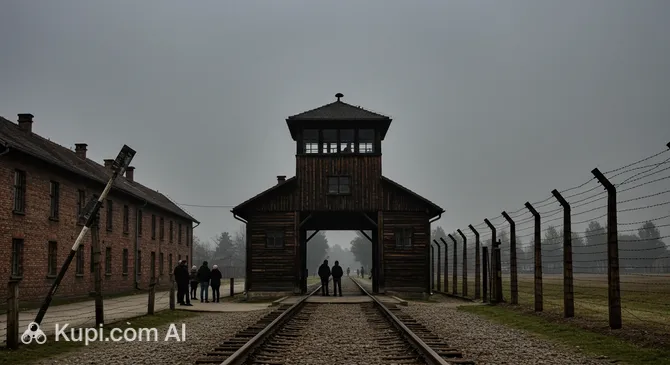
Inseparably linked to the first site and serving as its continuation is the Auschwitz II-Birkenau Memorial and Museum. This vast area was the primary site of mass extermination. Here, visitors can see the famous "Gate of Death" with the railway platform, the remains of the barracks, and the ruins of the gas chambers. The scale of this site helps one more deeply grasp the magnitude of what occurred and the importance of maintaining peace.
Auschwitz II-Birkenau Memorial and Museum. Illustration.
Source: Kupi.com AI
Traveler photos:
To explore the earlier history of the city, it is worth visiting the Oświęcim Castle Museum. This ancient castle, perched on a hill, houses exhibits telling the story of Oświęcim's past, starting from the Middle Ages. Here, you can learn about the city's development, its rulers, and its culture, allowing you to see Oświęcim not only through the prism of 20th-century tragedy but also as a city with a rich historical legacy.
Oświęcim Castle Museum. Illustration.
Source: Kupi.com AI
Traveler photos:
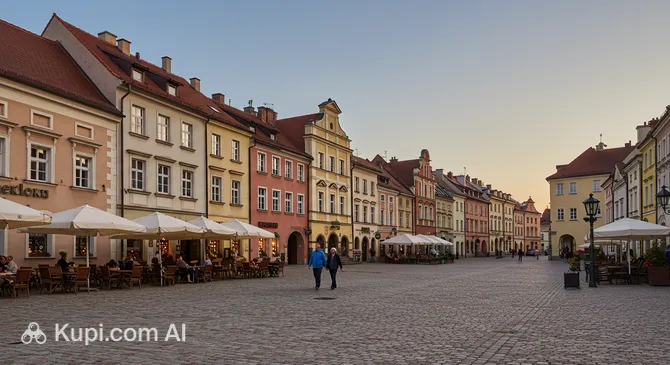
For those who want to experience the atmosphere of the modern city and see its daily life, the Oświęcim Market Square will be of interest. This lively spot is where you can find fresh local produce, artisan crafts, and souvenirs. A stroll through the market offers a chance to observe the locals' way of life and soak up the local atmosphere, providing a gentle contrast after visiting the memorial complexes.
Oświęcim Market Square. Illustration.
Source: Kupi.com AI
Traveler photos:
Local Cuisine
The cuisine of Oświęcim, like that of all Poland, will delight lovers of hearty and aromatic food. The city's gastronomic scene offers both traditional Polish dishes prepared according to old recipes and opportunities to explore European cuisine. Here, you can experience true Polish hospitality and enjoy flavors characteristic of the Lesser Poland region.
Among the dishes you must try in Oświęcim are the famous Polish pierogi. These are dumplings with various fillings: from classic meat, cabbage and mushroom, or potato and cheese (ruskie pierogi) to sweet versions with berries or fruit. Another iconic dish is żurek, a thick and fragrant sour rye soup often served with a boiled egg and pieces of white sausage. Also, look out for bigos—a hearty stew made from sauerkraut and fresh cabbage with various types of meat, smoked meats, and mushrooms.
Regarding drinks, Polish beer (piwo) of various types is popular in Oświęcim, as it is throughout the country. For something stronger, vodka (wódka) is traditionally offered. If you prefer non-alcoholic options, be sure to try kompot—a refreshing drink made from fresh or dried fruits and berries, often homemade and served in cafes. Various herbal teas (herbata ziołowa) are also popular.
You can eat in various establishments in Oświęcim. Locals and tourists often choose traditional restaurants (restauracja) or inns (karczma), where authentic Polish dishes are served in a fitting atmosphere. There are also cafes (kawiarnia) where you can enjoy coffee with fresh pastries or desserts. To get a feel for the local character and perhaps buy fresh produce or regional delicacies, visit the Oświęcim Market Square. If you are looking for a place for dinner, you might consider options like Bulwary 1 Restaurant, which offers European cuisine.
Bulwary 1 Restaurant. Illustration.
Source: Kupi.com AI
Traveler photos:
The culinary scene in Oświęcim allows tourists to touch Polish culture through its flavors. By trying dishes like hearty pierogi or rich żurek, you will not only enjoy a delicious meal but also gain vivid impressions of the region's culinary traditions. The city has establishments for every taste and budget, from cozy cafes to restaurants offering both classic Polish treats and international dishes.
Travel Tips
Planning a trip to Oświęcim? To ensure your journey goes smoothly and leaves the right impression, we have prepared some practical tips. They will help you better prepare for your visit to this city with its difficult but important history.
Clothing and Essentials:
The climate in Poland is temperate, so choose clothing according to the season. Lightweight clothes are good for summer, but a raincoat is also useful. In winter, bring a warm jacket, hat, and gloves. A key point is comfortable footwear, as you will be doing a lot of walking, especially if you plan to visit the Auschwitz-Birkenau Memorial. For visiting memorial complexes and religious sites, choose modest clothing that covers shoulders and knees. Don't forget a power adapter for your electronics (Type E).
Transport:Oświęcim is a relatively small city, and the center is easy to navigate on foot. For longer distances, such as to the Auschwitz-Birkenau Memorial (if it is not within walking distance of your accommodation), you can use local buses. Taxis are also available. If you are arriving from Kraków or other major cities, it is most convenient to travel by train or bus. Renting a car is not a necessity for getting around the city itself.
Finances:
The official currency in Poland is the Polish złoty (PLN). You can exchange currency at banks or exchange offices (kantor), but try to avoid exchanging at airports and very touristy areas due to less favorable rates. Credit and debit cards (Visa, Mastercard) are widely accepted in shops, restaurants, and hotels. ATMs (bankomat) are easy to find. An approximate daily budget is 150-250 PLN per person (excluding accommodation and expensive tours). Tipping in restaurants is usually 10-15% of the bill if service is not included.
Health and Safety:
There are pharmacies (apteka) in Oświęcim, but not all are open 24/7. It is recommended to carry a basic first-aid kit. For EU citizens, the European Health Insurance Card (EHIC) is valid; other tourists are strongly advised to take out travel insurance. In case of emergency, dial 112. Oświęcim is generally considered a safe city. However, as with anywhere, take basic precautions: watch your belongings, especially in crowded places. Special attention should be paid to behavior on the grounds of the Auschwitz-Birkenau Memorial—please show respect for the memory of the victims.
Communication:
The official language is Polish. In tourist areas, hotels, and at the Memorial, many staff members speak English. Knowing a few basic phrases in Polish, such as "Dzień dobry" (Good morning/day), "Dziękuję" (Thank you), "Proszę" (Please), and "Przepraszam" (Excuse me/Sorry), will be very helpful and appreciated by locals. A SIM card with internet access can be purchased from local providers. Wi-Fi is available in most hotels and many cafes.
Local Etiquette:
It is customary to shake hands when meeting someone. Poles value politeness and respect. In public places, especially on the grounds of the Auschwitz-Birkenau Memorial, it is necessary to maintain silence and behave with restraint. Photography is not allowed everywhere; pay attention to signs and staff instructions.
What to Avoid:
Categorically avoid any disrespectful behavior on the grounds of the Auschwitz-Birkenau Memorial. This includes loud talking, laughing, inappropriate selfies, or any actions that could be perceived as an insult to the memory of the victims. It is also best to avoid starting discussions on sensitive historical topics unless you are sure of your tact and deep knowledge of the subject.
Additional Tip:
If you plan to visit the Auschwitz-Birkenau State Museum, be sure to book your tickets online in advance, especially during the tourist season, as the number of places is limited. Allocate enough time for your visit—at least 3-4 hours to see both parts of the memorial (Auschwitz I and Auschwitz II-Birkenau). Consider joining a guided tour for a deeper understanding of this complex site.
We hope these tips help you in planning your trip to Oświęcim. A thoughtful approach will allow you to focus on the purpose of your visit and gain a meaningful experience. We wish you a thoughtful and peaceful journey.
Entertainment & Nightlife
Oświęcim, known primarily for its tragic history, offers visitors a relatively quiet pace of life, which is reflected in its evening entertainment. While the city does not boast the bustling nightlife districts of major metropolises, you can still find places to spend a pleasant evening and unwind after a busy day.
Evening entertainment in Oświęcim is mainly centered around cozy bars, cafes, and restaurants where you can enjoy local cuisine and drinks in a calm setting. The atmosphere is generally friendly and welcoming. There are few loud nightclubs with dancing until dawn; the emphasis is more on intimate relaxation. Most of these establishments can be found in the central part of the city, particularly around the Market Square (Rynek Główny) and its adjacent streets.
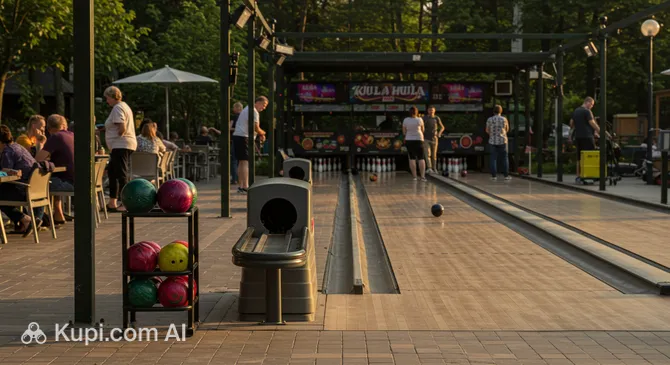
Among the places where you can spend your evening, the bar Kula Hula is worth noting, offering a good selection of drinks in a pleasant environment. If you are looking for a place to grab a bite and perhaps find a more lively atmosphere late at night, check out Kebab Burger Allis, which positions itself as a nightclub. Some restaurants, such as Mamma Mia or Bulwary 1 Restaurant, also stay open until late evening, offering a nice conclusion to the day over dinner.
Kula Hula. Illustration.
Source: Kupi.com AI
Traveler photos:
Most establishments in the city center are within walking distance of each other. Opening hours for bars and restaurants can vary, but many are open until late, especially on weekends. There is usually no specific dress code; smart-casual attire is welcome. Prices in Oświęcim establishments are generally moderate. For late-night travel, you can use local taxi services; it is recommended to order a car through known companies or ask your hotel or the establishment to call one for you.
Oświęcim is generally considered a safe city for evening walks, particularly its central areas. However, as with any other place, it is best to stick to well-lit streets and keep an eye on your belongings after dark. You can call a taxi using local service numbers or through apps if they are popular in the region.
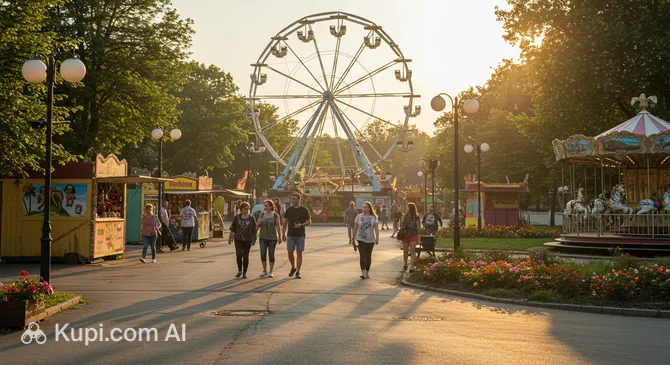
During the day, there is also plenty to do in Oświęcim and its surroundings. Besides the world-famous Auschwitz-Birkenau Memorial and Museum, which is the main reason for many visits, you can visit the Oświęcim Castle Museum to learn more about local history. For a walk in the fresh air, the Family Recreation Park is an excellent choice. Shopping enthusiasts can head over to the Niwa Shopping Gallery.
Park Family Fun. Illustration.
Source: Kupi.com AI
Traveler photos:
Parks & Museums
Oświęcim, a city with a deep and complex history, offers visitors not only places to reflect on the past but also spots for relaxation and experiencing local culture. Here, memorial complexes of global significance intertwine with more traditional urban spaces, allowing for a multifaceted impression of the city.
The central pillar of Oświęcim's cultural and historical heritage is the Auschwitz-Birkenau Memorial and Museum. This site preserves the memory of the tragic events of World War II and is a UNESCO World Heritage site. Visiting the museum, which includes the grounds of the former Auschwitz I and Auschwitz II-Birkenau camps (also known as the Auschwitz II-Birkenau Memorial and Museum), leaves a profound impression and serves as a vital reminder of the lessons of history. Iconic points within the memorial grounds include the Main Gate of Auschwitz II-Birkenau and the historical site of Auschwitz-Birkenau – Judenrampe.
Auschwitz-Birkenau Memorial and Museum. Illustration.
Source: Kupi.com AI
Traveler photos:
Auschwitz II-Birkenau Main Gate. Illustration.
Source: Kupi.com AI
Traveler photos:
To learn about the earlier history of the city and region, it is worth visiting the Oświęcim Castle Museum. Housed in an ancient Piast dynasty castle, it offers exhibitions detailing Oświęcim's centuries-old past, its people, and the culture that preceded the tragic events of the 20th century. This is an opportunity to see another side of the city, its medieval heritage, and archaeological finds.
Oświęcim Castle Museum. Illustration.
Source: Kupi.com AI
Traveler photos:
For outdoor relaxation in Oświęcim, the Family Recreation Park is a perfect choice. This is the city's primary green space, where you can stroll along well-maintained paths, take a break from intensive sightseeing, and spend time with family. The park offers playgrounds for children and zones for peaceful rest, making it a popular spot among locals.
Park Family Fun. Illustration.
Source: Kupi.com AI
Traveler photos:
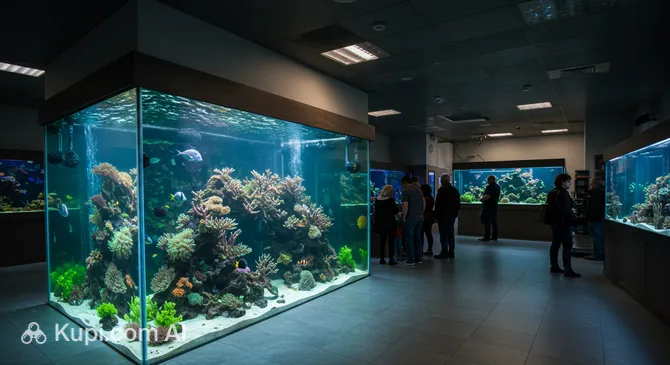
Among other interesting places, especially if you are traveling with children, is the Aquarium at the pet and fishing store in Oświęcim. While it is not a large-scale oceanarium, it offers a fascinating introduction to the underwater world and can diversify your cultural program.
Oświęcim Pet and Fishing Store Aquarium. Illustration.
Source: Kupi.com AI
Traveler photos:
To more deeply feel the atmosphere of modern Oświęcim, take a walk through its central streets and visit the Oświęcim Market Square, where you can see the daily life of the city and buy local products. Additionally, the embankments of the Soła River offer picturesque views and spots for quiet walks, allowing for a bit of distraction and silent reflection.
Getting Around
Navigating Oświęcim using public transport is quite simple, especially if you plan to visit the key sites. The city's transport system is primarily based on buses. They connect various districts of the city and provide links to important locations, including the Auschwitz-Birkenau Memorial and Museum.
The fare system on Oświęcim's city buses usually includes the option to buy single-trip tickets. The cost of such a ticket is typically a few złoty, comparable to prices in other small Polish cities. Tickets can be purchased at newsstands, some shops, or directly from the driver (sometimes for a small surcharge). For longer stays, multi-trip or day passes might be available, though it is best to check locally as the availability and exact cost of these options can vary. Specialized transport cards or widely used mobile payment apps typical of major metropolises may not be available in Oświęcim, so it is worth relying on traditional ticket purchasing methods.
Tourists are advised to buy tickets in advance to avoid delays. After boarding the bus, the ticket must be validated in a special device—a validator—usually located near the entrances. Bus schedules can be found at the stops; they run at regular intervals throughout the day, though the frequency of service may decrease in the evenings and on weekends. When planning trips, especially to the Memorial, it is a good idea to check the current schedule beforehand.
In addition to buses, other modes of transport are available in Oświęcim. Taxis are a convenient option, especially for traveling with luggage or at night, though they are more expensive. In warmer months, bicycle rental can be considered for exploring the city itself, if such a service is available. Car-sharing services are less common in cities of this size, so public transport or taxis remain the primary choice for most tourists.
Accommodation
In Oświęcim, tourists have access to a diverse range of accommodation options to suit various budgets and preferences. You can find everything from budget-friendly hostels and guesthouses to mid-range hotels and short-term rental apartments. This variety makes it easy to find the perfect option for both individual travelers and groups.
When choosing a place to stay, there are a few areas worth considering. Many tourists prefer staying in the immediate vicinity of the Auschwitz-Birkenau Memorial and Museum, which provides easy access to this important historical site. Another popular choice is Oświęcim city center, where shops, restaurants, and other infrastructure are concentrated, along with attractions like the Oświęcim Castle Museum. Staying in the center is also convenient for transport links.
While specific famous hotels are not listed in the attractions provided, Oświęcim and its surroundings have a sufficient number of hotels in various categories, from small family-run inns to larger establishments. Private apartments and rooms for rent are also common, which can be a great choice for those seeking more privacy or traveling as a family.
When planning a trip to Oświęcim, especially during peak tourist seasons or on commemorative dates, it is recommended to book your accommodation in advance. This will help ensure the best selection and more favorable prices. Demand for housing can be high, so planning ahead will save you from extra hassle.
The price range for accommodation in Oświęcim varies from budget to mid-range. You can find a suitable option through popular online booking platforms, which offer a wide selection of hotels, hostels, and apartments. Direct booking through hotel websites or by contacting them directly is also an option.
Nearby Cities
For those wishing to explore the surrounding area, Oświęcim serves as an excellent starting point for day trips to several interesting nearby locations:
Among them, Tychy is particularly worth mentioning, home to the famous Tyskie Brewery, which offers fascinating tours and tastings. Architecture lovers and those who enjoy mountain scenery will like Bielsko-Biała, a charming city often called "Little Vienna" for its elegant 19th and 20th-century buildings, and which serves as the gateway to the picturesque Beskids. Jaworzno is also interesting, where you can visit the unique "Koparki" diving center, set in a former quarry, or the educational GEOsfera geological park.
Here are some of the cities that are easily accessible for a day trip from Oświęcim, along with their population and distance:
City
Population
Distance
Brzeszcze
11 921
7 km
Chelmek
8 669
8 km
Bierun
23 640
10 km
Libiąż
16 385
11 km
Imielin
9 313
12 km
These nearby destinations allow for a more complete picture of the diverse culture, history, and landscapes of the Lesser Poland and Silesia regions.
Shopping & Souvenirs
While Oświęcim is known primarily for its historical significance, visitors can also find opportunities for necessary shopping here. The city offers a standard set of shops catering to both locals and tourists, though it is not famous for any specific goods or exclusive boutiques. Shopping here is more practical in nature.
The main retail outlets in Oświęcim are concentrated in the central part of the city and along the main streets. Here, you can find small shops selling clothing, shoes, household goods, and food. There are no specialized shopping streets comparable to those in large cities, but a walk through the center will allow you to browse the local selection.
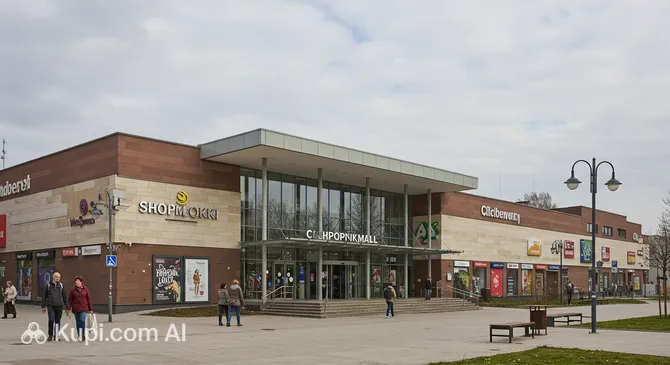
For a more concentrated shopping experience, you can visit the Niwa Shopping Gallery. This is a modern shopping center where various stores offering clothing, electronics, and cosmetics are gathered under one roof, along with cafes and service points. It is a convenient place for those who want to make several purchases in one location.
Niwa Shopping Gallery. Illustration.
Source: Kupi.com AI
Traveler photos:
If you prefer a more authentic experience, head to the Oświęcim Market Square. Here, you can find fresh local produce, flowers, and various home and garden goods. While it is not a traditional tourist souvenir market, it provides a glimpse into the city's daily life and allows you to pick up something useful.
Oświęcim Market Square. Illustration.
Source: Kupi.com AI
Traveler photos:
For souvenirs from Oświęcim, besides the materials related to the memorial complex purchased directly there, you might consider traditional Polish products. These can include amber jewelry, ceramics, regional food products, or small handcrafted items found in some city shops. However, it is worth noting that the choice of souvenirs not directly related to the history of the site may be limited.
Most shops in Oświęcim operate on a standard schedule for Poland: Monday to Friday usually from 9:00-10:00 to 18:00-19:00, with shorter hours on Saturdays, and many shops are closed on Sundays, except for some large supermarkets or shopping centers. Cash (Polish złoty) and bank cards are widely accepted for payment.
For tourists from non-EU countries, a Tax Free system operates in Poland for goods purchased in participating stores. Usually, this requires a purchase over a certain amount and the correct completion of documents at the time of purchase and at customs when leaving the EU.