Support

Astra Park

About

Imagine a place where time seems to have stood still, and the entire rural soul of the country is gathered in one picturesque corner. The ASTRA Museum of Traditional Folk Civilization is the largest open-air ethnographic museum in Romania, stretching across the outskirts of the city of Sibiu.
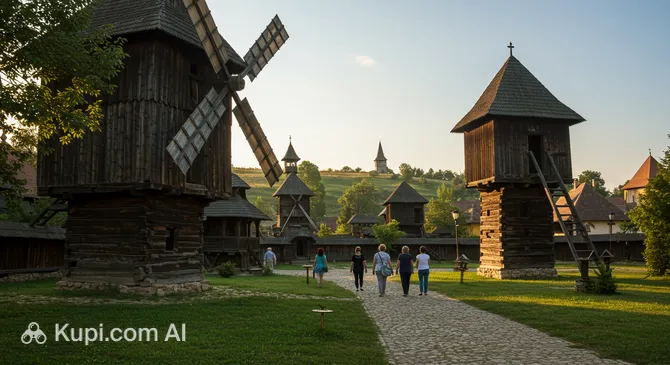
ASTRA Museum of Traditional Folk Civilization
ASTRA Museum of Traditional Folk Civilization. Иллюстрация. Источник: Kupi.com AI

The exposition covers an impressive area of 130 hectares within the "Dumbrava Sibiului" Natural Park. Here, amidst dense forests and surrounding a peaceful lake, the authentic atmosphere of Romanian villages from various historical eras and regions has been recreated. This is not just a display of buildings, but a living cultural landscape comprising more than 400 structures.

The museum's collection features unique mills, ancient forges, workshops, wooden churches, and residential houses, housing more than 200,000 household items. The ASTRA Museum is rightfully considered one of the most significant and atmospheric ethnographic centers in all of Europe, offering tourists a true journey into the past.

Contacts

To plan your visit to the ASTRA Museum of Traditional Folk Civilization, it’s helpful to have the official details at hand. The primary information regarding the museum's location and resources is provided below:

How to contactContact
AddressStrada Mitropoliei, Sibiu, Romania
Websitewww.turism.sibiu.ro

What to Do

Visiting the museum is more than just a stroll past old houses; it is a full-scale interactive adventure. Here, you can do more than just look at the facades—you can peer inside the buildings to study ancient interiors and tools. The functioning technical structures are particularly impressive: water and wind mills, fulling mills, and sawmills that demonstrate the incredible ingenuity of folk craftsmen.

Ancient traditions regularly come to life on the museum grounds. Visitors can witness genuine artisans at work and even try their hand at traditional crafts, from weaving and wool processing to blacksmithing and woodcarving. On weekends and during holidays, the museum often hosts folklore festivals, folk craft fairs, and gastronomic events.

For those seeking a quiet retreat, the park offers miles of scenic trails for walking or cycling. You can enjoy a picnic on the grass in the shade of the trees or take a boat ride on the lake, admiring the reflection of the ancient mills in the water. For children, there are educational programs and play areas that turn learning history into an engaging game.

Getting There

Reaching the ethnographic complex is easy, as it is located just 3–6 kilometers from the historical city center. The most convenient way is to use public transport. Buses and minibuses regularly run toward the Dumbrava Sibiului Park, heading in the direction of the Rășinari commune or the Păltiniș mountain resort.

If you prefer comfort, you can take a taxi directly from the city center; the trip will take no more than 10–15 minutes. For those traveling by their own or a rented car, there is a spacious and convenient parking lot located at the museum entrance.

For outdoor enthusiasts, a walk is an excellent option. The trek from the center takes about 40 to 60 minutes. The route passes through scenic surroundings, allowing you to gradually trade cityscapes for the natural tranquility of the forest.

Ближайший город: Sibiu

History & Facts

The history of this unique site began in 1963, when the ASTRA National Museum Complex was officially founded. Its primary mission was the preservation and promotion of the rich cultural heritage and traditions of the Romanian people, which were rapidly disappearing under the influence of industrialization.

The first exhibits — authentic peasant houses and outbuildings — began arriving here as early as 1961 from all corners of the country. Specialists carefully dismantled each building in its home village and reassembled it within the park, preserving every detail of the original construction.

Many objects in the collection are priceless architectural monuments from the 18th and 19th centuries. The museum takes particular pride in its ancient wooden churches, one of which was built as far back as 1754. These structures are not merely exhibits, but silent witnesses to the spiritual life and craftsmanship of ancestors.

Over the decades, the ASTRA Museum of Traditional Folk Civilization project has grown into the largest ethnographic center in Romania. Today, it is recognized as one of the most significant open-air museums in all of Europe, serving as a living encyclopedia of rural life.

Time Needed

Given the massive scale of the territory, you should set aside at least 3–4 hours for your visit. This time is sufficient for an introductory walk through the main sectors and to see the most notable structures around the lake.

However, if you plan to go inside the houses, watch the craftsmen at work, or participate in workshops, it is better to budget a full day for the visit. It is easy to spend time here from morning until evening, enjoying the silence of the forest and immersing yourself in the atmosphere of old Romania, pausing only to rest in the shade of century-old trees.

Working Hours

According to official data, access to the museum grounds is possible daily and around the clock (24 hours a day). This allows you to enjoy the beauty of the park and the exterior of the exhibits at any time convenient for you, including early morning hours or sunset.

However, it should be noted that the internal exhibitions in the houses and pavilions are usually open to visitors on a standard schedule, most often from 9:00 AM to 6:00 PM. If your goal is to see the interiors and talk with the craftsmen, it is better to plan your visit during daylight hours.

Круглосуточно

Nearby

The museum's location on the outskirts of the city allows you to combine an exploration of folk architecture with visits to other iconic sites in the region. Exploring the surroundings of Sibiu will give you a more complete understanding of Transylvania's rich history and culture.

Below are interesting sites located relatively close to the ethnographic complex:

NameDistance
Sibiu Public Bath0.1 km
Holy Trinity Orthodox Cathedral0.2 km
Brukenthal National Museum0.4 km
Altemberger House History Museum0.4 km
Brukenthal National Museum0.4 km
Citadel Park0.4 km
Potters' Tower0.4 km

Reached the end of the page?

That means the route is fully explored