Support

Borovichi

About

Borovichi is a picturesque and cozy town nestled on the steep banks of the Msta River. As the second-largest settlement in the Novgorod Region, it attracts travelers with its well-preserved merchant-era architecture, unique engineering monuments, and a special atmosphere of antiquity.

Geographically, the town is located in the northwest of such a vast country as Russia, within a humid continental climate zone. Here, you can experience snowy winters and comfortable, warm summers, perfect for long walks. The town's population is around 50,000, which keeps it free from the hustle and bustle of major metropolises while maintaining a well-developed infrastructure for visitors.
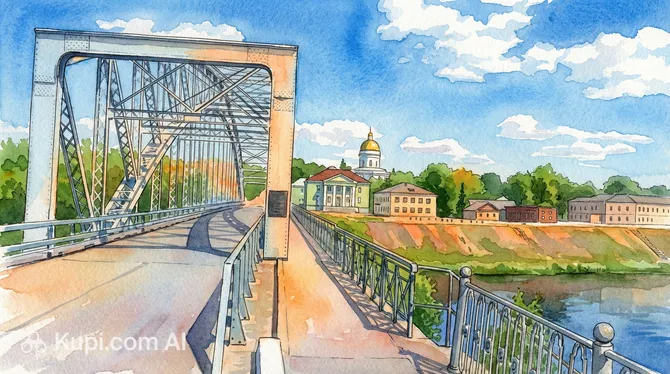
Borovichi. Illustration.
Source: Kupi.com AI

The fascinating history of Borovichi is closely intertwined with river shipping and the famous Msta rapids. The town's landmark is the magnificent Belelyubsky Arch Bridge — the first bridge of such design in the country, which became a true masterpiece of 19th-century engineering. Equally interesting for tourists is the historic wooden railway station, which, thanks to its authentic look, frequently serves as a filming location for historical movies.

Borovichi is a town that knows how to surprise. A stroll along its embankment and through the historical center will leave a lasting impression on lovers of architecture and beautiful landscapes. Be sure to include this town in your itinerary to experience the unique culture of the Russian province.

Weather Overview

The climate in this region is humid continental, providing distinct seasonal changes. Before your trip, it's worth checking what weather in Borovichi is expected for your visit dates, as conditions can be variable.

Winters here are moderately frosty and quite snowy. The coldest month is traditionally January, with an average temperature of around -6.2°C, while night-time lows can reach -8.3°C. This is an atmospheric time for walks through the snow-covered town, provided you are dressed warmly enough.

Summer brings comfortable warmth without exhausting heat. In July, the warmest month of the year, the average temperature stays around +17.6°C, and daytime temperatures often rise to +21.6°C. Expect a pleasant summer with occasional rain and cold winters. It's worth noting that July is also one of the rainiest months (up to 18 days with precipitation), so an umbrella will not be redundant on your journey.

Average monthly temperature

Average monthly precipitation

Interesting Facts

Beyond its main architectural monuments, Borovichi holds many fascinating stories and details that often escape the average tourist's eye. This town on the Msta is capable of surprising travelers with its unique engineering achievements and rich cinematic past.

  • A Legendary Bridge. The famous Belelyubsky Bridge is not just a crossing but a technical revolution of its time. It was the first steel arch bridge in Russia. A popular local legend claims that this very Borovichi structure served as the inspiration for the world-famous Sydney Harbour Bridge, which is why they are often called "brothers."

  • A Movie-Star Station. The wooden railway station building has been preserved almost in its original state since 1876. Due to its unique atmosphere and authenticity, it regularly becomes a film set. Scenes for famous Russian films like "The State Counsellor" and "Yolki 1914" were filmed here.

  • The Town of River Pilots. Historically, Borovichi prospered thanks to the dangerous Msta rapids. Only local pilots, possessing incredible skill, could navigate vessels through them. Empress Catherine II valued the work of Borovichi pilots so much that she granted the town a coat of arms featuring a ship's rudder, which is still in use today.

  • The "Refractory" Capital. Deposits of unique clays were discovered near the town, making Borovichi the first and largest center of the refractory industry in the empire. Local bricks were of such high quality that they were used to build furnaces and fireplaces in the wealthiest palaces of St. Petersburg.

How to Get There

When planning a trip to this historic merchant town, it's important to think about logistics in advance. Borovichi is situated away from the main federal highways, which helps preserve its cozy atmosphere but requires attention to your route. You can explore all ways to get to the city to choose the most convenient option.

There is no airport in Borovichi itself, so traveling by air involves transferring to ground transport. The closest and most convenient option for tourists from distant regions is Pulkovo International Airport (LED) in St. Petersburg. It is located about 261 km from Borovichi. As the largest aviation hub in the northwest, it receives flights from all over the country and abroad. The journey from the airport to the town by taxi or bus takes about 7 hours.

An alternative is Cherepovets Airport (CEE) in Cherepovets, located about 257 km away. This is a regional airport that handles fewer flights, but it may be convenient for travelers from certain directions. The travel time from there is also approximately 7 hours.

For clarity, here is a summary of the main airports:

AirportPassenger trafficDistance
Cherepovets Airport405 000257 km
Pulkovo20.4 mln261 km

Rail travel is one of the most popular ways to reach this area. Although Borovichi has its own historic station, most express trains from Moscow and St. Petersburg stop at main line stations located in neighboring settlements.

The most convenient is often considered to be Okulovka station, which formally serves the Borovichi direction but is located about 36 km from the town center. High-speed "Sapsan" trains and many long-distance trains stop here. From the station, you can reach your destination by taxi or a regular bus in about 1 hour and 15 minutes. Another close option is Uglovka station, located 30 km from the town; the journey from there takes about an hour.

Below is information on the nearest railway stations:

StationPassenger trafficDistance
Okulovka Station800 00036 km
Uglovka Station700 00029 km
Borovenka Station50 00050 km
Borovichi Railway Station5 0001 km
Bologoye-Moskovskoye Station1.5 mln58 km
Valday Railway Station100 00061 km
Kabozha Station30 00080 km
Udomlya Railway Station150 00086 km
Vyshny Volochyok Railway Station350 00097 km

Main Attractions

Borovichi is a town with a rich merchant past where every corner breathes history. You should start your sightseeing with a stroll through the historical center, where 19th and early 20th-century civic architecture is perfectly preserved. However, there are several iconic sites that serve as true symbols of the town and are must-visits.

Belelyubsky Bridge is perhaps the most recognizable landmark and the town's primary signature site. Built in 1905 according to the design of the outstanding engineer Nikolai Belelyubsky, it was Russia's first steel arch bridge with an underslung roadway. This elegant steel structure connecting the banks of the Msta River looks remarkably graceful. Today, the bridge is pedestrian-only, making it the best spot for leisurely walks and panoramic photos of the river landscapes.

Another architectural gem is the wooden railway station. This building, erected in 1876, has miraculously preserved its original appearance and the unique atmosphere of the pre-revolutionary era. The station is so colorful and authentic that film directors often choose it as a natural set for historical movies. Walking along the old platform literally allows you to step back in time.

Lovers of antiquity and spiritual heritage should visit the Holy Spirit Monastery. Founded in the 14th century, this monastery is one of the oldest in the Novgorod land. On its grounds is the Cathedral of the Descent of the Holy Spirit, which attracts pilgrims and tourists with its austere beauty and peaceful aura. It is a quiet place where you can find spiritual rest away from the town's bustle.

To dive deeper into the local context, stop by the Museum of the History of Borovichi and the Borovichi Region. Housed in a historic merchant mansion, the exhibition details the famous Msta rapids, the skill of the brave river pilots (lotsmans), and the development of the ceramics industry. It houses unique items of merchant life, vintage photographs, and documents that reveal the character and traditions of the local residents.

Local Cuisine

The gastronomic map of Borovichi is closely linked to the traditions of the Novgorod land, where hearty, natural food and old recipes are highly valued. Local cuisine lacks metropolitan pretension but wins you over with its homey comfort and the use of local ingredients grown in nearby villages or gathered in the forests.

The main culinary specialty you must try in this region is the famous Serye Shchi (Grey Cabbage Soup). It is made from "kroshevo" — finely chopped and fermented green outer cabbage leaves. Unlike classic white cabbage soup, this dish has a richer flavor, a specific tanginess, and a thick aroma. Traditionally, such shchi is simmered in an oven for several hours and served with sour cream and rye bread. This is a true taste of the Russian province that is hard to find in other regions.

Since the town is surrounded by forests and sits on a river, local menus often feature nature's bounty. It's worth trying dishes made from river fish caught in the Msta, as well as mushroom soups and stews. For dessert, locals prefer pastries with forest berries: blueberries, lingonberries, or cranberries. Borovichi is also famous for its confectionery products, so local gingerbread and cookies make a great addition to teatime.

Among drinks, traditional Russian options take the lead. In summer, tourists are refreshed by homemade bread kvass, which has a sharp and invigorating taste. In cooler weather, hot herbal blends are popular, especially Ivan-chai (fireweed tea), which is harvested in large quantities in the Novgorod region. For alcoholic beverages, look out for mead and various northern berry infusions, often served in local taverns.

The dining culture in Borovichi encourages a slow-paced rest. Most popular cafes and small restaurants are concentrated in the historical center, near the embankment and the arch bridge. The interiors of many establishments are styled after merchant-era antiquity, supporting the town's overall atmosphere. For those who want to take the taste of Borovichi home, the best place is the town market, where you can buy jars of homemade kroshevo, dried mushrooms, and fresh honey from local residents.

Travel Tips

Welcome to Borovichi! To make your trip to this atmospheric merchant town in the heart of a state like Russia as comfortable and worry-free as possible, we have gathered the most relevant and proven tips for you.

  1. Clothing and Footwear. Borovichi is a hilly town, with picturesque but sometimes steep descents to the Msta River. The main tip: bring the most comfortable shoes with flat soles. Heels will be out of place on old pavements and dirt paths. The climate here is changeable, so even in summer, it's worth having a light windbreaker and an umbrella, and in winter — a warm, windproof jacket, as it can be windy by the river.
  2. Transport. The historical town center is compact and best explored on foot to enjoy the architecture. For trips to outlying areas (such as estates), city buses are available, but schedules can change. It is more convenient to use taxis: popular aggregators (like Yandex Go) work here, but during peak hours or bad weather, wait times may increase, so keep local taxi company numbers handy.
  3. Finances. Supermarkets, hotels, and most cafes accept bank cards without problems. However, Borovichi is a provincial town, so you will definitely need cash. It will come in handy for buying souvenirs in small shops, paying for bus fares, or purchasing farm products at the market. ATMs of major banks are concentrated in the town center.
  4. Health and Safety. The town is peaceful and safe for tourists. The main precaution concerns walking near the water: the banks of the Msta can be steep and slippery, especially after rain or in winter. There are plenty of pharmacies in the center, but few are open 24/7, so it's better to pack a personal first-aid kit with necessary medications in advance.
  5. Communication and Navigation. Mobile service and 4G internet are stable across all major operators. For orientation, it's better to download offline maps (Yandex.Maps or 2GIS) in advance, as the signal can be weaker in some backstreets of the residential sector. Free Wi-Fi is available in most cafes and hotels, but you shouldn't count on it in public outdoor areas.
  6. Local Etiquette. Residents of Borovichi are friendly and value politeness. When visiting the Holy Spirit Monastery and other active churches, follow the dress code: women are advised to cover their heads and wear skirts below the knee, while men should wear long trousers. Taking photos inside churches is only allowed with permission from the staff.
  7. What to Avoid. Do not attempt to cross the Msta River in unauthorized places, even if the river seems calm or (in winter) appears solidly frozen. The current here is fast and treacherous, typical of a river with rapids. Also, do not expect metropolitan service speeds from local establishments — life here flows at a more measured and calm pace, so just enjoy it.
  8. Gourmet Tip. If you want to bring home a truly unique souvenir, head to the town market for "kroshevo" (the base for grey shchi). This is an authentic local product hard to find in other regions. Locals will be happy to tell you how to cook it correctly to get that genuine taste of Novgorod antiquity.

Borovichi is a town that reveals itself to those who are not in a hurry. Follow these simple recommendations, and your trip will be filled with comfort, interesting discoveries, and only pleasant impressions!

Entertainment & Nightlife

Nightlife in Borovichi has its own special, quiet, and provincial charm. You won't find noisy districts with neon signs or massive nightclubs operating until dawn. Evening leisure in the town primarily consists of cozy dinners in restaurants that turn into dance floors on weekends, walks through the beautifully lit center, and intimate gatherings.

The epicenter of evening activity is the historical town center, especially the streets near the Msta River and 1st May Square. This is where the main establishments are concentrated, offering a pleasant way to spend time after sunset. The atmosphere in local bars and restaurants is relaxed and informal. There is no strict dress code, but for a restaurant visit on a Friday or Saturday, smart casual style would be most appropriate.

Among the specific spots popular with locals and guests, the Antonio restaurant complex stands out. It is one of the town's most famous venues, combining a family restaurant with a space for evening relaxation, featuring high-quality cuisine and a pleasant interior. Another hub is the entertainment zone in the Europa shopping center, which houses a modern cinema — a classic choice for a quiet evening.

If you're looking for something more active, check out the Olymp sports complex. It features an aquapark that stays open until late evening. This is a great alternative to bars — a chance to swim and relax in a jacuzzi after a busy day of sightseeing.

Practical tips for an evening out:

  • Opening hours: Most restaurant kitchens close around 11:00 PM, though the venues themselves may stay open until midnight or slightly later on weekends. Plan your dinner in advance.
  • Safety: Borovichi is a peaceful town, and walking through the well-lit center is safe. However, avoid unlit outskirts and river access points late at night.
  • Transport: Public transport does not run at night. The most reliable way to get back to your hotel is to call a taxi via popular apps or local services. Rides within the town are inexpensive.

As for daytime entertainment, it harmoniously complements the evening rest. During the day, it's worth visiting the Borovichi Drama Theater, renowned for its productions far beyond the region, or stopping by the local history museum. In summer, be sure to stroll through the parks or head out into nature to the Msta rapids.

Parks & Museums

The cultural and natural life of Borovichi is inextricably linked with its merchant history and the picturesque landscapes of the Msta River. While the town may not boast massive palace parks, it offers cozy green corners for leisurely strolls and museums holding unique evidence of the past that is hard to find elsewhere in such a country as Russia.

The main place for outdoor relaxation is the 30th Anniversary of October Park. This is the town's oldest park and serves as a hub for locals and tourists alike. Here you can walk along shaded alleys, relax on benches, and feel the steady rhythm of provincial life. For tourists, the park is interesting for its authentic Soviet-era atmosphere preserved in its layout, as well as the chance to see local festivals and events often held on its grounds.

Equally attractive for nature lovers is the Msta River Embankment. Although not a park in the classic sense, the green slopes of the banks and well-maintained paths create a wonderful walking zone. From here, you get the best views of the famous Belelyubsky Bridge and the historical buildings on the opposite bank. It is the perfect spot for panoramic photos and watching the fast flow of the river that was once the region's main transport artery.

Among cultural institutions, the central place is held by the Borovichi Local History Museum, located in the former house of merchant M.Ya. Shulgin. It is one of the oldest museums in the region, and its collection is considered one of the richest. Tourists should visit it to learn the amazing story of the "town of river pilots," see 19th-century merchant lifestyle items, and understand how locals conquered the capricious Msta rapids.

Also worth noting is the Museum of the History of the Borovichi Refractories Plant. Despite its industrial name, the museum tells a fascinating story of how local clays made the town famous throughout the empire and Europe. Unique ceramic samples and documents are presented here. This place will interest those who want to go beyond standard excursions and learn how the country's "refractory shield" was created and how industry shaped the town's appearance.

The historical center of Borovichi itself can be called an open-air museum. Walking along Kommunarnaya and Podbelskogo streets, you will see beautifully preserved merchant mansions, trading rows, and 19th-century civic buildings. Architecture enthusiasts should note the variety of styles — from Classicism to Eclecticism — which harmoniously sit side-by-side, creating a unique ensemble of a district town.

For those seeking unconventional experiences, we suggest finding the suspension bridges (known locally as lavas) across the Msta in the vicinity or on the outskirts of the town. These swaying wooden structures connecting villages look very picturesque and offer a bit of an adrenaline rush when crossing. It's a great opportunity to see the river from an unusual perspective and take atmospheric photos rarely found in standard guidebooks.

Getting Around

The public transport system in Borovichi is simple and compact, perfectly matching the size and pace of life of this small town. There are no subways, trams, or trolleybuses here. The only types of municipal transport are buses and fixed-route taxis (marshrutkas). The route network covers all main districts, connecting the historical center with residential areas, the railway station, and the bus station. Buses run according to a schedule, which is usually followed quite accurately.

To pay for travel on city transport, you don't need to buy special transport cards or passes in advance. Payment is made directly inside the bus — to the conductor or driver upon entry. The fare is fixed and very affordable. Both cash and bank cards are accepted, as well as smartphones with NFC modules, though terminals may not work in all older marshrutkas. Therefore, tourists are strongly advised to always have a small amount of cash in small bills with them.

The public transport schedule has its own peculiarities that visitors should be aware of. Active service starts early in the morning, around 6:00 AM, but ends quite early. After 8:00–9:00 PM, intervals between buses increase significantly, and many routes stop running altogether. If you are planning a late dinner or an evening walk, you shouldn't rely on the bus.

The most convenient and popular alternative to buses is taxis. Major aggregators like Yandex Go operate in the town, making calling a car familiar and convenient for tourists from big cities. Prices for trips around the town are low, and the car wait time is usually just a few minutes. There are also local taxi services that can be called by phone — their numbers are easily found at information desks in hotels.

Specialized car-sharing services or city bike-rental systems are currently not available in Borovichi. You can rent a bike privately at some rental points or sports shops during the summer season, but this is more for recreation than a full-fledged mode of transport. Given the compactness of the historical center, many attractions are within walking distance of each other, so walking is often the most pleasant and effective way to get around.

Accommodation

The choice of accommodation in Borovichi, while not boasting metropolitan scale, is quite capable of meeting the needs of most travelers. In this small town, you won't find large international hotel chains or luxury five-star resorts. The backbone of local hospitality consists of cozy mid-range hotels, private mini-hotels, and guest houses that offer a homey atmosphere and a decent level of service.

The most convenient area for tourists to stay is the historical center, especially the streets adjacent to the Msta River and the Belelyubsky Bridge. By staying here, you will be within walking distance of the main architectural monuments, the museum, and the town's best cafes, which is ideal for exploring on foot. For those traveling by car and seeking peace, holiday retreats in the green suburbs or hotels on the outskirts, where the air is fresher and there is even less bustle, are excellent options.

The price range in the town can be described as budget and moderate. The cost of living here will pleasantly surprise guests from big cities. Booking is available through popular Russian online aggregators or directly by phone, which in small towns is often even more reliable.

Booking tip: Even though Borovichi is a provincial town, high-quality room availability is limited. During the summer season, as well as during holidays and festivals, the best options are booked quickly. Therefore, it is strongly recommended to book your accommodation in advance, at least a couple of weeks before your planned trip.

Nearby Cities

For those looking to explore the surroundings, Borovichi serves as an excellent starting point for day trips to several interesting nearby locations:

Veliky Novgorod is one of the oldest and most significant cities in the country, often called the "Father of Russian Cities." Here you will find the majestic Kremlin (Detinets), the ancient St. Sophia Cathedral, and numerous UNESCO World Heritage monuments. A trip here is a true immersion into the origins of Russian history and culture.

Vyshny Volochyok is located closest to Borovichi and is known for its unique system of canals and locks, for which it is sometimes poetically called the "Russian Venice." The town is interesting for fans of hydro-technical architecture and is also famous for its historic glass production and cozy provincial atmosphere.

Torzhok attracts travelers with its picturesque hilltop views, numerous domes of ancient churches, and the Borisoglebsky Monastery. Besides its architecture, the town is famous for its unique gold embroidery craft, which has flourished here for centuries, and its gastronomic brand — the legendary Pozharsky cutlets, which are a must-try.

CityPopulationDistance
Bologoye21 15857 km
Valday14 37960 km
Udomlya28 11987 km
Vyshny Volochyok46 90897 km
Malaya Vishera10 602110 km

These nearby destinations provide a glimpse into the diverse culture and landscapes of the region, making your journey through the Novgorod and Tver regions even more rich and memorable.

Shopping & Souvenirs

Shopping in Borovichi has a relaxed, provincial character and is unlikely to be the main goal of your trip, but it can pleasantly complement your journey. You won't find high-fashion boutiques or huge outlets here, but the town offers excellent opportunities for purchasing quality local products, home goods, and unique souvenirs. Trade here is focused on residents' daily needs and the preservation of local traditions, making the shopping process feel cozy and personal.

The main shopping artery of the town has historically been Kommunarnaya Street. Strolling along it, you can combine viewing merchant architecture with visiting small shops. Here you'll find mobile shops, pharmacies, bookstores, clothing stores, and jewelry salons. It is an ideal place for a leisurely promenade where shop windows sit alongside old facades, creating the special atmosphere of a district town.

For those accustomed to modern shopping formats, several shopping centers operate in the town. The most popular and largest is TC Piros. This is a multi-purpose complex where you can find electronics stores, mass-market clothing brands, children's goods, and a food court. Another notable site is TC Europa, which also offers a diverse range of goods and services, serving as a convenient spot for family shopping.

You can feel the true local flavor at the Central Market. This is a must-visit for gastronomic tourists. Here, local farmers and residents from nearby villages sell fresh vegetables, forest berries (blueberries, lingonberries, cranberries), mushrooms, and homemade dairy products. The market is clean, and the sellers are friendly; you can often haggle or simply discuss recipes for local dishes.

When choosing souvenirs, pay attention to products the region is famous for. First and foremost, this means ceramics and porcelain. Thanks to rich clay deposits and the local refractories plant, you can find high-quality and beautiful tableware in the town. The most unusual and authentic gift is "kroshevo" — the green cabbage leaf starter for making the famous grey shchi. Local gingerbread and sweets are also popular and make a great addition to teatime.

Shops in Borovichi usually open at 09:00 or 10:00 AM. Small street shops finish work around 6:00–7:00 PM, while shopping centers and chain supermarkets are open until 9:00 or 10:00 PM. Most permanent shops and cafes accept bank cards without issue. However, for visiting the market or buying souvenirs at small kiosks, it is recommended to have cash on hand, preferably in small denominations.

The Tax Free system is virtually non-existent in Borovichi. In a country like Russia, this service is primarily available in major cities and specialized premium stores authorized by system operators. In small regional centers, you should not count on Tax Free forms, so plan your budget based on the full cost of goods.

Reached the end of the page?

That means the route is fully explored