Dubna is not just a city, but a true science city, known far beyond the borders of Russia for its outstanding scientific achievements and unique atmosphere. This is a place where cutting-edge science harmoniously coexists with picturesque nature, creating an inimitable charm.
Located in the Moscow Region at the confluence of the Volga and Dubna rivers, this city with a population of about 75,000 people is an important scientific and cultural center. The climate here is moderate continental, with warm summers and snowy winters, making it attractive to visit at any time of year.
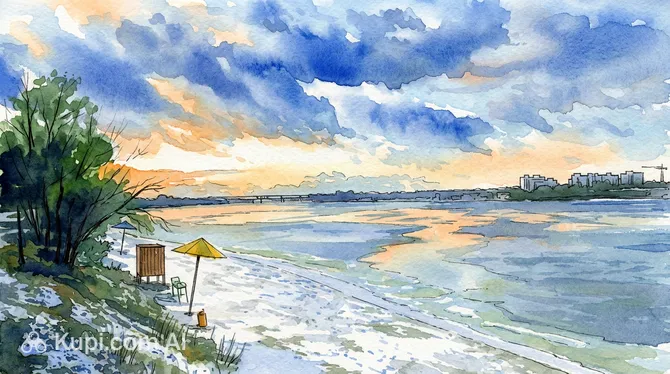
Dubna. Illustration.
Source: Kupi.com AI
The main pride of Dubna is undoubtedly the Joint Institute for Nuclear Research (JINR) — a world-renowned international scientific center where discoveries of global significance are made. Among other iconic sites are the impressive Monument to V.I. Lenin, one of the largest in the world, located at the entrance to the Moscow Canal, as well as the picturesque "Bolshaya Volga" Lighthouse. The city also offers excellent opportunities for relaxation on the banks of the Volga and the Ivankovo Reservoir.
Dubna is an amazing place where you can touch the mysteries of science, enjoy the beauty of Russian nature, and feel the special energy of a city oriented toward the future. A visit to Dubna will leave you with many vivid impressions and new knowledge.
You can find more interesting facts on the history of Dubna page.
Weather Overview
When planning a trip to Dubna, consider the local moderate continental climate. Expect warm summers with average temperatures around +17°C to +19°C (June-August) and occasional rain, especially in July, which also sees the highest number of days with precipitation. Winters here are cold and snowy: the average January temperature is about -6.3°C, snow falls frequently, and the number of days with precipitation is also quite high.
Overall, monthly precipitation is not very heavy (usually 2-3 mm), but it is distributed fairly evenly throughout the year, with the highest number of rainy or snowy days in July and the winter months. For more detailed weather information for each month and to better plan your trip, we recommend visiting the Dubna Climate page.
Average monthly temperature
Average monthly precipitation
Interesting Facts
In addition to its world-famous scientific centers, Dubna hides many curious details and unique stories. Here are just a few little-known facts that will help you look at this science city from a new perspective:
Lenin Monument. Illustration.
Source: Kupi.com AI
Traveler photos:
It was in Dubna, at the Joint Institute for Nuclear Research, that the 105th chemical element of the periodic table was synthesized, which in 1997 received the official name "Dubnium" (Db) in honor of the city.
One of the world's largest monuments to V.I. Lenin (25 meters high, and 37 meters including the pedestal) originally had a "pair" – on the opposite bank of the canal stood an equally large monument to Stalin, which was dismantled in 1962.
A significant part of the city, including the historical center and main scientific institutes, is actually located on an island formed by the rivers Volga, Dubna, Sestra, and the Moscow Canal.
Many streets in Dubna are named after outstanding scientists, both Russian and foreign (for example, Joliot-Curie Street), highlighting the international character of the city's scientific activities and its contribution to global science.
How to Get There
You can get to Dubna in several ways, and one of the most popular is through Moscow's airports. Although Dubna itself does not have its own airport, the nearest major air hubs are in Moscow, from where you can continue your journey to the science city by ground transport.
The most convenient option for an air flight is Sheremetyevo International Airport (SVO). It is located in Moscow, approximately 86 km from Dubna. As one of Russia's largest airports, Sheremetyevo offers many flights. A trip from here to Dubna by taxi or bus will take approximately 2–2.5 hours, depending on traffic conditions.
You can also consider flying into other major Moscow international airports. Domodedovo Airport (DME) is about 154 km from Dubna, and the journey from there takes approximately 4–4.5 hours. Vnukovo International Airport (VKO) is located about 127 km from the city, with a travel time to Dubna of around 3–3.5 hours.
For convenience, here is summary information on the main airports used to reach Dubna:
For railway travel to Dubna, there are several convenient options. The city's main railway hub is Dubna (railway station). It is located in Dubna itself, about 2.6 km from the center, and is the terminus of the Savyolovsky line, receiving commuter trains and expresses from Moscow. Travel time from the capital is usually about 2–2.5 hours.
Additionally, within the city limits, just 1.9 km from the center, is the Bolshaya Volga station. It also serves trains on the same Savyolovsky line and can be a convenient alternative depending on your destination in Dubna.
Here is information on the railway stations that may be useful when planning a trip to Dubna:
Station
Passenger traffic
Distance
Savyolovo Station
—
19 km
Verbilki Station
750 000
32 km
Dmitrov Railway Station
4.5 mln
49 km
Zavidovo Station
—
49 km
Klin Railway Station
2.5 mln
53 km
In addition to air and rail links, Dubna can be reached by intercity bus from Moscow and other nearby cities, or by private car via the Dmitrovskoe Highway.
Main Attractions
Dubna, famous for its scientific achievements, also offers travelers several notable sites that reflect its history and modern character. Here are some of the attractions worth including in your itinerary:
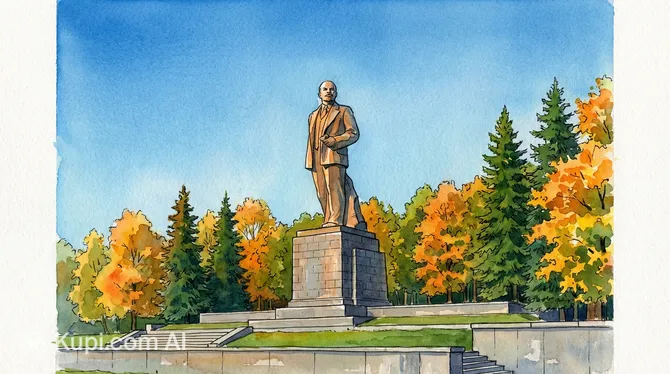
One of the most monumental and recognizable landmarks of Dubna is the Lenin Monument. This grandiose sculpture, one of the largest in the world, greets everyone arriving in the city by water at the entrance to the Moscow Canal and is striking in its scale. The monument is not only an important historical object but also a popular spot for photo shoots, offering impressive views.
Lenin Monument. Illustration.
Source: Kupi.com AI
Traveler photos:
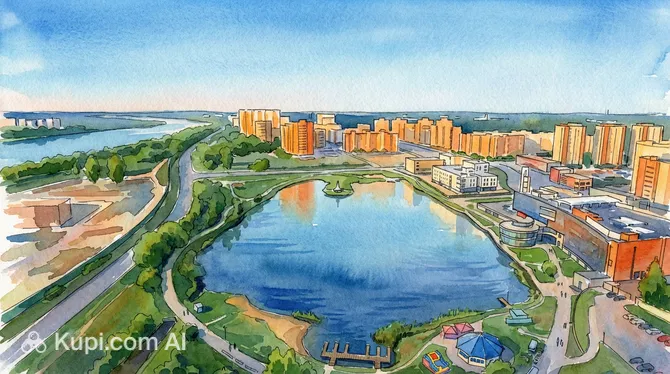
For those who prefer a quiet rest in nature, the Family Rest Park is an excellent choice. This green space is perfect for walks, picnics, or simply enjoying the silence away from the city bustle. The park offers opportunities for both active and passive recreation for visitors of all ages, serving as an oasis of tranquility in the science city.
Family Recreation Park. Illustration.
Source: Kupi.com AI
Traveler photos:
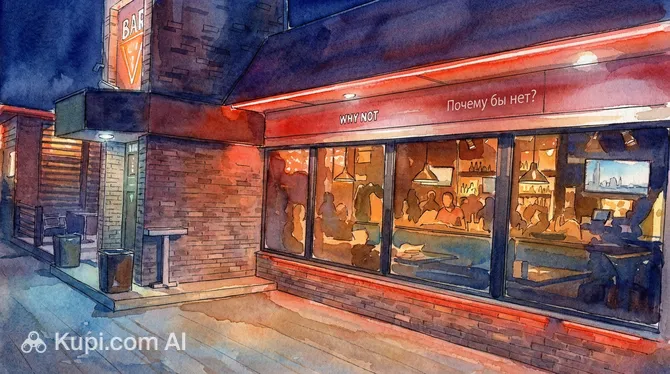
To immerse yourself in the evening atmosphere of Dubna and have a pleasant time, you can visit the Why Not Bar. This establishment attracts with its cozy setting, a good selection of drinks, and the chance to chat with friends or meet new people. It is a great place to end a busy day of sightseeing and share impressions.
Why Not Bar. Illustration.
Source: Kupi.com AI
Traveler photos:
Local Cuisine
Dubna's gastronomic scene will pleasantly surprise travelers with its variety. Here you can find establishments offering traditional Russian dishes as well as cafes and restaurants with European and international cuisine. The atmosphere of the science city is reflected in the approach to food: the emphasis is often on quality and modern interpretations, offering guests both familiar tastes and interesting innovations.
Be sure to try the classics of Russian cuisine, which are widely represented in local establishments. Hearty borscht, aromatic pelmeni (dumplings), or syrniki (cottage cheese pancakes) for breakfast, along with golden blini with various fillings—from meat to sweet—are excellent choices. Given the city's location at the confluence of the Volga and Dubna, the menus of some restaurants feature fresh river fish dishes, such as ukha (fish soup) or fried zander, adding authenticity to your gastronomic experience.
Locals and visitors alike prefer to dine in the numerous cafes and restaurants scattered throughout Dubna. The choice of venues ranges from small cozy coffee shops to restaurants offering a more refined menu. If you are looking for something familiar and filling, look for places with European cuisine. For example, Pizzeroni offers popular Italian dishes that are perfect for a family lunch or dinner with friends.
For non-alcoholic beverages, try traditional Russian options: refreshing kvass, especially popular in the warm season, or aromatic mors (berry drink) made from wild forest berries. As for alcoholic drinks, Dubna's bars and restaurants offer a standard selection including beer, wine, and spirits to satisfy various tastes.
Overall, gastronomic Dubna offers a balanced combination of the homey comfort of Russian cuisine and modern culinary trends. Every tourist will find something to their liking here, whether it is a substantial lunch after a busy day exploring scientific attractions or a light dinner in a pleasant setting. The city does not aim to compete with major culinary centers but provides quality and diverse dining for its residents and guests.
Travel Tips
Planning a trip to Dubna? Wonderful! To make your journey to this unique science city smooth and full of pleasant memories, we have prepared some practical tips for you.
Clothing and Essentials: The climate in Dubna is moderate continental. In summer, bring light clothing, but don't forget a windbreaker or umbrella in case of rain. In winter, you will need warm layered clothing: a jacket, sweater, hat, gloves, and a scarf. A key element of your wardrobe is comfortable shoes, as you will surely want to walk around the city and its picturesque embankments. Don't forget a plug adapter (type C and F sockets are used in Russia). When visiting active Orthodox churches, women are advised to have a headscarf and clothing that covers shoulders and knees; men should wear trousers.
Transport: The main form of public transport in Dubna is buses, with a route network covering the whole city. You can usually pay the fare in cash to the driver. To call a taxi, it is convenient to use popular mobile apps like Yandex Go or local taxi companies. Renting a car for travel within Dubna itself is generally not necessary given its compactness, but it can be useful if you plan to explore the surroundings.
Finances: The official currency is the Russian ruble (RUB). You can exchange currency at bank branches. We strongly recommend avoiding money exchange with private individuals. Note: Visa and Mastercard bank cards issued outside of Russia will very likely not work. Chinese UnionPay cards may be accepted in a limited number of places. Therefore, it is best to carry a sufficient supply of cash or a card from the Russian payment system "Mir" if you have the opportunity. ATMs are available in the city, but they may not service cards from foreign banks. A rough daily budget (excluding accommodation) could be 2500-5000 rubles per person. Tipping in cafes and restaurants is welcomed (usually 5-10% of the bill if you liked the service) but remains at your discretion.
Health and Safety: There are plenty of pharmacies in Dubna (look for the "Аптека" sign); some may operate 24/7—check this info in advance. The emergency services number is 112. Be sure to get travel medical insurance before your trip. Overall, Dubna is a very quiet and safe city, especially given its status as a science city. Follow standard precautions: watch your personal belongings, especially in crowded places, and do not leave valuables unattended.
Communication: The official language is Russian. English proficiency among the general population is low, although young people and employees of scientific institutions may speak it. Learn a few basic phrases in Russian: "Zdravstvuyte" (Hello), "Spasibo" (Thank you), "Pozhaluysta" (Please/You're welcome), "Da/Nyet" (Yes/No), "Skol'ko stoit?" (How much does it cost?), "Gdye nahoditsya...?" (Where is...?). For convenience and internet access, you can buy a SIM card from a local operator (e.g., MTS, Beeline, MegaFon, Tele2); you will need your passport for this. Free Wi-Fi is available in most hotels, many cafes, and some public spaces.
Local Etiquette: A handshake is standard when meeting or greeting (especially between men). Try to behave with restraint in public places. It is customary to give up seats on public transport to the elderly, pregnant women, and passengers with small children. If you are invited to a home, always remove your outdoor shoes at the entrance. Locals are usually friendly and helpful, though they may seem a bit reserved at first. A respectful attitude and even minimal attempts to speak Russian are always appreciated.
What to Avoid: Try not to take photos of people without their prior consent, especially for portrait shots. It is also recommended to refrain from active discussion of sensitive political issues with strangers to avoid potential misunderstandings.
Extra Tip:Dubna is first and foremost a city of science. Try to experience this unique side: if possible, visit the JINR Museum of the History of Science and Technology or simply walk through the Academic Town district. And, of course, don't miss the chance to enjoy the beauty of nature while walking along the picturesque embankments of the Volga and the Ivankovo Reservoir.
We hope these tips help you better prepare for your trip and get the most out of your stay in the unique science city of Dubna! We wish you a pleasant journey and vivid impressions.
Entertainment & Nightlife
Evening and night-time Dubna offers its guests and residents cozy places to relax after a busy day, although it cannot boast the scale of nightlife found in metropolises. The atmosphere here leans toward quiet conversation and pleasant pastimes with friends, which matches the spirit of the science city.
Main evening activity is concentrated around bars, cafes, and restaurants, many of which are open until late. While there are no dedicated "nightlife districts" in Dubna, popular venues can be found in the central part of the city, for example, along Bogolyubov Avenue. Here you can find both quiet coffee shops and more lively bars. One such place to spend a pleasant evening is the Why Not Bar, which offers guests a variety of drinks and a relaxed atmosphere. For dinner or a late snack, you can consider establishments like Pizzeroni or Pizzeria, where popular dishes are served in a cozy setting.
Why Not Bar. Illustration.
Source: Kupi.com AI
Traveler photos:
The atmosphere in Dubna's venues is generally casual and friendly. The crowd consists of local residents, employees of scientific institutes, and students. There is usually no specific dress code; a casual style is welcomed. Bars typically operate until midnight or until 1-2 AM, especially on weekends. There are few clubs with loud music and dancing until morning in Dubna, as the emphasis is on a more intimate style of leisure.
When planning your evening leisure, keep in mind that public transport finishes relatively early. For night-time travel, it is better to use taxi services, which can be ordered through popular mobile apps or by calling local dispatchers. Dubna is considered quite a safe city; however, standard precautions, especially after dark, are always advisable. The average check in bars and restaurants is moderate but can vary depending on the level of the establishment.
During the day, Dubna offers other types of entertainment. You can visit local museums, such as the JINR Museum of the History of Science and Technology, to dive deeper into the atmosphere of the science city. The Family Rest Park is great for walks and family outings. The city also has cinemas and cultural centers where various events take place periodically.
Parks & Museums
Dubna, a city of science and picturesque nature, offers its guests not only an immersion into the world of scientific discovery but also excellent opportunities for outdoor recreation and exploring cultural heritage. Well-maintained parks, interesting museums, and unique architectural sites coexist harmoniously here.
For walks and relaxation in nature, Dubna has several wonderful places. One popular spot is the Family Rest Park. This is a landscaped area where you can have a pleasant time with your family, enjoy the silence, have a picnic, or simply stroll along the shady alleys. The park offers entertainment for visitors of all ages and is a true green oasis in the city.
Family Recreation Park. Illustration.
Source: Kupi.com AI
Traveler photos:
The Mendeleev Embankment along the Volga adds a special charm to Dubna. This is a favorite place for strolls among locals and tourists, offering beautiful views of the river and the Ivankovo Reservoir. Here you can walk leisurely, breathe the fresh air, and admire the sunsets. The city also has other forest-park zones, such as the Institute part of town, ideal for solitary walks and connecting with nature.
The cultural life of Dubna is closely linked to its scientific history. The key museum of the city is certainly the Museum of the History of Science and Technology of the Joint Institute for Nuclear Research (JINR). Here you can learn about the history of the institute's creation, its outstanding scientists, and the most important discoveries made in Dubna. The museum's exhibitions will be of interest not only to specialists but to everyone interested in science and technology.
Another important cultural site is the Dubna Museum of Archaeology and Local History. It tells the story of this land from ancient times, detailing the life and culture of the people who inhabited it long before the science city was founded. Visitors can see archaeological finds, ancient artifacts, and learn much about the region's past.
Speaking of historical and architectural attractions, one must mention the majestic Lenin Monument, located at the entrance to the Moscow Canal. This is one of the largest Lenin monuments in the world, serving as an important symbol of the city and the era.
Lenin Monument. Illustration.
Source: Kupi.com AI
Traveler photos:
Equally iconic is the "Bolshaya Volga" Lighthouse, located on the dam of the Ivankovo Reservoir. It is not only a functional structure but also a picturesque landmark that attracts photographers. A unique cultural phenomenon in Dubna is the mosaics by the French artist Nadia Léger, donated to the city in the 1970s. These vibrant panels adorn the facades of some buildings and give the city a special character.
For a complete impression, take a walk through the old part of the city (Left Bank) to feel the atmosphere of pre-science Dubna. And if you are looking for privacy, pay attention to the small squares and green courtyards hidden from the main streets—there you can find quiet corners for rest.
Getting Around
Getting around Dubna is fairly simple, and public transport plays a key role here. The core of the city's transport system consists of buses. The route network is well-developed and covers all districts, connecting residential areas, scientific centers, and main attractions. In addition to buses, there are also fixed-route taxis (marshrutkas) that often duplicate or complement bus routes, offering a faster but sometimes less comfortable way to travel.
As for larger types of urban transport, such as metro, trams, or trolleybuses, these do not exist in Dubna, which is typical for cities of this size. The main load falls precisely on the bus service.
The payment system in Dubna is quite standard. Most often, you can pay for a ride with cash directly to the driver or conductor (if there is one). Also, since Dubna is in the Moscow Region, the unified transport card of the Moscow Region, "Strelka", or social cards may be valid here. We recommend checking the possibility of using such cards and how to top them up upon arrival. Fares are usually low, but it is better to check current rates on-site or on the websites of local carriers. Mobile apps for buying tickets or tracking transport may not be as widely used as in large metropolises.
Tourists should keep a few practical points in mind. Bus tickets are generally purchased upon boarding. Timetables can be found at stops (though they are not always strictly followed) or on the websites of transport companies. Buses usually start running early in the morning and finish late in the evening, but intervals and operating hours can vary significantly depending on the route and day of the week (weekdays or weekends). During peak hours, transport can be crowded.
If public transport does not suit you, there are alternatives in Dubna. The most popular is the taxi. Both local taxi services and popular aggregators, such as Yandex Go, operate in the city, making it easy to order a car via a mobile app. Given the city's compactness, car-sharing services are less developed here. In the warm season, a bicycle can be a good option for short distances; check for bike rental availability on-site, especially near park areas and embankments. Walking is also an excellent way to get around many central districts of Dubna, allowing you to get to know the city better.
Accommodation
In Dubna, travelers can find various accommodation options to suit different budgets and preferences. While the city is not a major tourist hub with an abundance of luxury resorts, there are comfortable hotels, guest houses, and apartment rentals available.
The typical range of housing in Dubna includes mid-range hotels offering a good level of service, as well as more budget-friendly options such as small hotels or rooms for rent. For those who prefer a homely atmosphere and more space, especially if traveling as a family or for a longer period, renting an apartment can be a good choice. Hostel-style options are less common but can be found.
When choosing a place to stay, consider areas close to the main scientific institutes if your trip is related to them, or central streets where shops, cafes, and some attractions are easily accessible. Given Dubna's compactness, most accommodation options will be within reasonable reach of key points in the city. Staying near the Volga or Dubna embankments can be convenient for evening strolls.
While the list of attractions provided does not include specific hotels, there are hotels in Dubna that offer a standard set of services for a comfortable stay. It is recommended to look for information on them on popular online booking platforms.
General booking tip: if you plan to visit Dubna during major scientific conferences or events, it is best to book your accommodation in advance, as the number of available options may be limited. At other times, you can usually find a suitable option even with more spontaneous planning.
The price range for housing in Dubna varies from budget to mid-range. There are few luxury premium hotels here. The main booking methods are popular online platforms (such as Booking.com, Ostrovok.ru, and others operating in Russia) or direct booking through hotel websites or by phone, if available.
Nearby Cities
For those who want to explore the surroundings, Dubna serves as an excellent starting point for day trips to several interesting nearby locations:
These nearby destinations provide insight into the diverse culture and landscapes of the region. For example, Dmitrov, located just 48 km away, attracts with its ancient Kremlin and picturesque surroundings. Sergiev Posad, 76 km away, is the spiritual center of Russia and home to the famous Trinity Lavra of St. Sergius. A trip to Tver (78 km) allows you to get acquainted with one of the oldest Russian cities, rich in historical monuments and cultural traditions.
Shopping & Souvenirs
Dubna, being primarily known as a science city in Russia, offers shopping opportunities oriented more toward the daily needs of residents and guests rather than large-scale brand shopping. Nevertheless, you can find everything necessary and purchase interesting souvenirs to remember your trip. The city is not famous for any exclusive luxury goods but offers a standard set of shops and several outlets with local flavor.
The main shopping areas in Dubna are concentrated along central streets, such as Bogolyubov Avenue. A variety of shops are located here, from grocery supermarkets and pharmacies to clothing stores, household appliances, and bookstores. A walk along this avenue will allow you to find most necessary goods and services.
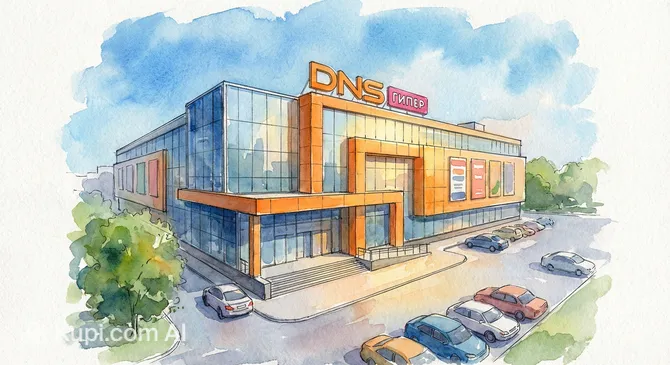
For a more comprehensive shopping experience, you can visit the Terminal Shopping Center. This is one of the city's notable shopping complexes, where various clothing, shoe, electronics, and home goods stores are gathered under one roof, and there may also be a food court and entertainment areas for the whole family. It is a convenient place for those who prefer to do all their shopping in one spot.
Terminal Shopping Center. Illustration.
Source: Kupi.com AI
Traveler photos:
Regarding markets, Dubna has food markets where local residents and farmers offer fresh vegetables, fruits, meat, dairy products, and other items. These markets are a great place to feel the local atmosphere and buy quality products. Specialized flea markets or large souvenir markets may not exist in the city, but small souvenir stalls are found near tourist sites and in some shops.
As souvenirs from Dubna, tourists often choose products with the city's symbols and its main pride—the Joint Institute for Nuclear Research (JINR). These might include magnets, mugs, or t-shirts with images of atoms, formulas, or the name of the chemical element "Dubnium." Items related to the Volga and the region's nature are also popular. Traditional Russian souvenirs can also be found in some stores.
Most shops in Dubna follow a standard schedule: approximately from 10:00 AM to 7:00 PM or 8:00 PM on weekdays and Saturdays, with slightly shorter hours on Sundays. Large supermarkets and shopping centers may have longer hours, often until 9:00 PM or 10:00 PM. The main currency for payments is the Russian ruble (RUB). Cash and bank cards of the Russian payment system "Mir" are accepted. It is important to remember that Visa and Mastercard bank cards issued outside of Russia will most likely not work.
The Tax Free refund system in cities like Dubna is generally not common for most goods and shops. This service is more frequently found in major international airports and specialized stores in large tourist centers. Therefore, you should not usually count on a VAT refund for purchases in Dubna.