Support

Kuznetsk

About

Kuznetsk is the second-largest and second most significant city in the Penza region, which, despite its industrial development, has managed to preserve the charm of an old provincial center. Located on the picturesque hills of the Volga Uplands, on the banks of the Truyov River, this city attracts travelers with its calm atmosphere and green streets. More than 80,000 people live here, creating a lively yet unhurried environment, ideal for leisurely strolls.

When traveling around Russia, many tourists choose Kuznetsk as an interesting stop to get acquainted with the culture of the Volga region. The climate here is moderate continental, with warm summers and snowy winters, allowing you to plan a visit at any time of the year, although the city looks most colorful during the warm months when parks and squares are lush with greenery.
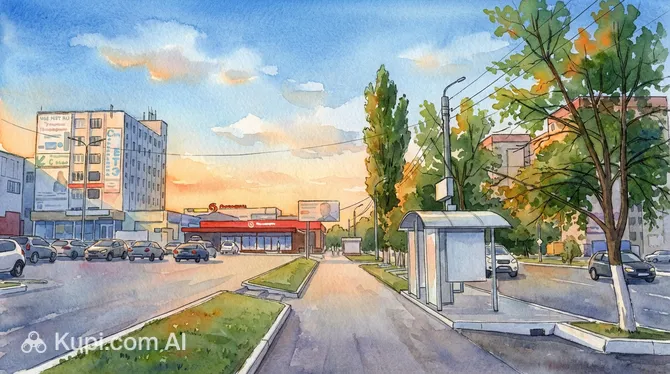
Kuznetsk. Illustration.
Source: Kupi.com AI

The past of this place is closely intertwined with craftsmanship, which is eloquently reflected in the city's name itself. The fascinating history of Kuznetsk traces its roots back to the village of Naryshkino, founded in the late 17th century. Over time, the settlement became famous for its skilled blacksmiths (kuznetsy), and it was this fact that was immortalized in the decree of Catherine II, which granted it city status. Today, echoes of the merchant and craft past can be seen in the preserved historical buildings of the central streets.

Among the main attractions, the majestic Ascension Cathedral holds a special place. Built in the Russian-Byzantine style, this temple impresses with its scale and the beauty of both its exterior decoration and its interiors. Guests should also visit the Kuznetsk Museum of Local Lore, which houses rich collections telling the story of the life, nature, and outstanding residents of the region. For quiet relaxation, the City Culture Park is a favorite leisure spot for locals.

A visit to Kuznetsk will give you a sense of coziness and a touch of real provincial life with rich traditions. It is a wonderful destination for those who want to take a break from the noise of megacities and discover new facets of Russian tourism.

Weather Overview

The climate of Kuznetsk can be described as moderate continental, with pronounced seasons, making the city attractive to visit at different times of the year. Summer here is usually warm and sunny. The hottest month is July with an average temperature of 20.1°C, while during the day the air often warms up to a comfortable 25.2°C. August is considered the most favorable month for long walks, as the number of days with precipitation drops to a minimum (about 6 days).

Winter in the city is frosty and snowy. January is the coldest period, when the average temperature drops to -9.5°C, and night figures can reach -12.3°C. In the winter months, especially in December and January, there are up to 12–13 days with precipitation. Spring arrives gradually: while in March the average temperature still stays around -3.0°C, by May the air warms up to a pleasant 13.0°C, and nature comes alive.

Expect a warm summer with occasional rain and cold, snowy winters. To pack your bags correctly and choose the best dates for your trip, we recommend checking the current weather in Kuznetsk in advance for the time of your visit.

Average monthly temperature

Average monthly precipitation

Interesting Facts

In addition to its main attractions, Kuznetsk holds many fascinating details that make its history truly unique. This city in Russia is capable of surprising travelers with its traditions and unexpected unofficial statuses.

  • A "Speaking" Name and Coat of Arms. The city was named by Empress Catherine II in 1780, when the village of Naryshkino was renamed. The choice was not accidental: the local population was famous for its skilled blacksmiths (kuznetsy). This craft is immortalized on the city's coat of arms, where an anvil, tongs, and a hammer are depicted on a red field, symbolizing the industriousness of the residents.

  • Furniture Capital of the Volga Region. Kuznetsk bears the grand unofficial title of one of the main centers of furniture production in the region. There are a huge number of furniture enterprises operating in the city—from large factories to small workshops, whose products are known far beyond the region's borders.

  • Merchant Heritage. The historical center of the city is a real open-air museum thanks to the preserved buildings of the late 19th and early 20th centuries. Many buildings that previously belonged to wealthy merchants are still in use today and give the streets a special, pre-revolutionary charm.

How to Get There

When planning a trip to the Penza region, it is important to think through the logistics in advance, as there are no direct flights to the city itself. However, the developed transport network of neighboring regions allows you to get here without much difficulty. You can study all ways to get to the city in more detail to choose the most convenient route.

There is no airport in the city of Kuznetsk, so travelers have to use the air harbors of neighboring large cities. The closest option is the Penza airport (IATA: PEZ), located in the regional center about 106 km from Kuznetsk. The journey from there by taxi or bus takes about 3 hours. If you are looking for more flight options, consider Kurumoch International Airport (IATA: KUF) in Samara. This is a major transport hub with a high passenger flow, but it is located significantly further away—241 km—and the journey will take more than 6 hours. The Gagarin airport (IATA: GSV) in Saratov is also available, located about 159 km away (about 4.5 hours on the road).

For clarity, here is a summary of the main airports:

AirportPassenger trafficDistance
Penza Airport232 000106 km
Saransk Airport120 000145 km
Gagarin1 mln159 km
Baratayevka600 000169 km
Kurumoch3.5 mln241 km

Railway communication is a very convenient way to get directly into the city. The main station—Kuznetsk Railway Station—is located right within the city limits, only 0.7 km from the center, which eliminates the need for long transfers after the train arrives. This is an important hub with a good passenger flow, accepting trains from various directions. As an alternative, you can consider the Inza station, located in the city of the same name 84 km from Kuznetsk, but this will require an additional transfer.

Below is information about the nearest railway stations:

StationPassenger trafficDistance
Kuznetsk Railway Station350 0001 km
Aseevskaya Station70 00061 km
Barysh Railway Station69 km
Bazarnaya Station71 km
Novospasskoye Station77 km
Inza Railway Station300 00084 km

Main Attractions

Kuznetsk is a city with a rich merchant history, and the best way to start exploring it is through its architectural and cultural monuments. Despite its compact size, there are places here that can surprise a traveler with details of old-fashioned lifestyle and craftsmanship.

One of the main architectural landmarks is the Ascension Cathedral. Unlike many provincial churches, it impresses with its size and the complexity of its Russian-Byzantine design. Particular attention should be paid to the powerful five-dome structure and the high three-tier bell tower, which are visible from afar. After a large-scale restoration, unique murals and a rich iconostasis were restored inside the cathedral, creating a special solemn atmosphere.

To dive into the details of local life, it's worth visiting the Kuznetsk Museum of Local Lore. The exhibition here goes beyond the standard set: visitors can see reconstructed interiors of a merchant's living room, rare paleontological finds, and a rich ethnographic collection reflecting the costumes and traditions of the peoples of the Volga region. A separate hall is dedicated to the blacksmith craft, displaying authentic tools of the masters who made the city famous.

Connoisseurs of architecture must see the Merchant Bobrov House. This stone building, executed in the style of classicism, is a striking example of the urban architecture of the past. The facade is decorated with austere columns, giving the structure a monumental and noble appearance. The house serves as an excellent example of how wealthy citizens arranged their estates, bringing elements of capital-city grandeur to the look of a provincial town.

The main symbol of the city—the famous Blacksmith Monument—greets travelers at the Station Square. The bronze figure of a master at work reminds guests how the village of Naryshkino turned into the city of Kuznetsk thanks to the labor of its residents. For quiet relaxation in the fresh air, the City Park of Culture and Leisure is ideal. This is the green heart of the city with shady alleys, where it is pleasant to hide from the summer heat and enjoy the silence.

Local Cuisine

The gastronomic scene of Kuznetsk is a reflection of the generous culinary traditions of the Volga region and classic Russian cuisine. You shouldn't look for exotic delicacies or molecular gastronomy here; the main value of local food lies in its heartiness, natural ingredients, and homey comfort. Travelers in the city are greeted by the aromas of fresh bread and rich soups, prepared with special love.

The core of most menus consists of familiar and favorite dishes. You should definitely try the local pelmeni and vareniki (hand-made dumplings)—they are often served in clay pots with sour cream or mushroom sauce. Soups occupy a special place on the table: thick borscht, solyanka, and, of course, okroshka. In the Penza region, okroshka is treated with special reverence, and during the summer season, this dish can be found in almost every cafe, with locals often debating the "correct" recipe for the dressing.

For fans of baked goods, Kuznetsk offers a variety of pies (pirogi) and rasstegai. This region is famous for its flour products, so don't miss the opportunity to snack on a golden pastry with cabbage, meat, or apples in one of the city's bakeries. It's also worth paying attention to the local honey and sweets—the Penza region is known for its confectionery traditions, and many tourists take home sets of candies or gingerbread as a delicious souvenir.

Among drinks, kvass is the undisputed leader. Local producers prepare it according to old recipes, and it perfectly quenches thirst on hot days. Popular non-alcoholic drinks also include berry mors (fruit drinks) and herbal teas brewed with oregano, mint, and St. John's wort gathered in the surrounding areas. Regarding alcohol, restaurants will offer you classic berry-infused tinctures or "khrenovukha" (horseradish vodka), which are served with meat appetizers.

The dining culture in Kuznetsk is democratic. Both small cozy cafes, where you can have a quiet lunch with the whole family, and canteens (stolovaya) that have preserved the best traditions of Soviet catering with affordable prices are popular here. For those who want to get closer to local products, it is recommended to visit the central market. There you can buy fresh cottage cheese, farm meat, and seasonal vegetables, feeling the true taste and flavor of provincial life.

Travel Tips

A trip to Kuznetsk promises to be calm and educational, as it is a cozy city with a measured pace of life and its own unique flavor. To make your stay here as comfortable as possible and free of everyday hassles, we have compiled a list of practical recommendations to help you easily navigate on the spot.

  1. Clothing and Seasonality. The climate in the region is continental, so your wardrobe should strictly correspond to the season. In winter, be sure to take a warm windproof jacket, a hat, and, most importantly, comfortable shoes with non-slip soles—the streets can be snowy. In summer, it can be hot here, so light clothing made of natural fabrics is suitable. If you plan to visit the Ascension Cathedral, remember the dress code: covered shoulders and knees, and women are recommended to have a head covering.
  2. Transport Accessibility. Kuznetsk is a compact city, and the historical center is most pleasant to explore on foot. Public transport is represented by buses and marshrutkas that run along the main streets. For trips to remote areas, it is more convenient and inexpensive to use a taxi; popular Russian aggregators (such as Yandex Go) work here, which eliminates the need to look for local service numbers.
  3. Financial Matters. Russian rubles are in use. In large supermarkets, cafes, and hotels, bank cards (Mir payment system) are accepted without problems. However, for purchases at the market, in small kiosks, or for paying the fare in a marshrutka, it is strongly recommended to have cash with you, including small bills and coins. ATMs of major banks are easy to find in the central part of the city.
  4. Health and Safety. The city is calm and safe for tourists, but basic precautions (watching your belongings in crowded places) are still worth following. Pharmacies are common, but there are few 24-hour points, so it's better to assemble a personal first-aid kit in advance. Drinking tap water is not recommended—it's better to buy bottled water in stores.
  5. Communication and Navigation. The main language of communication is Russian; English is not widely known, so it is useful to learn a few basic phrases or have a translator app. Mobile internet works stably (4G). For orientation, it's best to download offline maps in advance, such as 2GIS or Yandex Maps, as they display house numbering and organizations in provincial cities in the most detail.
  6. Local Etiquette. Residents of Kuznetsk value politeness and simplicity in communication. It is customary to greet sellers in small shops and taxi drivers. In public places, behave with restraint; it is not customary to have loud arguments or attract excessive attention with extravagant behavior.
  7. What to Avoid. You shouldn't compare the service or pace of life in Kuznetsk with megacities in a negative way in front of locals—they are proud of their history and way of life. Also, refrain from photographing people without their permission and be careful with photography around the railway station, as it is a strategic transport facility.
  8. Shopping Tip. Kuznetsk is often called the "furniture capital" of the region due to the huge number of production facilities. Of course, you can't put a sofa in a suitcase, but if you're interested in interiors, you can find high-quality home textiles here at very attractive prices. Also, be sure to visit the local market in the first half of the day for fresh honey and farm products.

By following these simple tips, you can avoid minor troubles and focus on the main thing—getting to know the merchant architecture and the soulful atmosphere of Kuznetsk. We wish you a safe journey and warm memories of your trip through the Penza region!

Entertainment & Nightlife

The nightlife in Kuznetsk is characterized by a calm and measured pace, typical for small provincial towns. You won't find noisy megacity raves or streets that don't sleep until dawn here, but it is quite possible to spend a pleasant evening with friends or family. The main center of attraction in the evening is the cozy cafes, bars, and restaurants, which on weekends transform into venues with dance music and karaoke.

Most entertainment venues are concentrated in the central part of the city, around Belinskogo, Kirova, and Lenina streets. These are the liveliest and best-lit areas, where it is pleasant to walk before visiting an establishment. The crowd here is generally friendly and relaxed. Strict face control is rarely encountered in local establishments, but a neat appearance (smart casual) will be appropriate everywhere. The average check in the city's bars and clubs is quite affordable compared to large centers, which is a nice bonus for tourists.

If you are looking for a place with a special atmosphere, be sure to pay attention to the Prancing Pony (Gartsuyushchiy Poni) pub. This establishment stands out for its fantasy-themed interior, referencing the famous works of Tolkien. Here you can not only try a variety of drinks and snacks but also immerse yourself in a cozy, almost fairytale-like setting, perfect for long evening conversations.

For fans of more active recreation and dancing, the Cherdak (The Attic) bar-club is a great choice. It is a popular spot among young people, regularly hosting parties, DJ sets, and maintaining an energetic atmosphere. On weekends, it can get quite crowded, so it's better to book a table in advance. If your soul craves music in a more refined performance, check out Jazz Caffe. As the name suggests, live music often plays here, and the interior and menu are conducive to a romantic dinner or a quiet rest after a busy day.

A classic option for evening leisure remains the cinema. The modern Gulliver Cinema Center operates within the Gulliver shopping and entertainment mall. This is a great opportunity to watch the latest international and domestic releases in comfortable halls with good sound. Near the cinema, there is a food court and coffee shops where you can discuss the film.

As for safety, Kuznetsk is a peaceful city, and evening walks along the lit central streets carry no threats. Nevertheless, to return to your hotel late at night, especially from remote areas, it is recommended to use a taxi. Online booking services (such as Yandex Go) work stably here and allow you to avoid difficulties with explaining the address.

While the main focus of this block is on evening entertainment, it should be mentioned that the city's cultural life during the day also deserves attention. Local museums and parks, mentioned earlier, create a great backdrop for daytime walks that smoothly transition into a cozy evening in one of Kuznetsk's welcoming establishments.

Parks & Museums

Kuznetsk harmoniously combines industrial power and the coziness of an old town. For tourists wishing to take a break from the hustle and bustle or immerse themselves in the history of the region, there are picturesque parks and interesting museum exhibitions telling of merchant traditions and the heroic deeds of local residents.

The heart of public life is rightfully considered the "Neskuchny Sad" (Merry Garden) park of culture and leisure. This is the main center of attraction for families with children and young people. The park is well-maintained and improved: there are attractions, modern playgrounds, and sculptures. In summer, the "Summer Theater" located here becomes a point of interest, where city festivals, concerts, and creative meetings are regularly held. A special atmosphere is created by the fountain, where it is pleasant to spend time on a hot day.

Another important public space is the Radishchev Square. It is a quiet and green corner, ideal for peaceful walks. The central place in the square is occupied by the monument to A. N. Radishchev—the famous writer and philosopher whose name is closely linked with the history of the Penza region. The square combines a tribute to the past with a comfortable environment for residents and guests of Kuznetsk to relax.

The main guardian of the city's memory is the Kuznetsk Museum of Local Lore. It is located in the building of the former "Komsomolets" cinema, which is itself a striking example of Soviet architecture. A visit to the museum is a true journey through time: the exhibitions detail merchant life with authentic furniture, and the ethnography hall introduces the costumes of the Volga peoples. Special attention should be paid to the collection dedicated to blacksmithing, which gave the city its name. The center also includes an Art Gallery with works by local artists.

It is impossible to ignore the unique memorial complex "Hill of Military Glory". This is not only a sacred place of memory but also an impressive landscape monument. A long staircase leads to the majestic sculptural group at the top, and the climb offers a breathtaking panorama of the entire city of Kuznetsk. The complex is especially beautiful at sunset, when the city below lights up and the scale of the monument is felt most acutely.

For those looking for union with nature and who appreciate off-the-beaten-path routes, we recommend visiting the "Shurchavye Springs" tract in the vicinity of the city. This is a picturesque forest corner with a complex of natural springs, the water of which is considered healing by local residents. A walk to the springs will be a great end to the cultural program, giving a sense of complete peace and quiet.

Getting Around

The public transport system in Kuznetsk is simple and intuitive, which is typical for compact cities of this size. You won't find a metro, trams, or trolleybuses here. The basis of passenger transportation consists of small and medium-capacity buses, as well as ubiquitous marshrutkas (minibuses). The route network is quite dense and covers all key areas: from the historical center and the railway station to industrial zones and residential neighborhoods.

For fare payment in Kuznetsk, it is best to always have cash with you, preferably in small bills and coins. Although digitalization is gradually penetrating here, terminals for contactless payment with bank cards are not available in all vehicles. Payment is usually made directly to the driver upon entry. The cost of a trip around the city is very affordable, around 30–35 rubles, making public transport a very budget-friendly option for a tourist.

The transport schedule is oriented towards the rhythm of the citizens' lives. Active movement begins around 6:00 AM and continues until 8:00 PM–9:00 PM. When planning evening walks, keep an important nuance in mind: after 8:00 PM, service intervals increase significantly, and some routes stop operating altogether. To avoid waiting too long for a bus, we recommend using popular navigation apps such as Yandex Maps or 2GIS, which allow you to track transport movement in real-time and build optimal routes.

The most convenient and inexpensive alternative to buses is a taxi. Popular aggregators (such as Yandex Go) work stably in the city, eliminating the need to look for local dispatch service numbers and explain the address over the phone. Vehicle arrival usually takes only a few minutes, and prices for trips around the city remain very affordable compared to large megacities. This is the best choice if you are traveling with luggage or returning to your hotel late at night.

Car sharing and organized bike rentals as urban systems have not yet been developed in Kuznetsk. However, given the short distances, walking remains the best way to get to know the city. Most attractions, including the Ascension Cathedral, the park, and museums, are within walking distance of each other, allowing you to forgo transport entirely when exploring the central part.

Accommodation

Kuznetsk is a small city, so the hotel infrastructure here is quite compact and lacks the pretension of major tourist centers. Travelers should not look for international hotel chains or luxury resort complexes here. The majority of offers consist of cozy mid-range hotels, small private mini-hotels, and guest houses. The short-term apartment rental sector is also well-developed in the city, which often becomes a convenient alternative for those who value a home-like environment.

When choosing a location to stay, the most successful decision would be to stay in the central district. Focus on Lenina, Kirova, and Belinskogo streets. Staying here will ensure you are within walking distance of the main attractions, such as the Ascension Cathedral and the Museum of Local Lore. In addition, the city center is very close to the railway station, which eliminates the need to spend time and money on long taxi rides upon arrival.

Since the number of rooms in the city is limited, competition for guests has a positive effect on the quality of service: many establishments try to maintain cleanliness and offer sincere hospitality. In most local hotels, you will be offered a standard set of amenities, including Wi-Fi and parking, and the interiors are often designed in a calm, classical style. Apartments are frequently chosen by families with children or large groups who value the ability to cook their own meals.

The price range in Kuznetsk can be described as budget-friendly and accessible. The cost of a night here is significantly lower than in Penza or neighboring large cities of the Volga region. You can find very inexpensive options for an overnight stay, as well as comfortable "luxury" rooms at very attractive prices. This makes a trip to the city easy on the wallet.

The main tip for tourists is to book your accommodation in advance. Due to the small total number of high-quality rooms, the best options may be occupied, especially on weekends or during the summer holiday season. You can use popular Russian online aggregators for your search, but for some small guest houses, it may be more reliable to confirm the booking with a direct call to the administrator.

Nearby Cities

For those who want to explore the surroundings, Kuznetsk serves as an excellent starting point for day trips to several interesting nearby locations:

Just a hundred kilometers away is the regional center—Penza. This is the most convenient option for a short visit. The city attracts tourists with its pedestrian Moskovskaya Street, the unique Museum of One Painting, and green parks. A trip here will allow you to immerse yourself in the cultural life of the region without an exhausting journey.

Ethnography lovers and fans of modern architecture should visit Saransk, the capital of neighboring Mordovia. This city is famous for its exceptional cleanliness and the majestic Cathedral of St. Theodore Ushakov. Here you can get acquainted with national flavor and visit the museum of the sculptor Erzia.

A bit further, on the banks of the Volga, is Ulyanovsk. It is interesting not only as the birthplace of V.I. Lenin with corresponding museums but also as an aviation center with an impressive open-air aircraft museum. The wide Volga panoramas will make an excellent background for photos.

CityPopulationDistance
Barysh15 97469 km
Inza17 63084 km
Zarechnyy65 15696 km
Penza523 726107 km
Syzran173 260121 km

These nearby destinations provide an insight into the diverse culture and landscapes of the region.

Shopping & Souvenirs

Shopping in Kuznetsk has its own unique specifics that distinguish it from other cities in the region. First and foremost, the city is known as a major center for furniture production, often called the "furniture capital of the Volga region." Therefore, in addition to the usual purchases of clothes and food, tourists often pay attention to home and interior goods. Otherwise, the city's commercial sphere offers a standard set of opportunities for comfortably stocking up on all necessities.

The main shopping districts and streets are concentrated in the historical center of the city. The main artery for those who like to stroll through shops is Lenina Street, as well as the adjacent Kirova and Belinskogo streets. Here, on the first floors of residential buildings, many small boutiques, mobile phone shops, bookstores, and cosmetics stores are located. A walk through this area allows you to combine viewing architecture with casual shopping.

Among the shopping centers, the most popular and modern is Gulliver Mall. This is the city's main mall, where shops of popular Russian brands of clothing, shoes, and electronics are gathered under one roof. Here you can also find a food court and relaxation areas, making it a convenient place for a family visit. It's also worth mentioning the "Solnechny" shopping center, which offers a good selection of everyday goods.

The special flavor of provincial trade can be experienced at the Central Market. This is a place where life is in full swing from early morning. It's worth stopping by for fresh farm products: seasonal vegetables, fruits, homemade cottage cheese, and meat. The market is also interesting for its stalls with honey and beekeeping products, for which the Penza region is famous. Here you can not only buy delicious treats but also chat with the locals.

When choosing souvenirs, pay attention to the products of local confectioners. Penza candies and gingerbread make an excellent sweet gift. If your luggage allows, take a look at home textiles or small interior items—tablecloths, decorative pillows, or wooden products, as the skill of local craftsmen is known far beyond the city. Also, in souvenir shops, you can find the famous Abashevo toy—a traditional clay whistle-charm that is a symbol of the region.

Opening hours for shops in Kuznetsk are standard for Russia. Large shopping centers are usually open from 10:00 to 22:00 daily. Small street shops operate from 09:00 or 10:00 to 19:00–20:00. Markets start work early in the morning, around 08:00, and wind down trade by 15:00–16:00. Regarding payment, bank cards are widely accepted in supermarkets and malls, but for purchases at the market or in small kiosks, it is strongly recommended to have cash with you.

The Tax Free system (value-added tax refund) is generally not supported in Kuznetsk shops. This service is primarily available in large tourist centers and luxury boutiques in megacities, so you should not expect to issue tax refund checks here.

Reached the end of the page?

That means the route is fully explored