Support

Minusinsk

About

Minusinsk is a cozy and colorful city located in the south of the Krasnoyarsk Territory, in the picturesque valley of the mighty Yenisei River. Often called the "Siberian Italy" because of its mild climate for these latitudes, it attracts travelers with its identity and rich heritage. Located in the heart of Russia, this city offers a unique combination of natural beauty and historical atmosphere, allowing you to see Siberia from a new, warm perspective.
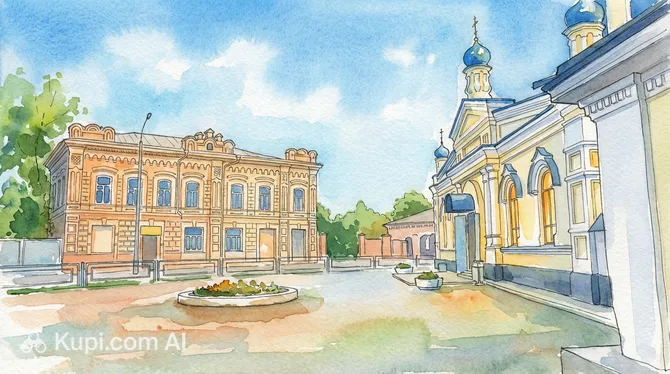
Minusinsk. Illustration.
Source: Kupi.com AI

Its geographical position in the Minusinsk Hollow creates special weather conditions here that are ideal for agriculture. The city, with a population of about 68,000 people, is widely known for its gastronomic achievements: it is here that the famous Minusinsk tomatoes are grown, whose taste and size are famous throughout the country. Summer here is surprisingly sunny, which is perfect for long walks and outdoor recreation.

The history of Minusinsk deserves special attention, as it is one of the oldest cities in Eastern Siberia, founded back in 1739. The historical center of the city is a real open-air museum, where 19th-century merchant buildings have been perfectly preserved. Stone mansions and old wooden houses with exquisite carvings convey the spirit of a bygone era and create a unique architectural appearance.

Guests of the city should definitely visit the famous N.M. Martyanov Local History Museum and enjoy the slow pace of life on the quiet, shady streets. Minusinsk is an excellent choice for those looking for authentic experiences, wishing to get acquainted with the traditions of the region, and feel genuine Siberian hospitality.

Weather Overview

The climate of Minusinsk, located in a hollow, is characterized by pronounced continentality, offering tourists vivid contrasts between seasons. If you are planning a trip, it is useful to know in advance what the weather in Minusinsk will be on your chosen dates so that you can prepare an appropriate wardrobe.

Winters here are Siberian-harsh, but, as a rule, have little snow and are sunny. The coldest month is January, with an average temperature of about -17.9°C, while at night frosts can intensify to -22.3°C. There is very little precipitation in the winter months, and the number of days with precipitation is minimal — only 4–5 per month.

Summer comes to the city with real heat. July is the peak of the season when the air warms up to an average of +20.0°C, and maximum values often reach +24.9°C. However, the summer period is characterized by the most cloud cover: in July and August, there can be up to 10–12 rainy days. Expect a warm summer with occasional rain and cold, dry winters.

Average monthly temperature

Average monthly precipitation

Interesting Facts

In addition to its famous sights, Minusinsk holds many fascinating stories and local legends that reveal the character of this Siberian city. Here are some curious facts that not all travelers know about:

  • Capital of the Siberian Tomato. Minusinsk tomatoes are a true brand and the pride of the region, often called the "Siberian miracle." The local fruits are famous for their giant sizes and benchmark flavor; a monument has even been erected in the city in honor of this vegetable, and large-scale gastronomic festivals are held annually.

  • Cultural Legacy of the Decembrists. The city became a place of exile for many participants of the 1825 uprising, but instead of isolation, they brought enlightenment here. Thanks to the Decembrists, gardening, science, and education began to develop actively in Minusinsk, and the memory of their contribution is carefully preserved in the specialized Museum of the Decembrists.

  • One of the Oldest Museums in Siberia. The local N.M. Martyanov Local History Museum was founded back in 1877, making it a unique phenomenon for the region. Its walls house rare archaeological finds and ethnographic collections detailing the history of the region's development.

  • Legendary Fertility. There is a local belief in the "Minusinsk phenomenon": they say that the local land is so fertile that even in the leanest years, the city's residents knew no want. The special microclimate of the hollow indeed allows for gardens and orchards that are untypical for harsh Siberian conditions.

How to Get There

When planning a trip to the south of the Krasnoyarsk Territory, it is worth thinking about logistics in advance. Minusinsk has good transport accessibility due to its proximity to major regional hubs. You can find out more details on how to get to Minusinsk by studying all possible routes, and below we will consider the main ways of arrival via airports and railway stations.

The most convenient way for air travelers is to fly via the neighboring city of Abakan. Abakan Airport (IATA: ABA) is located just 21.1 km from the center of Minusinsk. This is the nearest air harbor receiving regular flights. The journey by taxi or bus from here will take about 40–50 minutes, making this route the fastest.

If there are no direct flights to Abakan, many tourists choose Krasnoyarsk International Airport (IATA: KJA). It is located in the city of Krasnoyarsk, at a distance of 280.2 km from Minusinsk. This is a major international hub with a large number of flights. The journey from Krasnoyarsk Airport to Minusinsk by intercity bus or car will take about 4–5 hours.

For clarity, here is summary information on the main airports:

AirportPassenger trafficDistance
Abakan Airport415 56221 km
Krasnoyarsk International Airport4.3 mln280 km
Cheremshanka300 000281 km
Kyzyl Airport138 742290 km

Railway travel enthusiasts can arrive directly in the city. The Minusinsk station (railway station) is located within the city limits, approximately 8.7 km from the historical center. This is a convenient option for those who want to be on-site immediately without long transfers.

An alternative and often more popular option is to go to the Abakan station, located in the city of Abakan (about 20.2 km from Minusinsk). Abakan is a major railway junction where more trains arrive from different regions of the country. Buses and taxis regularly run from Abakan station to Minusinsk; the travel time will be about 30–40 minutes.

Below is information about the nearest railway stations:

StationPassenger trafficDistance
Minusinsk Railway Station250 0009 km
Abakan Railway Station365 00020 km
Khankul Station63 km
Kapchaly Station15 00064 km
Erbinskaya Station20 00096 km
Kizir Railway Station112 km

Main Attractions

Minusinsk is often called a "museum city," and it carries this title rightfully. The historical center of the city is surprisingly well-preserved, offering tourists an immersion into the atmosphere of the Siberian merchant class of the 19th century. You can walk the streets for hours here, looking at old estates, but there are places you should visit first.

One of the main points of attraction is the N. M. Martyanov Minusinsk Local History Museum. This is not just an exhibition space, but the oldest museum in Siberia, founded back in 1877. Its collection includes hundreds of thousands of exhibits, including unique archaeological finds, ancient bronze artifacts, and rare books. Tourists will find it interesting to learn about the ancient cultures that inhabited the Minusinsk Hollow and see authentic evidence of the region's rich history.

It is impossible not to notice the majestic Savior-Transfiguration Cathedral, which is the architectural dominant of the historical part of the city. Built in the first half of the 19th century, the white-stone church harmoniously combines features of Siberian Baroque and Classicism. The cathedral is interesting not only as a religious site but also as a monument of architecture that has preserved its solemn appearance through the centuries.

A special place in the cultural life of the city is occupied by the Museum of the Decembrists. Minusinsk became a place of exile for many participants of the 1825 uprising, who made an invaluable contribution to the city's development — from gardening to education. The museum's exhibition, located in a historical wooden house, allows you to immerse yourself in the atmosphere of noble life in exile and learn the touching life stories of these outstanding people.

While walking through the center, be sure to see the famous Vilner House. This luxurious stone mansion, often called the "Siberian Winter Palace," belonged to a wealthy merchant and is considered a masterpiece of Siberian eclecticism. The building strikes with its scale and rich facade decor, serving as a vivid reminder of the times of Minusinsk's merchant prosperity and an excellent place for commemorative photos.

Local Cuisine

The gastronomic scene of Minusinsk is a combination of Siberian traditions and an abundance of fresh vegetables surprising for these latitudes. Thanks to the special microclimate of "Siberian Italy," the local cuisine is famous for its rich flavors and natural products. The main pride of the city is the famous Minusinsk tomatoes: large, meaty, and incredibly aromatic. They are served fresh, used in salads, and also made into thick juices and signature sauces that can be found in family cafes and on market stalls alike.

Travelers wishing for a hearty lunch should pay attention to classic dishes. The menus of local establishments often feature rich cabbage shchi and authentic Siberian pelmeni. Fans of pastries will enjoy homemade pies with berry and vegetable fillings, as well as traditional rasstegai. Hot pirozhki and vareniki are excellent as a quick snack, being popular as street food — they are sold, as the locals say, "piping hot."

A special atmosphere can be felt at the city's farmers' markets. These are true centers of attraction for gourmets, where, in addition to vegetables and fruits, they sell taiga honey, craft cheeses, and a variety of pickles and marinades prepared according to old recipes. For drinks, you should definitely try the natural tomato juice of local production, which differs fundamentally from store-bought analogs with its rich and sweetish taste.

The brightest event for food lovers happens in August — the "Minusinsk Tomato Day" festival. At this time, the city turns into the gastronomic center of the region. Tourists can taste dozens of tomato varieties, evaluate signature dishes from chefs, and see competitions for the most giant fruit. This is the best time to get acquainted with Minusinsk's food culture in all its diversity.

Travel Tips

A trip to Minusinsk is an immersion into the atmosphere of an old merchant city with a Siberian character. To make your trip as comfortable as possible and leave only pleasant memories, we have prepared a list of useful recommendations that will help you easily navigate on the spot.

  1. Clothing and Seasonality. The climate here is sharply continental, so your wardrobe depends on the time of year. In winter (down to -20°C and below), thermal underwear, a warm down jacket, and non-slip shoes are mandatory. In summer it can be hot (up to +30°C), so bring light clothes and a hat. For walks in the historical center, where there is a lot of cobblestone and old asphalt, choose comfortable shoes with flat soles. When visiting churches, follow the dress code: covered shoulders and knees; a headscarf is desirable for women.

  2. Transport. The historical center of the city is compact and is most pleasant to explore on foot. For trips to new districts, city buses run, but taxis remain the most convenient option for a tourist. Popular Russian aggregators (e.g., Yandex Go) and local dispatch services work here. Renting a car only makes sense if you plan independent trips to the lakes of Khakassia.

  3. Finances. In supermarkets, hotels, and most cafes, bank cards (MIR payment system) are accepted without problems. However, if you plan to buy the famous tomatoes at the market or souvenirs in small shops, be sure to have cash with you. ATMs of major banks are in the center and large retail outlets, but there are not many of them on the outskirts.

  4. Health and Safety. Minusinsk is a calm and safe city, but do not leave valuables unattended in crowded places. Pharmacies are available in all districts, and there are 24-hour duty points. An important nuance: if you go in spring or early summer and plan walks in nature (including in the pine forest), be sure to use repellents against ticks and conduct regular clothing inspections.

  5. Communication and Navigation. The main language of communication is Russian; few people know English. For orientation, it is best to download offline maps (2GIS or Yandex Maps); they work most accurately here and show transport routes. Wi-Fi is available in most cafes and hotels, and mobile internet from the "Big Four" operators is stable throughout the city.

  6. Local Etiquette. The city's residents are characterized by Siberian hospitality but value restraint. It is customary to greet sellers in small shops and taxi drivers. In public places and museums, try not to make noise. If you need help, feel free to contact passers-by — they will gladly show you the way.

  7. What to Avoid. You should not compare Minusinsk with metropolises in a negative way or criticize the provincial pace of life — local residents are very proud of their history and the city's uniqueness. Also, remember that in Russia, drinking alcohol on the streets and in parks is prohibited and subject to a fine.

  8. Tip for Gourmets. If your trip falls in August or September, do not buy vegetables in supermarkets. Head to the central market or special weekend fairs. That's where you can find real, sweet Minusinsk tomatoes straight from the garden, which taste like fruit.

By following these simple tips, you will be able to feel confident and safe in Minusinsk. May your acquaintance with "Siberian Italy" be easy, tasty, and full of interesting discoveries!

Entertainment & Nightlife

Minusinsk is a city with a measured pace of life, so do not expect the booming nightlife of a metropolis here. However, this does not mean that evenings here are boring. Nightlife and entertainment in the city have their own cozy, "intimate" character. Locals and tourists prefer to spend time in atmospheric venues where a delicious dinner smoothly transitions into a dance program or a karaoke party.

The epicenter of evening activity can be called the area around Abakanskaya Street and the adjacent blocks in the new part of the city. Most cafes, bars, and shopping centers are concentrated here. Unlike the historical center, which quiets down after dark and becomes an ideal place for romantic walks in the silence of old mansions, the new part of the city lives more dynamically.

The format of most evening venues in Minusinsk is restaurant-clubs or gastropubs. There are few pure nightclubs in the conventional sense, so places operating until late at night (usually until 02:00–04:00 on weekends) with a dance floor and live music are popular. The crowd here is diverse but friendly; the dress code is smart casual, although ladies often choose evening outfits for a restaurant visit.

A special place in the cultural life of the city is occupied by the Minusinsk Drama Theater. This is the true pride of the region and a center of attraction for the intellectual public. Attending an evening performance is one of the best ways to spend time, enjoying the high level of productions. After the theater, many go for dinner at nearby cafes to discuss the show.

Regarding daytime entertainment, in addition to museums, it is worth paying attention to the city parks and cinemas. On warm days, the Park of Culture and Leisure becomes the main venue for family leisure, with rides operating and city festivals taking place. This is a great place to switch off after excursions before an evening out.

Practical tips for tourists:

  • Safety: Minusinsk is a calm city, and walking along the lit central streets (Abakanskaya, Timiryazeva) is safe. However, at night, it is better to avoid unlit outskirts and private residential sectors.
  • Transport: Public transport stops running quite early, around 21:00–22:00. For night travel, it is highly recommended to use a taxi. Popular aggregators work here; a car can be called via an app, which saves you from having to look for local service numbers.
  • Prices: The average check in evening venues will pleasantly surprise guests from large cities — dinner with drinks will cost significantly less than in capitals.

Parks & Museums

Minusinsk offers its guests a wonderful balance between educational leisure and outdoor recreation. The city, which has preserved the charm of old merchant Russia, is famous not only for its architecture but also for its unique green zones and museum collections that can compete with the exhibitions of large metropolises in terms of richness.

A true natural treasure and the "green lungs" of the city is the famous Minusinsk Pine Forest. This relict forest, bordering the city limits, is a unique natural monument. The air here is filled with a healing coniferous scent, making the forest an ideal place for health walks, Nordic walking, and picnics. For more traditional leisure, the city Park of Culture and Leisure is suitable — a cozy space with well-kept alleys where rides operate and city festivals are held in the summer, creating an atmosphere of carefree fun.

The cultural life of the city revolves around the legendary N.M. Martyanov Local History Museum. This is not just a repository of antiquities, but one of the oldest museums in Siberia, enjoying world renown. Tourists should visit it for the unique collection of bronze items from ancient steppe cultures and the richest scientific library. Another important point is the Museum of the Decembrists, located in a historical house. Here, in an intimate setting, you can learn about the life and fates of the exiled nobles who, finding themselves in Siberia, did not lose heart but engaged in enlightenment and gardening.

In addition to museums, the historical center of Minusinsk itself is perceived as an open-air architectural exhibition. While walking through the old streets, pay attention to the stone merchant mansions and the Savior-Transfiguration Cathedral building. These structures form the unique look of the city, transporting travelers to the atmosphere of the 19th century when Minusinsk was a prosperous trading center.

Lovers of unusual experiences should check out the private Museum of Retro Cars and Motorcycles, created by the Mezhov family of enthusiasts. This place, which not all guidebooks know about, stores lovingly restored Soviet cars, motorcycles, and household items from the last century. Here you can not only see rare equipment but also hear live stories about each exhibit from the owners themselves.

Getting Around

The public transport system in Minusinsk is simply organized and typical of many small cities in Russia. There are no trams or trolleybuses here, and the main means of transportation are buses and minibuses (marshrutkas). The route network covers all areas, reliably connecting the historical center ("Old Town") with modern residential quarters ("New Town") located on different sides of the Minusinsk Channel.

Fares are paid to a conductor in the cabin or to the driver upon exit. Although digitalization is gradually coming to the city and terminals are appearing in many buses, travelers are strongly recommended to have small amounts of cash with them. Cards are not always accepted in private minibuses, and terminals may work intermittently.

It is important for tourists to remember the specific schedule: public transport finishes operation quite early. After 20:00–21:00, the number of trips is sharply reduced, and it becomes problematic to leave by bus. For evening walks, it is better to consider alternative options for moving around in advance.

The most reliable way to get to your destination late at night is by taxi. Popular federal aggregators (for example, Yandex Go) operate in the city, through which you can order a car and pay for the trip with a linked card. Local dispatch services also operate, offering trips at reasonable prices. The car arrival time is usually just a few minutes.

Thanks to the compactness of the historical center, many attractions can be comfortably explored on foot. This is the best way to see the ancient architecture. In the summer season, kicksharing services (electric scooter rental) are available for moving along the embankment and park zones, which are convenient for short trips.

If you need to get to neighboring Abakan, with which Minusinsk actually forms a single agglomeration, you can use regular intercity buses or taxis. Transport communication between the cities is intensive, and the travel time takes less than an hour.

Accommodation

The hotel sector in Minusinsk corresponds to its status as a cozy provincial city. Here, travelers will not find large international hotel chains or luxury five-star complexes. The basis of the offer consists of small private hotels, mini-hotels, and guest houses, creating an intimate, almost home-like atmosphere. This format perfectly complements the experience of traveling through the heart of Russia. The segment of short-term apartment rentals is also widely developed, which often becomes a convenient solution for families with children or large groups.

When looking for accommodation, it is practical to focus on the city's informal division into two parts: the Old Town (historical center) and the New Part.

  • The Historical Center is an excellent choice for those who want to immerse themselves in the atmosphere of the merchant past. Staying in this area, tourists are within walking distance of the Savior-Transfiguration Cathedral, the Martyanov Museum, and old estates. Evenings here are characterized by peace and quiet.
  • The New Part of the city (near Abakanskaya Street) will suit those who value developed urban infrastructure. Modern shopping centers, most cafes, and convenient transport interchanges are concentrated here. Life in this area is more dynamic, and the choice of accommodation options is generally wider.

Important booking tip: At ordinary times, finding a free room is not difficult, but the situation changes in August. During the city's main holiday — "Minusinsk Tomato Day" — the city experiences a real tourist boom. If your trip falls on these dates, it is highly recommended to book accommodation in advance, 1–2 months ahead, as the best options are taken instantly.

The price range in Minusinsk can be described as budget and mid-range. The cost of living here is significantly lower than in large metropolises. For booking, it is convenient to use popular Russian online aggregators. Local specifics should be considered: some small guest houses may not be listed on major platforms, so it is sometimes useful to find their contacts on maps and call the administrators directly.

Nearby Cities

For those who want to explore the surroundings, Minusinsk serves as an excellent starting point for day trips to several interesting nearby places:

Just 18 kilometers from the city, on the opposite bank of the Yenisei, lies Abakan — the capital of the Republic of Khakassia. It is an ideal destination for a short visit: here you can get acquainted with the original culture of the region at the National Local History Museum, which houses ancient stone statues, or take a walk through the famous topiary art park "Gardens of Dreams."

For a longer trip, consider Krasnoyarsk, located about 4 hours away. This is a major cultural and industrial center of Siberia, known for its "Stolby" Nature Reserve, majestic bridges over the Yenisei, and historical architecture. A trip here will allow you to plunge into the rhythm of a big city and see the iconic landmarks of the region.

Also very close is Chernogorsk — a city of mining glory. It will be of interest to fans of Soviet monumental architecture and the history of the development of Siberia's coal basins. Due to its proximity to Minusinsk, a visit here will not take much time but will complete the picture of life in the region.

CityPopulationDistance
Abakan181 70918 km
Chernogorsk75 06728 km
Sayanogorsk60 31769 km
Sorsk11 416101 km
Artyomovsk29 754135 km

These nearby destinations provide an overview of the region's diverse culture and landscapes.

Shopping & Souvenirs

General Overview. Shopping in Minusinsk is more practical and gastronomic in nature than entertaining. Here you will not find boutiques of global high-fashion brands, but you can purchase high-quality natural products and unique goods of local production. The city is famous for its agricultural achievements, so the main purchases for tourists are often the gifts of Siberian nature and, of course, the legendary tomatoes.

Main Shopping Streets. The center of modern trade is Abakanskaya Street, located in the new part of the city. This is a busy thoroughfare along which most clothing, electronics, mobile phone stores, and cafes are concentrated. A walk along Abakanskaya will allow you to find everything you need for your trip. In the historical part of the city ("Old Town"), there are fewer retail outlets, mainly represented by small convenience stores and souvenir shops at museums.

Shopping Centers. For a more familiar shopping experience, it's worth checking out the "Festival" shopping mall. This is one of the largest complexes in the city, where mass-market stores, children's goods, and cosmetics are gathered under one roof. The "Slavyansky" shopping center is also popular with locals, offering a wide range of home goods and clothing at affordable prices.

Markets. The true heart of Minusinsk trade is the markets. The Central Market and seasonal fairs are a must-visit, especially in late summer and autumn. This is where you can buy the freshest vegetables, taiga berries (lingonberries, cranberries), cedar nuts, and local honey. The atmosphere at the market is lively and colorful, and sellers often let you try the product before buying.

Souvenirs. The main brand of the city is the Minusinsk tomato. In season (August-September), tourists take boxes of these sweet fruits with them. At other times of the year, seeds of local tomato varieties, which are valued by gardeners throughout Russia, make a great gift. It is also worth paying attention to Siberian delicacies: cedar nut brittle, pine cone jam, herbal blends (sagan-daylya, Ivan tea), and birch bark products.

Working Hours and Payment. Large shopping centers and supermarkets usually operate daily from 10:00 to 21:00 or 22:00. Small shops may close earlier — at 18:00–19:00, and have reduced schedules on weekends. Bank cards (of the national payment system) are accepted almost everywhere, including most stores and cafes. However, for purchases at the market, in kiosks, or souvenir shops, it is recommended to have cash with you.

Tax Free. The tax refund system (Tax Free) is practically non-existent in Minusinsk. Tourists should not count on this service, as it is available mainly in metropolises and premium brand stores, which are not present in this small city.

Reached the end of the page?

That means the route is fully explored