Support

Roslavl

About

Roslavl is a cozy and ancient city in the Smolensk region that attracts travelers with its calm atmosphere and rich past. Founded as a princely fortress, it has preserved the charm of a quiet province where time seems to slow its pace.

The city is situated on the picturesque left bank of the Oster River and serves as an important transport hub for the region. If you are planning a trip to Russia and want to see not only megacities but also small towns with a soul, Roslavl is an excellent choice. Today, about 50,000 people live here, and the climate is pleasantly mild, typical of the central belt.
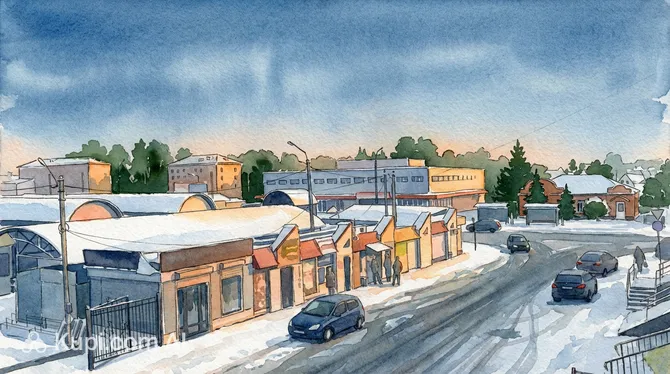
Roslavl. Illustration.
Source: Kupi.com AI

The ancient history of Roslavl dates back to the 12th century, when the Smolensk Prince Rostislav Mstislavich founded a military outpost here to protect the southern borders. The famous "Burtseva Gora" (Burtsev Hill) settlement serves as a reminder of those times—it is the historical heart of the city, offering a panoramic view of the surroundings. This site literally breathes legends and is a must-visit spot.

Among the architectural landmarks, the Spaso-Preobrazhensky Monastery holds a special place, its walls remembering events spanning several centuries. Tourists will also enjoy a walk through the city center, which features preserved 19th-century merchant mansions and the railway station building, itself an architectural monument. Roslavl invites guests to enjoy leisurely walks and discover pages of the past away from the city bustle.

Weather Overview

The climate of Roslavl can be described as moderate continental, with a mild change of seasons. Summer here is usually warm and comfortable for tourism, without exhausting heat. The warmest month is July, when the average temperature is about +18.5°C, and during the day the air often warms up to +22.8°C. However, be prepared for precipitation: mid-summer is also the wettest time of year, with rain possible up to 16 days a month.

Winters in the city are moderately frosty and snowy. The coldest month is January with an average temperature of -4.9°C and lows around -7.0°C. Spring arrives gradually: while sub-zero temperatures still persist in March, by May the air warms up to an average of +12.3°C, marking the start of the tourist season. In autumn, September is considered the most pleasant month, retaining the remnants of summer warmth.

When planning your trip dates, it is useful to check a detailed forecast so that nature's surprises do not disrupt your plans. The current weather in Roslavl will help you pack your suitcase correctly. In general, expect a warm summer with frequent rains and a cool winter with a stable snow cover.

Average monthly temperature

Average monthly precipitation

Interesting Facts

Beyond its main attractions, Roslavl holds many fascinating secrets and historical details that reveal themselves only to the attentive traveler. Here are a few facts that offer a new perspective on this city:

  • Older than Moscow. Roslavl is one of the oldest cities in the country. It was founded by Prince Rostislav Mstislavich in 1137, making it 10 years older than the current capital of Russia.

  • Homeland of the creator of "Millennium of Russia." The famous sculptor and artist Mikhail Mikeshin was born in the Roslavl district. He was the author of iconic monuments such as the "Millennium of Russia" in Veliky Novgorod and the monument to Catherine II in Saint Petersburg.

  • Castle-style station. The Roslavl railway station, built in the 19th century, is considered a true architectural gem. Thanks to its pseudo-Gothic elements and expressive brickwork, the building resembles an old mansion or a small castle more than a utilitarian transport facility.

  • Evolution of the name. Originally, the city was named Rostislavl in honor of its founder. However, over time, influenced by natural speech and for ease of pronunciation, the name was simplified, losing a few syllables and transforming into the modern version—Roslavl.

How to Get There

When planning a trip to the Smolensk region, it is important to think about logistics in advance. The city is located at the intersection of historical paths, making it accessible by various modes of transport. You can find out more about how to get to Roslavl to choose the most convenient route for you.

There is no airport in the city of Roslavl itself, so air travel will require a transfer to ground transportation. The closest option is Gomel Airport (IATA: GME), located in the city of Gomel. It is approximately 200 km from Roslavl, and the journey from there by taxi or bus will take roughly 5 hours and 20 minutes. This is a regional airport that accepts flights from various directions.

Another option is Vitebsk Airport (IATA: VTB), which is located in the city of Vitebsk at a distance of about 209 km from Roslavl. Travel time will be approximately 5.5 hours. You can also use Grabtsevo Airport (IATA: KLF) in Kaluga. It is located 238 km from your destination, and the transfer will take about 6 hours.

For convenience, here is a summary of the main airports:

AirportPassenger trafficDistance
Bryansk Airport120 km
Mogilev181 km
Gomel Airport74 000200 km
Vitebsk Airport10 000209 km
Grabtsevo100 000239 km

Railway transport is often a more convenient way to reach the destination directly. The main station, Roslavl-1, is located right in the city of Roslavl, just 1.3 km from the center. This eliminates the need for long taxi rides upon arrival.

As an alternative major hub, you can consider Klimovichi station, located in the town of Klimovichi. However, keep in mind that it is situated about 72 km from Roslavl, and you will need additional time (about 2 hours) for the transfer.

Below is information about the nearest railway stations:

StationPassenger trafficDistance
Roslavl-1 Railway Station250 0001 km
Stodolishche Station30 km
Pochinok Railway Station58 km
Klimavichy Railway Station1.2 mln72 km
Yelnya Railway Station73 km
Zhukovka Railway Station74 km

Main Attractions

Your acquaintance with the city should begin at its historical heart—the "Burtseva Gora" settlement. This is the spot where the fortress that gave birth to modern Roslavl was founded in the 12th century. Today, you can see the earthen ramparts of the ancient citadel and a monument to the city's founder, Prince Rostislav Mstislavich. From the top of the hill, a magnificent panorama of the Oster River and city quarters opens up, making it the perfect place for your first photos and leisurely strolls.

One of the main architectural landmarks is the Spaso-Preobrazhensky Monastery. Founded in the 16th century, it has survived many historical events and maintained its spiritual significance. Tourists are drawn here not only by the peaceful atmosphere but also by the majestic cathedral with its rich interior. The monastery grounds are well-maintained and beautiful at any time of year, serving as a true island of tranquility.

Culture and local history buffs should definitely stop by the Roslavl Museum of History and Art. The museum's exhibition tells the detailed story of the region's rich past, from archaeological finds to 19th-century merchant life. Special attention is paid to famous natives of the Roslavl land, including the sculptor Mikhail Mikeshin. It is an excellent opportunity to gain a deeper understanding of the traditions and spirit of this ancient Russian city.

Another gem of the city is the Church of the Ascension of the Lord, built in the first half of the 19th century. This temple is a wonderful example of Classicism and stands out for its harmonious architecture. The church is active, and many travelers note its special, bright energy, as well as the beauty of its iconostasis and interior frescoes.

Local Cuisine

Roslavl's gastronomic map is a reflection of its geographical position and history. Being at the junction of regions and very close to the border, the local cuisine harmoniously combines classic traditions of Russia with a noticeable influence of Belarusian culinary arts. Simple, hearty, and "honest" food based on local products, seasonal vegetables, and forest treasures is valued here.

From the main dishes, tourists should definitely try draniki (potato pancakes) and various versions of potato casseroles—a result of the proximity to Belarus. Potatoes are prepared masterfully here: with mushrooms, meat, or simply with sour cream. Traditional Russian soups are also highly regarded: thick, rich borscht, shchi made from sauerkraut, and solyanka, which warms you up perfectly in cool weather. Fans of pastries will enjoy local pies (rasstegai and kulebyaka) with fillings of berries gathered in the Smolensk forests.

Among drinks, traditional non-alcoholic options are popular in Roslavl. On a hot day, homemade bread kvass, often prepared according to old recipes, is the best way to refresh yourself. In the cold season, you will be offered hot herbal tea with thyme or mint, as well as berry mors (fruit drinks) made from cranberries and lingonberries—true vitamin bombs that boost the immune system.

The food culture in the city is quite conservative and cozy. There is no abundance of pretentious fine-dining restaurants; instead, locals and guests prefer small cafes and canteens with a homey atmosphere. The main dining establishments are concentrated in the city center and near the station. For those who want to try the freshest products, it is worth visiting the city market: here you can buy local honey, homemade cottage cheese, pickles, and fresh seasonal fruits directly from farmers.

Travel Tips

A trip to Roslavl is an immersion into the steady life of an ancient Russian city where every stone breathes history. To make your trip as comfortable as possible and leave only warm memories, we have compiled a list of useful recommendations to help you feel confident.

  1. Clothing and weather preparation. The climate here is temperate, but the weather can be changeable. Even in summer, it doesn't hurt to have a light windbreaker and an umbrella with you, as rain is not uncommon. Since Roslavl is a city with historical terrain, be sure to choose comfortable flat shoes for walks along the "Burtseva Gora" settlement and ancient streets. If you plan to visit the Spaso-Preobrazhensky Monastery or other churches, remember the dress code: women are advised to cover their heads with a scarf and wear a skirt below the knees, and men should wear trousers rather than shorts.

  2. Transport accessibility. Roslavl is quite compact, and most attractions in the center can be explored on foot—this is the best way to soak up the city's atmosphere. Public transport consists of buses and minibuses that run along the main streets. For more comfortable movement, especially in the evening or with luggage, it is convenient to use taxi services; popular Russian aggregators (such as Yandex Go) and local call services work here.

  3. Financial matters. The official currency is the ruble. Chain supermarkets, pharmacies, and most cafes accept bank cards from Russian payment systems. However, when traveling in Russia, and especially in small towns, it is important to always have cash with you. You will need it to pay for fares in minibuses, purchases at the city market, or in souvenir shops. ATMs of major banks are concentrated in the city center and large retail outlets.

  4. Safety and health. Roslavl is a peaceful city, but observing basic precautions won't hurt: do not leave belongings unattended and avoid unlit outskirts at night. There are pharmacies in the city, but there are few 24-hour points, so it is better to assemble a personal first-aid kit with necessary medications in advance. Drinking tap water is not recommended; it is better to buy bottled water.

  5. Connectivity and navigation. All major mobile operators (the "Big Four") work reliably in the city. Free Wi-Fi is available in some cafes and hotels, but do not rely on it in the street. For orientation, we recommend downloading offline maps (such as 2GIS or Yandex Maps) in advance, as they contain up-to-date information on house numbers and organizations, simplifying your search for the right address.

  6. Local etiquette. Roslavl residents are generally friendly and welcoming. It is customary to say hello when entering small shops or approaching passers-by. Special respect should be shown on the territory of the monastery and churches: speak quietly, do not photograph monks and parishioners without their permission, and turn off your mobile phone's sound.

  7. Things to avoid. Do not consume alcoholic beverages in public places (parks, squares, on the streets)—this is prohibited by law and causes disapproval among locals. Also, try not to be too noisy in the evening in residential quarters, respecting the peace of the townspeople.

  8. Useful tip. Be sure to visit the local market in the first half of the day. It is not only a place for shopping but also a colorful location where you can find the freshest seasonal products: in summer—forest berries (blueberries, wild strawberries) and mushrooms gathered in the surrounding forests, as well as homemade honey and pickles from local farmers.

Roslavl reveals itself to those who are not in a hurry and are ready to listen carefully to its quiet stories. By following these simple tips, you can avoid everyday troubles and fully concentrate on the beauty of the ancient ramparts and cozy streets of this wonderful city.

Entertainment & Nightlife

The nightlife and entertainment scene in Roslavl is characterized by its quiet, provincial nature. Here you won't find noisy club districts or all-night raves typical of megacities. Evening leisure in the city primarily consists of cozy dinners in cafes, karaoke, and leisurely walks. It is a great place to escape the hustle and bustle and spend time with friends or family in a relaxed setting.

The city's main streets—Sovetskaya and Proletarskaya—become the center of attraction in the evening. Most dining establishments are concentrated here and in the surrounding lanes, transforming into places for dancing and fun on weekends. The crowd is diverse but predominantly local and friendly. The dress code in most places is casual; neat everyday style is appropriate everywhere, though you might choose something more festive for a Saturday night.

The city's main entertainment hub is rightfully considered the "Fabrika" entertainment center. This is a versatile venue that brings a modern cinema, a pizzeria, and an arcade zone under one roof. People come here with children during the day or in the evening to catch the latest movie releases or sit in the cafe. Another popular format for locals is cafe-bars with karaoke, where you can not only have dinner but also show off your vocal talents. On Fridays and Saturdays, such establishments stay open until late at night (usually until 02:00–04:00), while on weekdays, life slows down by 23:00.

Speaking of daytime entertainment, it's worth mentioning the City Park of Culture and Leisure. It is a classic green oasis with amusement rides, perfect for family walks during daylight hours. Those interested in cultural leisure will enjoy the "Yubileiny" Cultural Center (City Palace of Culture). It regularly hosts concerts by local groups, performances by touring artists, themed holidays, and theatrical productions, which are an important part of the city's social life.

Practical tips for an evening out:

  • Safety: Roslavl is a peaceful city, and walking through the well-lit center (Lenin and Sovetskaya streets) is safe even late in the evening. However, it is better to refrain from walking through remote residential sectors and unlit outskirts at night.
  • Transport: Public transport stops running quite early. If you plan to stay late at a bar or with friends, install taxi apps in advance (such as Yandex Go) or save the numbers of local dispatch services. A car usually arrives within 5–10 minutes.
  • Prices: The average bill in Roslavl's evening establishments will pleasantly surprise tourists from larger cities. Dinner with drinks will cost significantly less than in the capital.
  • Payment: Many places accept cards, but keeping a small supply of cash (especially small bills) is recommended for tipping or paying for a taxi if the app fails to work.

Parks & Museums

The cultural and natural landscape of Roslavl offers tourists a harmonious combination of quiet walks in the fresh air and a deep dive into the past. In this small city in Russia, there are no huge entertainment complexes, but there are cozy green zones steeped in history and museum spaces that carefully preserve the heritage of the Smolensk land.

The main place for recreation for citizens and tourists is the City Park of Culture and Leisure, which locals often call the "Ring" (Koltso). This name is no accident: the park is laid out on the site of ancient earthen ramparts that surrounded the fortress and has a characteristic ring structure. Shady alleys of centuries-old trees provide a pleasant coolness even on a hot summer day. The park is equipped with rides for children, benches, and walking paths, making it an ideal place for a leisurely family promenade in the city center.

A unique natural and historical area is Burtseva Gora. Although technically an archaeological site (an ancient settlement), today it is one of the most picturesque green spots in Roslavl. Climbing to the top of the hill, you will find yourself in a small square with the best panoramic view of the Oster River and city quarters. This place is especially beautiful in autumn when the slopes are covered with golden foliage, creating an atmosphere of romance and solitude.

For those who want to learn more about the region's fate, the Roslavl Museum of History and Art opens its doors. Its exhibition covers a huge span of time—from archaeological finds of the Stone Age to objects of 19th-century merchant life. Of particular interest is the collection dedicated to ethnography: here you can see authentic folk costumes, tools, and interior items that tell the story of the ancestors' lives. The museum is an important cultural center where the city's history comes to life in detail.

Art lovers should visit the museum's Exhibition Hall, which often serves as a venue for temporary exhibitions. Works by local artists and masters of decorative and applied arts are regularly exhibited here, along with visiting collections. This intimate space allows you to touch the modern creative pulse of the city and see Roslavl through the eyes of painters.

The city itself resembles an open-air museum thanks to the preserved historical buildings. Walking through the center, pay attention to the 19th-century merchant mansions and the railway station building, which resembles a medieval castle. An important architectural and spiritual monument remains the Spaso-Preobrazhensky Monastery, whose well-kept grounds with flower beds also invite contemplative relaxation.

Insider Tip: If you find yourself in the City Park, pay attention not only to the rides but also to the terrain. Walking along the alleys, you are actually walking along the top of ancient defensive ramparts. This is a rare opportunity to literally walk through history, feeling the scale of the past's fortifications that now serve peaceful purposes.

Getting Around

The public transport system in Roslavl is compact and simple, typical of small cities. There is no complex metro network, tram tracks, or trolleybus lines here. The main means of transport for locals and tourists are buses and fixed-route taxis (marshrutkas/minibuses). The route network is quite conveniently built: it connects the city center, the railway station, and residential micro-districts, allowing you to reach most necessary locations without transfers.

Fares are usually paid in cash to the driver or conductor upon entering. The ticket price is fixed and very affordable compared to large cities. An important tip for tourists: always carry small cash (coins and small denomination bills). While terminals for bank cards are appearing in some new buses, this system is not universally implemented, and it is more reliable to count on the traditional payment method. There is no need to buy complex travel passes or transport cards for a short stay here.

The transport schedule is oriented toward the city's pace of life. The first trips start around 6:00 AM, and service ends roughly between 9:00 and 10:00 PM. When planning an evening walk, keep in mind that after nine in the evening, catching a minibus can be problematic, and intervals between runs increase. Stops are marked with appropriate signs, but in fixed-route taxis, "on-demand" stops are sometimes practiced if they do not contradict traffic rules.

The most convenient and inexpensive alternative to public transport is the taxi. Popular aggregators (such as Yandex Go) operate in Roslavl, as well as local dispatch services that can be called by phone. Trips around the city are inexpensive, and the car arrival time is usually 5–10 minutes. This is the optimal choice if you are traveling with luggage or want to reach a remote attraction late at night.

As for modern mobility services like car sharing or automated electric scooter rentals, they have not yet become widespread in Roslavl. You can rent a bicycle at private rental points during the summer season, but you shouldn't rely on this as a systematic mode of transport. Given the small distances, the city center is most pleasant and easiest to explore on foot.

Accommodation

Roslavl's tourist infrastructure offers guests a modest but quite decent selection of accommodation, typical for small cities with a population of about 50,000. You shouldn't look for luxury hotel chains or large-scale resort complexes here. The offerings mainly consist of cozy mid-range private hotels, mini-hotels, and guesthouses providing basic comfort and a homely atmosphere. For those who prefer independence and their own kitchen, a wide choice of apartments and flats for daily rent is available.

When choosing a place to stay, tourists should focus on two main areas. The historical center is the most attractive location for those who want to be closer to culture and history. Staying here, you can walk to the "Burtseva Gora" settlement, the city park, and ancient temples. An alternative is the railway station area. It is convenient for transit travelers and those arriving in the city late at night, although the atmosphere here is more utilitarian and busy than in the quiet center.

The price range in the city can be described as budget and mid-range. The cost of a night's stay here is pleasantly lower than in the region's larger tourist centers. You can book a room through popular Russian online aggregators, but in Roslavl, direct booking by phone is still relevant. A call to the hotel often helps not only to guarantee check-in but also to clarify important details, such as the availability of hot water during summer maintenance periods.

Although there are usually no problems finding vacancies on regular days, experienced travelers advise booking accommodation in advance if the trip is planned for the summer season or long public holidays. On peak dates, the demand for comfortable rooms in the city's best hotels can exceed supply.

Nearby Cities

For those who want to explore the surroundings, Roslavl serves as an excellent starting point for day trips to several interesting nearby locations:

Just a couple of hours away is Smolensk—one of the oldest cities in Russia. This destination is a must for history lovers: here you can see the majestic Smolensk fortress wall, called the "stone necklace of the Russian land," and visit the grand Assumption Cathedral towering over the city. A walk through the ancient streets and the Dnieper embankment will leave a lasting impression.

Another interesting option is a trip to Bryansk. The city is famous for its green parks and the "Kurgan of Immortality" memorial complex. It is also worth visiting the Svensky Assumption Monastery—one of the oldest and most beautiful monasteries in the region, located in a picturesque spot on the banks of the Desna River.

If you are interested in small towns with industrial history, you can stop by Yartsevo. The town is known for its textile past and the beautiful Church of Peter and Paul, which is a brilliant example of early 20th-century architecture.

CityPopulationDistance
Pochinok8 54558 km
Klimavichy15 40870 km
Yelnya8 99373 km
Zhukovka16 87874 km
Mstislavl10 20175 km

These nearby destinations allow you to get a sense of the region's diverse culture and landscapes, making your journey even more fulfilling.

Shopping & Souvenirs

Shopping in Roslavl is calm and utilitarian, reflecting the steady pace of life in a small provincial city. Here you won't find huge malls with luxury boutiques or outlets of global brands. The trade sphere is primarily oriented toward the everyday needs of locals, offering clothing, electronics, and food. For a tourist, this is an opportunity to purchase essentials and get acquainted with local products without the hustle and queues typical of megacities.

Main commercial life is concentrated in the city center, along the main transport arteries—Sovetskaya and Proletarskaya streets. Walking here, you can find many small shops located on the ground floors of buildings. This is a mixed development where mobile phone stores, pharmacies, clothing shops, and bookstores coexist. This is the most convenient place for spontaneous purchases while sightseeing.

There are several shopping centers in the city which, although smaller than those in the capital, offer a decent assortment. One popular spot is the "Moskovsky" Shopping Center. Under one roof, it gathers shops for clothing, shoes, cosmetics, and household goods. It is a convenient location if you need to buy something forgotten or just pass the time during rainy weather.

The true heart of local trade is the City Market. This place is a must-visit if you want to feel the lively atmosphere of the city and buy the freshest products. The market is famous for its seasonal offerings: in summer and autumn, the stalls overflow with forest berries (blueberries, lingonberries), mushrooms, and vegetables from local gardens. You can also find homemade cottage cheese, sour cream, and meat from farmers in the surrounding villages. Besides food, the market sells inexpensive clothing and household items.

As souvenirs from Roslavl, people most often bring gastronomic gifts and folk crafts from the region. Pay attention to products made from Smolensk linen: tablecloths, towels, or clothing, which are famous for their quality and eco-friendliness. Those with a sweet tooth should look for the famous "Smolensk konfekty" (dried jam) or local honey, which is considered one of the most fragrant in the central belt. Magnets and small paintings depicting the Spaso-Preobrazhensky Monastery or Burtseva Gora are also popular.

Most shops in the city open at 9:00 or 10:00 AM and work until 7:00–8:00 PM. Large chain supermarkets may stay open until 10:00 or 11:00 PM. Regarding payment, bank cards from Russian payment systems are widely accepted in shops and shopping centers. However, when heading to the market or small kiosks, it is highly recommended to have cash with you, as not all sellers have terminals.

The Tax Free system (VAT refund) is not available in Roslavl. This option is primarily available in large tourist centers and million-plus cities in Russia, so you should not expect to issue tax refund checks here.

Reached the end of the page?

That means the route is fully explored