Support

Vyksa

About

Vyksa is an amazing city in the Nizhny Novgorod region that breaks stereotypes about typical industrial centers. Here, deep metallurgical traditions are harmoniously intertwined with modern art, creating a unique atmosphere of creativity and progress. Located in central Russia, this city with a population of just over 50,000 people attracts travelers with its coziness, picturesque nature, and creative approach to the urban environment.

The rich history of Vyksa dates back to the 18th century and is inextricably linked with the Batashev dynasty of factory owners. It was thanks to their activities that a unique architectural and industrial complex was formed here, and the famous system of ponds was created, which remains the main decoration of the city landscape today.
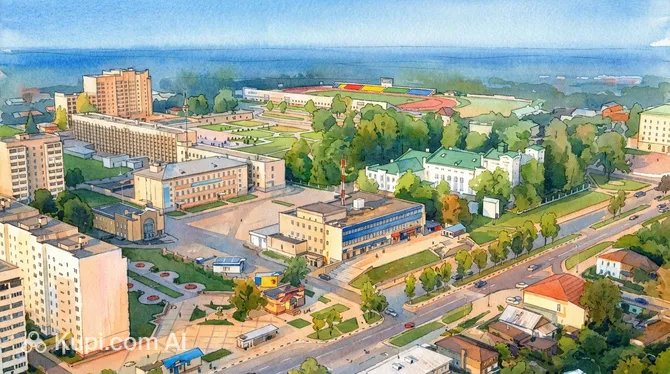
Vyksa. Illustration.
Source: Kupi.com AI

Today, the city is known far beyond the region as a capital of street art. Thanks to the annual urban culture festival, the streets of Vyksa have turned into a real open-air museum: the facades of residential buildings and industrial structures are decorated with dozens of murals created by leading artists. Special attention should be paid to the magnificent city park—a monument of landscape art where centuries-old trees coexist with modern art objects.

A trip to Vyksa will be a real discovery for those looking for unconventional routes and inspiration. This place clearly proves that industrial power and high art can exist in perfect balance, inviting every guest to become part of this amazing dialogue between eras.

Weather Overview

Vyksa's climate can be described as moderate continental, with a clear change of seasons, allowing tourists to enjoy nature's variety. Winter here is real but without extreme frosts: in January and February, the average temperature ranges from -6.7°C to -7.5°C. This is the "wettest" period of the year in terms of days with precipitation (up to 14 days per month), so the city is often draped in a picturesque blanket of snow.

With the arrival of spring, the air gradually warms up, reaching comfortable average values of +12.8°C by May. Summer brings pleasant warmth, ideal for walks to see art objects and parks. The warmest month is July, when temperatures hover around +20°C, often rising to +24.5°C during the day. Expect warm summers with occasional rain and moderately cold winters.

Autumn arrives smoothly: September still delights with mild weather and averages around +13°C, but by November, the thermometer drops to -0.2°C. To choose the perfect time for your visit and pack correctly, we recommend checking in advance what the weather in Vyksa is expected to be for your travel dates.

Average monthly temperature

Average monthly precipitation

Interesting Facts

Beyond its main attractions, Vyksa holds many fascinating secrets and records that can surprise even seasoned travelers. This city in Russia is full of unexpected discoveries where history intertwines with modern achievements.

  • World street art record. One of the world's largest monumental wall paintings created by a single artist is located here. The mural "Evolution-2" by Misha Most covers an area of 10,800 square meters on a factory workshop facade, demonstrating the scale of the local arts festival.

  • Shukhov's legacy. Vyksa is one of the few places that has preserved a unique hyperboloid water tower designed by engineer Vladimir Shukhov. Unlike the Moscow TV tower, this 1898 structure has a different lattice design and is recognized as a world-class masterpiece of engineering.

  • Mythical symbol. The coat of arms of this tough metallurgical city features a graceful unicorn. Vyksa inherited this heraldic sign from the factory founders, the Batashev brothers. It is believed that the unicorn symbolized their strength and nobility; today, it has become the city's ubiquitous brand.

  • Man-made water system. The famous Vyksa ponds, which look like natural lakes, are actually a grand 18th-century hydraulic engineering feat. Man-made to power the factory machinery, this system remains one of the largest in the region by water surface area.

How to Get There

When planning a trip to this distinctive city, it's wise to think about logistics in advance, as there are no direct flights. You can find all ways to get to the city in more detail on a separate page, but here we will look at the nearest major transport hubs that are most convenient for building a route.

There is no airport in Vyksa itself, but you can fly into the Strigino International Airport (GOJ) in Nizhny Novgorod, which is approximately 143 km from Vyksa. This is the nearest major air hub. The journey from there by taxi or bus takes roughly 235 minutes.

Another popular option, especially for transit tourists, is flying into Moscow's Domodedovo Airport (DME). It is located in Moscow, 270.4 km from Vyksa. Despite the distance, the high passenger traffic and abundance of flights make it a popular choice. The trip by ground transport from here takes about 426 minutes.

For convenience, here is a summary of the main airports:

AirportPassenger trafficDistance
Strigino1.5 mln143 km
Ivanovo Airport100 000195 km
Saransk Airport120 000238 km
Zhukovsky1.7 mln255 km
Domodedovo15.6 mln270 km

Railway transport often proves to be a more convenient option for the final leg of the journey. While Vyksa doesn't have a station for long-distance passenger trains, you can arrive at the Navashino station in the town of Navashino, which is only 23.7 km from Vyksa. This is the main "gateway" to the city for those traveling by train. From there, you can reach Vyksa by taxi or bus in about 56 minutes.

Many travelers also use the major railway hub — Murom-1 station in the city of Murom, located 27.9 km from the destination. Due to the large number of passing trains, this option is very popular. The transfer to Vyksa takes about 62 minutes.

Below is information about the nearest railway stations:

StationPassenger trafficDistance
Navashino Railway Station350 00024 km
Murom-1 Station1.2 mln28 km
Butylitsy Station46 km
Dobryatino Station57 km
Sarov (Mius) Station85 km

Main Attractions

Despite its compact size, Vyksa offers a rich cultural program. The city surprisingly combines the atmosphere of an old noble estate, the power of metallurgical production, and the boldness of modern art. Here are the main places to include in your travel itinerary.

The Batashev-Shepelev Manor Museum is the heart of historical Vyksa and the city's signature landmark. This majestic 18th-century mansion, meticulously restored, immerses guests in the era of the local factory founders. Inside is the History Museum of the Vyksa Metallurgical Plant, where you can learn about the development of metallurgy, see unique cast-iron works, and view recreated interiors of noble life. This place is interesting not only for history buffs but also for those who appreciate classical architecture.

Special attention should be paid to the Park of Culture and Rest, often called the "Vyksun Versailles." Laid out back in the Batashev era, it is now a unique space where centuries-old linden alleys stand alongside daring art objects from the modern culture festival. Tourists come here to relax by Swan Lake, see the famous "Vyksun" installation (a wooden unicorn), and simply enjoy the silence in one of the region's best parks.

For those seeking spiritual peace, the Iversky Vyksa Convent is a must-visit. Founded in the 19th century by St. Barnabas of Gethsemane, the monastery impresses with its scale and the beauty of its red-brick architecture. The main cathedral, partially restored after the destruction of the Soviet period, rises majestically over the city and attracts pilgrims with its special, prayerful atmosphere.

Fans of industrial aesthetics should look into the territory of the Vyksa Metallurgical Plant. Although it is an active enterprise, industrial tourism is actively developing here. This is where you can see the famous Shukhov Tower and the world's largest mural, "Evolution-2." You can visit as part of organized tours, which allow you to see with your own eyes how steel is born and how art transforms factory workshops.

Local Cuisine

Vyksa's gastronomic scene is an interesting mix of the hearty merchant traditions of the Nizhny Novgorod region and modern trends brought to the city by the new culture festival. People here appreciate simple but high-quality food that provides energy for work and creativity. The menus of many establishments are based on Russian cuisine: rich shchi (cabbage soup), hand-made pelmeni, and various pastries.

Gifts of local nature hold a special place on the table. Since the city is surrounded by dense forests, in season, you should definitely try the mushroom soup made from porcini mushrooms or fried potatoes with chanterelles. Proximity to the Oka River provides local restaurants with fresh river fish: pike cutlets or baked zander are common on menus and considered a delicacy. Local chefs also take pride in "Vyksa pies"—enclosed pastries with a complex filling of chicken, mushrooms, and vegetables, inspired by old recipes of factory workers.

As for drinks, traditional Russian fruit mors (cranberry or cowberry) are popular in Vyksa, perfectly refreshing in summer and boosting immunity in winter. The tea culture is very developed: you'll be offered fragrant herbal blends with oregano or Ivan-tea collected in the nearby meadows. In recent years, thanks to the development of tourism, local craft beer varieties and signature berry-infused tinctures have also appeared in the city.

The dining culture in the city has transformed noticeably. While industrial canteens once predominated, today the center of gravity has shifted toward cozy coffee shops and gastropubs. Locals and tourists prefer to have lunch in hotel restaurants or small cafes in the center, where they can not only eat but also discuss art. During festivals, street food fairs pop up, where you can grab a quick burger or farm-fresh products on the go.

Travel Tips

A trip to Vyksa is an immersion into a unique world where heavy industry coexists with refined art. To make your trip to this distinctive city as comfortable as possible and leave only pleasant memories, we have prepared a list of practical recommendations to help solve everyday issues and avoid awkward situations.

  1. Clothing and Footwear. Vyksa is a city for long walks. Exploring the massive park, street art in courtyards, and the factory grounds requires endurance, so be sure to bring your most comfortable flat-soled shoes. If you plan a tour of the metallurgical plant, remember the strict safety requirements: clothing must be closed (long sleeves and pants), and no heels or open sandals are allowed. For visiting the Iversky Convent, women will find a headscarf useful.

  2. Transport. The historical city center is compact and best explored on foot. Public transport consists of buses and minibuses, but the schedule might not always be convenient for a tourist. The most optimal way to travel longer distances (for example, to distant art objects or the station) is by taxi. Popular aggregators (like Yandex Go) work well here, and fares are very affordable.

  3. Finances. Most shops, cafes, and hotels accept bank cards, but it's still worth having some cash in rubles. It will come in handy for paying for minibus fares, making purchases at local markets, or leaving tips. ATMs of major banks are easy to find in the city center and shopping malls. Price levels in Vyksa are lower than in megacities, making your travel budget go further.

  4. Plant Tours. This is perhaps the most important tip for Vyksa: tours of the active metallurgical plant—a secure facility—must be booked in advance (ideally several days or even weeks before). You will definitely need your original passport to enter the territory. Without a prior request, you won't be able to get inside to see the famous murals and workshops.

  5. Health and Safety. Vyksa is a quiet and safe city. However, given the abundance of ponds and forests around, we highly recommend bringing mosquito and midge repellent in the summer—there can be many near the water. There are enough pharmacies in the city, but not many are open 24/7, so it's better to pack a personal first-aid kit at home.

  6. Communication and Navigation. To navigate the city, it's best to use the 2GIS or Yandex Maps apps—they show current routes and the locations of murals. Free Wi-Fi is available in most cafes and hotels, but the signal may be unstable on the streets or deep in the park, so mobile internet will be helpful.

  7. What to Avoid. Do not try to enter the plant territory on your own through fences or gates—this is a serious violation that will lead to trouble with security. Also, do not swim in the city ponds in unequipped areas; despite the picturesque view, the bottom may not be safe.

  8. Local Etiquette. Residents of Vyksa are proud of their history and status as a metallurgical city. They may seem reserved in conversation, but they are actually very helpful. It is considered good manners to show respect for the plant workers' labor and to treat the street art objects with care—do not touch installations with your hands unless intended by the author.

By following these simple tips, you can focus on the main thing—the amazing contrast of industrial power and creative freedom that Vyksa offers. May your journey be easy, safe, and full of bright discoveries!

Entertainment & Nightlife

The nightlife in Vyksa has its own special, intimate character. You won't find noisy districts with endless rows of nightclubs like in megacities. Evening leisure in the city is primarily about gastronomic pleasures, cozy gatherings in bars, and cultural events inspired by modern art. Most activity after sunset is concentrated in the central part of the city, around Lenin Street and near the city park, where locals and tourists alike love to stroll.

The atmosphere in local venues is friendly and relaxed. The crowd here is mixed: from employees of the city-forming plant to visiting artists and participants in art residencies. The dress code in most places is casual and appropriate almost everywhere. However, if you plan to visit a high-end restaurant, smart casual is preferred. Establishments usually stay open until 11:00 PM or midnight, and until 2:00 AM on weekends.

Among the specific places that define the city's evening scene, the restaurant "Aristocrat", located at the Batashev Hotel, stands out. This establishment is considered one of the most respectable in the city, offering live music (piano or violin), an exquisite interior, and European cuisine. It is an ideal place for a quiet dinner and a glass of wine in an elegant setting. Another popular hub is the Ex Libris space. While not a bar in the classic sense, it often hosts evening lectures, workshops, and creative meetups that bring together the city's active youth and intelligentsia.

Regarding daytime entertainment that flows into the evening, the cultural component is essential. The Lepse Palace of Culture hosts concerts and theatrical productions. History lovers will find the museum at the Batashev Manor interesting, and during the warmer months, long walks through the park to see unique art objects are a must.

Practical Tips and Safety:

Vyksa is quite safe for evening walks, especially in the well-lit center and the park area. However, as elsewhere, it is best to avoid unlit outskirts and industrial zones at night. For moving around the city at night, it's best to use a taxi; popular aggregators (such as Yandex Go) work reliably here, and the average fare is low. Keep in mind that public transport runs infrequently late in the evening. Prices in Vyksa's bars and restaurants are noticeably lower than in the capital, allowing for a pleasant time without a major impact on your budget.

Parks & Museums

The cultural and natural landscape of Vyksa is an amazing symbiosis of noble heritage, industrial might, and bold modern art. The city offers travelers more than just walks along alleys; it provides a real immersion into history through green zones and museum spaces organized with great love and attention to detail.

The city's main green gem is undoubtedly the Park of Culture and Rest. This 18th-century landscape art monument is often compared to the best European examples of its time. The park is unique for preserving its historical layout with centuries-old linden alleys planted back during the era of the Batashev factory founders. Today, this space has become a platform for a dialogue between eras: modern art objects and installations created by famous artists and architects are nestled among ancient trees. It is an ideal place for a leisurely promenade where nature harmoniously blends with contemporary art.

Another important natural area is the embankments of the Upper and Lower Ponds. The Vyksa ponds are a man-made water system that is as picturesque as natural lakes. The walking areas along the water are well-maintained and offer magnificent panoramas of the water surface and cityscapes. In summer, it is especially pleasant to watch the sunsets here, and the improved beach on the Upper Pond becomes a hub for sun lovers and water activities.

Among museum spaces, the central place is held by the VMZ History Museum, located in the restored manor house of the Batashev-Shepelev estate. The museum's exhibition is not just a collection of artifacts, but an interactive journey through the centuries. Here you can see unique examples of artistic cast-iron work for which Vyksa was famous, learn about historical metallurgical technologies, and immerse yourself in provincial noble life. The manor's interiors have been restored with maximum historical accuracy, allowing you to feel the atmosphere of the golden age of the Russian province.

A completely different experience is offered by the "Vyksa Air" Art Residency. This is a contemporary art space where artists from all over the world work, coming to the city for inspiration. While not a museum in the classic sense, the residency regularly opens its doors for exhibitions, workshops, and open days. Here you can see art in the making and talk to authors whose works later decorate the city streets and gallery collections.

The concept of the "Open-Air Museum" deserves special mention. All of Vyksa is one large street art gallery. Building facades, transformer boxes, and factory walls are decorated with dozens of murals and graffiti. A stroll through the streets turns into a fascinating quest to find works by leading street artists from Russia and around the world, transforming the ordinary urban environment into a space for aesthetic enjoyment.

Insider Tip: Be sure to check out the "Lesoposadka"—a pine forest adjacent to residential neighborhoods. It is a less touristy but very atmospheric place where locals love to walk. In winter, excellent ski trails are laid out here, and in summer, the air is filled with the incredible scent of sun-warmed needles, creating a natural inhalatorium right within the city limits.

Getting Around

Getting around Vyksa is easy for travelers: the city has a compact layout, and most iconic places are concentrated in the central part or within walking distance of each other. The transport system here is typical for small cities in central Russia—it is simple, affordable, and oriented toward a steady pace of life.

The main form of public transport is buses and minibuses (marshrutkas). The route network covers all city districts, connecting the historical center with residential areas (such as the Zhukovsky and Gogol microdistricts) and the metallurgical plant gates. Intervals average 10–15 minutes during peak hours, but in the evening (after 8:00 PM) and on weekends, the wait can be longer. You can pay for fare with cash to the conductor or driver, or by bank card via the terminal found in most vehicles.

For tourists, the most convenient way to get around is often by taxi. Popular federal aggregators (such as Yandex Go) as well as local dispatch services work reliably in Vyksa. Trips around the city are inexpensive compared to megacities, and a car is usually dispatched within 5–7 minutes. This is the best option if you want to reach distant art objects or are returning to your hotel late at night.

Walking is a particular pleasure in Vyksa. Given the city's status as a street art capital, moving on foot turns into a tour: walking from one building to another, you will encounter unique murals and installations. Sidewalks in the center and on the pond embankments are well-maintained, making for a comfortable walk. For cycling, the paths in the city park and zones along the Upper Pond are ideal; during the summer season, rental points for sports equipment and scooters operate in the park.

If you are traveling by private car, parking is generally not a problem. There are plenty of free parking spaces near shopping centers, hotels, and main attractions. Traffic difficulties may only arise during shift changes at the plant (morning and evening), when the flow of employees' cars significantly increases on central streets.

Accommodation

The accommodation situation in Vyksa reflects the specifics of this small but culturally significant city in Russia. You won't find a wide presence of international hotel chains here; however, the existing infrastructure is quite capable of satisfying the needs of both business travelers and those who come for the art. The hotel stock consists of one major high-end hotel, several mini-hotels, and a developed sector of private apartments.

When choosing a location, the best solution is the historical center of the city. Look for Lenin Street, Akademika Koroleva Street, and the area adjacent to the famous Park of Culture and Rest. Staying here will ensure walking distance to the main attractions, the pond embankments, and art objects, saving time and money on taxis. The city is compact, and the center is a convenient starting point for any route.

The undisputed flagship of local hospitality is the "Batashev" hotel. This modern four-star complex sets a high bar for service in the entire region. The hotel is often chosen by business travelers and those accustomed to European-level comfort: it features a restaurant, a fitness center, and spacious rooms. Due to the hotel's popularity among business travelers, it's worth booking rooms here in advance.

For more budget-friendly accommodation or for those who prefer a homey feel, several small hotels and guesthouses operate in Vyksa. They offer clean rooms and basic services at affordable prices. Additionally, short-term apartment rentals are an excellent alternative. Locals actively rent out housing, and this is often the only way to accommodate a large group or find an option with a kitchen.

Important booking nuance: Vyksa's tourist calendar has a distinct peak. During the annual urban culture festival (usually in June or July), the city's population effectively doubles with guests and participants. On these dates, finding a room on the day of arrival is impossible—all accommodation, including apartments, is booked months in advance. If your trip coincides with the festival dates, make sure to book 3–4 months ahead.

Nearby Cities

For those who want to explore the surroundings, Vyksa serves as an excellent starting point for day trips to several interesting nearby locations. The city's location allows you to reach significant historical and cultural centers of the region in just a couple of hours.

The closest to Vyksa is ancient Murom—one of the oldest cities in Russia, which is a must-visit. It is the birthplace of the legendary bogatyr Ilya Muromets and a major spiritual center with beautiful monasteries (Spaso-Preobrazhensky, Troitsky) and a picturesque embankment along the Oka River. A trip here takes less than an hour and will leave history buffs with plenty of impressions.

Another interesting destination is Arzamas. This city is famous for its unique church architecture, especially the majestic Resurrection Cathedral that dominates the historical center. Arzamas has preserved the atmosphere of an old provincial merchant town, where it is pleasant to stroll along pedestrian streets and sample local gastronomic traditions, including the famous Arzamas goose.

Below is information about cities located within convenient transport accessibility:

CityPopulationDistance
Navashino14 83024 km
Kulebaki32 51825 km
Murom109 07229 km
Melenki13 78934 km
Kasimov30 24364 km

These nearby destinations provide a more complete picture of the diverse culture and landscapes of the Nizhny Novgorod and Vladimir regions, harmoniously complementing the experience of visiting Vyksa.

Shopping & Souvenirs

General Overview: Shopping in Vyksa is more utilitarian and souvenir-oriented than recreational. You won't find the massive malls with luxury brands typical of megacities here. The city's retail sector is focused on the comfort of local residents, offering high-quality everyday goods. For tourists, the main interest lies in local souvenirs related to the history of metallurgy and modern art, which make this city unique.

Main Shopping Districts/Streets: The city's retail life is concentrated in its central part. The main artery for shoppers is Lenin Street and the intersecting Krasnye Zori Street. Walking here, you can find many small clothing stores, bookstores, mobile shops, and pharmacies. This is a convenient route that allows you to combine architectural sightseeing with buying necessary small items.

Shopping Centers: Several shopping centers in the city provide residents with everything they need. One popular spot is the "Krasnye Zori" Shopping Center, featuring chain stores for clothing, shoes, cosmetics, and electronics. The "Vyksa" Trading House and "Atrium" Shopping Center are also worth noting. These are compact modern complexes where you can find familiar Russian brands, visit a food court, or buy groceries at a supermarket.

Markets: To get a real taste of local life, visit the Central Market. This place especially comes alive on weekends. Here you can buy fresh farm products: homemade cottage cheese, meat, honey, and seasonal vegetables. Given the city's location among forests, during the season (late summer to early autumn), an abundance of fresh berries (blueberries, cowberries, cranberries) and mushrooms, gathered by locals in the ecologically clean surroundings, appears on the counters.

Souvenirs: Vyksa offers an unconventional set of commemorative gifts. First and foremost, look for items featuring the city's symbol—the Unicorn, which is depicted on the coat of arms. Souvenirs related to the metallurgical plant and the famous Shukhov Tower are also popular: magnets, mugs, and miniature models. A special category is the urban culture festival merch (T-shirts, shoppers, pins), sold in art spaces and the "Volna" cultural center. These are stylish items reflecting the city's modern art spirit.

Opening Hours and Payment: Large shopping centers and chain supermarkets usually operate daily from 09:00 or 10:00 AM to 9:00–10:00 PM. Small private shops may close earlier, around 7:00 PM, and have shorter hours on weekends. Bank cards (MIR and others working in Russia) are accepted almost everywhere, including most kiosks. However, for purchases at the market or in small souvenir shops, it's better to have cash on hand.

Tax Free: The tax refund system (Tax Free) is not common in Vyksa shops. This service is generally only available in major tourist centers and luxury boutiques in million-plus cities, so do not count on it here.

Reached the end of the page?

That means the route is fully explored