Support

Sarov

About

Sarov is a city with a truly unique atmosphere and a singular destiny, occupying an important place in the history of Russia. It is known far beyond the country's borders for its scientific potential and rich spiritual heritage.

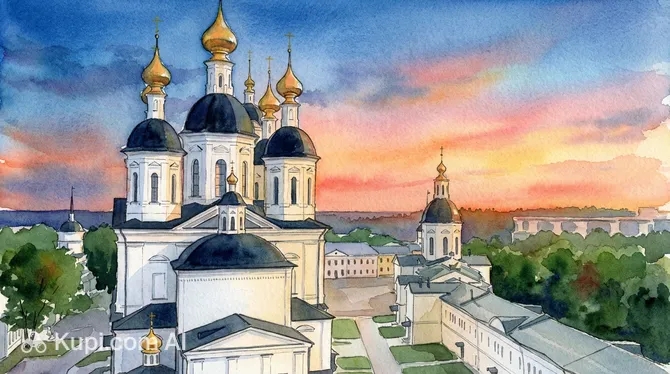
Sarov. Illustration.
Source: Kupi.com AI

Located in the Nizhny Novgorod region, Sarov is home to approximately 95,000 residents. Its geographical position and historical characteristics have largely shaped its unique path of development.

The main points of attraction and interest in Sarov are undoubtedly its status as one of the country's leading scientific research centers, where major discoveries have been made. Equally significant is the Holy Assumption Monastery—the famous Sarov Desert (Sarovskaya Pustyn), associated with the name of St. Seraphim of Sarov, which attracts pilgrims and connoisseurs of spiritual history. For a long time, Sarov was a closed city, which also left an imprint on its appearance and character, preserving a special, almost "preserved" atmosphere.

Visiting Sarov is an opportunity to touch the amazing intersection of cutting-edge science and deep spirituality, discovering a city unlike any other. If you are looking for non-trivial routes and are ready for new discoveries, Sarov will undoubtedly leave you with vivid impressions.

You can find more interesting facts on the Sarov city history page.

Weather Overview

The weather in Sarov is characterized by clearly defined seasons. Summer is generally moderately warm: the average July temperature is about +19.7°C (with maximums up to +24.3°C). Winters are quite frosty, with average January temperatures around -8.3°C (with minimums down to -10.7°C). Overall, Sarov features warm summers with periodic but light rain, and cold winters with frequent, though light, snowfall, as monthly precipitation is typically 1-3 mm. You can learn more about weather conditions on the Sarov Climate page.

Average monthly temperature

Average monthly precipitation

Interesting Facts

Sarov is a city with a multilayered history, and behind its reputation as a scientific and spiritual center of Russia lie many curious details. Here are a few facts that might surprise you:

  • The Invisible City: For decades, Sarov was absent from most publicly available geographical maps, and its residents signed non-disclosure agreements regarding their place of residence. Even public transport routes heading toward the city formally ended on the map in "an open field" or a generic "terminal point" of the nearest open settlement.

  • A Palette of Code Names: Before its historical name Sarov was restored in 1995, the city cycled through several "aliases" reflecting its top-secret status. Among them were "Object 550", "KB-11", "Arzamas-75", and the most famous, "Arzamas-16".

  • A Symbol of Reconciling Science and Faith: In a unique way, the fates of the Holy Assumption Monastery (Sarov Desert) and the All-Russian Scientific Research Institute of Experimental Physics (RFNC-VNIIEF) became intertwined in Sarov. During the Soviet era, some monastery buildings were used by the scientific center. A notable story tells how one of the founders of the nuclear center, Academician Yulii Khariton, personally facilitated the restoration and return of one of the historic monastery bells to the bell tower, which became a symbol of respect for the city's past.

  • Underground Legends: While this falls more into the category of urban legends and rumors, many believe that an extensive network of underground structures, bunkers, and laboratories exists beneath Sarov, related to the activities of the nuclear center. Given the nature of the research conducted here, such assumptions add an aura of mystery to the city.

How to Get There

Getting to Sarov, a city with a special status in Russia, can be done in several ways; however, keep in mind that entry into the city may involve certain procedures and permits. The main transport hubs used for access are located in neighboring cities, as Sarov itself does not have large passenger airports or railway stations that accept long-distance trains.

By air, the most convenient way to reach Sarov is through the airports of neighboring large cities. The closest and most significant of these is Strigino International Airport (GOJ), located in Nizhny Novgorod, approximately 147 km from Sarov. This is a major transport hub, from which you can reach Sarov by taxi or bus in about 4 hours. Another option is Saransk International Airport (SKX), located in Saransk at a distance of about 152 km. The trip from there will take just over 4 hours. You can also consider Penza International Airport (PEZ) in Penza (about 231 km), but the journey from there will be longer, approximately 6 hours.

For clarity, here is summary information on the main airports used to reach Sarov:

AirportPassenger trafficDistance
Strigino1.5 mln147 km
Saransk Airport120 000152 km
Penza Airport232 000231 km
Donskoye32 000266 km
Ivanovo Airport100 000268 km

Railway communication with Sarov is also handled through stations in nearby settlements. One of the closest is Pervomaysk-Gorkovsky station in Pervomaysk, just 31 km from Sarov. From there, the city can be reached by taxi or local transport in about 1 hour 10 minutes. Another important railway hub is the Arzamas-2 station in Arzamas, located 63 km from Sarov. Travel time from Arzamas-2 to Sarov is about 2 hours.

Here is information on the nearest railway stations:

StationPassenger trafficDistance
Sarov (Mius) Station2 km
Bereshchino Station24 km
Pervomaysk-Gorkovsky Station31 km
Shatki Station200 00058 km
Arzamas-1 Station1.8 mln61 km
Arzamas-2 Railway Station1.5 mln63 km

Upon arrival at one of these transport hubs, it is recommended to take a taxi or check for bus connections for the final leg of the journey to Sarov. Also, given the city's special status, be sure to familiarize yourself with the current entry rules and, if necessary, obtain the appropriate permits before your trip.

Main Attractions

Sarov, despite its historical status as a closed city, offers guests several iconic sites reflecting its unique dual nature—as a spiritual center and the cradle of domestic science. When planning your visit, be sure to include the following attractions in your itinerary:

One of the city's main shrines and jewels is the Holy Assumption Monastery – Sarov Desert. This place is inextricably linked with the name of St. Seraphim of Sarov, one of the most revered saints in the Orthodox world. The monastery complex, which is being gradually restored and landscaped, attracts pilgrims and tourists interested in the spiritual history of Russia. Here you can visit temples, touch the shrines, and feel a special atmosphere of peace and grace.

An integral part of Sarov's identity is its scientific heritage. A key site detailing this side of the city's life is the Museum of Nuclear Weapons of the RFNC-VNIIEF. The museum's exhibition is dedicated to the history of the creation of the national nuclear shield and the work of outstanding scientists and designers. A visit to the museum is a unique opportunity to learn more about a vital stage in the history of the country and global science, see models of historic equipment, and browse archival materials. Please note that access to the museum may be limited and requires prior approval, given the specifics of the city.

The city features several monuments immortalizing significant figures associated with Sarov. A special place among them is held by the monument to St. Seraphim of Sarov. Usually, such monuments become a focal point for believers and a symbol of the city's spiritual patronage. It serves as a reminder of the deep Orthodox traditions of this land.

For outdoor recreation and strolls, the P.M. Zernov City Park of Culture and Leisure is an excellent choice. Named after one of the organizers and the first director of VNIIEF, Pavel Mikhailovich Zernov, this park is a popular spot among locals. Here you can find amusement rides, walking paths, and relaxation areas, making it a good place for family time and getting to know the everyday life of Sarov.

Local Cuisine

The gastronomic scene in Sarov, like the city itself, has its own characteristics, largely reflecting its unique history and location in the heart of Russia. You likely won't find ultra-trendy restaurants with experimental cuisine here, but you can enjoy authentic traditional Russian dishes prepared with heart and time-tested recipes. The foundation of local cooking consists of hearty, simple, yet very tasty dishes that will warm you up and give you energy.

Be sure to try the classics of Russian gastronomy. For a starter, there is, of course, rich borscht or aromatic shchi (cabbage soup). For a main course, it is worth trying pelmeni or vareniki (dumplings) with various fillings—from meat to potato or cottage cheese. Various pirogi and pirozhki (pies and pastries) enjoy constant popularity: with cabbage, meat, mushrooms, or berries—they make a great snack or addition to lunch. Also, pay attention to dishes made from potatoes and seasonal vegetables, which are frequently featured on local menus.

Regarding drinks, in Sarov you will be offered traditional Russian kvass, which is especially refreshing in the warm season, and various mors (berry drinks) made from forest berries. Of course, no lunch or dinner is complete without tea, which is consumed here frequently and with pleasure. Among alcoholic beverages, you can find products from Russian producers. The dining culture in the city is quite conservative: locals and guests prefer to have lunch and dinner in cafes and restaurants offering Russian and European cuisine. You might also encounter "stolovaya" (canteens) offering set lunches at affordable prices, which is a kind of legacy from the Soviet period and the city's specifics as a scientific center.

The gastronomic appeal of Sarov for a tourist lies precisely in the opportunity to immerse oneself in the atmosphere of real Russian cuisine, without excessive gloss, but with an emphasis on quality and taste. Here you can appreciate signature dishes like homemade pelmeni, various pies, and, of course, hearty soups like shchi or borscht. The city's food scene is characterized more by comfort and tradition than by chasing trends, which in itself can be an interesting experience for a traveler seeking authenticity.

Travel Tips

Planning a trip to Sarov, a city with a unique history and special status? To ensure your journey goes smoothly and leaves only pleasant impressions, we have prepared some practical tips. Given the specifics of Sarov, some of these may be especially important for a comfortable and safe stay.

  1. Clothing for the Season and Holy Sites: The climate in Sarov is humid continental. In summer, bring light clothing, but don't forget a sweater or jacket for cool evenings. In winter, very warm clothes are necessary: a hat, scarf, gloves, and warm boots. In spring and autumn, dress in layers; a waterproof jacket will be useful. Always bring comfortable shoes for walking. If you plan to visit the Holy Assumption Monastery, women are recommended to have a headscarf and a skirt/dress below the knees, while men should wear trousers (not shorts).

  2. Getting Around the City: The main form of public transport in Sarov is buses, which connect different city districts. Local taxi services are also available; you can check for popular Russian apps to call them. Given Sarov's relative compactness, many central parts of the city can be explored on foot. Renting a car for travel exclusively within the city is hardly practical, and entering the city in a private or rented vehicle may require special approvals due to the city's special status.

  3. Money Matters: The official currency is the Russian ruble (RUB). You can exchange currency at bank branches. Cards from the Russian "Mir" payment system are accepted in most shops, cafes, and restaurants. However, the use of international payment systems (Visa, Mastercard, etc.) may be severely limited or impossible. It is strongly recommended to have a sufficient supply of cash rubles. ATMs for withdrawing cash with "Mir" cards are available in the city. Tipping of 5-10% is welcomed in dining establishments if you liked the service and it isn't included in the bill.

  4. Health and Safety under Special Regulations: There are pharmacies in Sarov, some of which may work 24/7 or have duty windows. Emergency medical care for Russian citizens is provided under the CHI policy; tourists from other countries are highly recommended to have valid medical insurance. In emergencies, call 103 (ambulance) or 112 (emergency services). Sarov is a city with a special permit regime, which ensures a high level of general safety. Nevertheless, always follow standard precautions. The most important thing is to strictly follow the rules of the permit regime and do not attempt to enter restricted territories.

  5. Language and Communication: The primary language is Russian. English proficiency among the general population is low, so knowing a few basic Russian phrases will be very helpful: "Zdravstvuyte" (Hello), "Spasibo" (Thank you), "Pozhaluysta" (Please/You're welcome), "Skol'ko stoit?" (How much does it cost?), "Gde nakhoditsya...?" (Where is...?). A Russian SIM card can be purchased at mobile stores (a passport is usually required). Wi-Fi is available in some hotels and cafes.

  6. Etiquette and Socializing: Be polite and respectful when communicating with locals. A standard greeting is a handshake, especially between men. In public places and transport, it is customary to behave discreetly, avoid making noise, and give up seats to the elderly, pregnant women, and passengers with children. Given Sarov's unique history and scientific status, be tactful and avoid intrusive questions about closed aspects of city life unless it is part of your official visit program.

  7. Strict Prohibitions: Firstly, given Sarov's status as a "science city" and defense development center, it is categorically forbidden to photograph or film any objects that could be considered strategic, restricted, or simply not intended for public view (institute buildings, checkpoints, specific equipment, etc.) without special permission. This can lead to very serious consequences. Secondly, never try to bypass established entry and stay rules, penetrate restricted areas, or violate the permit regime—this is strictly controlled.

  8. Plan Visits to Specific Sites in Advance: If you wish to visit the Museum of Nuclear Weapons of the RFNC-VNIIEF, which is one of Sarov's key attractions, be sure to clarify the visiting conditions well in advance. Typically, this requires a preliminary application, approval, and permit issuance, especially for non-residents. Do not count on a spontaneous visit to such places.

We hope these tips help you better prepare for your visit to Sarov and fully enjoy its unique atmosphere, where cutting-edge science, deep spirituality, and rich history are wonderfully intertwined. We wish you an exciting and educational journey to this extraordinary corner of Russia!

Entertainment & Nightlife

In the evening, Sarov offers its own special atmosphere for relaxation, which differs from the noisy nightlife of major metropolises. Here you are more likely to find cozy spots for a quiet pastime rather than large nightclubs. Nevertheless, the city provides opportunities for interesting leisure after sunset, and while there are no major nationwide brand names, an intimate local entertainment scene does exist.

The main points of attraction for evening leisure in Sarov are local bars, cafes, and some restaurants. For instance, you might visit a cozy place like the "Quiet Harbor" bar (hypothetical name), where you can spend the evening with friends over a drink and leisurely conversation. Such establishments usually offer a good selection of drinks and snacks and are characterized by a friendly, calm atmosphere. Another popular format is café-lounges, such as the hypothetical "By the Fireplace", where in the evenings, especially on weekends, you might hear live music or find small themed events. These places are valued for their homey comfort and the opportunity for a cultured evening out.

While Sarov is not famous for a developed club culture in the metropolitan sense, finding a place to dance is still possible. These might be small local clubs or dance floors, perhaps based in the city's Palaces of Culture, which are popular with the youth. Imagine an establishment called "Rhythm" (hypothetical name), operating on Fridays and Saturdays and offering popular music. The atmosphere in such places is usually simple and oriented toward locals.

Most such establishments where you can spend the evening are concentrated in central districts of Sarov, along the main streets. The dress code is generally casual; for most bars and cafes, casual style is appropriate, though a dressier look might be suitable for some restaurants with evening programs. The best time to visit is, of course, Friday and Saturday nights, when the city comes alive a bit more. Prices in Sarov's establishments are usually moderate, making evening leisure affordable.

For getting around the city in the evening and at night, the most convenient and safe option is a taxi. It is recommended to use official local services or trusted apps if they are popular in the city. Sarov, thanks to its special status and closed nature, is generally considered a safe city. However, as elsewhere, standard precautions, especially after dark and when visiting unfamiliar places, are always a good idea.

Regarding daytime entertainment, Sarov offers its guests primarily cultural and educational leisure. You can visit, for example, the unique Museum of Nuclear Weapons of the RFNC-VNIIEF (remember the specific access rules and prior arrangements) or stroll through the picturesque P.M. Zernov City Park of Culture and Leisure. Local theaters or exhibition halls may also be operating; it is worth checking their schedules immediately before your trip, as the cultural program may be oriented mainly toward city residents.

Overall, evening entertainment and nightlife in Sarov fully reflect its calm, intelligent, and somewhat reserved character. This is a place for those who appreciate soulful conversations in a cozy setting, cultural leisure, and peaceful rest, rather than loud parties until dawn in generic clubs.
Parks & Museums

Sarov, a city with a rich history and unique atmosphere, offers its guests not only the chance to touch the scientific and spiritual heritage of Russia but also to enjoy the tranquility of well-kept green zones and the educational exhibits of unique museums. Here, everyone will find something for themselves, whether it's a peaceful walk in nature or a dive into the fascinating pages of history.

The main place for outdoor recreation in Sarov is undoubtedly the P.M. Zernov City Park of Culture and Leisure. It is a wonderful place for leisurely strolls along shaded alleys, family time, and simply resting away from the city bustle. The park offers well-maintained areas where you can sit on a bench with a book or watch the local life. Additionally, Sarov is surrounded by picturesque forests that offer the opportunity to enjoy fresh air and the beauty of Central Russian nature, an ideal place for hiking enthusiasts and those seeking solitude. Within the city, you will also find small, cozy squares where you can take a break while exploring Sarov.

Speaking of cultural heritage, one cannot fail to mention the key museums of Sarov. Certainly, one of the most significant and unique is the Museum of Nuclear Weapons of the RFNC-VNIIEF. Its exhibition tells the story of the creation of the country's nuclear shield and the work of outstanding scientists. Visiting this museum is a rare opportunity to touch a vital part of domestic and world history, though it's important to remember the specific access rules and the need for prior organization. Another iconic site combining spirituality and history is the Holy Assumption Monastery – Sarov Desert. The monastery complex itself, with its restored temples and buildings, is a living historical and architectural monument. Often, monasteries organize exhibits dedicated to their history and relics, which can be interesting for understanding the spiritual life of Sarov and the role of St. Seraphim of Sarov.

Among other historically significant objects, the monument to St. Seraphim of Sarov stands out as an important symbol of the city and a point of attraction for believers and history buffs. The architecture of the monastery complex itself is also of great interest, reflecting the traditions of Russian church architecture.

For those seeking authentic experiences, we suggest not limiting yourself to well-known attractions. Stroll through the quieter, residential streets of Sarov to better feel its special, somewhat "preserved" atmosphere. Sometimes it is in such corners that you can make unexpected small discoveries and see the city from a different side. Also, if the opportunity arises, visiting a small exhibition of local artists or craftsmen can add interesting touches to your understanding of Sarov's cultural life.

Getting Around

Getting around Sarov for visitors is primarily facilitated by a system of public transport, supplemented by taxi services. Given the city's size, the transport network here is quite compact and straightforward, but it has its own characteristics to consider when planning trips.

The primary and, essentially, only form of public transport in Sarov is buses. They run on established routes, connecting various districts of the city, including residential areas, the center, and important sites. There are no metro, trams, or trolleybuses in Sarov, which is typical for cities of this scale. Occasionally, route taxis ("marshrutkas") can be found, offering a faster but perhaps slightly more expensive way to travel along similar directions as the buses.

The payment system for bus fares in Sarov is generally quite traditional. Most often, you can pay in cash directly to the driver or a conductor (if one is on the route). The possibility of using bank cards for fare payment should be clarified on the spot, as it may depend on the specific carrier. Specialized city transport cards or long-term passes may exist, but information about them is most current directly in Sarov. Regarding apps for tracking transport or buying tickets online, it is best to check their availability and functionality upon arrival. Public transport fares in Sarov are usually low and affordable; exact tariffs can be found upon boarding or on official resources of the city administration, if available.

Tourists planning to use public transport in Sarov should keep a few points in mind. Tickets, if issued in paper form, should be kept until the end of the trip. Buses usually run from early morning until late evening, though intervals may increase during evening hours and on weekends. Timetables, if posted at stops, will help you orient yourself. During peak hours, buses can be quite crowded.

As an alternative to public transport, taxi services are always available in Sarov. This is a convenient option for door-to-door travel, especially in the evening or if you are traveling with luggage. You can use the services of local taxi companies or try calling a car through mobile apps popular in Russia. Given the compactness of the city, many central areas of Sarov are also perfectly explorable on foot, allowing you to better experience its atmosphere. Carsharing systems or mass bike rentals have likely not gained wide distribution in the city.

There are no unique or historical types of transport, such as funiculars or old tram lines, in Sarov. The city's transport system is primarily focused on meeting the everyday needs of its residents, being functional and practical.

Accommodation

When planning a trip to Sarov, it is important to take care of accommodation options in advance. The city offers several types of lodging capable of satisfying various needs and budgets, though the choice may not be as wide as in major tourist centers of Russia.

In Sarov, you can find hotels of various comfort levels, ranging from budget-friendly options to mid-range hotels, as well as private apartments or flats for rent. The latter can be particularly convenient for those who prefer more independence and a home-like environment. While the number of large hotel chains may be limited, local hotels and guest houses offer a decent level of service.

When choosing a place to stay, it is worth focusing on the central districts of Sarov or those that provide convenient access to the sites you are interested in and transport infrastructure. Given the city's specifics, the choice of neighborhood may also depend on the purpose of your visit. Overall, the city is quite compact, which makes getting around easier.

It is recommended to book accommodation in advance, especially if your trip coincides with any significant city events or if you have fixed dates. For searching and booking, it is convenient to use popular online platforms that allow you to compare prices and conditions. Direct booking via hotel websites or by phone is also an option if such information is available.

The price range for accommodation in Sarov can vary: you can find both more economical options and mid-range housing. Luxury hotels are likely to be less represented here. In any case, planning ahead will help you find the optimal variant that meets your expectations and budget.

Nearby Cities

For those who want to explore the surroundings, Sarov serves as an excellent starting point for day trips to several interesting nearby places:

Among them, the following stand out particularly:

Arzamas, located just 61 km away, attracts visitors with its rich history and numerous Orthodox shrines. This ancient city is known as the "city of geese" and is famous for its majestic Resurrection Cathedral, as well as other churches and monasteries that create a unique atmosphere of a Russian merchant town. A trip to Arzamas will be an immersion into history and spirituality.

Murom, located approximately 109 km from Sarov, is one of the oldest cities in Russia, steeped in legends of the bogatyr (warrior) Ilya Muromets and Saints Peter and Fevronia. Travelers in Murom can expect the Transfiguration and Holy Trinity Monasteries, unique architectural monuments, and picturesque views of the Oka River.

Saransk, the capital of the Republic of Mordovia, is located 145 km away. This is a modern, dynamically developing city that will surprise guests with its neatness, interesting museums such as the Museum of Mordovian Folk Culture and the S.D. Erzia Museum of Visual Arts, as well as beautiful parks and the opportunity to get acquainted with Mordovian national cuisine. Saransk offers a more modern perspective on the region.

More detailed information about some nearby cities is presented in the table:

CityPopulationDistance
Pervomaysk13 49632 km
Arzamas104 54761 km
Burevestnik67 km
Lukoyanov14 10475 km
Kulebaki32 51876 km

These nearby destinations allow for a deeper acquaintance with the rich culture, history, and diverse landscapes of the region surrounding Sarov. Each trip promises new discoveries and vivid impressions.

Shopping & Souvenirs

Shopping in Sarov has its own characteristics, determined by the city's unique status and history. Do not expect huge malls or an abundance of designer boutiques as in megacities. Rather, the trade infrastructure is geared toward meeting the daily needs of residents, though guests will also be able to find everything they need and bring home something special.

The main shopping points in Sarov are generally concentrated along central streets and in residential neighborhoods. These can be individual stores of various types—grocery, hardware, bookstores—as well as small shopping centers or "houses of services" (dom byta), where different departments are gathered under one roof. There are no specialized shopping streets famous throughout Russia here, but strolling through the center, you will easily find places to shop.

Large modern shopping and entertainment complexes in Sarov may be less common than in larger cities. However, there are shopping centers in the city where you can find clothing, shoe, electronics, home goods, and children's stores. They offer a sufficiently wide range to meet basic consumer demands.

As for markets, a city food market likely operates in Sarov, where you can buy fresh local products: vegetables, fruits, meat, and dairy. Such markets are often a good place to feel the local flavor and buy something truly fresh. There are likely no specialized flea markets or large souvenir markets in the city.

If you are thinking about what to bring from Sarov as a keepsake, pay attention to souvenirs related to its spiritual history. These might be icons, church utensils, or books about St. Seraphim of Sarov, which are sold at the Holy Assumption Monastery. You can also look for items by local craftsmen if they are available in souvenir shops. As gastronomic souvenirs, consider local honey, forest berry jam, or herbal teas characteristic of this region of Russia.

Shops in Sarov usually operate on a standard schedule: from 9:00-10:00 in the morning to 19:00-20:00 in the evening. Large supermarkets may have longer hours. On weekends, some shops may work on a reduced schedule. The primary method of payment is Russian rubles. Most retail outlets accept bank cards from the Russian payment system "Mir". The possibility of using cards from international payment systems (Visa, Mastercard, etc.) is extremely limited or impossible, so it is strongly recommended to carry a sufficient supply of cash.

The possibility of Tax Free (VAT refund) for foreign tourists in Sarov is likely non-existent, as this system usually operates in large cities with heavy international tourist traffic and in specialized stores participating in the program.

Reached the end of the page?

That means the route is fully explored