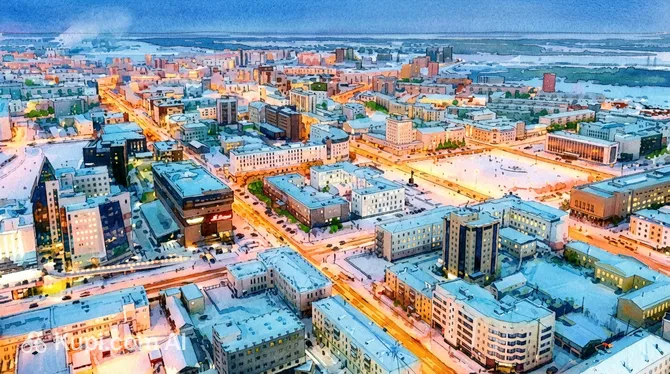
Welcome to Yakutsk, a destination that redefines the concept of extreme travel and offers a truly unique experience in the heart of Siberia. As the capital of the Sakha Republic (Yakutia), this city is a fascinating blend of modern urban life and rich indigenous traditions, all set against the backdrop of the majestic Lena River. Located in the far northeast of the Russian Federation, Yakutsk is famous for being the largest city in the world built entirely on continuous permafrost.
Yakutsk. Illustration.
Source: Kupi.com AI
The local climate is a defining feature of the city, earning it the reputation of the coldest major city on Earth. Winters here are long and famously frigid, often shrouded in a mystical "habitation fog," while the short summers can be surprisingly warm and sunny. Despite the extreme conditions, the city is home to over 300,000 people and serves as a vibrant cultural, scientific, and economic hub for the region.
Those who wish to delve into the past can explore the fascinating history of Yakutsk, which began as a Cossack fortress in the 17th century. Today, the city offers incredible attractions such as the Mammoth Museum, which houses perfectly preserved remains of prehistoric animals found in the frozen ground. Another highlight is the Permafrost Kingdom, a glittering underground tunnel complex filled with ice sculptures that remain frozen year-round.
Whether you are drawn by the allure of the "Diamond Capital" or the chance to experience life in one of the most remote and resilient communities on the globe, Yakutsk promises an unforgettable adventure. It is a place where nature's power and human ingenuity coexist, inviting bold travelers to discover the secrets of the North.
Weather Overview
The climate in this region is extreme and continental, characterized by some of the most drastic seasonal temperature shifts on Earth. Before packing for your trip, it is wise to consult the detailed forecast for the weather in Yakutsk, as conditions vary significantly depending on the month. Winters are famously long and severe, with January averages plummeting to -38.6°C and minimum temperatures frequently dropping below -41°C.
Conversely, the short summer season offers a surprising respite with comfortable warmth. July is typically the hottest month, featuring an average temperature of 20.2°C and daily highs that can reach 25.8°C. Expect warm summers with occasional rain and extremely cold, dry winters, as precipitation remains very low throughout the year, rarely exceeding 2mm in any given month.
Average monthly temperature
Average monthly precipitation
Interesting Facts
Beyond the main attractions, Yakutsk holds many fascinating secrets that reveal the resilience required to thrive in such an extreme environment. From ingenious architectural solutions to unique daily habits, the city offers plenty of surprises for the uninitiated traveler.
Due to the unstable frozen ground, most large buildings in the city are constructed on concrete piles or stilts. This unique engineering method prevents the heat generated by the structures from melting the permafrost below, which would otherwise cause the foundations to sink and the buildings to collapse.
The region is a paleontological treasure trove, and the city hosts the specialized Mammoth Museum. Unlike typical exhibitions, this institution serves as a scientific research center dedicated to the study of prehistoric animals, often displaying perfectly preserved soft tissue found in the melting ice.
Car ownership here comes with a specific set of winter rules. It is not uncommon to see vehicles left with their engines running for hours while parked, as turning them off in temperatures below -40°C can cause the oil to freeze solid, making it impossible to restart them without special heating equipment.
Despite its remote location, Yakutsk is a major economic hub often called the "Diamond Capital." The surrounding Sakha Republic is responsible for producing a significant portion of the global diamond supply, fueling the city's modern development and infrastructure.
Mammoth Museum. Illustration.
Source: Kupi.com AI
Traveler photos:
How to Get There
Reaching this remote capital of the Sakha Republic requires some planning, as its location in the heart of Siberia makes it one of the more isolated major cities in the world. While air travel is the most practical and common method for most visitors, the region is also accessible by a combination of train and local transfer. You can find all ways to reach the city and detailed logistics on our dedicated transport page.
The primary entry point for travelers is Yakutsk Airport (YKS). As an international airport, it handles the vast majority of passenger traffic coming into the region. It is conveniently located just 6.2 km from the city center, making the transfer relatively quick. A trip by taxi or bus typically takes around 30 minutes, depending on traffic and road conditions. With an annual passenger traffic of approximately one million people, it is a busy regional hub connecting the city with Moscow, other major Russian hubs, and select international destinations.
For clarity, here is a summary of the main airport:
For those interested in overland travel, the railway network has recently expanded to serve the region more effectively. The main railhead serving the capital is Nizhny Bestyakh Station. Located approximately 11.2 km from the city center (across the Lena River), it connects the area to the Baikal-Amur Mainline and the Trans-Siberian Railway network. Travelers arriving here usually complete their journey to Yakutsk via a ferry in the summer, an ice road in the winter, or a hovercraft during the transition seasons. The transfer by taxi or bus from the station area can take varying amounts of time depending on the river crossing method.
Below is the information for the railway station serving the city:
Station
Passenger traffic
Distance
Nizhny Bestyakh Station
388 000
11 km
Main Attractions
Yakutsk offers a distinct array of sights that reflect its unique geography and rich cultural heritage. From scientific institutions dedicated to the Ice Age to sprawling public spaces that celebrate local history, the city provides visitors with a glimpse into life in one of the world's most extreme environments.
A visit to the city would be incomplete without exploring the Mammoth Museum. This world-renowned institution is part of the North-Eastern Federal University and specializes in the study of mammoth fauna and their environment. It is particularly interesting to tourists because it functions as a scientific research center rather than just a display hall. Visitors can see authentic skeletons, skulls, and even preserved soft tissues of ancient animals recovered from the permafrost, offering a rare and tangible connection to the prehistoric past.
For those interested in history and local monuments, the Victory Square of Veterans is a significant landmark. Located near the waterfront, this expansive plaza is dedicated to the memory of the soldiers from Yakutia who fought in the Great Patriotic War. The square is dominated by a striking T-34 tank monument and a memorial stela, making it a solemn and impressive place for a walk. It serves as a central gathering point for commemorative events and offers a space for reflection on the region's contributions to history.
Victory Square of Veterans. Illustration.
Source: Kupi.com AI
Traveler photos:
To experience the city's greener side, travelers can head to the Central Park of Culture and Recreation. As the main public park in Yakutsk, it provides a welcome natural retreat within the urban landscape. The park is a popular spot for locals to relax, enjoy outdoor activities, and attend festivals. In the warmer months, the pine forest setting offers fresh air and shaded paths, while in winter, it transforms into a snowy wonderland, showcasing the resilience of nature in this harsh climate.
Central Park of Culture and Recreation. Illustration.
Source: Kupi.com AI
Traveler photos:
Finally, no exploration of Yakutsk is complete without diving into its unique culinary scene. Muus Khaya is more than just a restaurant; it is a gastronomic attraction where visitors can taste authentic Yakut cuisine. Known for its atmospheric interior and dedication to local traditions, it is the perfect place to try regional specialties like stroganina (frozen raw fish shavings) and reindeer meat. For tourists, it offers a delicious and immersive way to understand how the local culture has adapted to the cold through its diet.
Muus Khaya. Illustration.
Source: Kupi.com AI
Traveler photos:
Local Cuisine
The local cuisine in Yakutsk is a fascinating reflection of the region's extreme climate and indigenous traditions. Food here is not just sustenance; it is designed to provide energy and warmth during the long, harsh winters. The diet is heavily based on meat and fish, often prepared in ways that preserve their natural vitamins and nutrients. The most iconic dish you must try is stroganina. This delicacy consists of thin, curled shavings of frozen raw river fish, such as broad whitefish (chir) or muksun. It is typically served with a simple mixture of salt and black pepper, offering a clean, melting texture that is unlike anything else.
Meat lovers will find plenty to appreciate, with horse meat (specifically from young foals) and venison being dietary staples. These meats are prized for their tenderness and high nutritional value. They are often served boiled, stewed, or as steaks. Another popular local appetizer is Indigirka salad, which is made from diced frozen fish mixed with onions, oil, salt, and pepper. It is a refreshing and flavorful dish that perfectly showcases the freshness of the local catch.
When it comes to beverages, the traditional drink of the Sakha people is Kumys (or Kymys). This fermented mare's milk is slightly sour, sparkling, and renowned for its health benefits. It plays a central role in local culture and festivals. For something non-alcoholic, the region produces excellent berry drinks, known as mors, made from locally gathered lingonberries and cranberries, which are rich in vitamins.
The dining scene in the city ranges from casual eateries to upscale establishments where you can sample these regional specialties. For a memorable meal that combines great food with a pleasant atmosphere, you can visit Reka Ozeroles. This restaurant is well-regarded for its menu and setting, making it a great spot to explore Yakutian flavors.
Reka Ozeroles. Illustration.
Source: Kupi.com AI
Traveler photos:
If you are looking for a modern venue to relax after a day of sightseeing, Kubik Restaurant is another popular choice among locals and visitors alike. Whether you are exploring the outdoor markets where fish stand vertically like frozen logs or dining in a warm restaurant, the culinary experience in Yakutsk is an adventure in itself.
Travel Tips
Preparing for a trip to Yakutsk is unlike packing for almost any other destination, primarily due to the unique challenges posed by its extreme environment. To ensure your adventure in the heart of Siberia is both safe and comfortable, here are some essential practical guidelines to help you navigate the local lifestyle.
Clothing and Gear: If you visit in winter, the "layering" principle is mandatory. You will need high-quality thermal underwear, wool sweaters, and a heavy down jacket or fur coat. Essential accessories include insulated boots with thick soles (often worn a size larger for extra socks), a warm hat, and a scarf to cover your face. In summer, the weather can be surprisingly hot, so light clothing is appropriate, but strong insect repellent is absolutely crucial to protect against mosquitoes and midges.
Transportation: The city has a functional bus network that covers most districts, but there is no metro system. For tourists, especially in winter, taxis are the best way to get around; they are affordable and minimize your exposure to the cold. Ride-hailing apps like Yandex Go or inDrive are very popular and eliminate language barriers when giving directions.
Finances: The official currency is the Russian Ruble (RUB). While local bank cards are used everywhere, international credit or debit cards issued abroad typically do not work due to banking restrictions. It is highly recommended to bring sufficient cash in major currencies (USD or EUR) to exchange at local banks upon arrival, or use cash for daily expenses like transport and souvenirs.
Health and Safety: The biggest risk in Yakutsk is frostbite. Monitor your nose and cheeks for white spots, and never touch metal surfaces with bare skin outdoors. Pharmacies (marked as "Apteka") are common and easily accessible. In summer, be mindful of the strong sun and dry air; staying hydrated is just as important then as it is in the dry winter months.
Communication: The primary language is Russian, and the indigenous Sakha language is also widely spoken. English is not commonly used outside of major hotels and tour agencies. It is essential to download an offline translation app and offline maps before you arrive. The 2GIS app is particularly useful here for navigation and finding business hours.
Local Etiquette: Yakutian culture is deeply connected to nature. You may witness locals "feeding the fire" by offering small pieces of food to a hearth or campfire; this is a sign of respect to the spirits, and observing it quietly is appreciated. Additionally, always remove your shoes when entering a private home or a traditional guest house.
What to Avoid: Do not underestimate the cold distances. Even a walk that looks short on a map can be dangerous in -40°C temperatures if you are not accustomed to it. Avoid drinking alcohol to "warm up" before going outside, as it actually accelerates heat loss and dulls your awareness of the cold.
Useful Tip: If you wear glasses, be careful when entering a warm building from the freezing outdoors. Your glasses will fog up instantly and may even freeze. Many locals who wear glasses switch to contact lenses in winter or simply take their glasses off immediately upon entering a room to wipe them down.
By packing the right gear and respecting the power of the elements, you will be well-equipped to enjoy the wonders of this extraordinary city. This preparation allows you to look past the extreme temperatures and discover the incredible warmth of the local hospitality and the unique culture of the Diamond Capital.
Entertainment & Nightlife
Despite its reputation for extreme cold and isolation, Yakutsk boasts a surprisingly vibrant and warm nightlife scene. During the long winter nights, the city's social life moves indoors, where locals and visitors alike gather to escape the frost and enjoy music, dancing, and good company. The entertainment landscape is concentrated primarily in the city center, particularly around the main thoroughfares like Lenin Avenue and Ordzhonikidze Square, where you can find a variety of venues ranging from cozy pubs to energetic dance clubs.
For those seeking a classic pub atmosphere with a wide selection of drinks and hearty food, Aberdeen Pub is a popular destination. It offers a welcoming environment that feels like a home away from home, making it an excellent spot to start your evening or relax after a day of sightseeing. The venue is known for its friendly crowd and is often bustling on weekends, so arriving early or booking a table is advisable.
Aberdeen Pub. Illustration.
Source: Kupi.com AI
Traveler photos:
If you are in the mood for a more dynamic night out, the city has several clubs where you can dance until the early hours. KTV Night Club is a well-known venue in the local scene, attracting a younger crowd with modern music and a lively party vibe. Nightclubs in Yakutsk typically open around 10:00 PM and stay active until 5:00 or 6:00 AM. Be aware that "face control" and dress codes are common; while you don't need formal wear, a neat and stylish appearance is expected, and sports clothing is generally not permitted.
KTV Night Club. Illustration.
Source: Kupi.com AI
Traveler photos:
For a sophisticated evening that blends dining with a lounge atmosphere, Kubik Restaurant is a great choice. It serves as a stylish backdrop for cocktails and conversation, bridging the gap between a high-end restaurant and a night bar. Prices in Yakutsk's nightlife venues are generally moderate compared to Moscow, but imported alcohol can be pricier due to logistics.
Beyond the nightlife, the city offers plenty of daytime entertainment options. Cultural enthusiasts can visit the renowned Sakha Academic Theater to experience local dramatic arts. For a more casual afternoon, the Tuimaada Shopping and Entertainment Center is a central hub containing a cinema, food court, and various shops, making it a convenient place to warm up and catch a movie.
When enjoying a night out in Yakutsk, safety and logistics are key. The city center is generally safe for walking, but during the winter, the extreme cold is the biggest danger. It is strictly recommended to use taxi apps like Yandex Go or inDrive to move between venues, even for short distances. Waiting for a car indoors is standard practice to avoid hypothermia. Taxis are affordable and reliable, ensuring you get back to your accommodation safely and comfortably.
Parks & Museums
Yakutsk is a city where culture and nature are deeply intertwined with the extreme environment. Despite the harsh climate, the city boasts impressive green spaces that come alive during the short, warm summers, as well as world-class museums that offer deep insights into the history, geology, and indigenous traditions of the Sakha Republic.
The city's primary green lung is the Central Park of Culture and Recreation. This extensive pine forest located within the city limits is a favorite destination for locals seeking fresh air and relaxation. In summer, the park is vibrant with festivals and outdoor activities, while the tall trees provide cool shade. In winter, it transforms into a picturesque snowy landscape, offering a serene setting for walks among the frost-covered pines.
Another popular urban space is Ordzhonikidze Square, which serves as a cultural hub in the city center. It is home to the main Fountain, a beloved meeting point for residents. During the warm season, the sound of splashing water creates a refreshing atmosphere, making it an ideal spot to sit and observe the daily life of the city. The square is surrounded by key buildings, including the Sakha Theater, adding to its significance as a public gathering place.
Fountain. Illustration.
Source: Kupi.com AI
Traveler photos:
When it comes to museums, Yakutsk offers experiences found nowhere else on Earth. The Mammoth Museum is the most famous, dedicated entirely to the paleontology of the Ice Age. Visitors can examine the remains of mammoths, woolly rhinoceroses, and ancient bison preserved by the permafrost. For a broader look at the region's heritage, the Yaroslavsky Regional Museum of History and Culture showcases over 100,000 exhibits, ranging from shamanic artifacts to the history of Russian exploration in Siberia.
History enthusiasts should visit the Victory Square of Veterans. This monumental complex honors the sacrifices made during World War II and is a striking example of Soviet-era memorial architecture. For a glimpse into the city's origins, the "Old Town" (Stary Gorod) is a restored historic district featuring replicas of 19th-century wooden buildings, churches, and trading rows, allowing tourists to walk through the architectural history of old Yakutsk.
For a truly authentic experience, consider visiting the "Kingdom of Permafrost." Located inside a glacier near Mount Chochur Muran, this attraction allows you to walk through neon-lit ice tunnels filled with sculptures, offering a magical perspective on the frozen ground that defines the region. It is a place where winter lives year-round, providing a stark and beautiful contrast to the summer heat outside.
Getting Around
Navigating Yakutsk requires understanding a public transport system that has adapted to some of the most challenging weather conditions on the planet. Unlike many other major urban centers, the city does not have a metro, tram, or trolleybus network. The challenging permafrost ground conditions make the construction of underground tunnels or heavy rail infrastructure impractical. Instead, the city relies entirely on an extensive network of buses and minibuses that connect all districts, the airport, and the suburbs.
The bus fleet primarily consists of sturdy vehicles designed to operate in extreme cold, often recognizable by their doubled-paned windows to prevent frosting. These buses run frequently, typically from around 06:30 AM to 10:30 PM. However, tourists should be aware that intervals between buses can increase significantly late in the evening or during particularly severe cold snaps (below -45°C), when machinery is under immense strain. For navigation, the 2GIS mobile app is an indispensable tool; it works offline and provides accurate route planning, bus stops, and real-time arrival estimates.
Paying for your ride is straightforward. While cash was once the only option, the system has modernized significantly. You can now pay using cash, contactless bank cards, or mobile devices equipped with NFC. Payment is typically made directly to the driver. In many cases, local etiquette dictates paying as you exit the bus rather than when you enter, though it is always wise to observe what other passengers are doing. Fares are very affordable, making buses the most budget-friendly way to explore the city.
Given the extreme climate, taxis are often considered a necessity rather than a luxury, especially in winter. Waiting at a bus stop for even 15 minutes in -40°C weather can be dangerous for unprepared visitors. Ride-hailing apps like Yandex Go and inDrive (which actually originated in Yakutsk) are extremely popular and reliable. They allow you to book a warm car from indoors and minimize your exposure to the elements. Prices are dynamic and can rise during peak hours or extreme weather, but they remain reasonable by international standards.
A unique feature of the local transport logistics is the seasonal crossing of the Lena River, which separates the city from the nearest railway station. While not part of the internal city bus network, it is a crucial link for travelers. In summer, ferries transport cars and passengers; in winter, an official ice road is plowed directly onto the frozen river; and during the transition periods (spring and autumn), hovercrafts and airboats are the only way to cross. This river crossing is an adventure in itself and an integral part of the local transit experience.
Accommodation
Finding a place to stay in Yakutsk is relatively straightforward, although the options differ somewhat from typical European tourist destinations. The accommodation landscape is primarily geared towards business travelers and regional visitors. The range includes everything from renovated Soviet-era hotels and modern business-class establishments to a growing market of private rental apartments and budget-friendly hostels. While you will not find ultra-luxury international resort chains here, the available hotels are generally clean, comfortable, and, most importantly, exceptionally well-heated to withstand the winter temperatures.
For the vast majority of tourists, the best area to stay is the city center, specifically along or near the main thoroughfares like Lenin Avenue and the areas surrounding Ordzhonikidze Square. Staying in this central district is highly recommended, especially in winter. It places you within walking distance of key attractions, major museums, and theaters, minimizing the time you need to spend outdoors in the extreme cold. Additionally, this area has the highest concentration of restaurants and shops, making it convenient for evening meals without requiring a long taxi ride.
Booking Tip: If you plan to visit during the summer, particularly in late June for the massive Yhyakh national festival, it is crucial to book your accommodation months in advance. The city fills up quickly with visitors from across the republic and beyond, and finding a room at the last minute can be nearly impossible. In winter, availability is generally better, but business hotels can still be busy during the week.
In terms of pricing, accommodation in Yakutsk is generally moderate. A standard room in a decent hotel is typically affordable by international standards. When it comes to booking, be aware that many major international booking platforms may not list all local properties or process payments due to current restrictions. It is often more effective to use Russian travel platforms (such as Ostrovok or Yandex Travel) or to contact hotels directly to make a reservation. Private apartments are also a popular choice and can offer a more "local" experience, often providing better value for longer stays.
Nearby Cities
For those looking to explore the surroundings, Yakutsk serves as an excellent base for day trips to several interesting nearby locations:
Given the vast scale of the Sakha Republic, many "nearby" cities listed in the table require an overnight journey or a flight. However, there are several destinations and settlements closer to the capital that are perfect for a true day trip or a short excursion.
Zhatay is the most accessible urban settlement, located just 15 km downstream from Yakutsk. Historically known as a base for the river fleet, it offers a distinct industrial charm mixed with riverside tranquility. Visitors often come here to see the "ship graveyard" and the winter harbor, where dozens of massive vessels are frozen into the ice, creating a surreal and photogenic landscape. It provides a quick and easy glimpse into the importance of river navigation for the region's survival.
For a deep dive into culture, the "Druzhba" (Friendship) Open-Air Museum in Sotintsy is a highly recommended destination. Located on the bank of the Lena River, this architectural reserve features reconstructed wooden buildings from the 17th century, including churches and traditional Yakut dwellings. It marks the original site where the city of Yakutsk was founded before being moved to its current location. The museum hosts vibrant festivals in the summer and offers a peaceful, educational retreat into the history of Russian and Yakut coexistence.
While not a city, the Lena Pillars Nature Park is the premier day-trip destination for anyone visiting the region. This UNESCO World Heritage site features spectacular rock formations towering up to 300 meters along the riverbanks. Accessible by boat in summer or by specialized vehicles on the ice road in winter, the park offers breathtaking views and a profound connection to the ancient geology of Siberia.
These nearby destinations offer a glimpse into the diverse culture and landscapes of the region, ranging from industrial heritage to untouched natural wonders.
Shopping & Souvenirs
Shopping
Shopping in Yakutsk offers a distinct experience that goes far beyond typical retail therapy. While you will find modern conveniences and standard brands, the city is globally renowned as a treasure trove for specific high-value local goods. As the capital of the "Diamond Province," it is one of the best places in the world to purchase certified diamonds, gold, and silver jewelry. Additionally, due to the extreme climate, the region produces some of the finest fur clothing and traditional winter gear found anywhere on the planet.
The main artery for shopping and strolling is Lenin Avenue. This central boulevard runs through the heart of the city and is lined with a variety of shops, jewelry boutiques, and souvenir stores. Walking down this street allows you to window-shop for glittering ornaments while admiring the city's architecture. It is the most convenient starting point for tourists looking to explore the local retail scene without straying too far from major hotels and attractions.
For a more modern and comprehensive shopping experience, the city features several large commercial centers. The most prominent is the Tuimaada Shopping and Entertainment Center. Located centrally, it serves as a one-stop destination where you can find clothing, electronics, a food court, and a cinema. It is a popular place for locals to escape the cold and spend time with family. Another notable location is Uluru Mall, which offers a range of retail outlets and services, providing a comfortable environment for browsing international and Russian brands.
Tuimaada Shopping and Entertainment Center. Illustration.
Source: Kupi.com AI
Traveler photos:
However, the most atmospheric and unique shopping destination in Yakutsk is undoubtedly the Krestyansky Market (Farmers' Market). In winter, the outdoor section of this market transforms into a surreal spectacle that every tourist must see. Due to the extreme temperatures, fish are sold frozen solid, standing vertically in boxes like logs of wood. Here you can buy the famous "stroganina" fish (broad whitefish or muksun), reindeer meat, and blocks of frozen milk. It is a fascinating display of how the local food culture has adapted to the permafrost environment.
When it comes to souvenirs, Yakutsk offers items that are truly one-of-a-kind. The top purchase for many is jewelry; look for pieces featuring Yakutian diamonds or traditional silver ornaments, which are believed to have protective properties. Another exclusive local craft is mammoth bone carving. Artisans create intricate sculptures and charms from tusks recovered from the permafrost, making for a rare and culturally significant memento. Finally, consider buying a pair of unty—traditional high boots made of reindeer or horse fur with felt soles. They are not only beautiful but are also the warmest footwear you can own, essential for surviving the Siberian winter.
Most shops in the city operate daily, typically opening around 10:00 AM and closing between 8:00 PM and 10:00 PM. Payment methods are generally modern; credit and debit cards are widely accepted in malls and established stores. However, if you plan to visit the outdoor markets or smaller souvenir stalls, carrying cash (Rubles) is essential. While a Tax-Free system exists in the Russian Federation for foreign tourists, it is currently limited to specific certified retailers, so it is best to inquire directly at the store before making major purchases.