Support

Yelabuga

About

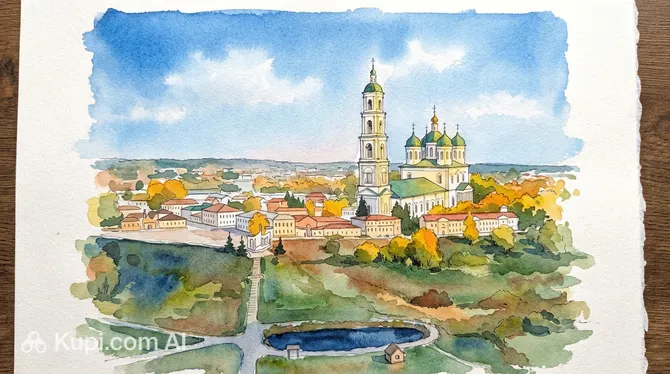
Elabuga is an amazing city where antiquity and modernity intertwine harmoniously, creating a unique atmosphere of comfort and tranquility. Located on the picturesque right bank of the Kama River, at its confluence with the Toyma, this city is one of the gems of the Republic of Tatarstan, in Russia. It is situated about 200 kilometers east of Kazan and is rightfully included among the country's historical settlements, carefully preserving its rich heritage.

Yelabuga. Illustration.
Source: Kupi.com AI

With a population of about 74,000 people, Elabuga offers its guests the measured pace of life and a chance to touch history rather than the hustle and bustle of a metropolis. The city is famous for its beautifully preserved old merchant estates of the 19th century, majestic cathedrals, and, of course, the famous Elabuga (Devil’s) Hillfort — an ancient archaeological monument with a thousand-year history, offering stunning views of the Kama expanses. Elabuga is particularly attractive due to its memorial complexes associated with great figures: the house-museum of landscape painter Ivan Shishkin and the memorial house of poet Marina Tsvetaeva are both located here.

Elabuga is a place where time seems to slow down, allowing you to enjoy every moment, explore historical corners, and soak up the spirit of the Russian province. If you are looking for inspiration, appreciate authentic beauty, and want to take a break from the urban rush, Elabuga will be a true discovery for you and provide unforgettable impressions from a journey deep into history and culture.

You can find more interesting facts on the history of Elabuga page.

Weather Overview

The climate in Elabuga is continental, with clearly defined seasons. Expect a warm summer with occasional but generally light rain, and cold, snowy winters. The warmest month is July, with an average temperature of +20.3°C (maximum values can reach +25.2°C). January is the coldest month, when the average temperature drops to -10.7°C (minimum to -13.1°C). Precipitation throughout the year occurs in small amounts, usually 1-2 mm per month; however, a large number of snowy days are observed in winter.

For detailed information on the weather by month and to plan your trip, we recommend checking the Climate of Elabuga page.

Average monthly temperature

Average monthly precipitation

Interesting Facts

Elabuga is not only a city with a rich official history and famous names but also a place that holds many curious details and almost forgotten stories. Behind the facade of popular attractions lie facts that can surprise even a seasoned traveler.

  • At the famous Elabuga (Devil’s) Hillfort, an ancient Bulgar settlement, legend has it that an oracle serpent once lived and predicted the future. The only surviving stone tower of this hillfort was restored in the 19th century by none other than the father of the great artist Ivan Shishkin, who, by the way, was a native of Elabuga himself.

  • Elabuga is closely associated with the name of Nadezhda Durova — the legendary "cavalry maiden," the first woman to become an officer in the Russian army. Her unique estate museum is carefully preserved in the city, where you can learn about the incredible fate of this brave woman.

  • One of the most unusual and original museums in Elabuga is the Portomoynya Museum. It recreates the atmosphere and tells the history of the city's laundry business from the late 19th to the early 20th centuries, opening a little-known page of daily life at that time.

  • Not many know that the V.M. Bekhterev Museum of Zemstvo Medicine is located in Elabuga. The outstanding neurophysiologist and psychiatrist Vladimir Bekhterev was a native of the Elabuga district, and the museum is dedicated to the development of this important aspect of healthcare in the region, displaying instruments and treatment methods of the time.

How to Get There

When planning a trip to Elabuga, it is worth thinking through your route in advance, as the city does not have its own major airport or railway station. However, you can reach this historical city in Russia in several convenient ways by using the transport hubs of neighboring cities.

For travelers who prefer air travel, the nearest and most convenient option is Begishevo Airport (NBC). It is located in the city of Nizhnekamsk, approximately 22.5 km from Elabuga. This is a modern regional airport from which you can reach the center of Elabuga by taxi or bus in about 50-60 minutes. Another major transport hub is Kazan International Airport (KZN), located in the capital of Tatarstan, the city of Kazan, at a distance of about 173 km. A car trip from there will take approximately 4.5-5 hours, but this airport offers a significantly larger number of flights, including international destinations. You can also consider flying into Izhevsk Airport (IJK), located in Izhevsk, about 149 km from Elabuga. The road from there to the city will take about 4 hours.

For clarity, here is a summary of the main airports:

AirportPassenger trafficDistance
Begishevo693 10022 km
Bugulma Airport50 000134 km
Izhevsk Airport900 000149 km
Kazan Airport5.2 mln173 km
Yoshkar-Ola Airport23 000275 km

If you plan to get to Elabuga by train, keep in mind that there is no railway station in the city itself. The nearest major railway hub is the Naberezhnye Chelny Railway Station, which is located in the city of Naberezhnye Chelny, just 19.3 km from Elabuga. From the station, you can easily reach Elabuga by taxi or local bus; the trip takes about 45-50 minutes. This station is an important transport hub and receives trains from many regions of Russia. An alternative option is the Mendeleyevsk railway station in the city of the same name, located about 23.4 km away; however, it serves significantly fewer directions and has a small passenger flow.

For planning convenience, below is information on the nearest railway stations:

StationPassenger trafficDistance
Krugloe Pole Station150 00019 km
Naberezhnye Chelny Railway Station750 00019 km
Mendeleyevsk Railway Station50 00023 km
Zainsk Railway Station45 00050 km
Kizner Station66 km

Main Attractions

Elabuga is a city with a rich history and culture, offering tourists many interesting places to visit. Here, everyone will find something for themselves, from ancient hillforts to the house-museums of great personalities.

One of the city's main gems is the Elabuga (Devil’s) Hillfort. This is a unique archaeological site, the remains of an ancient Bulgar settlement from the 10th-14th centuries. The main surviving structure is a stone tower, which offers a breathtaking view of the Kama River and the surrounding area. A visit to the hillfort allows you to touch the ancient history of the region and enjoy magnificent landscapes.

Art lovers should definitely visit the I. I. Shishkin House-Museum. It was in this house that the great Russian landscape painter was born and spent his youth. The museum's exhibition recreates the atmosphere of 19th-century merchant life and introduces the life and work of Ivan Shishkin, his family, and his inner circle. Here you can see the artist's personal belongings and early works, and feel the spirit of the time that inspired the master.

For literature enthusiasts, the Marina Tsvetaeva Memorial Complex is a landmark site. Elabuga became the final resting place for the great Russian poet. The complex includes several sites: the M. I. Tsvetaeva Literary Museum, the Memorial House where she spent her last days, the Silver Age Library, and the Intercession (Pokrovskaya) Church. This place allows for a deeper understanding of the poet's tragic fate and her creative legacy.

Another unique attraction is the N. A. Durova Estate Museum, dedicated to the legendary "cavalry maiden" Nadezhda Durova. This brave woman, disguised in men's clothing, served in the Russian army and participated in the Patriotic War of 1812. The museum tells the story of her amazing life, military career, and literary activity, presenting the lifestyle and the era in which she lived.

Local Cuisine

The gastronomic scene in Elabuga is an exciting journey where Russian and Tatar culinary traditions harmoniously intertwine, creating a unique flavor profile. Getting to know the local cuisine promises to be a highlight of your trip, just as enriching as walks through the city's historical streets.

Be sure to try the classics of Tatar cuisine. Notable among these dishes are echpochmak — appetizing triangular pastries with a juicy filling of meat and potatoes, and gubadiya — a hearty multi-layered pie with rice, raisins, eggs, and meat, often prepared for special occasions. For dessert, famous sweets await you: honey-drenched chak-chak, which has become a symbol of Tatar hospitality, and airy baursak, which perfectly complements tea time.

Due to the city's location on the Kama River, dishes made from fresh river fish are common on local menus. Zander, sterlet, and bream, prepared according to old recipes, will delight connoisseurs of natural flavors. Locals and tourists can enjoy these culinary delights in the city's numerous cafes and restaurants. It is also worth visiting local markets, where you can find aromatic honey, homemade cheeses, smoked meats, and, in season, fresh wild berries and mushrooms.

Among drinks, traditional Tatar tea deserves special attention — it is often served with milk and aromatic spices. On a hot day, homemade kvass, prepared according to ancient recipes, or rich mors made from northern berries will perfectly refresh you. The food culture in Elabuga involves both cozy gatherings in restaurants and exploring local products at markets. In summer and autumn, gastronomic festivals sometimes take place in the city, where you can taste farm delicacies and dishes created according to recipes passed down from generation to generation.

Travel Tips

Welcome to ancient Elabuga! To make your trip to this charming city on the Kama as comfortable as possible and leave you with only pleasant impressions, we have prepared a few practical tips.

  1. Clothing and items for the season: The climate in Elabuga is continental: summers are warm, and winters are quite frosty and snowy. In summer, light clothing, a sun hat, and something for a cool evening will come in handy. In winter, you cannot do without a warm jacket, a hat, mittens, and insulated footwear. A key wardrobe element at any time of year is comfortable shoes, as Elabuga is pleasant to explore on foot while viewing its historical streets. When visiting cathedrals and mosques, women are recommended to have a scarf to cover their heads and clothing that covers shoulders and knees; men should avoid shorts.
  2. Moving around the city: The main type of public transport in Elabuga is buses and fixed-route taxis. They cover most areas of the city. It is also easy to use taxi services by ordering a car through popular mobile apps or by phone. Renting a car may be justified if you plan to explore the surroundings, but for getting to know the city itself, it is generally not required — many attractions are located compactly.
  3. Financial matters: The currency in Russia is the Russian Ruble (RUB). You can exchange currency at bank branches. "Mir" system bank cards are accepted almost everywhere. Cards of international payment systems (Visa, Mastercard) may have restrictions, so it is strongly recommended to have a sufficient supply of cash. There are ATMs in the city. Tipping in catering establishments is welcome (usually 5-10% of the bill) but is not strictly mandatory.
  4. Health and safety: There are pharmacies in Elabuga, and some may work 24/7 — it's best to check information about duty pharmacies on-site. Before your trip, ensure you have valid medical insurance. Elabuga is generally a quiet and safe city, especially its tourist center. Nevertheless, do not forget about basic precautions: watch your belongings, especially on transport and at markets.
  5. Language and communication: The official language is Russian. In the Republic of Tatarstan, the Tatar language is also common. The level of English proficiency among the local population may be low, especially outside of tourist sites. It will be helpful to learn a few basic phrases in Russian, such as "Zdravstvuyte" (Hello), "Spasibo" (Thank you), "Skolko stoit?" (How much does it cost?). You can purchase a local SIM card for mobile internet and calls at mobile phone shops. Wi-Fi is available in many hotels, cafes, and some public areas.
  6. Local etiquette: Residents of Elabuga are hospitable and friendly. It is customary to say hello and goodbye when entering small shops or cafes. In public places, try to behave discreetly and respectfully toward others. When visiting someone's home, it is customary to remove outdoor shoes. A small token of attention, such as flowers or something for tea, if you are invited to visit, will be appreciated.
  7. What to avoid: Try not to initiate or support conversations on sensitive political topics. Avoid photographing people without their explicit consent, especially in situations that may be perceived as an invasion of privacy. Show respect for local customs, religious sites, and historical monuments.
  8. Special tip from us: Elabuga is a city with a very rich cultural heritage. Don't miss the opportunity to visit the I.I. Shishkin House-Museum, the M.I. Tsvetaeva Literary Museum, and the N.A. Durova Estate Museum. Be sure to try Tatar cuisine, for example, the famous chak-chak or echpochmaks, which can be found in local cafes and bakeries.

We hope these tips help you better prepare for your trip and enjoy every moment of your stay in amazing Elabuga. We wish you bright impressions and an unforgettable journey!

Entertainment & Nightlife

Evening Elabuga offers its guests an atmosphere different from the noisy nightlife of megacities, shifting the focus to calmer but no less pleasant forms of leisure. Although the city is not famous for a large number of loud nightclubs, you can find cozy places for evening relaxation and socializing.

Main evening activity is concentrated in the central part of the city, especially on streets such as Kazanskaya Street. Here you will find a variety of cafes, bars, and restaurants where you can have a pleasant time after a busy day. Instead of large dance clubs, Elabuga offers establishments with a more intimate setting. Some restaurants and cafes stay open until late evening. For example, for dinner in a historical atmosphere, you might consider establishments like "Stary Gorod" (Old City) or "Traktir Kuptsa Stakheeva" (Merchant Stakheev's Tavern), known for their cuisine. For a more informal setting and a cup of coffee, local coffee shops like "Kofein" are suitable.

The atmosphere in Elabuga's evening establishments is usually relaxed and friendly. The crowd is mixed: both locals and tourists will feel comfortable. The style of the venues varies from traditional cafes with national flavor to more modern bars and restaurants. Most popular places are open until 23:00 or midnight, especially on weekends. No special dress code is usually required; a neat everyday style (smart casual) is sufficient.

For an evening out, it is best to head to the city center. Prices in Elabuga's establishments are generally moderate, making evening leisure accessible. If your hotel is not within walking distance of the center, a taxi is the most convenient option for returning at night. It is recommended to use the services of official taxi companies or trusted mobile apps to call a car.

In terms of safety, Elabuga is a fairly quiet city. The central streets are generally well-lit, and evening walks here are considered safe. Nevertheless, it is always worth observing standard precautions: keep an eye on your personal belongings and avoid poorly lit and deserted places late at night.

During the day, Elabuga also offers guests a rich program. The city is famous for its numerous museums, among which the I.I. Shishkin House-Museum, the N.A. Durova Estate Museum, and the M.I. Tsvetaeva Literary Museum stand out. History buffs will enjoy walking through the historical center and visiting the ancient Elabuga (Devil’s) Hillfort. City parks are perfect for outdoor relaxation. Occasionally, performances by local theater groups take place in the city; it is worth checking the schedule in advance.

Parks & Museums

Elabuga is a city that enchants with its unique combination of picturesque natural spots and a rich cultural heritage. Everyone will find something for the soul here: from quiet parks for peaceful walks to museums preserving the memory of great figures and historical milestones.

Among the city's green oases, the Shishkin Ponds stand out particularly. This is not just a park, but a place inextricably linked with the name of the great Russian landscape painter Ivan Shishkin, who spent his childhood here. Today, it is a favorite vacation spot for citizens and visitors alike, where you can enjoy the silence, feed the ducks, and admire the scenic views. Another wonderful place for walks is the Alexander Garden (Alexandrovsky Sad), an old city park established back in the 19th century. It attracts with its well-kept appearance, shady alleys, and atmosphere of tranquility.

Cultural life in Elabuga is largely centered around the Elabuga State Historical-Architectural and Art Museum-Reserve, which unites several unique sites. A must-visit is the I.I. Shishkin House-Museum, where you can learn about the artist's life and work, see his personal belongings, and soak in the atmosphere where his masterpieces were born. The Marina Tsvetaeva Literary Museum, dedicated to the final, tragic days of the poet's life, leaves a deep impression. It is also worth paying attention to the N.A. Durova Estate Museum, which tells the fate of the legendary "cavalry maiden," and the V.M. Bekhterev Museum of District Medicine, which introduces the history of healthcare in the region.

The historical heart of Elabuga is undoubtedly the Elabuga (Devil’s) Hillfort. This ancient archaeological site, with the remains of a 10th-14th century Bulgar fortress and the famous tower, rises on the banks of the Kama, offering breathtaking panoramic views. Among the architectural landmarks of the city, the majestic Spassky Cathedral stands out, built in the 19th century, which impresses with its monumentality and the beauty of its interior decoration.

To feel the atmosphere of old Elabuga more deeply, take a stroll through its historical streets, admiring the 19th-century merchant mansions. Stop by local craft shops where you can find unique souvenirs that hold the warmth of local masters' hands and reflect the rich traditions of this amazing city.

Getting Around

Public transport in Elabuga is mainly represented by buses and fixed-route taxis (marshrutkas). These are the most common and convenient ways for tourists and locals to move around the city. The network of routes covers most areas of the city, allowing you to reach the main attractions and key points.

The fare payment system in Elabuga is quite simple. Typically, payment is made in cash directly to the driver or conductor upon entering the vehicle. The fare is usually fixed but may vary slightly depending on the route. It is better to clarify the availability of transport passes or transport cards on-site, as their availability and terms of use may change.

Tourists are recommended to have small change for the fare. Buses and marshrutkas usually run from early morning until late evening, but the schedule may differ on different routes, especially on weekends and holidays. You can check the schedule of a specific route at stops or with locals. Ticket validation happens upon payment of the fare.

As an alternative to public transport, taxi services are always available in Elabuga. This is a more comfortable, though more expensive, way of moving around, especially convenient for trips with luggage or at night. You can call a taxi by phone using local services or through popular mobile applications if they operate in the city. Information on car-sharing or a developed bike rental system in Elabuga is limited; these options may not be as widespread as in large metropolises.

There are no unique types of transport in Elabuga, such as a historical metro or a cable car. The city's transport system is standard for settlements of this size, providing basic mobility needs.

Accommodation

The choice of accommodation in Elabuga, while not boasting metropolitan scale, is quite capable of satisfying the needs of most travelers seeking comfort and coziness. The hotel sector here is primarily represented by small hotels, guest houses, and mini-hotels. There are no large luxury chain resorts in the city, but many local hotels offer a decent level of service, often focusing on a homely atmosphere and historical flavor.

For tourists, the most convenient and atmospheric area to stay is the historical city center (Old Town). By staying in the area of Kazanskaya Street, the embankment, or Shishkin Ponds, you will find yourself within walking distance of the main attractions — the I.I. Shishkin house-museum, the M.I. Tsvetaeva memorial, and Spassky Cathedral. Staying here will allow you to enjoy evening walks through the quiet merchant streets without spending time on transportation.

Hotels located in restored 19th-century merchant mansions give Elabuga a special charm. This is a unique opportunity to immerse yourself in history by living in interiors styled after the old days but equipped with modern amenities. Also, in the city and its surroundings, due to the presence of a special economic zone, there are modern business hotels and health resorts offering a more standard set of services. For those who prefer independence, a short-term apartment rental market is available.

Booking tip: Elabuga is a popular tourist destination, especially during the summer season and the days of the famous Spasskaya Fair. Additionally, due to business activity in the region, hotels are often occupied by business travelers. Therefore, it is strongly recommended to book accommodation in advance, preferably several weeks before your trip, to guarantee yourself the best option.

The price range in the city can be described as moderate. Here you can find both budget accommodation options in hostels or inexpensive guest houses, as well as mid-range and "comfort" category rooms. You can book your stay through popular Russian online aggregator platforms or by contacting hotels directly — many small hotels actively maintain social media accounts and take bookings by phone.

Nearby Cities

For those who want to explore the surrounding area, Elabuga serves as an excellent starting point for day trips to several interesting nearby locations:

Among the closest options for short excursions, Nizhnekamsk and Naberezhnye Chelny particularly stand out. Nizhnekamsk, located just 19 km from Elabuga, is a major center of the petrochemical industry but also offers guests modern parks, sports facilities, including the Neftekhim Arena ice palace, and opportunities for cultural leisure. Naberezhnye Chelny, located 24 km away, is known as the home of KAMAZ trucks and is the second-largest city in Tatarstan. This large and dynamic city attracts with its modern architecture, landscaped Kama River embankment, theaters, museums, and numerous cultural events. A trip to either of these cities will take very little time and will allow you to get closer to the diversity of industrial and cultural life in the region.

CityPopulationDistance
Nizhnekamsk237 25019 km
Mendeleyevsk22 33624 km
Naberezhnye Chelny533 83924 km
Mamadysh15 80639 km
Zainsk40 36653 km

These nearby destinations provide an insight into the region's diverse culture and landscapes, complementing the experience of visiting Elabuga.

Shopping & Souvenirs

Shopping in Elabuga is primarily an opportunity to purchase unique souvenirs and locally produced goods that reflect the rich history and culture of this ancient city. You won't find huge malls with global brands here, but you can enjoy searching for authentic items in small shops and boutiques. The city is famous for its folk crafts and commemorative items related to famous personalities whose fates were intertwined with Elabuga, such as Marina Tsvetaeva and Ivan Shishkin.

Main shopping spots in Elabuga are concentrated in the central part of the city. Walking along historical streets such as Kazanskaya Street or Neftyanikov Prospect, you will find a variety of shops — from grocery to hardware stores, as well as numerous souvenir stands. It is in these small, often family-run shops that you can find something truly special and memorable.

Elabuga has several shopping complexes that offer a standard set of goods: clothing, footwear, electronics, home goods, and groceries. They may not be as large-scale as in major cities, but they are quite capable of meeting daily needs. Look for them in both the central part and more modern areas of the city.

For those who value fresh products and local flavor, it is recommended to visit the city market. Here you can buy seasonal fruits and vegetables, homemade cheeses, meat, and dairy products from local farmers, as well as the famous Tatar honey and other gifts of nature. The market is not just a place for shopping but also an opportunity to dive into the everyday life of Elabuga residents.

As a memento of Elabuga, it is worth bringing back souvenirs that will remind you of this wonderful place. Particularly popular are items related to the names of Marina Tsvetaeva and Ivan Shishkin — these can be books, albums, reproductions of paintings, postcards, and magnets. Definitely take note of Tatar national souvenirs: bright tubeteikas (skullcaps), painted ceramics, leather goods with traditional ornaments, and dolls in national costumes. For delicious gifts, the famous chak-chak, aromatic Tatar herbal balsams, and natural honey are excellent choices. Local artisan products, such as clay pottery or items depicting iconic places like the Elabuga (Devil’s) Hillfort, are also valued. Souvenir shops can be found near the main tourist sites, in museum shops, and on the city's central streets.

Most shops in Elabuga are open daily, usually from 9:00-10:00 AM to 7:00-8:00 PM. Large supermarkets and some shopping centers may have longer hours. Markets usually open early in the morning and work until midday or early evening.

Regarding payment methods, most shops and retail outlets in Elabuga accept both cash Russian rubles and bank cards. It is recommended to have some cash with you, especially for purchases at markets or in small souvenir shops. Cards from Russian banks are common; the possibility of using cards issued abroad should be clarified directly before purchase.

A Tax Free system for foreign tourists operates in Russia. However, it applies to purchases in specific shops with the appropriate accreditation and subject to several conditions, such as a minimum purchase amount. In small towns like Elabuga, finding shops participating in the Tax Free system can be difficult. If you plan to use this opportunity, it is recommended to check information at large retail outlets in advance or focus your shopping in larger cities of the country.
Reached the end of the page?

That means the route is fully explored