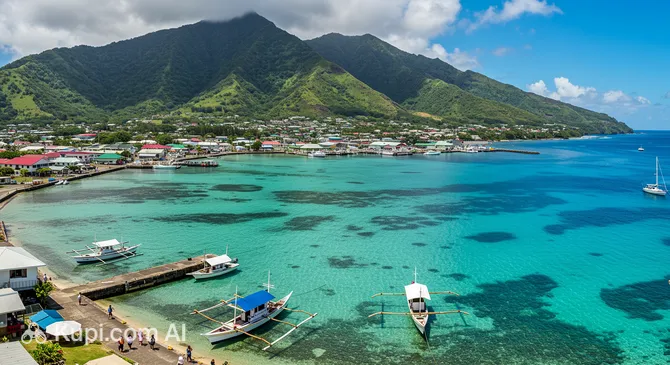
The public transport system in Pago Pago is refreshingly simple and distinct from the complex networks found in major global cities. There is no metro, tram, or large municipal bus fleet here. Instead, the city and the surrounding areas rely almost exclusively on a unique and colorful form of transportation known as the "aiga bus." For visitors, riding these buses is not just a way to get from point A to point B, but a genuine cultural immersion into the local way of life.
Aiga buses are essentially modified pick-up trucks fitted with a wooden cabin, bench seating, and often a high-powered sound system blasting island reggae or pop music. Each bus is individually customized by its owner with vibrant paint jobs, intricate designs, and catchy slogans, making them impossible to miss. They do not follow a strict timetable or a mapped route system in the traditional sense; instead, they generally travel along the main coastal road that connects the harbor to the outlying villages.
Using the bus system is informal and user-friendly. There are very few designated bus stops in the city. To catch a ride, you simply stand by the side of the road and wave your arm when you see a bus approaching. If there is space, the driver will pull over to let you on. When you are ready to disembark, you signal the driver by pulling a cord that rings a bell or by tapping on the window or roof structure. It is a communal experience, and it is polite to offer your seat to the elderly if the bus is crowded.
The payment system is strictly cash-based; there are no travel passes, smart cards, or mobile apps for transport in Pago Pago. You do not buy a ticket in advance. Instead, you pay the driver directly upon exiting the bus. The fares are incredibly affordable, typically costing around $1.00 to $2.00 USD depending on the distance traveled. It is highly recommended to carry small bills or quarters, as drivers may not always have change for large denominations.
Tourists should be aware of the operating hours, which operate on "island time." Buses run frequently during daylight hours, starting early in the morning, but service drops off significantly after 5:00 PM or 6:00 PM. On Sundays, the bus service is virtually non-existent as the island observes a day of rest and church attendance. If you plan to be out late in the evening or on a Sunday, you cannot rely on public buses to return to your accommodation.
For times when buses are unavailable, taxis are the primary alternative. Taxis in the city are plentiful and can be found at designated stands, particularly near the market and the airport, or flagged down on the street. They are generally unmetered, so it is standard practice to agree on the fare with the driver before starting your journey or to ask for the fixed rate to your destination. While more expensive than the bus, taxis offer the reliability needed for evening dining or airport transfers.
Other transportation options include renting a car, which is a popular choice for visitors who want the freedom to explore the remote trails of the National Park or the farther reaches of the island at their own pace. Car rental agencies are located at the airport and in the town area. Walking is also a viable and pleasant option for getting around the immediate harbor area, allowing you to take in the scenic waterfront views between the major hotels, the museum, and the Fagatogo Market.