Support

Grand Mosque of Dakar

About

The Great Mosque of Dakar (Grande Mosquée de Dakar) is not only the primary religious center of the capital but also a true architectural masterpiece, recognized as one of the most majestic mosques in all of West Africa. Located in the heart of Dakar, it captures the imagination with its scale: the complex covers an area of 6 hectares and can accommodate up to 30,000 worshippers simultaneously.
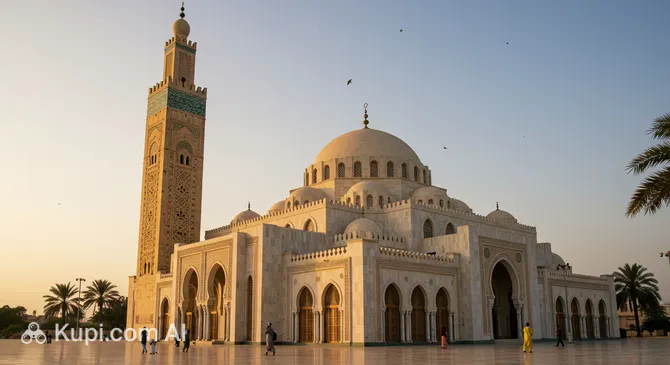
Grand Mosque of Dakar. Illustration.
Source: Kupi.com AI

Traveler photos:

The exterior of the building is the epitome of elegance—the facade is entirely clad in snow-white Carrara marble, with five slender minarets standing 78 meters tall rising above it. Inside, the mosque is adorned with a magnificent gilded dome and giant chandeliers created by talented Moroccan artisans. This site serves as a living symbol of how deeply Islamic traditions and Sufi brotherhoods are rooted in the everyday culture that Senegal is so proud of.

For tourists, this attraction is particularly interesting for its unique blend of Moroccan style and African motifs. Geometric patterns, graceful arches, and the peaceful atmosphere of the inner courtyard make the mosque an essential point on the map for any traveler seeking spiritual and aesthetic harmony.

Contacts

To clarify visiting details or plan a group visit, you can use the following information. Please note that there is currently no official website for this site.

How to contactContact
AddressMHH5+74C, Av. Malick Sy, Dakar, Senegal
Phone+20 12 21268200

What to Do

A visit to the Great Mosque of Dakar offers guests the opportunity to experience the fine art of Islamic architecture. First and foremost, it is worth carefully examining the exterior: the five tall minarets and snow-white marble walls provide a magnificent backdrop for photographs. Inside, you can see the stunning gilded dome and massive chandeliers that give the halls a grand and solemn appearance.

Culture enthusiasts will be interested in visiting the local library or the Islamic Institute, where you can learn more about the history of the spread of faith in the region and Sufi traditions. Studying the calligraphy and intricate geometric ornaments on the walls will help you better understand the symbolism of local art.

Don't forget the etiquette rules: you must remove your shoes to enter the prayer hall, and clothing should be modest and conservative (women are recommended to bring a headscarf). After touring the mosque itself, it is pleasant to walk through the surrounding Medina district, where you can observe the steady pace of life of Dakar's residents and feel the true spirit of the city.

Getting There

The landmark is located in the bustling central district of Medina. The exact address is Av. Malick Sy, Dakar. Thanks to its location near the city's main transport arteries, the mosque is easy to find.

The most convenient way to get there is by taxi (the famous yellow taxi jaune). A trip from the city center or the airport will take between 20 and 30 minutes, depending on traffic, and will cost approximately 1,000–2,000 CFA francs.

For those who prefer public transport, city buses or the colorful car rapides minibuses, which pass through Avenue Malick Sy, are suitable options. If you are already walking in the Medina market or port area, you can reach the mosque on foot by following its high minarets.

For private vehicle owners, there is parking available on the premises; however, keep in mind that traffic around the building can be heavy during prayer times.

Nearest city: Dakar

History & Facts

The history of this grand structure began long before its official opening. The state allocated an impressive site of 6 hectares, and construction lasted about ten years. The creation of the shrine was made possible thanks to the Mouride Brotherhood, one of the most influential Sufi branches of Islam in Senegal.

Interestingly, a significant portion of the funding came from King Hassan II of Morocco. This is directly reflected in the building's appearance: the mosque's five majestic minarets are styled after the famous minaret of the Mohammed V Mosque in Casablanca. Thus, the architecture of the site became a symbol of the spiritual connection between the Maghreb and West Africa.

Islam began to penetrate the territory of modern-day Senegal as early as the 11th century via trade routes, and over time Dakar evolved into a major center of religious education. The opening of the Great Mosque, attended by tens of thousands of worshippers, marked a new stage in the cultural and spiritual life of the capital.

Today, it is not just a place for prayer but a symbol of Sufi traditions and African identity. The structure is considered the largest Muslim temple in West Africa, underscoring Dakar's status as one of the region's primary Islamic centers.

Time Needed

To explore the Great Mosque of Dakar at a leisurely pace, 1–2 hours is usually sufficient. This is enough time to admire the facade, step inside (if no prayers are being held), and take several impressive photos against the backdrop of the minarets.

If you plan to visit the library or the museum at the Islamic Institute, you should add about another hour to your visit. It is also recommended to set aside extra time for a stroll through the adjacent streets of the Medina district to soak up the local flavor after visiting the shrine.

Working Hours

The mosque is open to visitors daily, from early morning until late evening. Official opening hours:

  • Monday — Sunday: 05:00 – 22:00

Tourists should keep in mind that during the five daily prayers, as well as during the large Friday prayer, access to view the interiors may be restricted, as priority is given to worshippers.

5:00 – 22:00

Nearby

The Medina district, where the mosque is located, is the heart of Dakar, full of life and contrasts. Exploring the surrounding area will allow you to dive deeper into the city's atmosphere and see both modern entertainment centers and important historical monuments.

Below are interesting locations nearby that are worth including in your itinerary:

NameDistance
Museum of Black Civilizations0.8 km
Léopold Sédar Senghor French Institute1.3 km
Temple Football1.7 km
Le Kermel Restaurant1.7 km
La Fourchette1.8 km
Port Casino1.8 km
Le Lagon 1 Restaurant1.9 km

Reached the end of the page?

That means the route is fully explored