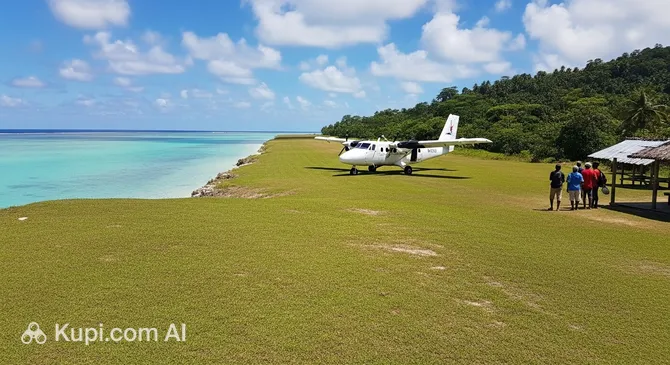
The gastronomic situation at Suavanao Airfield (VAO) fully corresponds to its format as a "wild" tropical outpost. Travelers should be prepared for the fact that there are absolutely no catering establishments directly on the airfield territory. There are no terminals, which means no restaurants, cafes, bars, coffee shops, or even vending machines with snacks.
Organizing meals for passengers falls entirely on the shoulders of the hosting party (resorts) or the tourists themselves. Below are recommendations and alternative options to help you avoid going hungry.
Restaurants and Cafes: Expectation vs Reality
Since the airfield is a strip of land by the ocean, the concept of a "food court zone" is not applicable here.
- In Terminals (Landside/Airside): Terminals are absent, there is no zone division, and there are no food outlets.
- Nearest Place to Eat: The only available "restaurant" is located outside the airfield, on the grounds of the Papatura Island Retreat. It can only be reached by boat (about 5–10 minutes journey).
Recommendations for Departing Passengers
If you are flying out of Suavanao, the issue of food must be resolved before boarding the transfer boat.
- Full Meal: It is strongly recommended to have a substantial breakfast or lunch at your hotel restaurant before leaving. Flights of small aircraft may be delayed due to weather, and waiting on the strip under the sun on an empty stomach can be exhausting.
- Takeaway for the Road: Ask your resort's kitchen staff to prepare a packed lunch for you. Usually, this consists of sandwiches, fruit, or pastries. This is the only way to have a snack directly before departure while sitting on a bench by the airfield.
Recommendations for Arriving Passengers
Upon arrival, hotel representatives will meet you immediately. The journey to the accommodation takes only a few minutes, so there is no need to worry about food — a hot lunch or dinner will be waiting for you immediately upon arrival at the hotel.
Local Cuisine and Regional Specialties
Although food is not served on the strip itself, the Santa Isabel Island region is famous for its seafood, which will be offered to you in nearby guest houses and at the Papatura resort. What is worth trying during your stay in this area:
- Fresh Crayfish (Lobsters): The calling card of local cuisine. They are often grilled or boiled in seawater.
- Reef Fish: Served on the same day it was caught, often with a side of local root vegetables (taro or cassava).
- Tropical Fruits: Papaya, pineapples, and coconuts here have an incredibly rich flavour.
Dietary Catering (Vegetarian, Halal, Gluten-Free)
In the absence of choice at the airfield, all special requests must be addressed to the chef at your place of accommodation.
- Vegetarianism and Veganism: The local diet is rich in plant-based food, so vegetable dishes and fruits are always available, but it is better to give advance notice regarding strict veganism.
- Gluten-Free Diet: Main side dishes (rice, root vegetables) do not contain gluten, however, bread and sauces may be imported.
- Halal and Kosher: Local kitchens usually do not hold specialized certificates, so for those strictly observing religious dietary laws, choosing fish and vegetable dishes is recommended as a safe option.
Water and Beverages
This is the most critical point for any passenger in Suavanao.
- Drinking Water: There are no drinking fountains or shops with bottled water at the airfield. In the tropical climate, dehydration occurs quickly.
- Tip: Be sure to have a personal bottle of water with you. If you are departing, fill it at the hotel. If you are arriving, do not throw away the bottle purchased at the departure airport (Honiara) until you reach your final destination.
Price Range
Since commerce is absent at the airfield, it is impossible to spend money on food here. The cost of meals at the nearby Papatura resort is usually included in the accommodation price (full board) or is around 150–250 SBD (Solomon Islands Dollars) for lunch if you order it separately.