Imagine a place where the boundaries of medical possibility were pushed forever. The Heart of Cape Town Museum is a unique interactive space in Cape Town, located within the world-renowned Groote Schuur Hospital. It was here in 1967 that humanity took a giant leap forward: the world's first successful human-to-human heart transplant was performed.
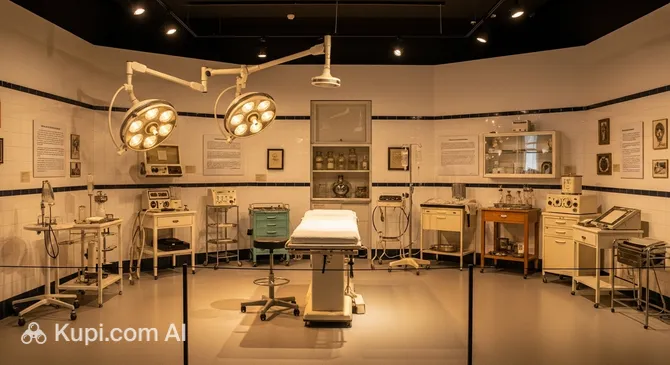
This museum in South Africa doesn't just store dry facts; it literally brings history to life. The exhibition is housed in the very operating theaters where Professor Christiaan Barnard achieved his scientific feat. Heart of Cape Town Museum. Illustration.
Source: Kupi.com AI
Traveler photos:
Thanks to a detailed reconstruction of the events, visitors can feel the tense atmosphere of that day when medical science changed forever.
The museum's significance lies in its authenticity: original instruments, equipment, and even the doctors' personal belongings are preserved here. Realistic wax figures of the operation participants allow guests to literally look over the surgeons' shoulders, making the visit not only educational but an incredibly emotional experience.
Contacts
To clarify visiting information or to book group tours, you can use the following contact details for the museum:
The main reason to visit the museum is the guided tour. A walk through the halls turns into a real documentary film where you become a witness to events of the past. Visitors pass through several thematic zones: from the introductory hall with historical context to the 'accident room,' where the tragic circumstances that led to the donor's arrival are recreated.
Of particular interest is visiting the original operating theaters (Theatres A and B). Here you will see authentic equipment from the 60s and wax figures that accurately depict Professor Barnard and his colleagues during the operation. It is amazing to realize that about 30 medical staff members were in this small room at once, fighting for the patient's life for nine hours.
In addition, you can peek into the laboratory where preliminary research was conducted and see a detailed 'timeline' that describes the preparation and aftermath of this medical breakthrough. Tours are held daily at 09:00, 11:00, 13:00, and 15:00, so it is best to arrive at the start of a session to ensure you don't miss a single detail of the story.
Getting There
The museum is located in the Observatory district, which is in close proximity to the city center. It is easy to find: the exhibition is located right on the grounds of the active Groote Schuur Hospital. Visitors should look for the main gates of the medical complex.
The most convenient way to get here from the city center is by taxi or popular ride-hailing services like Uber. The trip will take only 10–15 minutes. If you prefer public transport, you can take suburban trains to Observatory station; however, from there, you will have to walk uphill to the hospital.
For those who prefer driving themselves, simply enter the address Main Road, Observatory into your navigator. Remember that the museum is inside a working medical facility, so follow the signs within the complex to reach the correct building.
Nearest city: Cape Town
History & Facts
The history of this place is inextricably linked to the date December 3, 1967. On this day, within the walls of Groote Schuur Hospital, an event occurred that shook the entire world: Professor Christiaan Barnard and his team of 30 high-level specialists performed the first successful human-to-human heart transplant in history.
The lives of the people involved in this operation were full of drama. The donor was 25-year-old Denise Darvall, who tragically died in a car accident while crossing the street to buy a cake. Her heart was transplanted into 53-year-old Louis Washkansky, who suffered from an incurable heart disease and saw this operation as his only chance for survival.
The complex surgical intervention lasted 9 hours. Although Washkansky lived for only 18 days after the operation and passed away from bilateral pneumonia caused by immune suppression, this case proved the possibility of transplanting a vital organ. Christiaan Barnard instantly became a global celebrity, and Cape Town became the center of attention for the entire medical community.
Time Needed
To fully immerse yourself in the story of this great medical discovery, most visitors need between 1 and 2 hours. This is enough time to go through all the halls with a guide and examine the exhibits in detail.
Since visits are organized as guided tours starting at fixed times, we recommend planning your visit in advance. If you have a deep interest in medical history, set aside a little more time to linger by the displays of archival letters and photographs after the main tour ends.
Working Hours
The museum is open to visitors from Monday to Friday. Opening hours are from 09:00 to 15:00. Please note that the museum is usually closed for visits on Saturdays and Sundays.
Since exploration is only possible as part of organized tours held at 09:00, 11:00, 13:00, and 15:00, we strongly recommend checking the current schedule on the official website before your trip or booking a spot in a group in advance.
Day
Opening hours
Monday
09:00–15:00
Tuesday
09:00–15:00
Wednesday
09:00–15:00
Thursday
09:00–15:00
Friday
09:00–15:00
Saturday
Закрыто
Sunday
Закрыто
Nearby
After visiting the medical museum, it is worth checking out other interesting locations in the area. A walk around the neighborhood will help you better feel the atmosphere of the city and see both historical monuments and modern entertainment areas.