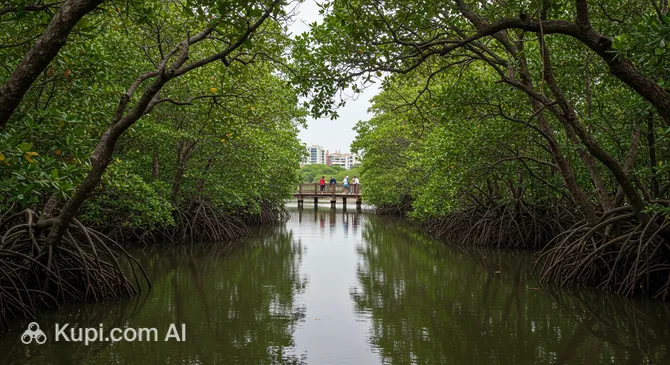
Imagine a corner of pristine nature sandwiched between urban development and the ocean coast. Beachwood Mangroves Nature Reserve is a unique 76-hectare protected area located at the mouth of the Umgeni River. It is the one-of-a-kind preserved natural estuarine ecosystem that Durban offers to travelers.
Beachwood Mangroves Nature Reserve. Illustration.
Source: Kupi.com AI
Traveler photos:
The reserve is famous for its mangrove forests, which create a unique atmosphere of mystery. Three species of protected trees grow here: Black, Red, and White Mangroves. This place is not only home to rare species of flora and fauna but also an important educational center in South Africa, demonstrating the significance of mangrove ecosystems for the planet.
Declared a National Monument in 1980, the reserve invites guests to explore its trails and meet the amazing creatures that have adapted to life on the edge of land and water.
Contacts
For more information about visiting or to book a guided tour, you can call the number provided. Please note that the reserve is primarily supported by volunteers from the North Durban Ezemvelo Honorary Officers.
The main adventure here begins on the wooden boardwalks that wind directly over the muddy soil. Three different walking routes allow you to explore the area safely, even during high tide. The "stars" of the local fauna are the amusing mudskippers, which can move on land using their fins, and thousands of fiddler crabs waving their enormous claws.
For bird lovers, the reserve features a concealed bird hide. From here, you can spot the rare Mangrove Kingfisher, Oystercatchers, and Sunbirds. It is an ideal spot for those seeking tranquility and wishing to capture unique wildlife shots against the backdrop of modern Durban's skyline and sand dunes.
If you want to learn more about the secrets of plant survival in salt water, it's worth joining an organized tour. Guides will explain the educational displays and help you find the forest's most secretive inhabitants. You can end your walk in the cozy picnic area, where a covered gazebo provides a pleasant place to rest after actively exploring the trails.
Getting There
The reserve is conveniently located in the northern part of Durban (Durban North area), along Riverside Road. A helpful landmark for tourists is the Durban North Hypermarket, located nearby. For visitors arriving by car, parking is available right at the entrance to the reserve.
The reserve is easily accessible by taxi from the city center — the trip takes very little time. If you prefer public transport, check the bus routes heading toward Durban North, though keep in mind that a short walk may be required from the stop. The entrance to the reserve is marked by a small sign on the beach access road, so keep a sharp eye out so you don't miss the turn.
Interestingly, the path to the forest itself involves walking along a pedestrian path that runs parallel to the highway. This creates an unusual contrast between the noise of the city and the descending silence of the mangroves.
Nearest city: Durban
History & Facts
Beachwood Mangroves Nature Reserve was officially proclaimed a protected area in 1977. This decision was driven by the need to save the rare ecosystem at the mouth of the Umgeni River from encroaching urbanization. By 1980, the importance of this site was recognized at the state level, and the reserve was granted the honorary status of a National Monument.
For decades, this area has served as a living laboratory for scientists and schoolchildren. The reserve's estuarine system is unique because it has adapted over centuries to cyclic tides, forming a complex web of life hidden within the tree roots. It is one of the few places where you can see what South Africa's nature looked like before the active development of the region's port infrastructure began.
Today, the life of the reserve is maintained through the efforts of volunteer enthusiasts. The North Durban Ezemvelo Honorary Officers organization is involved not only in protecting the territory but also in active education, striving to convey to every visitor the importance of preserving mangroves to protect the coastline from erosion and maintain ocean biodiversity.
Time Needed
To stroll leisurely along all the routes and enjoy the tranquility, 1–2 hours is usually sufficient. During this time, you will have enough time to walk along the boardwalks, stop by the bird hide, and take beautiful photos of the forest inhabitants.
If you plan to participate in a detailed guided tour or are a passionate birdwatching enthusiast, your visit might extend to half a day. In any case, it is an ideal option for a short escape from the bustling city into the world of wild nature.
Working Hours
The reserve has a specific operating schedule: it is open for public visits on the third Saturday of every month from 08:00 to 13:00. On these days, volunteers often host interesting introductory events for guests.
On all other days, visits are possible only by prior arrangement. It is recommended to contact the reserve representatives in advance by phone to coordinate your arrival time and ensure the area will be accessible for walks.
Nearby
A walk through the mangrove forests pairs perfectly with a visit to other interesting locations in the city. Durban offers many options for continuing your itinerary, from educational museums to exciting marine parks.