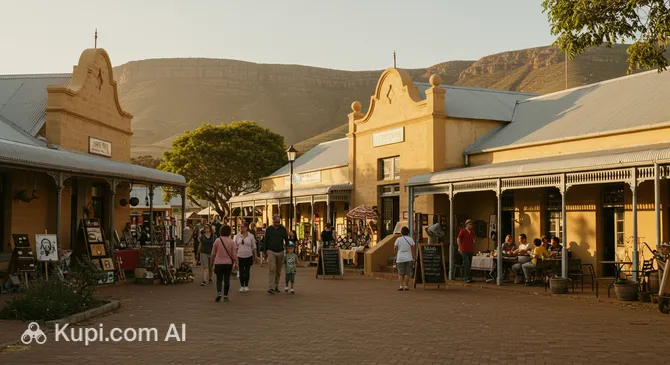
Oudtshoorn is a true oasis, nestled comfortably amidst the semi-desert landscapes of the Western Cape. Located in a picturesque valley between the majestic Swartberg mountains and the hills of the Klein Karoo, this town allows travelers to experience the authentic spirit of South Africa. Despite its distance from bustling metropolises, it is a key stop on the famous Garden Route and attracts those who value authenticity and natural beauty.
Oudtshoorn. Illustration.
Source: Kupi.com AI
With a population of approximately 61,500 people, the town retains the charm of provincial coziness, where time seems to slow down. Modern amenities, African flavor, and elegant colonial architecture are harmoniously intertwined here. The rich history of Oudtshoorn dates back to the 19th century, and a walk through its streets offers a rare sense of connection to the traditions of this region.
Oudtshoorn is world-renowned as the unofficial “Ostrich Capital” of the world. Visiting local farms has become the region's main hallmark, yet the town offers much more than just an introduction to giant birds. It is an ideal starting point for exploring natural wonders such as the famous caves and breathtaking mountain passes. Be sure to include this colorful corner in your itinerary for its hospitable atmosphere and unforgettable sunsets over the vast Karoo.
Weather Overview
Oudtshoorn's climate can be described as pleasant and moderate, making the town accessible for visiting year-round. Expect hot summers with high daytime temperatures and cooler, fresh winters that are perfect for outdoor activities.
In the summer months (January and February), the air warms up significantly: the average temperature is around 23°C, and maximums often reach 30°C. In winter, from June to August, it becomes cooler: during the day, the thermometer usually shows a comfortable 18°C, however, nights can be cold with temperatures dropping to 4–5°C.
Precipitation is distributed fairly evenly throughout the year. Travelers should be prepared for occasional rain: on average, there are 5–7 days with precipitation per month, although their intensity is usually low. Detailed weather in Oudtshoorn will help you more accurately plan your travel dates and choose a wardrobe suitable for the season.
Average monthly temperature
Average monthly precipitation
Interesting Facts
Beyond the main attractions, Oudtshoorn holds many fascinating secrets related to its rich history and unique nature. Here are a few surprising facts that will allow you to look at this town from a new perspective:
The Legacy of the "Ostrich Barons": During the "feather boom" era of the late 19th century, ostrich feathers were worth their weight in gold, leading to the rise of a class of incredibly wealthy farmers. They built luxurious mansions known today as "Feather Palaces." These buildings, scattered throughout the town and its surroundings, are striking in their architectural eclecticism: they whimsically blend Victorian style, Neo-Gothic, and Art Nouveau elements, showcasing the region's former greatness and wealth.
Mysteries of the Underground: The famous Cango Caves are not just a geological wonder but also a place shrouded in legends. Local lore says that ancient treasures left by travelers of the past are still hidden within the labyrinths of the halls. Additionally, archaeologists have discovered traces of human habitation here from thousands of years ago, making the caves an important anthropological site.
Adrenaline on Feathers: Oudtshoorn is one of the few places in the world where ostrich racing is an official sport. During the annual festival dedicated to the ostrich industry, exciting races take place where brave jockeys compete atop these giant birds. This spectacle gathers thousands of spectators and is considered one of the most colorful traditions of the town of Oudtshoorn.
Oudtshoorn. Illustration.
Source: Kupi.com AI
Traveler photos:
How to Get There
Oudtshoorn is located deep in the Klein Karoo region, and although the town itself does not have a large commercial airport, getting here is quite easy thanks to the developed transport network of neighboring cities. Most tourists prefer a combined route: a flight to the nearest major hub, followed by a scenic drive. We recommend checking all the ways to get to the city in advance to plan your ideal route.
The main air gateway for travelers heading to Oudtshoorn is George Airport (IATA: GRJ). It is located in the city of George, about 50 km from Oudtshoorn. This is a fairly large regional hub that accepts regular flights from Johannesburg and Cape Town. The trip from the airport to the center of Oudtshoorn by rental car or taxi takes about 45–60 minutes along a scenic road through the Outeniqua Pass.
Alternatively, you can consider Plettenberg Bay Airport (IATA: PBZ), located in the resort town of Plettenberg Bay. However, keep in mind that it is located much further away—about 118 km from Oudtshoorn. This option is suitable for those planning a trip along the Garden Route and wanting to visit the coast before heading inland. The travel time by car is about 1.5–2 hours.
For clarity, here is a summary of the main airports:
As for rail travel, direct regular passenger trains to Oudtshoorn are currently not a popular way for tourists to get around. The rail network in this region is primarily used for freight transport or special tourist trains. Therefore, you should not rely on the train as your primary means of arrival.
The most common and convenient way to get to Oudtshoorn remains by car. The town is a key point on the famous Route 62, which is considered one of the most beautiful road trips in the world. Many travelers rent a car in Cape Town or at George Airport to enjoy the views of the mountains and semi-desert on the way to the "Ostrich Capital."
Main Attractions
The main attractions of Oudtshoorn are inextricably linked to its unique nature and its history as the "Ostrich Capital." The town and its surroundings offer tourists a rare combination of underground wonders, wildlife encounters, and architectural heritage that cannot be found anywhere else in the world.
The absolute jewel of the region is the famous Cango Caves, located in the foothills of the Swartberg mountains. This is one of the most impressive limestone cave systems in the world. Visitors can choose a standard tour to admire the majestic stalactites and stalagmites in vast halls with artistic lighting, or embark on an adventure tour where they will have to squeeze through narrow passageways and tunnels. The site is striking in the scale and beauty of the underground formations, which nature has been creating for millions of years.
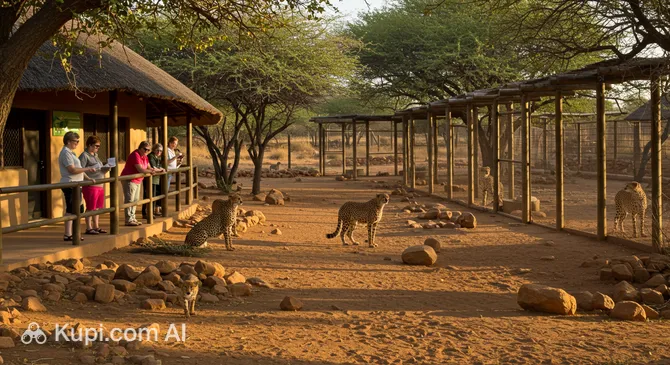
For animal lovers, a mandatory stop is the Cango Wildlife Ranch. This zoological center specializes in the conservation of endangered species and offers a unique experience with fauna. Here, you can not only see white tigers, lions, and lemurs but also get a thrill by diving in a cage with Nile crocodiles (Crocodile Cage Diving). The ranch is famous for its cheetah breeding program, and guests have a rare opportunity to see these graceful predators up close.
Cango Wildlife Ranch. Illustration.
Source: Kupi.com AI
Traveler photos:
It is impossible to visit here without stopping at one of the many ostrich farms that brought the town worldwide fame. At farms such as Safari Ostrich Farm or Highgate, tourists are shown the entire life cycle of these giant birds—from incubators with huge eggs to adult specimens. You will learn why ostrich feathers were once valued more than gold, be able to feed the birds by hand, and even, if you’re brave enough, try your hand at being a jockey. It is a fun and educational experience for travelers of all ages.
The town of Oudtshoorn itself also deserves careful exploration. A walk through its streets will transport you to the era of prosperity in the late 19th and early 20th centuries. The main architectural highlights are the so-called "Feather Palaces"—luxurious mansions built by ostrich barons from sandstone in Art Nouveau and Victorian eclectic styles. Many of them are perfectly preserved, such as the Le Roux Townhouse, which now functions as a museum, showcasing the lifestyle and wealth of that era.
Oudtshoorn. Illustration.
Source: Kupi.com AI
Traveler photos:
Local Cuisine
The gastronomic hallmark of Oudtshoorn is, undoubtedly, dishes made from ostrich meat. As the world capital of ostrich farming, the town offers tourists a unique opportunity to try this delicacy in a variety of forms. Ostrich meat is valued not only for its tender taste, reminiscent of high-quality beef, but also for its dietary properties: it has almost no fat or cholesterol. Be sure to order a juicy ostrich steak or burger at one of the local establishments. Gourmets should look for the exquisite carpaccio, and for a large group, a real adventure would be tasting an omelet made from a single ostrich egg, which is equivalent in volume to about two dozen chicken eggs.
In addition to ostrich, the cuisine of the Klein Karoo region is rich in other meat delicacies, including smoked game and traditional South African dried beef, biltong. Meals are traditionally accompanied by locally produced drinks. The town's surroundings are famous for their vineyards, so a glass of aromatic wine from the Karoo valley or Port, which this arid but fertile land is proud of, is perfect for dinner.
Food culture in Oudtshoorn is informal and diverse. You can often find street food stalls selling spicy samosas, hearty meat pies, and sweet pastries—a great snack option while walking. Lovers of authentic products will appreciate the farmers' markets, where locals offer fresh goat cheese, homemade jams, honey, and seasonal vegetables.
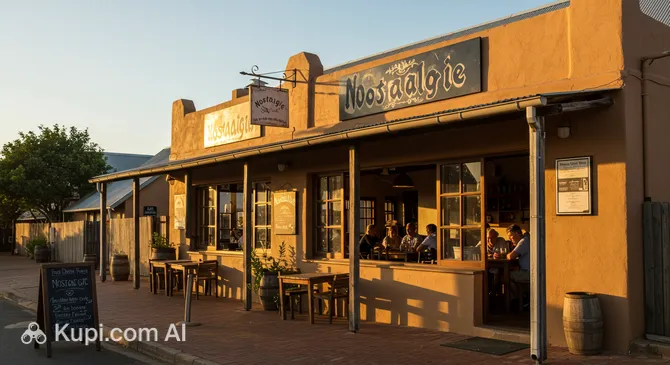
For those who want to enjoy traditional cuisine in a cozy setting, Nostalgie Restaurant opens its doors. Here, you can not only try the region's signature dishes prepared according to old recipes but also experience the atmosphere of hospitality characteristic of the South African hinterland. The town also regularly hosts food festivals where chefs share their secrets, turning food into a true celebration.
Travel Tips
A trip to the "Ostrich Capital" of the world promises to be a bright adventure, but the specifics of the Klein Karoo region require a little preparation. To ensure your vacation in Oudtshoorn is as comfortable as possible and without unpleasant surprises, we have prepared a list of important practical recommendations to help you feel confident.
Clothing and Gear: The climate here is contrasting. Even if the day is hot at over +30°C, nights can be unexpectedly cold, so be sure to bring a warm sweater or a light jacket—the principle of "layering" works best here. Comfortable non-slip shoes (sneakers) are necessary for visiting the Cango Caves, as the floors there can be damp. Don't forget sunglasses, a hat, and high SPF sunscreen—the sun in the semi-desert is very active.
Transport: The best way to get around is by rental car. Public transport is poorly developed and not geared toward tourists, and popular taxi apps (like Uber) may not work here or have very few cars on the line. If you don't drive, arrange transfers through your hotel or use local taxi services, ordering them in advance by phone.
Finances and Tipping: The national currency is the South African Rand (ZAR). Most restaurants, hotels, and shops accept Visa and Mastercard without problems. However, cash is necessary for small souvenirs, tipping car guards (usually 2–5 Rands), and at gas stations. It is customary to leave a tip for waiters in the amount of 10–15% of the bill, as it is often not included.
Health and Safety: Oudtshoorn is a quiet and safe town, especially compared to the metropolises in South Africa, but you should still stay vigilant. Do not leave valuables in plain sight in your car. Pharmacies (such as Clicks or Dis-Chem) usually work until 5:00 PM – 6:00 PM and are closed on Sundays, so it's better to bring a personal first-aid kit from home. Tap water is generally safe to drink, but due to potential changes in mineral composition, sensitive travelers are better off buying bottled water.
Communication and Language: The main language of communication for locals is Afrikaans, but English is understood and used almost everywhere in the tourism sector. For mobile internet, it is better to buy a local SIM card (Vodacom or MTN)—this can be done at large supermarkets or shopping centers (passport required). Wi-Fi is available in almost all cafes and guesthouses, but the speed may be lower than you're used to.
Local Etiquette: People here are very friendly and value politeness. It is customary to say hello when entering a store or addressing someone. A handshake is the standard form of greeting. Local residents live at a relaxed pace ("African time"), so don't be impatient if restaurant service takes a little longer than you're used to.
What to Avoid: Never try to touch or scare the ostriches unless you are under the supervision of a guide on a farm. A kick from this bird can be deadly. Also avoid walking alone on unlit outskirts of town at night—stick to the main tourist street, Baron van Reede.
Dining Tip: Keep in mind that Oudtshoorn is an "early bird" town. Kitchens in many restaurants close quite early, around 9:00 PM. If you plan on a late dinner, it's better to book a table in advance or arrive early so you don't go hungry after a busy day.
By following these simple tips, you will be able to avoid minor daily inconveniences and fully focus on the beauty of nature and the hospitality of this amazing corner of South Africa. Oudtshoorn reveals itself to those who respect its traditions and are ready to enjoy the moment!
Entertainment & Nightlife
Nightlife in Oudtshoorn has its own unique charm: you won't find loud night clubs with neon signs operating until dawn like in Cape Town or Johannesburg. Instead, the town offers a cozy, relaxed atmosphere where evening entertainment centers around gastronomy, tasting local wines, and lively conversation under the starry sky of the Karoo region.
The main artery of the town's evening life is Baron van Reede Street. It is here, in the historical center, that most of the restaurants, pubs, and coffee shops that come alive after sunset are concentrated. This place is perfect for an evening promenade: the street is well-lit, and music and laughter drift from the establishments. The crowd here is diverse—from local farmers to tourists from all over the world, creating a friendly and informal setting. The dress code in most places is casual.
Nostalgie Restaurant. Illustration.
Source: Kupi.com AI
Traveler photos:
For a pleasant dinner in a vintage atmosphere, it’s worth stopping by Nostalgie Restaurant. This establishment is famous for its home cooking and an interior reminiscent of the good old days, making it an excellent choice for a quiet evening. Many venues on this street offer not just dinner but also a great selection of local wines and craft beers, often accompanying the meal with live music from local performers.
If you are looking for a place to stay with evening relaxation on-site, look into Kleinplaas Resort. Such complexes often become focal points for travelers, where you can host a barbecue (braai) under the open sky and socialize with other guests.
Practical tips for tourists:
Opening hours: Keep in mind that Oudtshoorn is a town of "early birds." Most restaurant kitchens close around 9:00 PM – 10:00 PM, so plan your dinner in advance.
Safety and transport: The central tourist zone (especially Baron van Reede Street) is considered safe for walking in the early evening. However, if you are staying out late or if your hotel is on the outskirts, it is highly recommended to call a taxi or use a shuttle from the restaurant. Street lighting outside the center can be weak.
Prices: The average bill for a dinner with wine here will be noticeably lower than in major coastal cities, making evening leisure very affordable.
During the daytime, the town of Oudtshoorn offers a completely different program of entertainment. While the sun is high, tourists head out to explore the famous Cango Caves, visit ostrich farms, or spend time at the Cango Wildlife Ranch. But as soon as the heat subsides, the town invites everyone back to its cozy terraces to enjoy the evening coolness.
Parks & Museums
Despite the semi-desert climate of the Karoo region, Oudtshoorn manages to surprise tourists with picturesque natural areas and rich museum collections. The city offers a harmonious combination of active outdoor recreation and immersion in the unique history of the "ostrich fever," which left behind a magnificent architectural legacy.
One of the most popular places to get acquainted with the flora and fauna is the Cango Wildlife Ranch. This is not just a zoo, but a full-fledged nature conservation center that resembles a tropical oasis in the middle of an arid area. Here, visitors can walk along shady paths, see lemurs, pygmy hippos, and, of course, the famous cheetahs. This place is ideal for family vacations, offering interactive animal encounters in a comfortable and green environment.
Cango Wildlife Ranch. Illustration.
Source: Kupi.com AI
Traveler photos:
For those seeking solitude with wild nature, the Rust-en-Vrede Waterfall, located in the reserve of the same name near the town, is a real find. This secluded gorge in the Swartberg Mountains hides a picturesque trail leading to a cool waterfall. Here you can have a picnic surrounded by lush vegetation and ferns, enjoying the silence and majestic views of the mountains, which is a rare contrast to the surrounding semi-desert landscapes.
The cultural heart of the city beats within the walls of the CP Nel Museum. Housed in a magnificent sandstone building with a characteristic dome, this museum is considered one of the best provincial museums in South Africa. The exhibition tells in detail about the stormy history of the ostrich industry, displaying luxurious outfits, household items, and vintage cars of that era. Of particular interest is the recreated old pharmacy and a synagogue located right inside the museum complex.
Another important cultural point is the Arbeidsgenot museum-house, the former residence of the famous South African writer and poet C.J. Langenhoven. The house, with its well-kept garden, transports guests to the atmosphere of the beginning of the 20th century. Here you can see original furniture and personal belongings of the author, who played a key role in the formation of the Afrikaans language. This place is steeped in the spirit of creativity and national history.
If you want to see something unusual, pay attention to the architecture of the city center itself. Baron van Reede Street and its surroundings are a kind of open-air museum, where "feather palaces" with their whimsical towers and verandas have been preserved. A simple walk here will allow you to feel the former greatness of the city without buying entrance tickets.
Getting Around
The public transport system in Oudtshoorn differs significantly from the scheme familiar to residents of large cities. Since this is a small town with a population of about 60,000 people, there are no subways, trams, or even an extensive network of municipal buses with a fixed schedule. For tourists, this means that getting around the city and its surroundings requires some planning.
The main type of transport used by local residents is minibus taxis. These are minibuses, most often white, running along certain routes that are not always obvious to visitors. They do not have a fixed schedule: departure occurs as the vehicle fills up. Fares in such minibuses are paid exclusively in cash, with the money passed to the driver. The cost of the trip is low, but for a tourist, this method may seem chaotic and difficult to navigate.
A more comfortable alternative is classic taxi services. It is important to keep in mind that "catching" a car on the street by waving your hand is almost impossible here. Taxis must be ordered in advance by phone or by asking your hotel receptionist to call a car. Popular international ride-hailing apps may work intermittently: the number of drivers on the line is often limited, especially in the evening, so you shouldn't rely solely on your smartphone.
The most practical and recommended way to get around for travelers remains renting a car. This is especially relevant given that the main attractions—the famous caves and ostrich farms—are located outside the city limits. Having a car gives you freedom of action and allows you not to depend on shuttle schedules. There are usually no problems with parking in the city: there are enough spaces, and they are often free.
The central part of Oudtshoorn is quite compact, so it is pleasant to move around on foot. The main restaurants, museums, and souvenir shops are located within walking distance of each other, mainly along the main street. In addition, some guesthouses offer bicycle rentals, which is a great way to see the architecture of the "feather palaces" and enjoy the atmosphere of the town at a relaxed pace.
Accommodation
Where to stay:
Oudtshoorn offers travelers a surprising variety of accommodation options to suit every taste and budget. A special feature of the town is the large number of cozy guest houses (B&Bs) and boutique hotels, often located in restored historical buildings—those same "feather palaces" from the ostrich boom era. Additionally, farm stays outside the town are popular, where you can enjoy the silence of nature, as well as classic hotels and campsites for road trip enthusiasts.
When choosing a place to stay, it's worth considering your plans. If you want to be in the thick of things and be within walking distance of restaurants and shops, choose accommodation in the town center, especially around Baron van Reede Street. This is the tourist heart of Oudtshoorn. For those seeking privacy and wanting to feel the atmosphere of the Karoo region, lodges and guest farms on the outskirts, offering views of the Swartberg Mountains, are ideal.
An excellent example of a versatile vacation spot is Kleinplaas Resort. This resort complex offers various accommodation formats: from comfortable self-catering chalets to equipped camping sites. Located near the center, it is convenient for families with children and for large groups traveling by car.
Kleinplaas Resort. Illustration.
Source: Kupi.com AI
Traveler photos:
Booking Tips:
Seasonality: Oudtshoorn is a popular destination, especially during school holidays and the annual KKNK arts festival (usually held in March or April). During these periods, accommodation should be booked several months in advance.
Prices: The price range here is generally lower than in the coastal towns of the Garden Route. You will find excellent budget options and high-quality mid-range choices. Luxury accommodation is also available but is reasonably priced by global standards.
Booking methods: Most properties are listed on major international booking platforms, but many guesthouses are happy to take direct bookings through their websites, sometimes offering better rates or included breakfast.
Nearby Cities
For those who want to explore the surrounding area, Oudtshoorn serves as an excellent starting point for day trips to several interesting nearby locations:
The most popular and accessible destination is the city of George, located just 50 km to the south. The trip there goes through the picturesque Outeniqua mountain pass, which is an attraction in its own right. George, considered the capital of the Garden Route, offers a striking contrast to the semi-desert: here you will find green forests, ocean beaches (such as Victoria Bay), and excellent opportunities for shopping and gastronomic tourism.
For those ready for a longer journey for the sake of unique history and architecture, Graaff-Reinet is of interest. This is one of the oldest cities in South Africa, often called the "Gem of the Karoo." Here you can see more than 200 national architectural monuments and visit the famous Valley of Desolation in the Camdeboo National Park. Also, heading west along Route R62, you can reach wine-growing areas such as Worcester, surrounded by majestic mountains.
These nearby destinations provide an insight into the diverse culture and landscapes of the region.
Shopping & Souvenirs
Shopping in Oudtshoorn is not a trip to typical shopping malls, but a fascinating immersion into the culture and traditions of the Klein Karoo region. The town, known as the ostrich capital of the world, offers tourists unique products that are hard to find anywhere else. A walk through local shops and stalls will be a great addition to the excursion program.
The main object of the hunt for lovers of high-quality items are products made of ostrich leather. This material is highly valued in the fashion world for its softness, strength, and recognizable texture with characteristic nodules. Specialized boutiques in the center and farm shops offer a huge selection of bags, wallets, belts, and shoes. Such a purchase will be not just a souvenir, but a durable accessory reminding you of the trip.
No less popular are other gifts of the ostrich industry. Painted, carved, or turned into elegant lamps, ostrich eggs are true works of art created by local craftsmen. Feather products are also in demand: from fluffy boas to practical dusters. You can find these colorful souvenirs while strolling through the tourist center of Oudtshoorn, where many souvenir shops are concentrated.
In addition to the ostrich theme, the region is famous for its gastronomic delights. Be sure to pay attention to the products of local winemakers: fortified wines and Ports from the Karoo Valley are considered among the best in South Africa. Biltong (dried meat), homemade jams from local fruits, or olive oil produced on nearby farms will also make excellent gifts.
Important tip for tourists: When purchasing ostrich leather products or treated eggs, always ask the seller for the necessary certificates and receipts. These documents may be required when passing through customs at the airport to confirm the legality of your souvenirs' origin.