Support

Austin Roberts Bird Sanctuary

About

Austin Roberts Bird Sanctuary is a cozy natural corner spanning nearly 12 hectares, located in the quiet suburb of Nieuw Muckleneuk. It is a place where the urban bustle exuded by Pretoria is replaced by the singing of hundreds of birds and the calm rustle of trees. As the first facility of its kind in the city, the sanctuary has become an important part of the South African ecosystem and a favorite spot for nature enthusiasts.
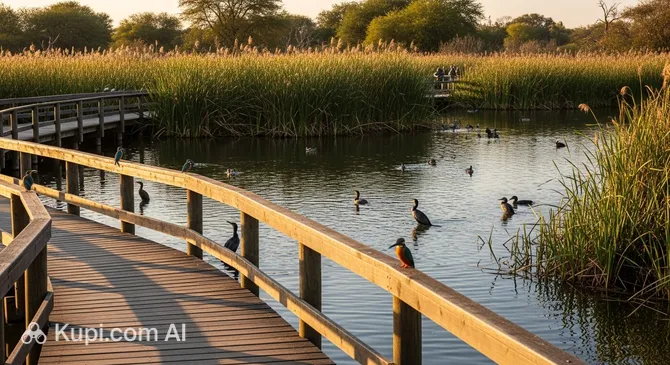
Austin Roberts Bird Sanctuary
Austin Roberts Bird Sanctuary. Иллюстрация. Источник: Kupi.com AI

The territory of the reserve features a unique landscape that emerged on the site of a former clay quarry. Today, a network of nine ponds and wetlands has been created here, surrounded by mixed bushveld. This diversity of habitat allows more than 150 species of birds to feel comfortable, including rare and majestic representatives of the local fauna.

The sanctuary's status as a provincial heritage site adds to its significance. Visitors can encounter the country's national symbol here—the blue crane—as well as crowned cranes, Egyptian geese, and vibrant sunbirds. It is a true "oasis" within the metropolis, open to everyone who appreciates the beauty of the wild world.

Contacts

To plan your visit to this nature reserve, it is helpful to have current contact details on hand. You can clarify operational details or book a group tour via the phone number provided or on the city council's official portal.

How to contactContact
AddressCorner of and, Roper St & Boshoff St, Muckleneuk, Pretoria, 0181, Южная Африка
Phone+27 12 440 8316
Websitewww.tshwane.gov.za

What to Do

The main activity for visitors to the sanctuary remains bird watching from a specially equipped bird hide on the northern side of the reservoir. The birds here are accustomed to the presence of people, so they often approach quite closely, making the location ideal for wildlife photographers. This point offers a wonderful view of the ponds, where cranes stroll proudly and white-breasted cormorants swim.

For those who want to dive deeper into the world of ornithology, organized guided walking tours are available. During the walk along the trails, specialists talk about the characteristics of the local flora and fauna, help distinguish the calls of different bird species, and show hidden corners of the forest and meadow zones. It is also worth visiting the small exhibition hall, which presents information about the research of Austin Roberts.

After a walk in the fresh air, visitors can relax at the popular Blue Crane restaurant, located right on the edge of the sanctuary. It is a great place to share impressions of what you've seen over a cup of tea while continuing to observe the feathered inhabitants through panoramic windows or from the open terrace.

The sanctuary also serves as an excellent educational platform. Programs for children and young people are held here, aimed at raising awareness about the importance of biodiversity conservation. The peaceful atmosphere of the park encourages thoughtful contemplation of nature, making it a suitable place for family holidays and psychological relaxation.

Getting There

The sanctuary is conveniently located in the prestigious Muckleneuk district, at the intersection of Roper St and Boshoff St, right next to the University of Pretoria campus. The trip from the city center by car or taxi takes no more than 10–15 minutes, and parking is provided on the north side at the entrance to the bird hide for visitors with private transport.

If you prefer public transport, you can use city buses heading toward the Muckleneuk area or call a taxi through popular mobile apps. The sanctuary is also within walking distance for those living in nearby residential blocks or studying at the university.

Entry to the area where the bird hide and exhibition space are located remains free of charge. For the most accurate route, it is recommended to use a navigator, targeting the coordinates 25°46′13″S 28°13′40″E. Don't forget to wear comfortable shoes if you plan to walk the trails.

Ближайший город: Pretoria

History & Facts

The sanctuary is named after J. Austin Roberts, an outstanding self-taught South African scientist whose handbooks on birds and mammals are still considered fundamental works in ornithology. Roberts was born in 1883 in Pretoria, and the creation of this reserve was a tribute to his invaluable contribution to science. For his merits, he was awarded an honorary doctorate from the University of Pretoria.

The history of the site itself is quite unusual: it was once a clay quarry that supplied raw materials to a local brick factory. After extraction ceased, the flooded quarry turned into a natural reservoir. Landscaping work began in 1955, and the city's first bird sanctuary was officially opened on October 27, 1956, by Mayor W. J. Seymore.

The site received nature reserve status in February 1958, and in the 1970s, the area was fully fenced to protect its inhabitants from excessive urban impact. Today, this site is recognized as a provincial heritage site due to its high recreational and educational value.

The preservation of this unique place is handled not only by municipal authorities but also by the active "Friends of the Austin Roberts Bird Sanctuary" community. They help maintain order in the park, conduct educational events, and ensure that the legacy of the famous ornithologist continues to inspire new generations of researchers.

Time Needed

For a standard visit to the area, 1 to 2 hours is usually sufficient. This is enough time to spend about 40 minutes at the bird hide, take a leisurely stroll along the trails, and see the small exhibition. Due to its compact size, the sanctuary is perfect for a short break during the day.

If you plan to join a tour with a professional guide or are a passionate photographer ready to wait hours for the perfect shot, it's worth setting aside about 3 hours. Also, account for time to relax at the local restaurant if you decide to have lunch or coffee there with a view of the water.

Working Hours

The sanctuary's operating hours depend on the time of year. During the summer period (from September to April), the gates are usually open from 06:00 to 18:00, allowing visitors to see the birds during their peak activity at dawn. In the winter months (from May to August), access time is slightly reduced: from 07:00 to 17:00.

Since the operating schedule may be adjusted on public holidays, visitors are advised to check current information on the official website or clarify details by phone before planning a trip.

07:00–18:00

Nearby

A visit to the bird sanctuary can easily be combined with exploring other iconic landmarks of the capital. The Muckleneuk area and its surroundings are rich in both architectural monuments and interesting themed sites, allowing you to put together a full day's itinerary.

Very nearby are famous government buildings and old forts offering panoramic views of the city. Below are the most interesting attractions located within a ten-kilometer radius of the reserve.

NameDistance
Crawdaddy's Brooklyn0.4 km
Brooklyn Mall0.6 km
Jan Cilliers Park1 km
Intiem Love Bridge1 km
Magnolia Dell1.1 km
Javett Art Centre at the University of Pretoria1.5 km
Sci-Enza2 km

Reached the end of the page?

That means the route is fully explored