Support

Badajoz (Railway Station)

About the Station

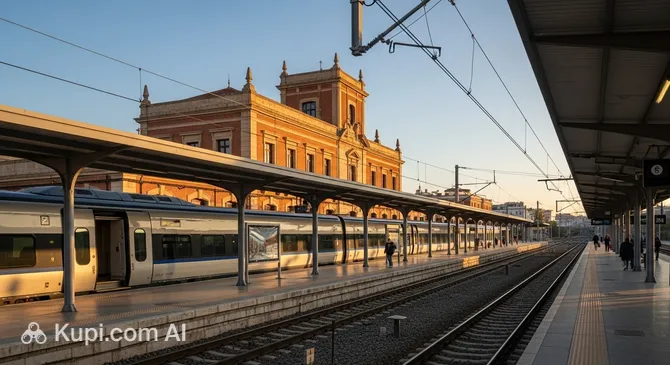
Badajoz Railway Station. Source: Kupi.com Binoculars

Badajoz Railway Station is a key transport hub in the autonomous community of Extremadura, located in close proximity to the border with Portugal. The station connects the city with important destinations such as Madrid, Mérida, and Ciudad Real, whilst also serving regional routes. The station is situated on the right bank of the Guadiana river, in the San Fernando district, providing travellers with a comfortable start to exploring the historical heritage of the region.

CityBadajoz
CountrySpain
TypeRailway station

Passengers should note that the station is compact and easy to navigate, making it difficult to get lost. The entrance leads to the main hall, where the Renfe ticket counters, a waiting area, and a cafeteria are located. Access to the platforms is intuitive and on the same level as the hall, although reaching the distant tracks may require using the underground passage. The station is located approximately 1.5 kilometres from the historic centre, so for transfers to main attractions, it is most convenient to take a taxi from the rank at the entrance or use the city buses operating in the area.

Contact Information

To conveniently plan your trip and resolve organisational matters, we recommend saving the following contact details for the station. This will help you quickly orient yourself upon arrival or clarify details before departure.

  • Official Website: Information about station services can be found at adif.es, while train schedules and tickets are available at renfe.com.
  • Information Phone: +34 912 432 343 (Adif information service) or +34 912 320 320 (Renfe customer service).
  • Address: Avenida Carolina Coronado, s/n, 06006, Badajoz.
  • Opening Hours: The station building is open to passengers daily from 06:15 to 00:00.
  • Luggage Storage Note: It is important for travellers to note that there are no luggage storage lockers at this station. We recommend taking care of your belongings in advance if you plan to walk around the city before your train departs.
  • Accessibility Information: The station is fully adapted for passengers with reduced mobility. Ramps, lifts, and dedicated restrooms are available. The free Adif Acerca assistance service for boarding and alighting is also operational (it is recommended to request this service at least 12 hours before travel).

Getting There

Getting to Badajoz Railway Station is straightforward, as it is located in the San Fernando district, on the right bank of the Guadiana river. Since the historic city centre and most hotels are on the opposite bank, the route will invariably involve crossing the river via one of the bridges. The journey does not take long thanks to the city's compactness and well-developed transport network.

For those who prefer public transport, the city buses operated by TUBASA are the optimal choice. The station is served by several routes, but Line 18 is usually the most convenient for tourists, connecting the station with key points in the city. The stop is located in the immediate vicinity of the terminal entrance. The travel time from the centre is approximately 15–20 minutes, and the service intervals mean you won't have to wait too long.

The fastest and most comfortable way to reach your train is to take a taxi. The official Radio Taxi service operates in Badajoz; their cars are white with a diagonal stripe on the front door. A trip from Plaza de España or Plaza Alta will take just 5–10 minutes depending on traffic. This is particularly relevant for travellers with heavy luggage or those departing on early morning services.

If you are travelling light and have time to spare, you can reach the station on foot. A walk from the Cathedral takes about 20–25 minutes (a distance of approximately 1.5–2 km). The route passes across the famous pedestrian bridge Puente de Palmas or the neighbouring Autonomy Bridge, offering picturesque views of the river and the Alcazaba fortress walls. This is an excellent way to bid farewell to the city before departure.

Services and Amenities

The infrastructure of Badajoz station is focused on functionality and ensuring basic passenger comfort before travel. The terminal building is small, so all key services are compactly located on one level. In the central hall, travellers will find ticket counters operating during the day, as well as self-service machines for quick ticket purchase or printing. The spacious waiting hall is equipped with seating where you can rest before your train arrives.

For those wishing to have a snack or a coffee, a cafeteria operates within the building. It is a cosy spot serving snacks, beverages, and traditional Spanish tapas — an excellent option for a short break. Public restrooms are available on the station premises and are kept clean. Regarding digital amenities, passengers can use the Wi-Fi (usually requires registration on the Adif network), and a small number of power outlets are provided in the waiting area for charging mobile devices.

The station pays great attention to accessibility. The complex is fully adapted for the movement of passengers with reduced mobility: entrances are equipped with ramps, there are no high thresholds, and passageways are wide enough for wheelchairs. Specially equipped sanitary facilities are also available. If necessary, you can utilise the boarding and alighting assistance services by contacting station staff.

An important nuance for tourists with bulky luggage: there are no automatic luggage lockers at the station. This means you cannot leave suitcases at the station to explore the city light-handed. We recommend considering this when planning your logistics and either heading straight to your hotel or using luggage services in the city centre if available.

Dining Options

Gastronomic opportunities at Badajoz station itself and in its vicinity are modest but functional. Since the station is located in the lively San Fernando district, a tourist certainly won't go hungry if they know where to look.

The most obvious option is the cafeteria inside the station. This is a classic Spanish establishment where you can quickly drink a cup of café con leche (coffee with milk) and eat a sandwich. They serve fresh bocadillos (baguette sandwiches) with cheese or traditional cured meats, as well as portions of traditional potato tortilla. This is the ideal place for those with less than 30 minutes before departure. The average bill for a snack with a drink will be around 5–8 euros.

If you have at least an hour to spare, it is worth stepping out of the station building and walking along the wide Avenida Carolina Coronado, which starts right at the station. This is the district's main artery, lined with local cafes and terraces. In the morning hours, you should try a genuine Extremaduran breakfast here: large toasts with olive oil and tomatoes or local cachuela pâté. Also popular in this area are churrerías, serving hot chocolate with crispy churros.

For a full lunch in the station area, look for signs reading "Menú del día" (Menu of the Day). In local taverns on Avenue Carolina Coronado, for 12–15 euros, you will be offered a hearty set lunch including a starter, main course, beverage, and dessert. The cuisine here is simple, home-style, and filling, with an emphasis on meat dishes characteristic of the region.

Important nuances to consider when planning meals:

  • Siesta: Remember that the kitchens of many restaurants outside the station close after lunch (usually from 16:00 to 20:00). Only cold snacks are available in cafes during this time.
  • 24-Hour Options: Finding a full meal at night near the station is difficult. The nearest options are 24-hour shops at petrol stations or vending machines inside the station (snacks, water).
  • Coffee to Go: If you are in a hurry, ask for “café para llevar” — this option is offered both in the station cafeteria and in the cafes opposite.

Station History

The history of rail transport in Badajoz dates back to the second half of the 19th century, when the development of transport became a necessary condition for the region's economic growth. The grand opening of the station took place in 1866, marking the completion of the line connecting the city with Ciudad Real. This event was a turning point for all of Extremadura, bringing the province out of relative isolation and opening the way for direct trade with the central part of Spain.

A key feature of the station since its foundation has been its strategic location near the border. Almost immediately after the opening of the Spanish line, a connection was established with neighbouring Portugal. Connecting with the Portuguese railway network turned Badajoz into a vital international hub on the route between the two capitals — Madrid and Lisbon. For many years, famous expresses carrying diplomats, merchants, and travellers across the Iberian Peninsula passed through this very station.

The architectural appearance of the station changed with the era. Initially built under the auspices of the MZA company (Madrid - Zaragoza - Alicante), the complex underwent several stages of modernisation. While the first structures were designed in the classical style of 19th-century railway architecture, subsequent reconstructions, especially in the 20th century, focused on functionality and increasing capacity. The building that tourists see today is the result of updates aimed at ensuring passenger comfort and compliance with modern safety standards.

In recent years, the role of Badajoz station has been growing again thanks to the development of high-speed rail services in Spain. The station is being integrated into the new infrastructure of high-speed lines passing through Extremadura. This not only reduces travel time to major metropolises but also cements the station's status as the country's main "western gateway", making travel around the region more accessible and attractive for tourists.

Passenger Tips

To ensure your trip via Badajoz station goes smoothly and without unnecessary stress, we recommend passengers consider a few practical nuances regarding travel organisation. The station is small, but following simple rules will help avoid rushing and misunderstandings.

  • Arrival Time: Although the station is compact, we recommend arriving 30–40 minutes before your train departs. This is especially relevant for long-distance services (for example, to Madrid), where a little more time may be required to reach the platform. For regional trains, arriving 15–20 minutes early is sufficient.
  • Security and Control: At the entrance to the tracks for Alvia or Intercity category trains, random or full luggage screening via X-ray scanner is often conducted. The procedure is faster than at an airport but requires time. Keep your tickets and documents close at hand.
  • Tickets and Boarding: Boarding usually begins 20 minutes prior and closes strictly 2 minutes before departure. If you are using an e-ticket on your smartphone, increase the screen brightness in advance for quick scanning of the QR code by the turnstile or inspector. Printing the travel document is not mandatory if it is saved in the official Renfe app or as a PDF.
  • Luggage: Remember that standard Renfe rules allow carrying up to three pieces of hand luggage. Given the lack of lockers at the station, plan your logistics so you are not left with heavy suitcases on the street if you have a long layover. Moving around the station with luggage is convenient: ramps and lifts are available everywhere.
  • Transfers: Changing trains in Badajoz is easy. Transfer between platforms is via an underground tunnel equipped with lifts. Information boards in the main hall and on the platforms will indicate the correct path. If you are transferring to Portuguese trains, watch the schedule carefully, as they may arrive at distant tracks.
  • Night Waiting: It is important to know that the station building closes at night (from 00:00 to 06:15) and is not intended for sleeping. The waiting hall is unavailable during these hours. If you have a night transfer or an early morning departure, we strongly recommend booking a hotel nearby (in the San Fernando district or in the centre) in advance, as staying inside or near the station at night may be uncomfortable.

Reached the end of the page?

That means the route is fully explored