Support

Sudan National Museum

About

On the banks of the great river, in the heart of Khartoum, lies one of the region's most significant cultural institutions — the National Museum of Sudan. Founded in 1971, it is rightfully considered the premier guardian of history in Sudan. Within its walls is the world's largest collection of artifacts, tracing the journey of human civilization from the ancient Stone Age to the Islamic period.
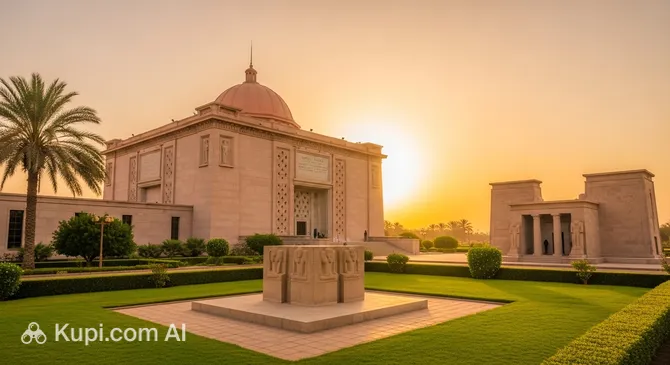
Sudan National Museum
Sudan National Museum. Иллюстрация. Источник: Kupi.com AI

The museum's particular pride is its unique ancient Egyptian temples — Buhen and Semna — which were rescued from being submerged by Lake Nasser during the construction of the Aswan Dam. These majestic structures, built by order of the legendary Queen Hatshepsut and Pharaoh Thutmose III, were carefully moved and reconstructed in the gardens surrounding the main building under the auspices of UNESCO.

Inside the two-story pavilion, visitors will find halls filled with rare Nubian exhibits, stunning statues, and works of art that make this site a must-visit for anyone wishing to understand the rich and multifaceted history of Northeast Africa. It is more than just an exhibition of antiquities; it is a true bridge between eras and cultures.

Contacts

To plan your visit to the country's main cultural repository, it is helpful to have current contact details at hand. Although operating hours may vary, the primary communication channels remain the same, and we recommend confirming information via phone or the official website before your trip.

Below is the detailed contact information for the museum administration:

How to contactContact
AddressJG45+996, Nile St, Al Khurtum, Судан
Phone+249 91 218 8894
Websitesudannationalmuseum.com

What to Do

The museum's halls offer visitors a fascinating journey through the millennia. Here, you can see rare Nubian antiquities, elegant statues of ancient Egyptian gods, and intricate reliefs, as well as unique artifacts from Sudanese civilizations. Pay special attention to the large-scale exhibits, such as the monumental seven-ton statue of King Taharqa, impressive for its grandeur and preserved detail.

Be sure to set aside time for a walk through the museum gardens. This is a unique opportunity to step inside the actual ancient Egyptian temples of Buhen and Semna, which have been recreated in their original form. By exploring their architecture, you can touch the history of ancient great rulers and appreciate the skill of ancient architects in a calm, almost meditative atmosphere.

For those interested in living traditions, the museum features ethnographic sections. Here, works by artisans from Sudanese villages are collected: authentic musical instruments, traditional clothing, and kitchenware. These items provide a deeper understanding of the lifestyle and culture of the Nile peoples, complementing the historical narrative with vivid details of modern times.

Getting There

Located in the heart of the capital on Nile Street (El-Nile Avenue), the museum is within walking distance of many central city points. The landmark is the confluence of the White and Blue Nile — the attraction is located very close to this picturesque spot. From central areas of Khartoum, such as the Presidential Palace, you can reach the museum in a leisurely 15–20 minute walk.

If you are coming from Khartoum International Airport (KRT), the distance is about 10–15 kilometers. A taxi ride along the main city thoroughfares will take between 20 and 30 minutes, depending on traffic density. Taxis are one of the most convenient ways for tourists to get around, but you can also use local microbuses (ambaits) that run near the museum complex.

For more precise navigation, using mobile maps is recommended as building numbering may not be obvious. Its convenient location on the waterfront makes a visit to the museum an excellent addition to a walk along the Nile.

Ближайший город: Khartoum

History & Facts

The history of the National Museum of Sudan began in 1971 when it officially opened its doors to the public. However, the two-story building that houses the country's treasures was constructed as early as 1955. The primary goal for establishing this institution was to preserve the region's colossal archaeological heritage, spanning eras from the Stone Age to the height of Islamic culture.

One of the most dramatic and impressive episodes in the museum's history was the rescue of the ancient temples of Buhen and Semna. In the 1960s, when the construction of the Aswan Dam threatened to flood vast areas of Nubia, a unique operation was conducted under the auspices of UNESCO. These monumental structures from Egypt's 18th Dynasty were literally dismantled stone by stone and transported to Khartoum, where they were reconstructed in the museum gardens, preserved for future generations.

In the early 2000s, the museum underwent an extensive modernization program with international support. Specialists not only updated the displays but also created digital archives of the collections, turning the museum into an important world-class research center. Today, it is rightfully considered the keeper of one of the most complete Nubian collections in the world.

Time Needed

To fully enjoy the wealth of the collections and see all the important artifacts without rushing, visitors typically need about 2–3 hours. This is enough time for a thoughtful exploration of the indoor halls and a stroll through the museum grounds.

It is recommended to allocate your time as follows: spend about an hour on the internal exhibition, which features household items, statues, and ancient manuscripts, and set aside another hour for the majestic open-air temples in the museum garden. The remaining time can be spent reading the information plaques and taking commemorative photos against the backdrop of ancient relics.

Working Hours

At this time, the National Museum of Sudan is listed as temporarily closed. This may be due to scheduled restoration work or internal administrative decisions.

Since the operating schedule is subject to change, we strongly advise tourists to check for updated information on the museum's official website or confirm the status through local tourist centers just before planning a visit.

Nearby

A stroll through the museum's surroundings will allow you to dive deeper into the atmosphere of the capital and see how locals live and relax. Its central location ensures proximity to various park areas and family leisure spots.

NameDistance
Corinthia Hotel Restaurant0.6 km
Al-Waha Mall1.7 km
Ozone Restaurant3.9 km

Reached the end of the page?

That means the route is fully explored