Support

Port Sudan Airport

About the Airport

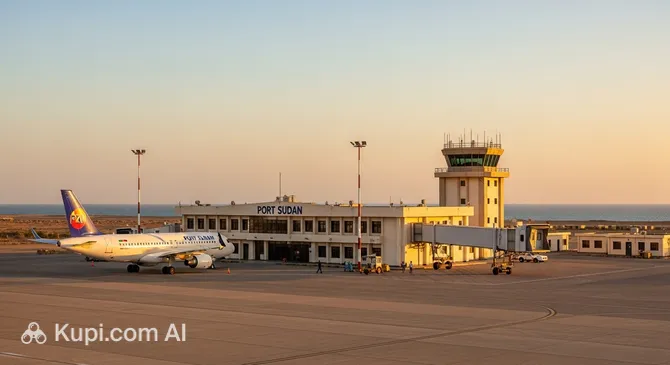
Port Sudan Airport. Source: Kupi.com Binoculars

Port Sudan International Airport is not merely a transport hub, but a true aerial gateway to the treasures of the Red Sea, welcoming travellers with the warm breath of the desert and a salty breeze. Situated at a distance from the bustling seaport, it serves as a starting point for those seeking to explore the underwater world of unique coral reefs or immerse themselves in the atmosphere of Eastern Sudan. In recent years, the significance of this air harbour has increased substantially, transforming it into a key centre connecting the country with the outside world.

IATA Code PZU
ICAO Code HSPN
City Port Sudan
Distance to centre About 20 km
Status International
Passengers per year Data not published
Schedule Check official resources

The airport possesses a number of features that make it a vital infrastructure facility in the region. Despite the relatively small size of the terminal, all necessary amenities for a comfortable wait are provided here, including **rest areas** and currency exchange points. Recent infrastructure updates have improved the quality of passenger service, while its international airport status ensures direct connections with major cities in the Middle East and Africa.

The main advantage of the air harbour is its strategic location: the coast, where the best diving centres and hotels are concentrated, can be reached in just half an hour. For tourists, this means the opportunity to begin their holiday almost immediately after landing, bypassing long transfers.

Contact Information

Obtaining precise and up-to-date contact information for Port Sudan Airport can be challenging due to the lack of unified official sources. It is recommended to resolve all flight-related matters directly through your airline. Below is general information:

  • Official Website: At present, the airport does not have a consistently functioning official website. It is recommended to check the most accurate information regarding flights and regulations on your airline's website.
  • Information Desk Phone: There is no publicly available and confirmed telephone number for the airport information desk. Please use the contact details of the airline you are flying with.
  • Address: The airport is located approximately 20 km south of the city centre of Port Sudan, Sudan.
  • Email: An official email address for general enquiries is not published.
  • Social Media: The airport does not have verified official pages on social networks. Beware of unofficial sources.
  • Lost Luggage Information: If your luggage has been lost or damaged, you should immediately contact your airline's representative at the airport. It is the carrier that handles luggage tracing matters.
  • Passenger Support Service: Assistance for passengers, including the provision of special services, is coordinated through the airlines. Contact them in advance to arrange the necessary support.

How to Get to the Airport

There are several ways to get to Port Sudan Airport (PZU) from the city centre. The choice of a suitable option depends on your budget, time, and comfort preferences. When planning your trip, consider that the airport is located approximately 20 kilometres south of the centre of Port Sudan.

Taxi and Private Transfer

The most convenient and recommended way to reach the airport is by taxi or a pre-booked transfer. Taxis can be found throughout the city; however, it is strongly recommended to agree on the fare with the driver in advance, as taximeters are rarely used. The journey from the city centre usually takes about 20-30 minutes depending on traffic conditions. For greater convenience and a fixed price, you can book a transfer through your hotel or a local travel agency. This is the most reliable option, especially if you are travelling with large luggage.

Public Transport

For budget-conscious and adventurous travellers, there is the option to use local minibuses, known as "bakassi". This is the cheapest mode of transport, but it comes with certain difficulties. Minibuses do not have a strict schedule, are often overcrowded, and may not take you directly to the terminal entrance. This option is suitable for those who are well-oriented in the area and ready for adventure. There is currently no direct bus or rail service to the airport.

Car Rental and Parking

If you prefer independence in movement, you can rent a car. Several car rental companies offer their services in the city. Ensure you have an International Driving Permit. The road to the airport is well signposted, but be prepared for the peculiarities of the local driving style. Port Sudan Airport has parking facilities where you can leave a car for both short and long periods. It is best to check rates and conditions directly on site.

General Recommendations

For most tourists visiting Sudan for the first time, a taxi or private transfer remains the optimal choice in terms of price, speed, and comfort. Regardless of the chosen method, always leave for the airport with plenty of time to spare to avoid rushing and to calmly go through all pre-flight formalities.

Terminals and Map

The New International Airport of Port Sudan (PZU) is a compact and functional aviation hub serving both domestic and international flights. Its structure is quite simple, making navigation intuitively clear for passengers.

The airport consists of one main terminal, which is divided into arrival and departure zones. Thanks to the small size of the building, you will not have to worry about transfers between terminals — all processes, from check-in to boarding, take place in one location. The layout of the airport is logical: after entering the building, you find yourself in the main hall where the check-in counters are located. After completing check-in and dropping off luggage, passengers proceed to passport and customs control, and then to the general departure lounge.

The departure zone is equipped with basic amenities, including seating for waiting. The arrival zone is located in another part of the same terminal. After disembarking from the aircraft, passengers proceed to passport control, then to the baggage claim hall, and finally undergo customs inspection before exiting to the city. All these zones are located within walking distance of each other.

Despite the fact that the airport is not large, it is worth allocating sufficient time to complete all formalities. It is recommended to arrive at the airport at least 2-3 hours before the departure of an international flight. Although queues here are usually shorter than in major hubs, procedures can take time. To navigate, simply follow the signs, although there may not be many, and not all are duplicated in English. However, due to the compactness of the terminal, it is practically impossible to get lost here. Airport and airline staff are always ready to help and direct you.

Airport History

Port Sudan International Airport, known as Port Sudan New International Airport, has a relatively short but significant history. It was officially opened in 1992 to replace the old and less functional airfield, which was located closer to the city centre and could no longer cope with the growing needs of the region. The construction of the new airport was a key step in the modernisation of Sudan's transport infrastructure, especially its coastal zone on the Red Sea.

The main stage of the airport's development took place during its design and construction in the late 1980s and early 1990s. The primary goal was to create an air gateway capable of receiving larger modern aircraft and serving international flights, connecting the country's main seaport with the world. Unlike the old airfield, the new air harbour was designed taking into account aviation safety standards and passenger comfort modern at that time, which allowed for the establishment of regular connections with cities in the Middle East and Africa.

Although the history of the airport does not abound with high-profile global events, its main role has always been to support the economic and tourist life of the region. For the city of Port Sudan, which is the most important trade hub of Sudan, the airport has become a vital artery for business trips and cargo transportation. Furthermore, it plays a key role in the development of tourism, as it serves as the main arrival point for divers and travellers wishing to explore the unique coral reefs of the Red Sea.

Throughout its existence, the airport has undergone planned modernisations to maintain compliance with international safety and navigation standards. An interesting fact lies in its strategic location: it is situated in close proximity to the country's largest seaport, creating a powerful transport hub that unites air and sea routes. Its main achievement can be considered the successful fulfilment of the function of the main international aviation gateway in eastern Sudan for over three decades.

Services and Amenities

Port Sudan Airport (PZU) provides passengers with all the basic amenities necessary for waiting for a flight. The terminal houses several cafés and small restaurants where you can order light snacks, hot meals, and drinks. Shops offering local souvenirs, travel goods, and press are also in operation, allowing you to pass the time before your flight and buy memorable gifts.

For passengers preferring privacy, a VIP lounge with more comfortable waiting conditions may be available. Opportunities for internet connection via Wi-Fi may be limited, so it is recommended to have alternative communication options. The same applies to charging stations for gadgets — their number may be small, so having a portable power bank will be very useful.

On the airport premises, you will find currency exchange points and ATMs for withdrawing cash. For urgent health issues, a medical point is available where first aid can be provided. Passengers with children and travellers with reduced mobility are provided with the necessary support. For this, it is important to inform your airline in advance about the need for special service.

There are no hotels directly within the terminal building, however, a wide range of accommodation options is available in the city of Port Sudan itself, which can be reached by taxi. There, in city hotels, business travellers will find conference rooms and everything necessary for work, as such services are not provided at the airport. A journey to this region of Sudan begins precisely from this airport, which serves as the gateway to the Red Sea coast.

Dining

When planning a departure from Port Sudan Airport (PZU), it is important to consider that this is a small regional airport with a limited range of services. Dining options here are quite modest and designed for the basic needs of passengers awaiting their flight.

In the terminal building, you will most likely find one or two small cafés or kiosks located in the public zone before security control (landside). There are no full-service restaurants or bars here. The assortment usually includes simple snacks, such as sandwiches, pastries, crisps, as well as bottled water, carbonated drinks, tea, and coffee. This is sufficient for a light snack, but not for a full lunch or dinner.

Specialised dietary dishes (vegetarian, vegan, gluten-free) are unlikely to be found on the menu. All food, as a rule, complies with Halal standards. Prices at the airport may be higher than in the city. In this regard, if you wish to have a substantial meal, it is better to do so in advance at one of the establishments in Port Sudan. It would also be a reasonable idea to bring packed snacks permitted for carriage with you.

Travel Tips

When planning a departure from the airport of Port Sudan, it is important to consider a few points to ensure your journey begins smoothly. It is recommended to arrive at the airport at least 2-3 hours before the departure of international flights. This will give you enough time in case of potential queues at check-in and security control, which may operate at a more measured pace than in major global hubs. Keep your passport, visa (if required for your trip), and ticket to hand to speed up the process.

When passing through security control, be prepared to present all electronics and liquids. Standard international rules for hand luggage apply here as well: liquids are permitted in containers up to 100 ml, packed in a transparent bag. It is prohibited to carry sharp objects, weapons, and flammable substances. Always check your airline's regulations, as there may be additional restrictions. When choosing a seat on the plane, if possible, select a window seat — during takeoff and landing, picturesque views of the Red Sea may open up.

For passengers with connections in Sudan, a key point is to verify in advance whether a transit visa is needed, especially if the connection involves leaving the airport transit zone. Ensure you have enough time between flights. Customs control upon arrival usually proceeds as standard. Be prepared to declare large sums of currency and expensive electronics. Honesty and politeness are your best assistants when communicating with customs officers.

To save time and money, try to check in for your flight online if your airline provides such a service. Travelling light will help avoid excess baggage fees. In the event of a flight delay or cancellation, contact your airline representative at the airport immediately. Clarify your rights regarding the provision of food, drinks, or accommodation. Having a portable power bank, a book, or downloaded films in your hand luggage will help pass the time while waiting.

Airports in nearby cities

Reached the end of the page?

That means the route is fully explored