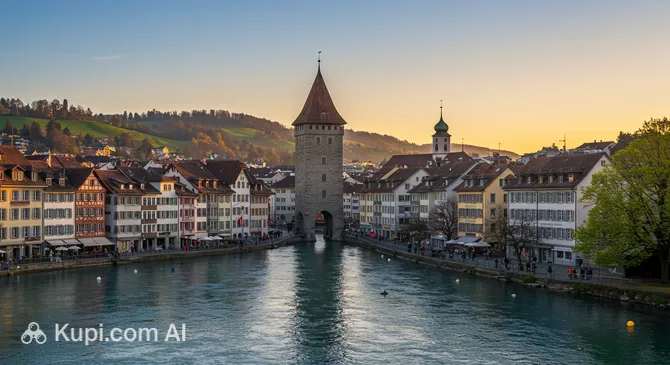
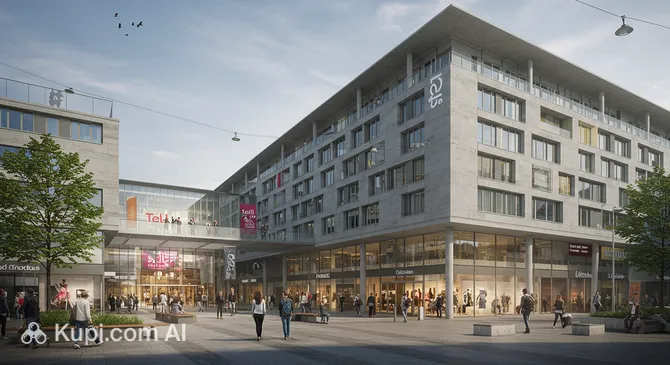
Aarau is a charming and atmospheric city nestled in the northwest of the country, at the foot of the Jura Mountains and on the banks of the picturesque Aare River. As the capital of the canton of Aargau, it combines the intimacy of a small settlement (with a population of about 21,500) and the dynamics of an important regional center. Switzerland is famous for its scenic spots, and this city is a clear testament to that, offering travelers the perfect balance between nature and urban culture.
Aarau. Illustration.
Source: Kupi.com AI
Thanks to its strategic location, the city serves as an excellent starting point for exploring the region: it is just a 25-minute drive from Zurich, while Basel and Lucerne are quite nearby. However, Aarau is interesting not only as a transit point. It is often called the "city of beautiful gables" due to the unique painted eaves of the roofs in the historic center. Strolling through the ancient streets, you will notice how Aarau's history is reflected in the architecture, where 16th-century buildings harmoniously coexist with modern structures.
In addition to the impressive Old Town, it is worth visiting local world-class museums and enjoying walks along the Aare embankment. The city offers many opportunities for relaxation: from picnics by the water to excursions to the majestic surrounding castles. Aarau is a place where you can feel genuine hospitality and enjoy a high quality of life, so be sure to include it in your itinerary for an unforgettable experience.
Weather Overview
The climate in Aarau can be described as temperate, which makes the city accessible for visiting year-round. However, to properly plan your wardrobe and leisure program, it is worth checking the current Aarau weather before your trip.
The summer season here delights with pleasant warmth: in July and August, average daily maximums reach a comfortable 24.2–24.5°C, which is ideal for walks along the embankment or excursions. Winters in the region are cool but not too harsh. The coldest month is usually January, with an average temperature of about 1.7°C and possible night frosts down to -1.1°C.
An important feature of the local climate is the regularity of precipitation. May is often the wettest month, counting up to 19 rainy days, while in winter and autumn this figure varies from 12 to 18 days. Expect a warm summer with occasional rain and cool winters, so having an umbrella or raincoat will be useful in any season.
Average monthly temperature
Average monthly precipitation
Interesting Facts
In addition to its main attractions, Aarau holds many fascinating secrets and historical details that make it a truly unique city.
The country's first capital. Few know it, but in 1798, Aarau became the first capital of Switzerland. Although the city held this status for only a few months, the national parliament met here for the first time, and this event remains a source of pride for local residents.
"Dachhimmel" — sky on the roof. The city is famous for its unique painted eaves and gables, which are called "Dachhimmel" here. Most of these colorful paintings date back to the 16th century; they are considered a national treasure and turn a walk through the streets into a visit to an open-air art gallery.
Traces of a genius. Albert Einstein spent his youth in Aarau. The great physicist studied at the local cantonal school, and it is believed that it was here that he began to take his first steps in science and formulate the ideas that changed the world.
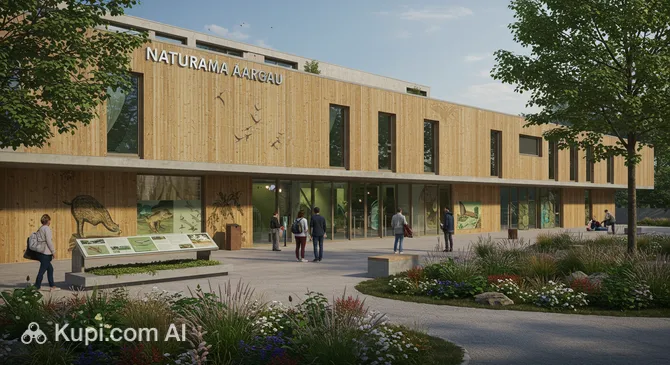
Interactive nature. The city has very strong traditions of education, an example of which is Naturama. This is not just a museum, but a modern interactive center where you can learn about the region's nature and science in an engaging way.
Naturama. Illustration.
Source: Kupi.com AI
Traveler photos:
How to Get There
Aarau occupies a strategically advantageous position in the central part of Switzerland, making it easily accessible for travelers. Thanks to the region's excellent transport infrastructure, the trip here will be comfortable, regardless of your chosen method of transportation. You can find out all the details and plan your route by following the link more about how to get to Aarau.
Aarau does not have its own airport, so most tourists fly into major aviation hubs in neighboring cities. The closest and most convenient option is Zurich Airport (ZRH). This is the country's largest international airport, receiving flights from all over the world. The distance to Aarau is about 40 km, and the travel time by taxi or transfer will take approximately 40–45 minutes, making this the fastest route.
Another popular option is the Basel-Mulhouse-Freiburg International Airport (EAP), located about 45 km from Aarau. This airport also serves many international destinations. A car trip from here to the center of Aarau will take about 50 minutes.
For clarity, here is summary information on the main airports located near Aarau:
Traveling by rail is another great way to get to the region. It is worth noting that major international expresses arrive at the main stations of neighboring metropolises. For example, Zurich Hauptbahnhof is only 37 km from Aarau. This is one of Europe's most important railway hubs with a huge passenger flow. From here, you can quickly reach Aarau by regional train or taxi (travel time by car is about 40 minutes).
It is also convenient to use Basel SBB station, located about 39 km from Aarau. This is a major station where trains arrive from many European countries. The road by car from the station to Aarau will take about 45 minutes.
Below is a table with the nearest major railway stations:
Aarau offers guests a rich cultural program and picturesque spots for outdoor recreation. The city harmoniously combines historical heritage with modern entertainment, so every traveler will find something to their liking — from walks through wooded parks to exploring cutting-edge art.
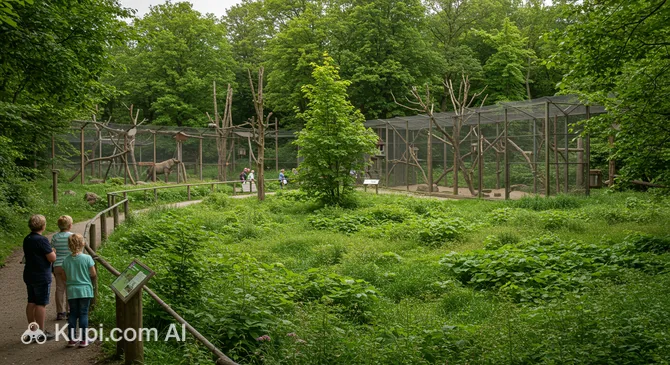
One of the most popular locations for family holidays is the Roggenhausen Zoo. This wildlife park is located in a scenic valley west of the city and is home to many local animals, including deer, wild boar, marmots, and ibex. Visitors are attracted by the opportunity to observe the fauna in their natural habitat, walk along well-maintained trails, and enjoy the tranquility of the forest. It is the perfect place to take a break from the city bustle and have a picnic in the fresh air.
Roggenhausen Wildlife Park. Illustration.
Source: Kupi.com AI
Traveler photos:
For those interested in natural sciences and the region's history, the Naturama museum is a must-visit. It is not just an exhibition of artifacts, but a modern educational center that tells the story of the nature of the canton of Aargau: from the age of dinosaurs to the present day and future predictions. Interactive displays, sound installations, and unique collections make the excursion exciting for both adults and children, allowing them to literally touch the history of the land.
Connoisseurs of fine art should visit the Aargauer Kunsthaus. This museum is considered one of Switzerland's most important art centers and boasts an impressive collection of domestic art from the 18th century to the present. The building itself is an architectural landmark, and regular temporary exhibitions attract art lovers from all over Europe.
The historical symbol of the city, the Obertorturm Tower, should not be overlooked either. This medieval gate tower, over 60 meters high, has been preserved since the 13th century and is part of the old city fortifications. It not only decorates the cityscape but also serves as a reminder of Aarau's rich medieval past when the city was an important strategic point.
Local Cuisine
Aarau's culinary traditions are a harmonious blend of Swiss classics and the regional features of the canton. In local restaurants, travelers should definitely try hearty dishes ideal for recharging after walks. The highlights of the table here are rösti — fried potato pancakes with a golden crust, as well as "Zürcher Geschnetzeltes" — tender veal in a cream sauce. A special place is occupied by Aargau cheeses, which are produced according to ancient recipes and are characterized by a rich, deep flavor.
For those with a sweet tooth, the city will be remembered for its desserts. In cozy confectioneries, you can find original Aarau gingerbread and almond cookies, which are often bought as delicious souvenirs. Seasonal fruit and berry pies supplied from nearby farms are also popular. Locals are known for their love of coffee, so a cup of the aromatic drink will be a great addition to any meal throughout the day.
To immerse yourself in an authentic atmosphere, the best choice would be the weekly farmers' markets in the city center. Here you can buy the freshest bread, homemade sausages, and try street food. Gastronomic festivals take place in Aarau throughout the year, where guests can appreciate the skill of local chefs and taste wines from regional producers.
The city's evening life offers a variety of relaxation formats. If you want to end the day in a lively atmosphere with good drinks, pay attention to Platzhirsch. This establishment is popular among locals and is great for getting to know the nighttime side of Aarau. Overall, the city's gastronomic scene is distinguished by high-quality products and hospitality, turning every lunch or dinner into a small event.
Travel Tips
Welcome to Aarau! To ensure your trip through this cozy Swiss city is as comfortable and carefree as possible, we have prepared a list of practical recommendations to help you plan your visit and avoid minor inconveniences.
Clothing and seasonality. The weather in the region can be changeable, so the best wardrobe principle here is layering. Even in summer, evenings can be cool, so a light jacket or sweater won't hurt. Be sure to bring comfortable flat-soled shoes: Aarau's historic center is paved with cobblestones, and walking on them in heels will be difficult. An umbrella or a compact raincoat will be your faithful companions in any season.
Transport. Aarau is a compact city, and its historic center is best explored on foot. For trips to the surrounding areas, public transport is ideal: BBA buses and trains run strictly on schedule. We recommend installing the SBB Mobile app — it will help you build a route and buy tickets online, which is often more convenient than looking for a machine. Taxis in Switzerland are an expensive pleasure, so buses remain the most rational choice.
Finance. The official currency is the Swiss franc (CHF). Although some large tourist spots may accept euros, the exchange rate will be extremely unfavorable, and you will still be given change in francs. Visa and Mastercard are accepted almost everywhere, but it is worth having a small amount of cash (coins and small bills) for paying at markets, parking meters, or small bakeries. Tips are usually already included in the bill, but rounding up the amount is considered good form.
Health and safety. Aarau is a very safe city where you can safely walk even after dark. The tap water here is of excellent quality — it can be drunk directly from the tap or from city fountains unless they have a "Kein Trinkwasser" (non-potable water) sign. Pharmacies (Apotheke) are easily recognized by the green cross; on-call pharmacies also work on weekends.
Communication. The main language of communication is German, but in everyday life, locals speak Swiss German (Schwyzerdütsch), which differs significantly from literary German. Nevertheless, the level of English proficiency here is very high, and you will be understood almost everywhere. For mobile internet, it is more profitable to buy a local prepaid SIM card (e.g., Swisscom, Sunrise, or Salt) at a service salon by presenting your passport.
Local etiquette. Politeness is the norm of life here. When entering a shop, restaurant, or even an elevator, it is customary to greet those present (the universal greeting is "Grüezi"). In public transport and restaurants, it is customary to observe silence: loud conversations, especially on the phone, may draw disapproving looks from others.
What to avoid. Never cross the street on a red light, even if the road is absolutely empty — this is considered a serious violation of norms and sets a bad example for children. Also, the Swiss are very protective of waste recycling rules and quiet after 22:00, so try not to make noise in your hotel or apartment late in the evening.
Shop opening hours. Note an important feature: most shops close quite early, around 18:30–19:00 on weekdays and even earlier on Saturdays (around 16:00–17:00). On Sundays, life in the city comes to a standstill: all supermarkets and boutiques are closed, only shops at the railway station and gas stations work. Plan your purchases in advance!
By following these simple tips, you will be able to easily blend into Aarau's steady rhythm of life and get the most out of experiencing the culture and atmosphere of this beautiful city.
Entertainment & Nightlife
Entertainment and nightlife:
Despite its modest size, Aarau knows how to surprise with a rich evening program. Nightlife here is not limited to a couple of quiet establishments; the city lives to the rhythm set by students, locals, and guests of the canton. The epicenter of evening strolls is traditionally the Old Town, where medieval streets fill with the sounds of music and lively conversations, as well as industrial areas converted into modern cultural spaces.
The heart of the city's alternative culture and music scene is rightfully considered KIFF (KIFF — Kultur in der Futterfabrik). Located in a former fodder factory building, this club and concert venue attracts fans of live music of various genres — from rock and hip-hop to electronic music. It has a democratic and free atmosphere, no strict dress code, and a very diverse crowd. It is an ideal place to dance or listen to performances by popular Swiss and international bands.
KIFF. Illustration.
Source: Kupi.com AI
Traveler photos:
If you prefer a more glamorous yet cozy setting, you should head to the center and visit Platzhirsch. This establishment successfully combines the formats of a stylish bar and a club, where you can start the evening with a signature cocktail and continue it on the dance floor to DJ sets. The location is popular among local youth and "white-collar" workers relaxing after the work week. It can get quite crowded on weekends, so it is better to arrive early, before midnight.
Regarding the practical side, prices in Aarau's bars and clubs correspond to the general Swiss level: you will have to pay about 7–9 francs for a glass of beer, and cocktails will cost 15–20 francs. The city is very safe for night walks, and even late at night, you can safely return to your hotel on foot. For those living in the surrounding areas, night buses (Nachtnetz) run on weekends, which allows you to save on taxis, which are not cheap here.
During the day, Aarau offers a more relaxed leisure pace. Shopping enthusiasts can drop by the Telli Center — a large shopping complex where you can not only update your wardrobe but also grab a bite in one of the cafes. The city is also rich in cultural events: there are drama theaters and cinemas, and walks through the parks and along the Aare River embankment are a great way to recharge before a new busy evening.
Parks & Museums
Aarau is a city where nature and culture intertwine in the most harmonious way. Despite its compact size, the capital of the canton of Aargau offers travelers an impressive selection of green oases for relaxation and museum spaces capable of satisfying the curiosity of the most demanding intellectuals. Here you can start your day with a walk through wooded hills and end it by contemplating masterpieces of modern painting.
Among the natural areas, the Roggenhausen Zoo deserves special attention. This place goes beyond a conventional zoo: it is an extensive landscape park nestled in a picturesque valley. There are convenient walking routes that allow you to enjoy the silence of the forest and observe animals in conditions as close to natural as possible. The park is ideal for leisurely strolls, morning runs, or family picnics at specially equipped areas.
Another important green artery of the city is the Aare River embankment and the Schachen area. This waterfront recreation zone attracts locals at any time of the year. Wide alleys, shady trees, and the view of the river's calm flow create a peaceful atmosphere. In summer, you can find cozy spots for swimming here, and in autumn, you can enjoy the golden colors of the foliage without leaving the city limits.
Aarau's cultural landscape is no less rich. A mandatory stop for many tourists is Naturama. This museum radically changes the perception of boring exhibitions: here the history of nature is told through interactive exhibits, sounds, and tactile sensations. The exhibition covers millions of years, from the ancient seas that once covered Switzerland to modern ecological issues, making science accessible and fascinating.
Connoisseurs of fine art should visit the Aargauer Kunsthaus. This museum holds one of the most complete and significant collections of Swiss art in the country, spanning the period from the 18th century to the present day. The building itself, expanded by the famous architectural firm Herzog & de Meuron, is a prime example of modern architecture, where light and space play a key role in the perception of paintings and sculptures.
To dive into the region's past, we recommend visiting the Aarau City Museum (Stadtmuseum Aarau). It combines an ancient castle tower ("Schlössli") and a modern exhibition space. Here, the city's history is presented through living human stories, interactive installations, and unique artifacts, showing how Aarau's daily life and appearance have changed over the centuries.
Speaking of architecture, one cannot fail to mention the famous "painted roofs" (Dachhimmel) in the Old Town. Looking up while walking through the central streets, you will see magnificently painted undersides of eaves, many of which date back to the 16th–17th centuries. This is a real open-air gallery that makes Aarau unique among other Swiss cities.
If you are looking for something unusual, look for the Meyerstollen. This is a system of underground tunnels built in the early 19th century for industrial needs. Periodically, tours are held here, allowing you to go underground and see the city's hidden engineering history — an experience rarely available in standard guidebooks.
Getting Around
The public transport system in Aarau is distinguished by Swiss precision, comfort, and the full integration of various modes of travel. Since the city is quite compact, there is no metro in the traditional sense, and the role of the main urban carrier is fulfilled by buses. The network is operated by the BBA Bus Aarau company, whose routes densely cover both the center and residential areas, as well as neighboring municipalities. Regional trains (S-Bahn) and the narrow-gauge WSB (Wynental- und Suhrentalbahn) railway complement the buses; within the city limits, the WSB functions almost like a tram, connecting Aarau with the southern suburbs.
The city and its surroundings are part of a single fare zone called A-Welle. This means that the same ticket is valid for buses, trains, and trams within the selected zones and time interval. The fare depends on the number of zones crossed; for trips within Aarau itself, a single-zone ticket is usually sufficient. Single tickets, day passes (valid for 24 hours), and multi-trip cards are available to tourists. If you plan active travel around the region, it is profitable to purchase a day pass, which allows unlimited use of transport in the selected zones.
For paying fares, it is most convenient to use mobile apps such as SBB Mobile or FAIRTIQ. They automatically calculate the optimal fare: you only need to swipe your finger across the screen before boarding and after alighting. If you prefer traditional methods, tickets can be bought from machines at stops (they accept cards and cash) or at the ticket counters at the railway station. It is important to remember: tickets must be purchased before boarding the vehicle. Bus drivers generally do not sell tickets, and fines for fare evasion in the country, which is Switzerland, are quite substantial.
Transport runs from early morning until midnight with intervals of 15–30 minutes. On Friday and Saturday, a night network (Nachtnetz) operates in the region, allowing you to get home late at night. Previously, a special surcharge was required for night trips, but rules can change, so it is recommended to check the current information in the app before your trip. Stops are often equipped with electronic displays showing arrival times in real time, which makes route planning very simple.
As an alternative to public transport, walking is popular in Aarau, especially in the historic center where traffic is restricted. Cycling is another great way to get around; the city has a developed network of bike lanes, and rental points can be found at the station. Taxis are available but are quite expensive compared to public transport; taxi stands are located at the exit of the railway station. Car-sharing services such as Mobility are also present in the city and will suit those who prefer independence behind the wheel.
Accommodation
The choice of accommodation in Aarau, as befits a small Swiss city, is characterized by quality and coziness, although it cannot boast the huge variety typical of megacities. Guests can expect a classic European standard: reliable mid-range hotels (3–4 stars) predominate, catering to both business travelers and tourists. Small family-run bed and breakfasts (B&Bs) and modern apartments are also available and are becoming increasingly popular for longer stays.
In terms of location, the most attractive for tourists is the Old Town (Altstadt). Staying here, you will be within walking distance of the main historical monuments and the famous houses with painted roofs. It is an ideal choice for those who want to fully immerse themselves in the atmosphere of the Middle Ages. Another strategically convenient area is the vicinity of the railway station. Given Aarau's status as an important transport hub, staying here will allow you to quickly reach Zurich, Basel, or Bern in less than an hour.
GAIS Center. Illustration.
Source: Kupi.com AI
Traveler photos:
For independent travelers who prefer to rent flats or apartments, proximity to urban infrastructure is an important factor. It is convenient to choose accommodation near major shopping points such as the GAIS Center, located in the immediate vicinity of the station, or the Telli Center. This will ensure easy access to supermarkets, pharmacies, and cafes, which significantly simplifies life during the trip.
The price range in Aarau corresponds to the general price level in the country, which is Switzerland: there are few budget options, and the cost per night even in simple hotels can be higher than the European average. There are no "luxury" five-star resorts in the city itself; for luxury, travelers usually go to neighboring major cities or spa regions. Booking tip: since the number of rooms in the city is limited and Aarau often hosts business conferences, it is recommended to book accommodation in advance — at least 2–3 weeks before the trip. It is best to use major international online platforms for this, where you can compare prices and read the latest guest reviews.
Nearby Cities
For those who want to explore the surroundings, Aarau serves as an excellent starting point for day trips to several interesting nearby places:
One of the most popular destinations is Baden, located just 22 km from Aarau. This city is famous for its thermal springs, known since Roman times. Here you can relax in modern spa complexes, try your luck at the casino, or stroll through the charming old town with its medieval architecture.
Even closer, just 12 km away, lies Olten. This is an important Swiss railway hub that is often undeservedly overlooked. The main attraction here is the ancient covered wooden bridge over the Aare River. Olten offers a cozy atmosphere for leisurely walks, many museums, and picturesque views of the Jura Mountains.
It is also worth paying attention to Wettingen. It is primarily known for its magnificent former Cistercian monastery — Wettingen Abbey. This cultural treasure of the region attracts history and architecture buffs with its beautifully preserved interiors and stained glass windows.
City
Population
Distance
Suhr
10 424
3 km
Lenzburg
10 569
10 km
Olten
18 362
12 km
Oftringen
13 791
13 km
Zofingen
11 655
14 km
These nearby destinations provide insight into the diverse culture and landscapes of the region, making a trip to Aarau even more rewarding.
Shopping & Souvenirs
Shopping in Aarau is a pleasant and relaxed activity, devoid of the bustle of major metropolises. The city offers a harmonious combination of modern retail spaces and cozy little shops tucked away in historical buildings. Here you can find products from well-known international brands as well as unique goods from local artisans, making the shopping process interesting for all types of tourists.
The heart of the city's commercial life is the Old Town (Altstadt). Strolling through its picturesque cobbled streets, such as Graben or Rathausgasse, you will find numerous clothing boutiques, bookstores, jewelry salons, and decor shops. The architecture adds a special charm to shopping here: many shops are located in houses with those very same famous painted eaves for which Aarau is renowned. It is an ideal place for those looking for something special and who appreciate an atmosphere of antiquity.
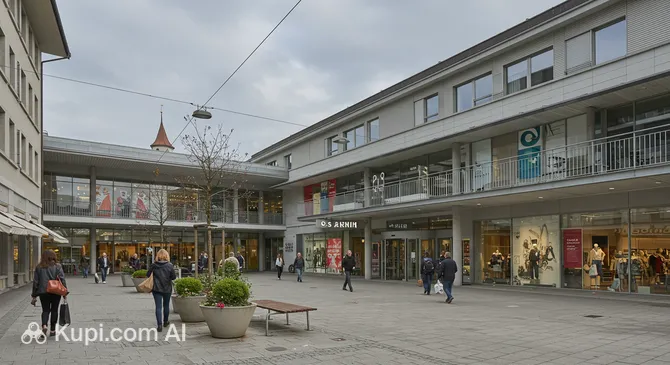
For those who prefer a concentration of many shops under one roof, there are several large shopping complexes in Aarau. One of the most popular is the Telli Center. It is located slightly away from the historical core but offers a wide selection of clothing, electronics, and home goods stores, as well as a large supermarket. It is a great place for large-scale purchases.
Telli Center. Illustration.
Source: Kupi.com AI
Traveler photos:
Another important point of attraction is the GAIS Center, which is located in the immediate vicinity of the railway station. Thanks to its convenient location, it is ideal for travelers: here you can quickly buy everything you need before a trip or upon arrival in the city. Both centers feature both Swiss and European brands.
Special attention should be paid to the local markets, which reflect the living soul of the city. Every Saturday morning, a traditional vegetable and flower market unfolds on Graben street. Here, farmers from the surrounding area sell the freshest seasonal produce, cheeses, bread, and homemade pastries. If your trip falls on the first Wednesday of November, you will be very lucky to visit the famous Rüeblimärt — the Carrot Market. Aarau is called the "capital of the carrot canton," and this festival turns the city into a colorful celebration where you can buy hundreds of types of carrot-related goods.
As souvenirs from Aarau, tourists most often bring "carrot" products. The most popular gastronomic gift is considered to be the Rüeblitorte — the famous Swiss carrot cake with almonds, which can be found in almost any confectionery. It is also worth looking for handmade local chocolate and, of course, classic Swiss knives and watches, which are sold here in specialized stores with quality guarantees.
When planning your shopping, take into account the opening hours of the shops. They are usually open from Monday to Friday from 09:00 to 18:30, while on Thursdays many stay open longer — until 20:00 (so-called "evening shopping"). On Saturdays, the working day is shorter, and shop doors close as early as 16:00 or 17:00. Sunday is a day off for most retail outlets, except for shops at the station. Credit cards (Visa, MasterCard) are accepted almost everywhere, but for market purchases, it is better to have some cash francs on hand.
Tourists residing permanently outside of Switzerland can use the Tax Free system. If your purchase amount in one store exceeds 300 Swiss francs (including VAT), you are entitled to a tax refund. Do not forget to ask the seller for a special form (Tax Free Form) and present it together with your passport and purchases at customs when leaving the country.