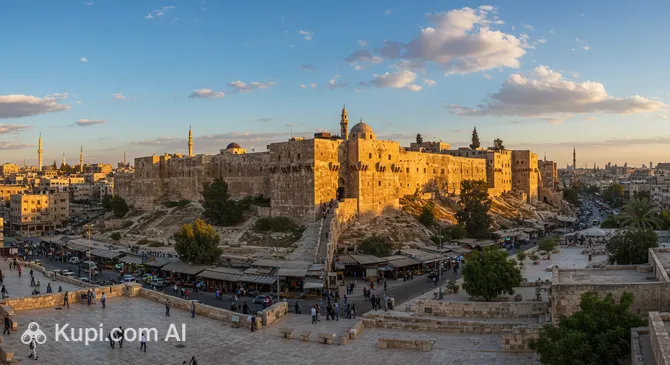
Aleppo is one of the most majestic and ancient cities of Syria, whose walls remember the rise and fall of great empires. Located at the crossroads of trade routes between the Mediterranean Sea and the Euphrates Valley, this city has served as a bridge between East and West for millennia. Today, Aleppo remains the country's largest metropolis and its most important cultural and economic center, attracting travelers with its unique merchant atmosphere and monumental architecture.
Aleppo. Illustration.
Source: Kupi.com AI
Geographically, the city is nestled in a wide basin at an altitude of about 390 meters above sea level. Its historical heritage is staggering: archaeologists have found traces of settlements here dating back to the 6th millennium BC. With a population of about 1.9 million people, Aleppo is a harmonious blend of bustling oriental markets, industrial areas, and modern residential complexes sprawling around the ancient core.
The heart of the city is rightfully considered the famous citadel and the labyrinths of covered markets, where the air is filled with the aromas of spices and coffee. Traditional buildings with narrow streets create a special coolness, providing relief from the midday sun. We invite you to touch the living history of mankind and experience the hospitality of one of the world's oldest continuously inhabited cities.
Weather Overview
The climate in Aleppo is semi-arid, representing something between Mediterranean and continental types. Summer here is usually hot and dry: in July and August, daytime temperatures often rise to +37°C. Winters, on the contrary, are quite mild and humid, with rare frosts, when the thermometer stays at an average of +8...10°C.
For those planning a visit, it is important to consider the weather in Aleppo by season. The best time for walking is spring (April-May) and autumn (October-November), when the air temperature is most comfortable, at around +20...25°C. Precipitation falls mainly in the winter months, peaking in January, while the summer passes with almost no rain.
The city's location in a basin affects air stagnation on windless days, which, combined with the summer heat, can lead to dustiness. Nevertheless, the dense buildings of the old quarters and the abundance of shaded markets allow tourists to feel comfortable even on a sunny noon. Be sure to bring sunscreen in the summer and a light jacket for cool winter evenings.
Average monthly temperature
Average monthly precipitation
Interesting Facts
Aleppo is a city that can surprise even the most seasoned traveler with its incredible records and ancient legends. Here are a few facts that will help you look at it differently:
The Oldest of the Living: Archaeological evidence confirms that people have lived continuously in Aleppo since the 6th millennium BC, and by some estimates, for more than 8,000 years.
The Legend of Milk: The Arabic name of the city, "Halab," is associated with a legend about the Prophet Abraham, who supposedly milked his cows on a local hill and distributed the milk to the poor ("Halab" means "milk" in Arabic).
Imperial Scale: During the Ottoman Empire, Aleppo was the third largest city after Constantinople and Cairo, surpassing many European capitals of the time in importance.
Trade Labyrinth: The covered markets of the old city are recognized as some of the longest in the world—the total length of the shopping rows is several kilometers.
Unique Climate: The city is located in a natural basin, which creates a special microclimate and contributes to temperature inversions that trap cool air on hot days.
How to Get There
Aleppo is a major transportation hub in northern Syria. The city is located approximately 350 kilometers from Damascus, and traditionally these two metropolises are connected by busy road and rail links. Before planning a visit, it is recommended to study all ways to get to Aleppo, taking into account the current road situation and flight schedules.
The city's main air gateway is Aleppo International Airport (IATA: ALP). It is located in close proximity to the city, making transfers quick and convenient. Normally, the airport serves both domestic flights from Damascus, which take about an hour, and international destinations from neighboring countries in the region.
Rail transport in Aleppo has historically played a key role. The city's main station receives trains connecting the northern provinces with the center of the country. A train journey allows you to enjoy views of the Syrian steppes, although the travel time may be longer than by car. To move between cities, tourists also often use comfortable intercity buses departing from the main bus stations.
Main Attractions
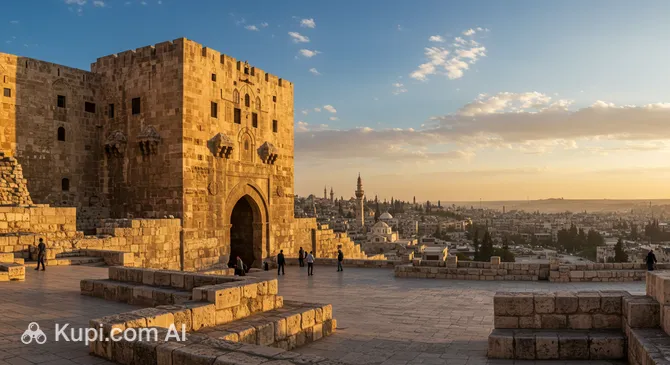
Aleppo is a true open-air museum, where every stone holds legends of the past. The main symbol of the city is the Aleppo Citadel. This powerful fortress, perched on a hill, is considered one of the most outstanding examples of medieval military architecture. While walking through its territory, tourists can see royal apartments and underground passages, and enjoy a panoramic view of the endless rooftops of the old city.
Aleppo Citadel. Illustration.
Source: Kupi.com AI
Traveler photos:
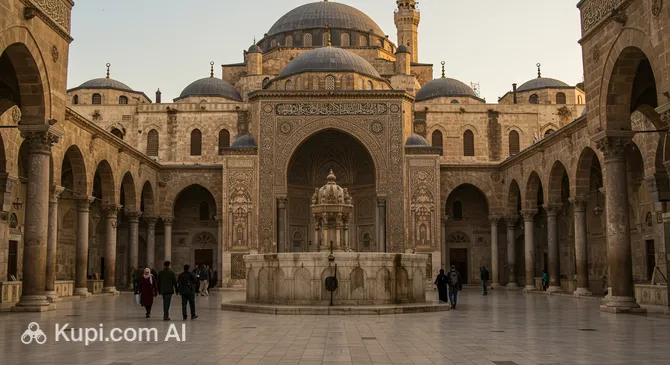
No less significant is the Great Mosque of Aleppo, founded in the 8th century. It is famous for its exquisite courtyard and unique architecture that combines elements from different eras. It is a place of power and tranquility that has served as a spiritual center for the people of the region for centuries.
Great Mosque of Aleppo. Illustration.
Source: Kupi.com AI
Traveler photos:
Another architectural masterpiece is the Al-Rahman Mosque, which stands out for its unusual style with square minarets. In addition to religious buildings, it is definitely worth visiting the famous souks (covered markets) of Aleppo. This is a multi-kilometer labyrinth of shopping stalls where you can find everything from hand-embroidered fabrics to the famous olive soap. The city's markets are included in the UNESCO World Heritage List and are rightfully considered some of the most beautiful in the Middle East.
Local Cuisine
The cuisine of Aleppo is rightfully considered the "gastronomic capital" of the Levant. It is famous for its sophistication and complex combinations of flavors. The main feature of local dishes is the skillful use of spices, nuts, and fruit sauces. Be sure to try the famous cherry kebab (Kebab Karaz)—a unique combination of tender meat and sweet-and-sour berries that has become the city's signature dish.
Meze in Aleppo is an entire art form. Here you will be served dozens of types of appetizers: from classic hummus and mutabal to specific Aleppine variations of bulgur and eggplant dishes. Great attention is paid to meat delicacies such as kibbeh—there are more than ten ways to prepare it, including baked, fried, and even raw versions with the addition of aromatic herbs.
For those with a sweet tooth, the city offers a real paradise: Aleppine baklava, knafeh, and pistachio sweets are considered the best in the region. Traditionally, a meal ends with a cup of strong Arabic coffee with cardamom or a refreshing mint tea. If you want to feel the true spirit of the city, head to restaurants near the Aleppo Citadel, where they serve dishes prepared according to old recipes in charcoal ovens.
Travel Tips
Preparing for a trip to Aleppo requires attention to detail to ensure your journey is as comfortable as possible and brings only positive emotions. We have gathered key recommendations for visiting this ancient metropolis.
Clothing and Dress Code: Choose light clothing made of natural fabrics to protect yourself from the heat. When visiting mosques, such as the Great Mosque of Aleppo, shoulders and knees must be covered, and women will need a headscarf. Comfortable shoes are a must for walking the cobbled streets of the old city.
Transport: For moving around the city, it is most convenient to use a taxi. Always have a hotel business card with the address in Arabic to show the driver.
Finances: The main currency is the Syrian Pound. It is recommended to carry a sufficient supply of cash, as international bank cards are rarely accepted. It is best to exchange currency at official points or banks.
Safety: Stick to the central and tourist areas. Try to avoid walking in unlit industrial zones late at night and always keep an eye on your belongings in crowded places, such as markets.
Connectivity: A local SIM card can be purchased at the offices of telecom operators by presenting a passport. Wi-Fi is available in most hotels and large cafes, but its speed may vary.
Language and Communication: The main language is Arabic. Young people in central areas often understand basic English. Learning a few greeting phrases is always appreciated by the locals.
Etiquette: It is customary to remove your shoes when entering a private home. Do not refuse offered tea or coffee—it is an important part of oriental hospitality and a sign of respect.
What to Avoid: You should not photograph government buildings and military facilities. Also, refrain from discussing political topics in public places.
May your acquaintance with Aleppo be a bright discovery, full of the aromas of oriental spices and the warmth of human connection. Have a pleasant trip!
Entertainment & Nightlife
Leisure in Aleppo traditionally revolves around gastronomy and leisurely socializing. The city's life is most vividly manifested in its numerous cafes and teahouses, where locals gather in the evenings to discuss the news over a cup of Arabic coffee or fragrant mint tea. Family restaurants and pastry shops scattered throughout the city are the main centers of attraction in the evening.
Classic Western-style nightlife with noisy clubs is less developed here than in coastal areas. The main entertainment is concentrated in the area of the Aleppo Citadel and on the central squares, where snack bars and small sweet shops stay open late. The atmosphere here is friendly and calm, oriented towards families and lovers of good food.
For cultural enrichment during the day, pay attention to the city's theaters and exhibition halls. In the newer districts of the city, you can find modern shopping malls with cinemas and play areas for children. If you are looking for a more dynamic night program, some residents recommend trips to Damascus, but even in Aleppo, an evening walk through the illuminated old quarters will provide unforgettable impressions.
Parks & Museums
Aleppo is a city where the historical core itself serves as a magnificent open-air museum. The Old City, recognized as a UNESCO World Heritage site, includes unique ensembles of mosques, caravanserais, and madrasas. The Aleppo Citadel remains the main cultural and historical center, inside which the remains of palaces and temples from different eras, from the Hittites to the Ottomans, have been preserved.
Aleppo Citadel. Illustration.
Source: Kupi.com AI
Traveler photos:
For fans of classic exhibitions, the city has museums dedicated to archaeology, which house priceless artifacts found during excavations in northern Syria. In the collections, you can find everyday objects from the ancient civilizations of Mesopotamia, ancient statues, and medieval manuscripts, highlighting Aleppo's role as a center of world trade and culture.
Despite the arid climate, the city has a network of cozy squares and public gardens that serve as oases of coolness. Among them, the City Garden and various park zones in the new districts stand out, where residents like to spend time with their families. Green boulevards and small parks with fountains provide a necessary contrast to the dense buildings and are a favorite spot for quiet walks at sunset.
Getting Around
The transport system of Aleppo is focused on a dense road network connecting the historical center with the rapidly growing outskirts. The core of public transport consists of buses and minibuses, known as "services." They run on fixed routes and are the most budget-friendly way to get around. It's worth noting that information boards in English are rare, so it can be helpful for tourists to check the name of the desired area with hotel staff beforehand.
Private taxis are the most comfortable option for traveling around the city, especially during hot daylight hours or in the evening. It is customary to agree on the price of the trip in advance or ensure the meter is turned on. Taxis are easy to find at special stands near markets and hotels, or simply by waving your hand on the street. During rush hours, traffic on central highways can be heavy, so plan your movements with extra time.
The pedestrian environment is best developed within the old city, where many streets are too narrow for cars. Walking is the best way to explore the attractions around the Aleppo Citadel. In the newer parts of the city, streets are wider and more oriented towards car traffic. Bicycle rental is not yet widespread in the city, so taxis and walking through historical quarters remain the main choices for tourists.
Accommodation
For tourists in Aleppo, a diverse choice of accommodation is available, reflecting the city's rich history and modern development. Especially popular are boutique hotels located in restored traditional mansions of the old city. Staying in such a place allows you to fully immerse yourself in the atmosphere of antiquity, enjoying courtyards with fountains and exquisite oriental room finishes.
In the newer districts of Aleppo, large hotel complexes and modern middle-class hotels are concentrated, catering to business travelers and tourist groups. These areas are convenient for their transport accessibility and proximity to business centers. For those planning a long stay, renting apartments in modern high-rise buildings is widely common.
When choosing a place to stay, it is recommended to look at areas near the Aleppo Citadel if you want to be at the center of cultural events, or at the western quarters of the city, which are considered more modern and commercially developed. It is better to book accommodation in advance, especially if your visit coincides with major regional holidays or business forums.
Nearby Cities
Aleppo is an ideal starting point for exploring the northern regions of the country, rich in archaeological sites and picturesque landscapes. Nearby towns and settlements offer a unique opportunity to see provincial life in Syria and touch the history of antiquity and the Middle Ages just a few dozen kilometers from the metropolis.
One interesting destination for a short trip is Al-Safira, located southeast of the city. This place is known for its agricultural traditions and proximity to ancient salt lakes. It is also worth noting the small town of Nubl, the journey to which takes very little time and allows you to see the typical architecture and way of life of this region.
City
Population
Distance
Anadan
11 918
13 km
Nubl
21 039
23 km
Al-Safira
106 460
25 km
Atarib
10 657
28 km
Turmanin
10 394
29 km
For those ready for longer journeys, it is convenient to set off from Aleppo towards the Euphrates Valley or to the Mediterranean coast in Latakia. Each of these directions will provide new experiences: from majestic river landscapes to the refreshing sea breeze and ancient port cities. Exploring the surroundings will help you gain a deeper understanding of the multifaceted character of this ancient land.
Shopping & Souvenirs
Shopping in Aleppo is primarily an immersion in the atmosphere of ancient traditions at the famous oriental markets. The city has been famous for its craftsmen for centuries, and today you can purchase unique items here that are difficult to find anywhere else. The key place for shopping is the covered souks in the old city, where aromas of spices, leather, and incense mingle in the air.
The main souvenir that is definitely worth bringing back is the legendary Aleppo soap, handmade from olive and laurel oils. Aleppo is also famous for its textiles: silk scarves, embroidered fabrics, and traditional Arabic clothing. For lovers of antiques and jewelry, there are shops with copper utensils, engraving, and silver jewelry.
If you prefer a modern shopping format, head to the western districts of the city, where shopping centers and boutiques of international brands are located. Shops in Aleppo usually open around 10:00 and work until late evening with a lunch break during the hottest time. In the markets, it is customary to bargain—this is part of the local culture, which turns an ordinary purchase into an exciting process of communicating with the master.