Support

Tanga Airport

About the Airport

Tanga Airport (TGT) is not just a runway, but a cosy gateway to one of the most authentic and pristine corners of Tanzania. Located on the shores of the Indian Ocean, it serves as a starting point for journeys to coral reefs, tropical forests, and ancient ruins. Its compact size and friendly atmosphere create a feeling that your adventure begins even before you have left the terminal. It is the ideal choice for those seeking a tranquil start to their exploration of the country's northern coast.
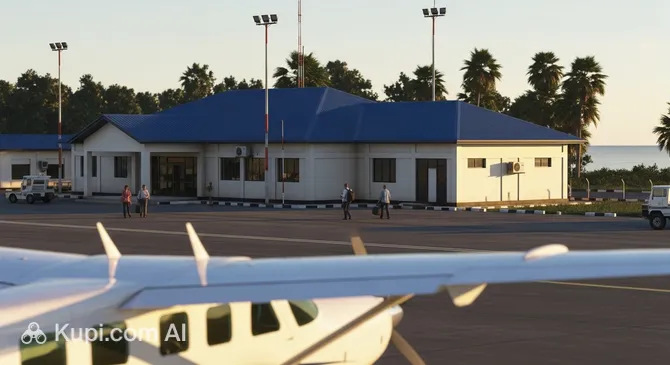
Tanga Airport. Source: Kupi.com Binoculars
IATA Code TGT
ICAO Code HTTG
City Tanga
Distance to Centre About 3 km
Status Domestic
Annual Passengers Over 30,000
Popular Airlines Auric Air, Coastal Aviation, Precision Air

The main feature of Tanga Airport is its compactness and simplicity. There is no hustle and bustle typical of large international hubs here: flight check-in and baggage claim are quick and free of unnecessary formalities. The airport primarily serves domestic flights, connecting the city with key destinations such as Dar es Salaam, Zanzibar, and Arusha, making it a convenient transfer point for further travel across the country.

Its key advantage is its strategic location. From here, it is convenient to reach Saadani National Park—the only wildlife sanctuary in Tanzania located on the ocean coast. The airport also serves as a departure point for trips to the picturesque Usambara Mountains, known for their tea plantations and panoramic views. For tourists who value time and comfort during regional transfers, Tanga Airport becomes an indispensable transport hub.

Contact Information

Tanga Airport (TGT) is a small regional aviation hub in Tanzania that primarily handles domestic flights. The airport is managed by the state-owned Tanzania Airports Authority (TAA), so most inquiries should be directed to them. Below is the current contact information to help you plan your trip.

  • Management Company: Tanzania Airports Authority (TAA). General information about all airports in the country, including Tanga Airport, can be found on their official website www.taa.go.tz.
  • Help Desk Phone: You can contact the administration directly at Tanga Airport by calling: +255 27 264 3087. Alternatively, you can use the TAA head office numbers: +255 22 2842402 / +255 22 2842403.
  • Airport Address: The airport is located approximately 5 km southwest of the city centre. Physical address: Ras Kazone, Tanga, Tanzania. Postal address: P.O. Box 263, Tanga, Tanzania.
  • Email: For official enquiries, it is recommended to use the TAA management email: info@taa.go.tz.
  • Social Media: Tanga Airport does not have its own social media pages. However, news and updates can be followed on the official pages of the Tanzania Airports Authority.
  • Lost Luggage Information: It is extremely important to remember that the airline carrier is responsible for lost or damaged luggage, not the airport. Upon arrival, immediately approach your airline's counter or contact their representative using the details provided on your ticket.
  • Passenger Support Contacts: For enquiries and support regarding airport operations, please use the airport administration or TAA head office numbers listed above.

How to Get to the Airport

Tanga Airport is located in close proximity to the city of Tanga, making the journey there quick and convenient. Travellers can choose from several transport options depending on their budget and preferences.

Taxis and Auto-rickshaws (Bajajis) are the most popular and simplest way to get to the airport. A trip from the city centre will take approximately 15-25 minutes. It is strongly recommended to agree on the fare with the driver in advance, before starting the journey. The average taxi fare is around 15,000–25,000 Tanzanian Shillings. A more budget-friendly option is the three-wheeled bajaj, which is ideal for travellers with light luggage.

Public Transport in Tanzania consists of local minibuses known as dala-dalas. This is the cheapest way to travel, but it may be inconvenient if you have many suitcases. There may not be a direct route to the terminal entrance, and you will likely have to walk some distance from the main road. This option is suitable for experienced and budget-conscious tourists travelling light.

For those who prefer independence, car rental services are available in Tanga. This is an excellent opportunity not only to reach the airport comfortably but also to explore the picturesque surroundings of the region. There is parking available at the airport where you can safely leave the car during your absence.

For maximum comfort, especially for early departures or late arrivals, you can book a private transfer. This service is often provided by hotels or local tour companies. Although this is a more expensive option, it guarantees peace of mind and timely arrival at the airport without unnecessary hassle.

Terminals and Map

Tanga Airport (TGT) is a small and compact regional airport, so its structure is extremely simple and intuitive for any traveller. There are no complex layouts or multi-level buildings here, making your stay comfortable and predictable.

The airport operates with only one terminal, which serves both departing and arriving flights. It is a single-storey building where all key zones are within walking distance of each other. Since the airport is primarily focused on domestic flights within Tanzania, there is no strict separation into international and domestic sectors. All passenger services are concentrated in one common space.

The terminal layout is very straightforward: upon entering, you immediately find yourself in the main hall. Here, the check-in counters of several local airlines are located. After receiving a boarding pass and checking in luggage, passengers proceed to a small security screening area, followed by a cosy waiting lounge. The arrivals area is located in the same building and consists of a baggage claim belt (or zone) and an exit to the city. Transfers between terminals are, naturally, not required.

The main advantage of Tanga Airport is the speed of completing all formalities. Flight check-in and screening usually take no more than 20-30 minutes due to the low passenger flow. Nevertheless, it is recommended to arrive at the airport approximately 1-1.5 hours before departure to go through all procedures without rushing. It is practically impossible to get lost here: all signs and zones are clearly visible, and staff are always ready to assist with navigation.

Airport History

The history of Tanga Airport (TGT) is closely intertwined with the economic and social development of the port city and the entire northern region of Tanzania. The airport was built in the mid-20th century, during a period when the territory was under British administration. It was originally created as a small airfield for administrative needs and cargo transport, primarily for the then-thriving sisal industry, of which Tanga was the centre.

After the country gained independence, the role of the airport began to change. With the decline of sisal production and the growth of tourism and business activity, the focus shifted to passenger transport. Tanga Airport became an important link between the Indian Ocean coast and key centres of the country, such as Dar es Salaam, Zanzibar, and Arusha. This spurred the development of tourism in the region, giving travellers access to nearby national parks and historical sites.

Throughout its history, the airport has been modernized multiple times to meet modern aviation standards. Key stages included improvements to the runway and the construction of a new, more comfortable, and functional passenger terminal. These renovations were aimed at improving flight safety and the quality of passenger service, which strengthened its strategic importance for the region.

Tanga Airport cannot boast passenger traffic records typical of metropolises, but therein lies its charm. It is a cosy air haven serving mainly small turboprop aircraft of local airlines. One interesting fact is its picturesque location right on the coast. Landing and taking off here offer passengers breathtaking views of the Indian Ocean, making for a wonderful start or end to a journey through this amazing corner of Tanzania.

Services and Amenities

Tanga Airport (TGT) is a small but functional aviation hub offering passengers a set of essential services for comfortable travel across Tanzania. Despite its modest size, the airport strives to meet the basic needs of travellers.

Dining and Shops. In the terminal, you will find small cafes where you can order light snacks, sandwiches, and beverages. There are also souvenir shops where you can purchase items made by local artisans and memorable gifts.

Waiting Areas and Facilities. Standard waiting halls are equipped for passengers. Although there are no specialised VIP lounges at the airport, conditions for comfortable waiting have been created in the general areas. Passengers have access to Wi-Fi, and there is also the possibility to charge electronic devices before the flight. For financial transactions, ATMs or currency exchange points are available.

Special Services. A medical point is available on the airport premises where first aid can be obtained. Basic amenities are provided for passengers with children. Travellers with reduced mobility are offered necessary support; however, it is recommended to contact your airline in advance to arrange assistance and clarify details.

Accommodation and Business Services. There are no hotels directly inside the airport building, but a wide selection of accommodation options can be found in the city of Tanga itself, which can be quickly reached by taxi. Specialised conference rooms or business centres are absent in the airport, but such services are often provided by major hotels in the city.

Where to Eat

When planning a flight through Tanga Airport, it is important to consider that this is a small regional hub with a limited selection of services. Dining options here are modest and primarily designed for a quick snack before departure rather than a full lunch or dinner.

In the airport's single terminal, there is usually a small kiosk or cafe located in the general hall before the security zone (landside). Here, passengers can purchase basic beverages such as water, soft drinks, tea, and instant coffee. Food offerings typically include packaged snacks, biscuits, and sometimes simple pastries or local snacks, such as samosas (fried pastries with filling).

There are no specialised restaurants or establishments offering specific menus for vegetarians, vegans, or people with gluten intolerance at the airport. Prices for food and drinks may be slightly higher than in the city but remain within reasonable limits. The cafe's opening hours depend directly on the flight schedule—it opens shortly before departures and may be closed during quiet periods. If you require a full meal or have specific dietary requirements, it is recommended to eat in Tanga before travelling to the airport or to bring food with you.

Travel Tips

To ensure your journey through Tanga Airport goes as smoothly as possible, take advantage of these tips. Planning and knowing a few nuances will help save time and reduce stress.

Arrival Time: Tanga Airport is small and serves domestic flights. Aim for the standard recommendation: arrive 1.5–2 hours before departure. This time will be sufficient to calmly go through all pre-flight formalities without unnecessary rushing.

Check-in and Security: If possible, complete online check-in if your airline provides this service. This will save time in the queue. Keep your passport and boarding pass ready at the airport. The screening procedure is standard, but to speed up the process, remove metal objects from your pockets and take laptops and liquids out of your hand luggage in advance.

Seat Selection: Want to enjoy views of the Indian Ocean coast during take-off or landing? Choose a window seat. If freedom of movement and the ability to stand up easily are more important to you, your choice is an aisle seat. For quicker disembarkation upon arrival, book seats in the front part of the cabin.

Hand Luggage: Remember the universal rules: liquids in containers no larger than 100 ml, packed in a transparent bag, as well as the absence of sharp objects. If you are carrying traditional statues or masks as souvenirs, it is better to check them in as luggage to avoid questions during screening.

Connecting Passengers: If you have a connecting flight, check with the airline whether you need to collect and re-check your luggage. Infrastructure in small airports may be limited, so in case of a long wait, bring a book or a charged power bank with you.

Customs Control: When departing from Tanzania, be prepared for checks regarding the export of prohibited items. This applies to certain types of shells, corals, and ivory products. Valuable souvenirs and jewellery may require receipts. Always declare large amounts of cash if required by law.

Saving Time and Money: To avoid overpaying for taxis, research transfer options in advance or arrange one with your hotel. Prices for food and drinks at airports are usually higher, so you can bring a small snack and an empty water bottle, which can be filled after passing security.

In Case of Flight Delay: First, contact your airline representative for up-to-date information. Remain calm and clarify your rights regarding the provision of beverages, meals, or hotel accommodation during long delays. Keep an eye on the information screens for updates.

Reached the end of the page?

That means the route is fully explored