Support

Nakhon Si Thammarat Airport

About the Airport

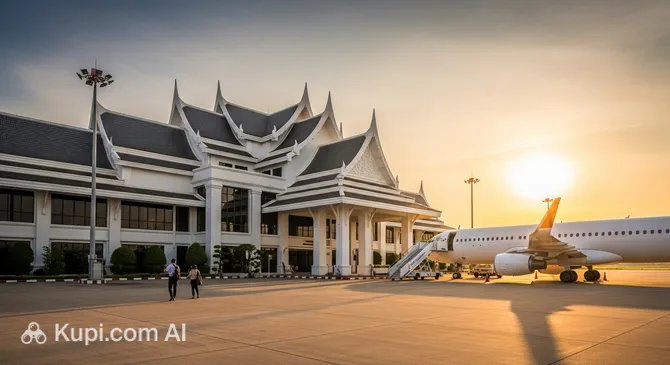
Nakhon Si Thammarat Airport. Source: Kupi.com Binoculars

Welcome to the aerial gateway of one of Thailand's oldest cities! Nakhon Si Thammarat Airport is not merely a transit point, but your first introduction to Southern hospitality and the rich history of the region. This small yet welcoming airport hub saves you from the hustle and bustle of giant terminals, offering a relaxed atmosphere and quick access to the province's ancient temples and pristine beaches. Here, your journey begins with a smile and comfort, setting the tone for a peaceful holiday.

IATA Code NST
ICAO Code VTSF
City Nakhon Si Thammarat
Distance to Centre 14 km
Status Domestic
Annual Passengers ~1.2 million
Schedule Check official online flight boards

Airport Features and Advantages

The main advantage of this airport is its compactness and convenience. Thanks to the terminal's small size, all procedures—from check-in to baggage claim—are completed as efficiently as possible, without the long queues typical of capital city hubs. This allows travellers to save time and energy after their flight.

For a comfortable wait before your flight, there are cosy coffee shops and stores selling local souvenirs, where you can purchase famous silverware or local textiles. Transport accessibility is also excellent: right at the exit of the arrival zone, you can easily find a taxi or use minivan services that will quickly take you to the city centre or popular resort areas.

Contact Information

Below you will find contact information for Nakhon Si Thammarat Airport (NST), which will help you plan your trip and resolve any potential issues.

  • Official Website: nakhonsithammarat.airports.go.th
  • Information Desk Phone: +66 75 369 540
  • Address: 10 Moo 1, Pak Phun Subdistrict, Mueang Nakhon Si Thammarat District, Nakhon Si Thammarat 80000, Thailand
  • Email: nst@airports.go.th
  • Social Media: Current information and news can be found on the airport's official page on Facebook.
  • Lost Luggage Information: If you encounter an issue with lost or damaged luggage, you must contact the support service of your airline directly, as the carrier is responsible for this.
  • Passenger Support Contacts: For general questions, consultations, and passenger assistance, please use the main airport information desk phone number.

How to Get to the Airport

Nakhon Si Thammarat Airport (NST) is located approximately 14 kilometres north of the city centre of Nakhon Si Thammarat, making the journey there quite quick and simple. Depending on the chosen transport and traffic conditions, the trip will take between 20 to 40 minutes. Travellers can choose from several convenient ways to get to the terminal.

Taxi and Private Transfer — the most comfortable and fastest way to reach the airport. A car can be booked via an app (such as Grab), requested at your hotel reception, or hailed on the street. A taxi ride from the city centre will take about 20-25 minutes. The fare is usually fixed and costs approximately 200-300 THB. This is an ideal option for those travelling with large luggage or who value personal space and speed.

For budget travellers, minivans or Songthaews (shared pick-up trucks) are an excellent choice. They operate along the main routes connecting the city with the airport. This is a cheaper alternative to taxis, with fares around 30-50 THB per person. However, please note that this transport makes stops along the way to pick up and drop off other passengers, so the travel time may increase to 30-40 minutes. It is a good way to experience the local atmosphere but may not be very convenient with bulky luggage.

Car Rental offers maximum freedom of movement, especially if you plan to explore the surroundings of Thailand. Counters for both international and local rental companies are available at the airport and in the city. It is best to book a car in advance, especially during the high tourist season. There is a parking lot next to the Nakhon Si Thammarat Airport terminal where you can leave your car for a short or long term.

If you cannot find a direct flight, you might consider flying into one of the neighbouring airports. Nearby options include Surat Thani Airport (URT), which is a hub for trips to Koh Samui and Koh Phangan, as well as the popular tourist airports of Krabi (KBV) and Samui (USM). From there, you can reach Nakhon Si Thammarat by bus or rental car.

Terminals and Map

Nakhon Si Thammarat Airport (NST) consists of one passenger terminal that serves all domestic flights. Thanks to its compactness and logical layout, navigating it causes no difficulties even for those visiting for the first time.

The terminal building is functionally divided into two main zones: departure and arrival. The airport layout is extremely simple:

  • Departure Zone is located in one part of the building. Immediately after entering, you find yourself in the main hall where airline check-in counters are located. After checking in and dropping off luggage, passengers proceed to pre-flight security screening, followed by a small waiting lounge with boarding gates.
  • Arrival Zone is located in the other part of the terminal. Passengers arriving on a flight enter the baggage claim hall which has several belts. Immediately after collecting suitcases, there is an exit to the public area, where you can find taxi counters, car rentals, and meet those waiting for you.

Since the airport has only one terminal, there is no need for inter-terminal transfers. All processes—from check-in to boarding—take place within a single building, which significantly saves travellers' time and energy. All navigation is intuitive, and signs are duplicated in English.

Completing all formalities usually takes little time. It is worth allocating about 30-40 minutes for check-in and security screening. Nevertheless, it is recommended to arrive at the airport 1.5-2 hours before departure, especially during peak hours or the tourist season, to avoid rushing and to calmly enjoy a coffee before your flight.

Airport History

Nakhon Si Thammarat Airport (NST) has a relatively recent but rich history, closely linked to the economic and tourism development of the province of the same name. Although the airfield existed previously, its history as a commercial hub began on 1 December 1998, when Thai Airways operated the first flight from Bangkok. Initially, it was a small regional airport designed to serve domestic flights and improve transport accessibility to the province of Nakhon Si Thammarat.

With the growing popularity of Southern Thailand as a tourist destination in the 2000s and 2010s, the airport's existing infrastructure quickly reached its capacity limit. The increasing passenger flow, which exceeded one million people per year by the mid-2010s, made the need for radical modernisation obvious. This became the starting point for the most large-scale project in the airport's history—its transformation into a modern international aviation hub.

A key stage of development was the comprehensive reconstruction that began in the late 2010s. The project included the construction of a new, spacious passenger terminal capable of serving up to 4 million passengers per year. Parallel works were carried out to lengthen and strengthen the runway, allowing it to accommodate larger aircraft, such as the Airbus A320 and Boeing 737, used on international routes. This modernisation was not just an expansion, but a complete transformation, laying the foundation for the airport to receive international status.

Among the interesting facts from the airport's history is its architectural transformation. The design of the new terminal was inspired by local culture: its elements feature motifs of the traditional shadow puppet theatre "Nang Talung" and patterns of Southern Thai textiles. Thus, the airport has become not only a functional gateway to the region but also a distinctive landmark, introducing arriving travellers to the rich cultural heritage of the province. Today, Nakhon Si Thammarat Airport is a symbol of dynamic development, continuing to play an important role in connecting this beautiful corner of Thailand with the world.

Services and Facilities

Nakhon Si Thammarat Airport (NST), despite its modest size, offers passengers all necessary services for a comfortable wait for their flight. It is a modern and functional terminal focused on domestic flights.

Restaurants, Cafés, and Shops. Before departure, you can have a snack in one of several cafés serving drinks, sandwiches, and local dishes. Small shops are also available in the airport where you can purchase souvenirs, snacks, newspapers, and essential items.

Waiting Lounges and Wi-Fi. A general waiting hall is available for all passengers. The terminal offers free Wi-Fi, and in some zones, you can find sockets for charging electronic devices. For Business Class passengers and members of loyalty programmes of certain airlines, such as Thai Airways, a separate lounge with more comfortable conditions may be available.

Financial Services. The airport building houses ATMs from several major Thai banks where you can withdraw cash. Currency exchange points are rare here, so it is recommended to exchange money in the city beforehand.

Services for Passengers with Special Needs. The airport is equipped for the convenience of passengers with reduced mobility: there are ramps and specially equipped restrooms. Mother and child rooms are provided for travellers with small children. If necessary, you can contact the information desk for assistance or a wheelchair.

Other Services. There is a medical point on the airport premises for first aid. Regarding accommodation, there are no hotels directly within the terminal, but many options can be found in the city of Nakhon Si Thammarat itself, which is easily accessible by taxi. Specialised conference rooms or business centres are absent at the airport.

Where to Eat

Nakhon Si Thammarat Airport (NST), being an important regional hub, offers passengers several options for a snack or a full meal before departure. Most dining establishments are concentrated in the public zone of the terminal (landside), accessible to both departing passengers and those seeing them off. After passing security control (airside), the selection is usually more limited, so it is recommended to eat beforehand.

The main highlight of the airport is the small cafés and eateries where you can try authentic Southern Thai cuisine. This is a great opportunity to enjoy local flavours one last time. They often serve various curries with rice (Khao Gaeng), fried noodles, and other traditional treats. Prices here are generally more affordable than in capital city airports, although slightly higher than in the city itself.

For those in a hurry, there are several coffee shops in the airport. They offer a standard selection: coffee, tea, sandwiches, pastries, and desserts. This is an ideal option for a quick breakfast or a light snack. There are also small shops in the terminal where you can buy drinks, crisps, and packaged snacks for the journey.

Passengers with specific dietary needs should be prepared for a limited selection. Finding vegetarian dishes based on rice and vegetables is quite realistic; however, specialised vegan, gluten-free, or certified Halal options may be absent within the terminal facilities. In such cases, it is better to bring a suitable snack with you. Most cafés and restaurants operate according to the flight schedule, opening early in the morning and closing after the departure of the last aircraft.

Traveller Tips

To ensure your journey through the airport of Nakhon Si Thammarat goes smoothly and without hassle, make use of these helpful tips. This is a small regional airport, so many procedures here are faster than in the major hubs of Thailand.

Arrival Time at the Airport. For domestic flights, which constitute the vast majority of flights from this airport, it is recommended to arrive 1.5-2 hours before departure. This time will be sufficient to check in, drop off luggage, and pass security control without rushing. If you are flying on a rare international charter, allow at least 2.5 hours.

Check-in and Security. To save time, complete online check-in for your flight if your airline offers this facility. Security control here usually does not take much time, but keep your passport and boarding pass ready. Airport staff are friendly and always ready to help.

Seat Selection. When flying to the south of Thailand, a window seat can offer you breathtaking views of the coast and islands. If comfort and the ability to stand up freely during the flight are more important to you, choose an aisle seat.

Hand Luggage. Remember the general rules: liquids are permitted in containers of no more than 100 ml each, packed in a transparent bag. Sharp objects are prohibited. External batteries (power banks) must be carried only in hand luggage. Always check the luggage and hand luggage allowances with your airline.

Transit Passengers. Nakhon Si Thammarat Airport is not a major transit hub. If you have a connection planned at another airport (for example, in Bangkok), you will likely need to collect your luggage and then check in again and drop it off for the next flight. Consider this when planning the time between flights.

Customs Control. Since the airport mainly serves domestic flights, customs control is only undergone by passengers of international charter flights. The procedure is standard: you must declare goods subject to declaration and be prepared for a possible luggage inspection.

Saving Time and Money. Research transfer options from the airport to the city or resort in advance—often booking a taxi via an app or reserving a shuttle online is cheaper than doing so on the spot. Prices for food and drinks in the departure zone may be higher, so you can bring an empty water bottle and fill it after passing security control.

In Case of Flight Delay. First of all, contact your airline's counter for the latest information. Monitor updates on the departure boards. There are several cafés and shops in the airport where you can spend time waiting. It is useful to have a book or a charged power bank with you to pass the time.

Reached the end of the page?

That means the route is fully explored