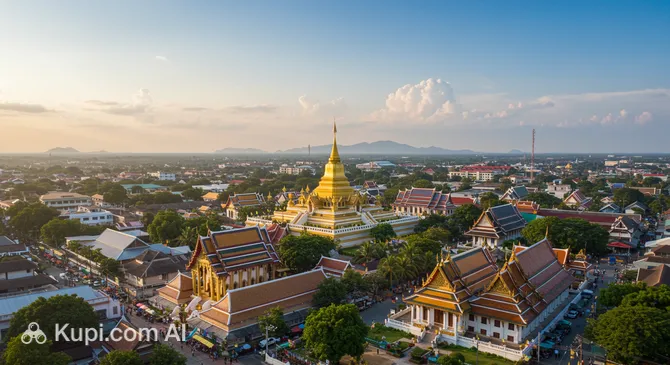
Nakhon Si Thammarat is a captivating destination that serves as a cultural and spiritual hub in the southern part of Thailand. Often overlooked by tourists flocking to the popular islands, this city offers a more authentic glimpse into the nation's living traditions. With a population of approximately 106,000 residents, it maintains a lively yet relaxed atmosphere, distinct from the bustling crowds of the capital.
Nakhon Si Thammarat. Illustration.
Source: Kupi.com AI
Geographically, the city is situated near the coast of the Gulf of Thailand, surrounded by lush tropical landscapes. It is one of the oldest settlements in the country, and the history of Nakhon Si Thammarat is deeply intertwined with the arrival of Buddhism in the region. The city was once a significant center of power in Southeast Asia, leaving behind a legacy that is still palpable in its architecture and local customs.
Visitors are primarily drawn to the magnificent Wat Phra Mahathat Woramahawihan, one of the most important temples in the kingdom, famous for its massive ancient stupa. The city is also renowned for its traditional shadow puppetry, known as Nang Talung, which showcases the region's artistic soul. Whether you are exploring spiritual sites or tasting spicy southern cuisine, Nakhon Si Thammarat promises a memorable and enriching experience for every traveler.
Weather Overview
Travelers planning a trip should be prepared for a tropical climate where warmth is a constant companion. The weather in Nakhon Si Thammarat is generally humid and consistent, making it a destination that can be visited year-round, though the experience varies by season.
The hottest time of the year typically occurs in April, with average temperatures around 28.7°C and highs reaching up to 33.0°C. Conversely, the months of December and January offer slightly cooler and more comfortable conditions, with daily averages hovering around 25.5°C and minimum temperatures dipping to approximately 22.3°C.
Rainfall is a significant factor to consider when scheduling your visit. The region experiences its wettest period towards the end of the year, particularly in October and November, where rain is frequent and can occur on up to 30 days in a month. In contrast, February and March represent the drier season, with precipitation recorded on only about 11 to 12 days, offering the clearest skies for exploration.
Average monthly temperature
Average monthly precipitation
Interesting Facts
Beyond the main attractions and historical sites, Nakhon Si Thammarat holds many fascinating secrets that reveal the depth of its cultural heritage. Here are a few unique aspects of the city that often escape the average traveler's radar.
One of the most enduring local legends concerns the central stupa of Wat Phra Mahathat Woramahawihan. It is widely believed by locals that this massive ancient structure does not cast a shadow on the ground, regardless of the time of day or the position of the sun.
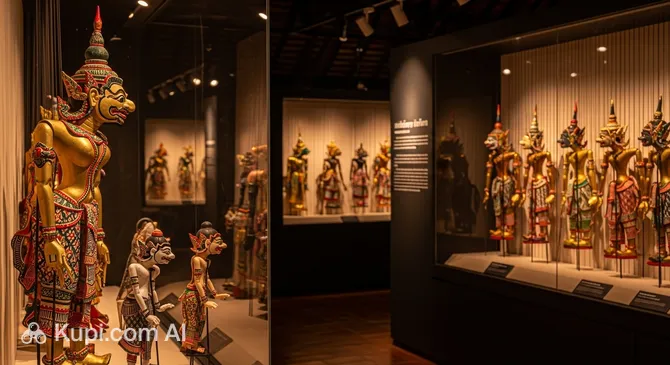
The city is celebrated as the premier center for Nang Talung, a traditional southern style of shadow puppetry. You can witness this dying art form and see intricate handmade puppets at the Suchart Subsin Shadow Puppet Museum, which was established to preserve this unique cultural treasure.
Nakhon Si Thammarat was historically known as the "City of Twelve Naksats" (Zodiacs). In ancient times, it served as a capital governing twelve tributary cities, each represented by a different animal from the astrological zodiac, a symbolism that is still reflected in the provincial seal today.
The province is famous for its exquisite Nielloware, known locally as Khrueang Thom. This ancient craft involves decorating gold and silver objects with a distinct black alloy, and the city's artisans are considered some of the most skilled in the country, often producing gifts for royalty.
Reaching this historical city is quite convenient, with several transport options available depending on your starting point and budget. For a comprehensive guide on all available routes, you can read more about how to get to Nakhon Si Thammarat. The most direct and popular method for most travelers is arriving by air, as the province is well-served by its own domestic airport and is accessible from neighboring international hubs.
The most convenient entry point is Nakhon Si Thammarat Airport(NST), located just 11.9 km from the city center. This facility handles a significant volume of domestic traffic, connecting the region primarily with Bangkok. Upon arrival, the journey to the downtown area is quick, taking approximately 40 minutes by taxi or minibus. Its proximity makes it the preferred choice for those wishing to minimize travel time.
If direct flights are unavailable, you can fly into Krabi Airport (KBV), situated in the city of Krabi. While it is an international hub with more flight connections, it is located about 113.5 km away. The transfer by road from Krabi to Nakhon Si Thammarat typically takes around 3 hours and 10 minutes. Another viable option is Surat Thani Airport (URT) in the city of Surat Thani, which is approximately 119.3 km from Nakhon Si Thammarat. A taxi or bus ride from there will take roughly 3 hours and 20 minutes.
For clarity, here is a summary of the main airports:
Nakhon Si Thammarat is a city steeped in history and religious significance, offering visitors a chance to explore ancient sites and lush green spaces far removed from the typical tourist trail. The city's attractions are a blend of spiritual heritage, architectural marvels, and community parks that reflect the authentic Southern Thai lifestyle.
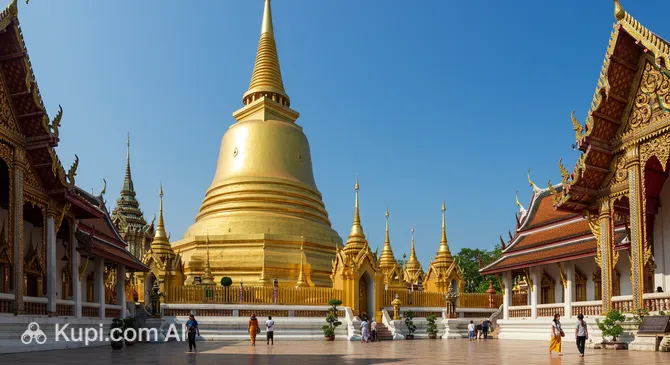
Undoubtedly the most significant landmark is Wat Phra Mahathat Woramahawihan, a first-class royal temple that serves as the spiritual heart of the south. Its main stupa, Phra Borommathat Chedi, is said to house relics of Lord Buddha and is topped with hundreds of kilograms of gold. Pilgrims from all over the world come here to pay their respects, especially during major Buddhist holidays. The temple complex is vast, featuring a museum and several smaller chapels, making it a must-visit for anyone interested in history and architecture.
Wat Phra Mahathat Woramahawihan. Illustration.
Source: Kupi.com AI
Traveler photos:
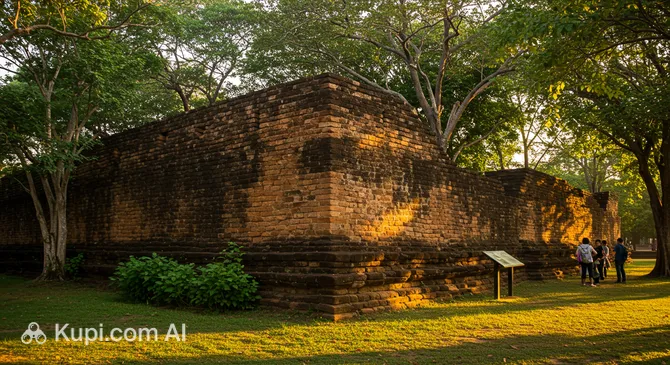
For a glimpse into the city's defensive past, visitors should see the Old City Wall of Nakhon Si Thammarat. While much of the original fortification has been lost to time, significant sections of the red brick wall have been preserved and restored. These remnants run alongside the city moat and provide a picturesque setting for a walk. The wall stands as a testament to the city's former status as a powerful fortified capital in the region.
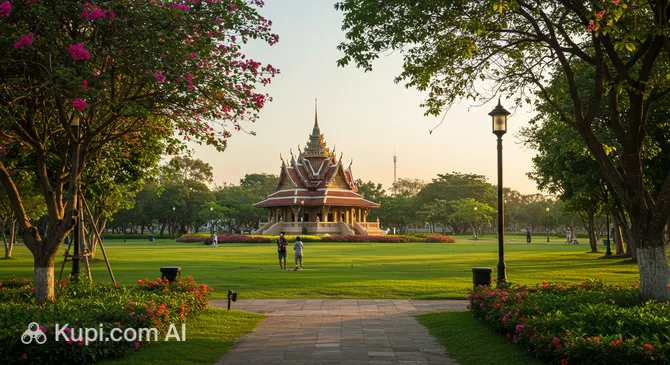
Nature lovers and families will appreciate Princess Mother 84 Park (Thung Tha Lat), a sprawling recreational area that serves as the city's "green lung." This large public park features beautifully landscaped gardens, a large pond with pedal boats, and shaded paths perfect for jogging or picnics. Inside the complex, there is also a small zoo and an aviary, making it an excellent spot for an afternoon of relaxation and outdoor activities.
Princess Mother 84 Park (Thung Tha Lat). Illustration.
Source: Kupi.com AI
Traveler photos:
Another central hub for local life is Sanam Na Muang Public Park, historically known as the "Field in Front of the City." Located near the city walls, this open green space is used for major provincial festivals and ceremonies. In the evenings, it transforms into a lively area where locals gather to exercise, play sports, and enjoy street food sold by nearby vendors. It offers a genuine look at the daily rhythm of the city's residents.
Local Cuisine
The culinary landscape of Nakhon Si Thammarat is a fiery and flavorful journey into the heart of Southern Thai cuisine. Known for its intense spices and rich aromas, the food here is distinct from what you might find in Bangkok or the north. The local palate favors sharp, pungent flavors, heavily utilizing turmeric, shrimp paste, and fresh chili. For those brave enough to handle the heat, the signature dish to try is Kaeng Tai Pla. This fermented fish entrails curry is legendary for its spiciness and salty depth, often containing bamboo shoots and eggplant. It is an acquired taste for some but represents the authentic soul of the province.
Another staple that visitors simply must experience is Khanom Chin, soft fermented rice noodles served with a variety of curry sauces. Nakhon Si Thammarat is famous for its delicious Nam Ya (fish curry sauce) made with crab or fish and coconut milk. A meal of Khanom Chin is typically accompanied by a massive platter of fresh local vegetables, herbs, and pickles, allowing diners to customize the crunch and flavor of every bite. For a drier but equally spicy option, look for Kua Kling, a dry meat curry that packs a punch with shredded kaffir lime leaves and peppercorns.
The city also boasts a unique breakfast culture influenced by its Chinese heritage and Muslim communities. Mornings often start with steaming baskets of Dim Sum or a clay pot of Bak Kut Teh (pork rib soup with herbs). Alternatively, you can find local tea shops serving sweet Roti with curry or condensed milk, paired perfectly with a hot cup of traditional coffee known as Kopi.
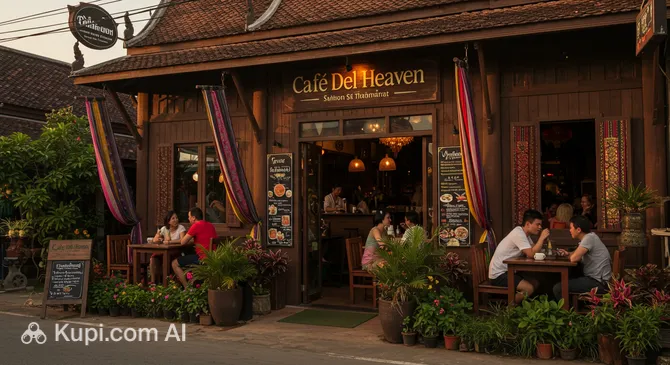
While street food stalls and night markets offer the most authentic local experience, the city has a growing cafe culture that blends great food with relaxed atmospheres. Places like Café Del Heaven offer a modern retreat where you can enjoy both Thai and international dishes in a comfortable setting. Similarly, the Little Black Cafe is a popular spot for grabbing a high-quality coffee and a quick bite, reflecting the younger generation's taste for trendy hangouts.
Café Del Heaven. Illustration.
Source: Kupi.com AI
Traveler photos:
When it comes to drinks, the southern style "pulled tea" or Cha Chak is a local favorite. It is a sweet, frothy milk tea prepared by pouring the liquid back and forth between two containers from a height, creating a thick foam. For those looking to unwind in the evening with an alcoholic beverage, the city offers several lively spots. You might visit Saeng Jan Bar, a well-known venue where locals gather to enjoy live music, cold beer, and social vibes after the sun goes down.
Travel Tips
Visiting Nakhon Si Thammarat offers a unique opportunity to experience the authentic culture of Southern Thailand, far removed from the commercialized tourist trails. To ensure your journey through this historical city is smooth and enjoyable, here are some practical tips to help you prepare.
Clothing and Gear: Given the tropical climate, lightweight and breathable fabrics like cotton or linen are essential to stay cool. However, Nakhon Si Thammarat is a deeply spiritual city with many sacred sites. When visiting temples such as Wat Phra Mahathat, you must dress modestly; cover your shoulders and knees. Slip-on shoes are highly recommended as you will frequently need to remove them before entering temples, homes, and some shops. Don't forget a universal power adapter (Type A, B, or C) and a raincoat if you are visiting during the monsoon season (October–December).
Transportation: The most common way to navigate the city is by Songthaew (blue pickup trucks with two benches), which run on fixed routes and are very affordable. For more direct travel, motorbike taxis are widely available; look for drivers wearing colored vests. While ride-hailing apps like Grab are available, they may have fewer drivers than in Bangkok, so it is wise to have a backup plan. Renting a scooter is a popular option for freedom of movement, but ensure you have a valid International Driving Permit and always wear a helmet.
Finances: The local currency is the Thai Baht (THB). While hotels and modern shopping centers accept credit cards, cash is absolute king here. You will need small bills for street food, local markets, and public transport. ATMs are plentiful throughout the city, usually located outside 7-Eleven stores or banks. Tipping is not mandatory, but leaving loose change or rounding up the bill at restaurants is a kind gesture appreciated by the locals.
Health and Safety: Nakhon Si Thammarat is generally very safe for tourists. Pharmacies are easy to find, and many pharmacists can speak basic English to help with minor ailments. As in most tropical destinations, protect yourself from mosquitoes to avoid dengue fever by using repellent, especially at dawn and dusk. Stick to bottled water for drinking and brushing your teeth to avoid stomach issues.
Communication: English is not as widely spoken here as in major tourist hubs like Phuket. Learning a few basic Thai phrases such as Sawatdee (Hello) and Khop Khun (Thank you) will go a long way in breaking the ice. It is highly recommended to buy a local SIM card upon arrival (available at convenience stores) to use translation apps and navigation tools, which are invaluable for getting around.
Local Etiquette: The traditional greeting is the Wai (pressing palms together at chest level), which is used for saying hello and goodbye. Thais consider the head the most sacred part of the body and the feet the lowest; never touch someone's head and avoid pointing your feet at people or religious images. As the south has a significant Muslim population, be respectful of Islamic customs as well.
What to Avoid: Avoid public displays of affection, such as kissing or hugging, as this is considered impolite in the conservative southern culture. Additionally, never show disrespect towards the Thai Royal Family or Buddha images, as these are serious offenses that can lead to legal trouble.
Morning Rituals: Immerse yourself in the local lifestyle by waking up early for a traditional southern breakfast. Visit a local tea shop (Kopi shop) to enjoy Dim Sum, Bak Kut Teh (pork rib soup), and strong local coffee. It is a beloved daily ritual for residents and the best way to soak up the city's relaxed atmosphere.
By keeping these practical tips in mind, you will be well-equipped to navigate the charming streets and rich heritage of Nakhon Si Thammarat with confidence. Embrace the slow pace, smile often, and enjoy the warm hospitality that this remarkable city has to offer.
Entertainment & Nightlife
Entertainment:
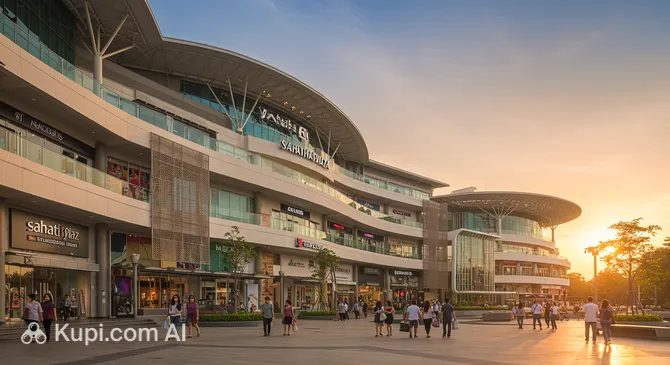
While Nakhon Si Thammarat is deeply rooted in history, it also offers modern amenities and leisure activities that provide a nice contrast to its ancient temples. For travelers looking to enjoy some air-conditioned comfort, do some shopping, or catch a movie, the city's shopping malls are the go-to destinations. Sahathai Plaza is a prominent lifestyle hub in the city center, featuring a department store, a variety of dining options, and a cinema. It is a popular gathering spot for locals and a great place to pick up necessities or relax after a day of sightseeing.
Sahathai Plaza. Illustration.
Source: Kupi.com AI
Traveler photos:
Another key venue for modern entertainment is Lifestyle Nakhon Si Thammarat. This shopping complex offers a wide range of international and local brands, making it ideal for those who wish to indulge in some retail therapy. Beyond shopping, these malls often host small events, fairs, and promotions that add a lively buzz to the atmosphere, giving visitors a glimpse into the contemporary urban culture of Southern Thailand.
For families traveling with children, a visit to the Talad Open Zoo is a delightful way to spend an afternoon. Located within the larger Thung Tha Lat park complex, this facility allows visitors to get close to various animals in a relaxed, open setting. It is an educational and entertaining stop that provides a break from historical tours, offering plenty of green space for kids to run around and enjoy the outdoors.
As the sun sets, the city's entertainment scene spills onto the streets in the form of vibrant night markets. While not as chaotic as those in Bangkok, the local markets here are full of character. They are the perfect places to enjoy live folk music performances, browse for affordable clothing and handicrafts, and soak up the friendly southern hospitality. Walking through these bustling stalls offers an authentic evening experience that captures the true spirit of the province.
Parks & Museums
Nakhon Si Thammarat is a city where cultural heritage and natural beauty coexist harmoniously. Beyond its famous temples, the region offers a variety of green spaces and educational venues that allow visitors to connect with the local history and the lush tropical environment of Southern Thailand.
For nature enthusiasts, a trip to Khao Luang National Park is highly recommended. Located just a short drive from the city center, this protected area is known for its majestic mountain range, which includes the highest peak in the south. The park is a haven for biodiversity, featuring dense rainforests, rare orchid species, and spectacular waterfalls like Karom and Krung Ching. It serves as an excellent escape for hiking, bird watching, and breathing in the fresh mountain air.
Another unique natural attraction is the village of Kiriwong, situated at the foot of Khao Luang. Famous for having some of the purest air in Thailand, this community is surrounded by fruit orchards and a clear flowing river where visitors can swim. It is a perfect example of community-based tourism, offering a glimpse into the traditional agricultural lifestyle while providing a serene setting for relaxation.
In terms of museums, the Nakhon Si Thammarat National Museum stands out as a treasure trove of regional history. The museum houses an impressive collection of artifacts found in the south, including ancient Vishnu statues, delicate gold and silver crafts, and prehistoric tools. It provides a comprehensive overview of the area's development from the Tambralinga kingdom era to the present day, making it an essential stop for history buffs.
To experience the artistic soul of the province, a visit to the Suchart Subsin Shadow Puppet Museum is a must. This venue goes beyond a typical display; it is a living center dedicated to preserving the art of Nang Talung. Visitors can explore the workshop to see how the intricate buffalo hide puppets are carved, view a vast collection of puppets from around the world, and often witness a live performance that brings these shadow figures to life.
For those interested in traditional architecture, Baan Tan Khun Ratthawut Wichan offers a charming look into the past. This beautifully preserved wooden house, located near Wat Phra Mahathat, showcases the classic Panya-style architecture. It serves as a local museum displaying antique furniture, household items, and photographs that tell the story of the city's noble families and their way of life in bygone eras.
Getting Around
The public transport system in Nakhon Si Thammarat is straightforward and relies primarily on road-based vehicles, as there is no metro or tram network. The backbone of local transportation is the Songthaew, a modified pickup truck featuring two rows of bench seats in the back covered by a roof. These vehicles operate on fixed routes across the city and to nearby districts. Within the city center, the blue Songthaews are the most ubiquitous, connecting major landmarks such as the train station, local markets, and the main temples. They are an authentic and breezy way to travel alongside locals.
For a faster and more direct service, motorbike taxis are extremely popular and widely available. You can identify them by the drivers wearing colorful vests, usually orange or green, waiting at designated stands known as "wins" on street corners and near busy intersections. This option is particularly efficient for solo travelers looking to cut through traffic or reach destinations located in narrow alleys where larger vehicles might struggle to pass.
The payment system is strictly cash-based, and travelers should carry small denominations of the local currency. There are no electronic travel cards or ticketing apps for local transit. Fares for Songthaews are very affordable, typically costing between 10 to 20 THB for a standard trip within the city. You simply pay the driver after you have reached your destination and exited the vehicle. For motorbike taxis, prices vary by distance, so it is highly recommended to agree on the fare with the driver before the journey begins.
Using the Songthaew system requires a bit of local know-how but is easy to master. There are very few designated bus stops; instead, you can flag down a passing vehicle from the side of the road by simply waving your hand. To signal that you want to get off, press the buzzer located on the ceiling of the passenger area. Be aware that public transport generally operates from early morning, around 06:00, until the early evening, roughly 18:00. Service frequency drops significantly after dark, so plan your evening returns accordingly.
For those seeking more comfort or traveling in groups, ride-hailing apps like Grab are available in the city. They offer a reliable alternative with transparent pricing, which is helpful if you are unsure about routes or do not speak the language. Traditional car taxis exist but are less common for street hailing compared to larger tourist hubs; they are often found at the airport or booked via hotels. Additionally, renting a scooter is a favored option for many tourists, offering the ultimate freedom to explore the city and its outskirts at a personal pace.
A unique feature of Nakhon Si Thammarat's transport landscape is the presence of Samlors, traditional three-wheeled pedal tricycles. While they are becoming a rarity in modern Thailand, you can still find them here, mostly used for short trips around markets or for carrying goods. Taking a ride in a Samlor offers a nostalgic and leisurely way to see the streets, harking back to a time before motorized engines dominated the roads.
Accommodation
Finding accommodation in Nakhon Si Thammarat is generally a hassle-free experience, offering visitors a range of comfortable options that cater to various budgets. Unlike the heavily commercialized tourist hubs in Thailand, the city does not feature an abundance of ultra-luxury international chains. Instead, the hospitality scene is dominated by charming mid-range hotels, modern boutique accommodations, and budget-friendly guesthouses. This local focus ensures that stays are often more personal and incredibly good value for money, allowing travelers to enjoy high standards of comfort without breaking the bank.
The most convenient area for tourists to base themselves is along the main thoroughfare, Ratchadamnoen Road. Staying here places you right in the heart of the action, with easy access to the city's most significant temples, markets, and dining spots. Many of the best hotels are clustered near the historic center, making it possible to explore the cultural heritage on foot. For a scenic and atmospheric location, look for lodgings situated near the Old City Wall of Nakhon Si Thammarat. This area offers a blend of history and leisure, with parks and the night market just a short walk away.
Old City Wall of Nakhon Si Thammarat. Illustration.
Source: Kupi.com AI
Traveler photos:
In terms of pricing, Nakhon Si Thammarat is very affordable. Budget travelers can find clean and basic rooms or hostels starting from as little as 300 to 500 THB per night. Mid-range hotels, which often include amenities like air conditioning, breakfast, and sometimes a swimming pool, typically range from 600 to 1,200 THB. Even the more upscale boutique hotels rarely exceed 2,000 THB, making it easy to indulge in a bit of luxury.
While walk-in bookings are often possible due to the city's relaxed pace, it is advisable to book in advance if you are visiting during major local festivals. Events such as the Festival of the Tenth Lunar Month (Sat Duan Sip) in September or October draw large crowds of returning locals and domestic tourists, causing the best rooms to fill up quickly. For the rest of the year, using major online booking platforms is the most convenient way to secure your stay and check for the latest deals.
Nearby Cities
For those looking to explore the surroundings, Nakhon Si Thammarat serves as an excellent base for day trips to several interesting nearby locations:
City
Population
Distance
Ban Pak Phun
33 407
10 km
Pak Phanang
20 425
27 km
Thung Song
30 500
54 km
Ban Song
17 373
64 km
Thung Sai
8 971
71 km
One of the most rewarding nearby destinations is Phatthalung, located just a short drive south. This province is renowned for its stunning limestone karst landscapes and the magnificent Thale Noi Waterfowl Park. Nature lovers can enjoy boat trips through a sea of pink lotus flowers and observe diverse bird species. Like Nakhon Si Thammarat, Phatthalung is also a cradle of the Nang Talung shadow puppetry tradition, making it a culturally rich extension of your trip.
Heading west towards the Andaman coast, Trang offers a delightful culinary adventure. The city is famous throughout Thailand for its unique breakfast culture, featuring endless plates of dim sum and its signature roast pork. Beyond the food, Trang possesses a charming old-town atmosphere with Sino-Portuguese architecture, providing a relaxed vibe that contrasts well with other busier tourist hubs.
To the north lies Surat Thani, often known as the gateway to the Gulf islands, but a city that holds its own charm. Visitors can explore the Tapee River estuary, visit local oyster farms, or enjoy the lively night markets that offer a wide array of southern street food. It provides a glimpse into a bustling provincial capital that balances commerce with local lifestyle.
These nearby destinations offer a glimpse into the diverse culture and landscapes of the region.
Shopping & Souvenirs
Shopping in Nakhon Si Thammarat offers a delightful mix of modern convenience and traditional charm, distinct from the commercialized experience of Bangkok. While the city is not a massive retail hub, it provides a genuine glimpse into the local lifestyle, where air-conditioned malls coexist with bustling open-air markets. Visitors can expect to find everything from international brands to unique handicrafts that reflect the rich cultural heritage of Southern Thailand.
For a taste of the city's commercial history, the Tha Wang area is the traditional trading heart of Nakhon Si Thammarat. Located near the train station, this district is lined with old shophouses selling gold, fabrics, and dry goods. Walking through these streets offers a nostalgic atmosphere where you can observe the daily commerce of locals. Ratchadamnoen Road, the city's main artery, is another key area where numerous smaller boutiques, souvenir shops, and local businesses are clustered, particularly near the major temples.
Travelers looking for a modern shopping experience will find excellent facilities in the city. Sahathai Plaza is a local favorite, offering a comprehensive department store, supermarket, and a variety of fashion outlets. It is a great place to escape the heat and find both necessities and leisure items. Another major destination is Lifestyle Nakhon Si Thammarat, a large complex that houses a Robinson Department Store, numerous restaurants, and entertainment zones. It serves as a one-stop hub for shopping, dining, and relaxation.
Lifestyle Nakhon Si Thammarat. Illustration.
Source: Kupi.com AI
Traveler photos:
Markets play a vital role in the local shopping scene and are the best places to find bargains and authentic food. The Friday Market (Talad Nat) in the Tha Wang area is particularly famous, drawing crowds with its vast array of clothing, accessories, and second-hand goods. For a more relaxed evening vibe, the various night markets around the city sell inexpensive apparel, handmade crafts, and an endless variety of street food, making them perfect for browsing after sunset.
When it comes to souvenirs, Nakhon Si Thammarat is renowned for its exquisite craftsmanship. The most prestigious item to bring home is Nielloware (Khrueang Thom), a traditional craft involving etched silver filled with a black alloy, often fashioned into jewelry or decorative boxes. Yan Liphao basketry, woven from fine fern vines, is another delicate and high-value local product. For something more playful and iconic, small leather shadow puppets (Nang Talung) make for lightweight and culturally significant gifts.
Most large shopping malls and department stores operate daily from approximately 10:00 to 21:00. Independent shops typically open earlier, around 09:00, and close by 18:00 or 19:00. While malls and larger establishments accept major credit cards, cash is essential for local markets, street vendors, and smaller boutiques. ATMs are widely available throughout the city for withdrawing Thai Baht.
Tourists visiting Thailand are eligible for a VAT Refund (7%) on goods purchased at participating stores, provided the total spending exceeds 2,000 THB (including VAT) on the same day at the same store. Look for the "VAT Refund for Tourists" sign at the entrance or checkout counters in major department stores within the shopping malls to take advantage of this benefit. You will need your passport to process the necessary forms.