Support

Lupepau'u Airport

About the Airport

Lupepau'u Airport (VAV) is not merely a runway; it is the aerial gateway to one of the most picturesque corners of the Kingdom of Tonga — the Vava'u archipelago. This is precisely where travellers land, dreaming of witnessing humpback whales, setting off on a sailing regatta through azure lagoons, or simply relaxing on secluded beaches. This small yet vital airport serves as the starting point for unforgettable adventures in this tropical Polynesian paradise.
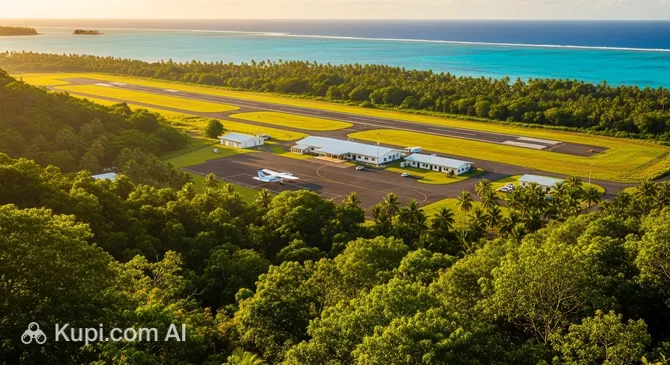
Lupepau'u Airport. Source: Kupi.com Binoculars
IATA Code VAV
ICAO Code NFTV
City Neiafu
Distance to Centre 10 km
Status International
Annual Passengers Over 85,000 (data from 2019-2020)
Popular Airlines Lulutai Airlines, Fiji Airways

The main feature of Lupepau'u Airport is its intimate and welcoming atmosphere. There is none of the hustle and bustle of major transport hubs here, allowing you to complete all pre-flight formalities quickly and without stress, or to collect your luggage with ease upon arrival. Thanks to its location, the airport offers passengers breathtaking views of the islands and turquoise waters of the archipelago even during the approach, which is the beginning of the adventure in itself.

The airport connects Neiafu with the main island of Tongatapu and also operates seasonal international flights, making it a key transport hub for tourists. Despite its modest size, the terminal has everything necessary for a comfortable wait: a small café and taxi stands ready to take you to any point on the island. It is a perfect example of how functionality and simplicity create convenience for travellers arriving in one of the most beautiful places on the planet.

Contact Information

  • Official Website: At present, Lupepau'u Airport does not have its own separate website. Up-to-date information can be found on the website of the airport operator of TongaTonga Airports Limited.
  • Inquiry Service Phone: For information, you can contact the main airport line: +676 70 212 or the Tonga Airports Limited head office at +676 35 001.
  • Airport Address: Lupepauʻu International Airport (VAV), Neiafu, Vava'u, Kingdom of Tonga.
  • Email: General inquiries can be sent to the airport operator's email: info@tongaairports.com.
  • Social Media: There are no specialised social media pages for the airport. We recommend following news on the pages of the airlines operating flights to Neiafu.
  • Lost Luggage Information: In case of loss or damage to luggage, you should first contact your airline's representative at the airport. If a representative is not present, please contact the airport information desk.
  • Passenger Support Contacts: For questions related to airport services, please contact the general inquiry phone number. Questions regarding tickets, schedules, and carriage regulations should be addressed to your airline.

How to Get to the Airport

Getting to Lupepau'u Airport (VAV), the main air harbour of the Vava'u archipelago, from the city of Neiafu is quite simple, though the journey requires some planning. Since the airport is located just 10 km from the city, the trip does not take much time, but it is important to choose a reliable mode of transport.

Taxis and Hotel Transfers are the most common and convenient options. Most hotels, resorts, and guest houses on Vava'u offer airport transfer services to their guests. We recommend confirming this option when booking your accommodation. Alternatively, you can use local taxi services. It is extremely important to arrange the trip in advance, especially if you have an early flight. The journey from the centre of Neiafu to the airport usually takes 15–20 minutes. It is best to agree on the fare with the driver before the journey begins.

The option of public transport is virtually non-existent. There are no regular bus routes with a clear timetable on the island that go to the airport. Relying on a random local bus to catch a plane is not recommended due to their unpredictable schedules.

For independent travellers, renting a car can be a good solution. There are several rental agencies in Neiafu. Having a car will allow you not only to reach the airport comfortably on the day of departure but also to explore the picturesque corners of the island at your own pace. The airport has a small parking area, quite sufficient for dropping off and picking up passengers.

The main recommendation for travellers is to organise your transport well in advance. Life on the islands of Tonga flows at a relaxed pace, so finding a car spontaneously can be problematic. A pre-booked transfer or taxi will ensure your calm and timely arrival at the airport, allowing you to conclude your journey through this paradise without unnecessary hassle.

Terminals and Map

Lupepau'u Airport, serving the picturesque Vava'u island group in Tonga, is a small and cosy regional aviation hub. Its infrastructure is simple and intuitive, which fully corresponds to the relaxed atmosphere of the islands.

The airport consists of one compact terminal that handles both domestic and international flights (primarily from neighbouring island nations). There is no division into numerous buildings or levels here, making navigation extremely simple. All main zones — check-in, security screening, departure lounge, and baggage claim — are located in one building within a few steps of each other.

The terminal layout is very straightforward: upon entering the building, you will immediately see several check-in counters. After checking in and dropping off luggage, passengers proceed to a small security screening point. The departure zone is a small waiting hall with basic amenities. For arriving passengers, the path is even shorter: after disembarking the aircraft, they proceed to passport control (for international flights) and then to the baggage claim hall, which is located next to the terminal exit.

Due to the small size of the airport and low passenger traffic, all pre-flight formalities are completed quite quickly. Check-in and screening rarely take much time, however, as with any airport, it is recommended to arrive in advance — approximately 1-1.5 hours before a domestic flight and 2 hours before an international one. This will allow you to go through all procedures without rushing.

The main advice for navigating Lupepau'u Airport is not to worry. It is practically impossible to get lost here. The airport staff are friendly and always ready to help. Signage is minimal, but there is no particular need for it. Simply follow the general flow of passengers, and you will easily find the zone you need. The atmosphere here is more reminiscent of a small station than a large international airport, which is part of its charm.

Airport History

Lupepau'u Airport (VAV), serving as the main air gateway to the Vava'u archipelago, has a history closely tied to the development of tourism in the Kingdom of Tonga. Although the exact founding date of the small airstrip for local needs is not always widely documented, the key stages of its transformation into a modern airport are well known.

For many years, the airport near Neiafu functioned as a domestic airfield with a dirt or coral runway, ensuring connections between the islands. It played an important but modest role in the country's transport system. The situation changed radically in the early 2000s when the Tongan government, with the support of international partners, initiated a large-scale modernisation.

A key event in the airport's history was its reconstruction, completed around 2005. During the works, the runway was extended and paved with asphalt, and the terminal infrastructure was improved. These changes allowed Lupepau'u Airport to gain international status and begin accepting flights from abroad, primarily from Fiji. This was a turning point that opened Vava'u to a greater flow of foreign tourists, making it one of the most accessible and popular destinations in Tonga.

An interesting fact is connected with the name of the airport itself. "Lupepau'u" is the name of a legendary Tongan princess, which adds historical and cultural flair to this important transport hub. Today, the airport is not just an infrastructure facility, but a symbol of the growth and accessibility of a unique region known worldwide for its opportunities for whale watching, sailing, and diving.

Services and Amenities

Lupepau'u Airport (VAV), also known as Vava'u International Airport, is the main air gateway to the scenic Vava'u island group in Tonga. It is important to understand that this is a small regional airport, and its infrastructure is primarily focused on ensuring quick and functional flights rather than long passenger stays. Services here are quite basic, so it is worth preparing for your trip in advance.

In the airport terminal, you will find a very limited selection of amenities. Typically, a small kiosk or café operates here, where you can buy light snacks, soft drinks, and possibly local souvenirs. There are no full-service restaurants or duty-free shops here. Banking and currency exchange services are also absent, so it is recommended to exchange money for local currency in advance in the city of Neiafu or upon arrival at the country's main international airport.

Passengers should note that public Wi-Fi at Lupepau'u Airport is likely unavailable. Charging stations for electronic devices may also be in short supply, so it is better to carry a portable power bank. There are no high-comfort lounges or VIP areas at the airport; a general waiting area with a basic number of seats is provided for passengers.

Specialised services at the airport are minimal. There are no baby care rooms or equipped play areas here. Passengers with reduced mobility or those travelling with small children who require assistance are strongly advised to notify their airline in advance. Airline and airport staff will do their best to assist with boarding and disembarking, however, special infrastructure such as ramps or lifts may be limited.

There are no hotels, business centres, or conference rooms at Lupepau'u Airport. All accommodation options, from cosy guest houses to resort hotels, are located outside the airport, mainly in the city of Neiafu and its surroundings, which can be reached by taxi or pre-booked transfer.

Where to Eat

When planning a departure from Lupepau'u Airport (VAV), it is important to consider that this is a small regional terminal with a limited range of services. Dining options here correspond to its size and are focused on the basic needs of passengers.

Usually, one small café or kiosk operates on the airport grounds, located in the main hall before the security control zone (landside). Here, travellers can purchase light snacks for a quick bite. The assortment typically includes sandwiches, crisps, biscuits, chocolate, as well as soft drinks, bottled water, tea, and coffee.

There are no full-service restaurants with hot meals at the airport. If you are counting on a substantial lunch or dinner, it is strongly recommended to eat beforehand at one of the establishments in the city of Neiafu, which is located close to the airport. Opportunities for ordering special meals (vegetarian, gluten-free, or Halal) are extremely limited here, so passengers with specific dietary requirements are better off bringing food with them.

The café's opening hours are directly linked to the flight schedule. Usually, it opens a couple of hours before departure and closes shortly after the plane takes off. Prices may be slightly higher than in the city, which is standard practice for airports.

Traveller Tips

Travelling through Lupepau'u Airport to Neiafu is your first step to discovering the amazing Vava'u archipelago in the Kingdom of Tonga. To make your experience as comfortable as possible, use these tips adapted to the specifics of this small but important transport hub.

Arrival Time and Check-in: Lupepau'u Airport is small, so there is no metropolitan bustle here. Nevertheless, it is recommended to arrive approximately 2 hours before departure. This time is sufficient to check in for the flight and drop off luggage without rushing. Keep your passport and ticket ready. Online check-in may not be available, so count on the standard procedure at the airline counter.

Hand Luggage and Security: Rules for carrying liquids (up to 100 ml in one container) and the ban on sharp objects are standard. Pay special attention to bio-security rules: the import of fresh fruits, vegetables, seeds, and other plant products is strictly controlled. Baggage allowances on local flights are often stricter than on international ones due to the small size of the aircraft. Check the weight and dimensions with your airline in advance to avoid extra charges.

Choosing a Seat on the Plane: Flights between the Tongan islands are a scenic adventure in themselves. At check-in, ask for a window seat. Views of coral reefs, turquoise lagoons, and the Vava'u islands scattered across the ocean are simply breathtaking. On small planes, seat selection may be limited, but it is definitely worth trying your luck.

Connections and Customs Control: If you have a connecting flight, especially from a domestic to an international one, allow the maximum possible time buffer. Flights between islands can be delayed due to weather conditions. Upon entering the country, be prepared to declare all food items and goods subject to customs duty. The customs service strictly monitors compliance with import regulations.

Saving Time and Money: The best way to save is to book tickets in advance and carefully study the baggage allowance rules to avoid excess weight fees. The airport may have a limited selection of food and drinks, so you can bring a small snack with you. Have some local currency (Tongan Pa'anga) with you for small expenses.

In Case of Flight Delay: Flight delays are not uncommon for island nations. Remain calm and maintain contact with airline representatives. Ensure your phone and power bank are charged. A book or a downloaded film will help pass the time, as amenities in the waiting lounge may be minimal. If you have a transfer or hotel check-in scheduled, be sure to notify them of the delay.

Reached the end of the page?

That means the route is fully explored