Support

Tonga

Cities in the country

About the Country

Tonga, also known as the "Friendly Isles", is a unique kingdom in the heart of Polynesia, located in the South Pacific Ocean. It is an archipelago of more than 170 islands—many of which are uninhabited—giving the country a special atmosphere of seclusion and untouched nature. Tonga prides itself on being the only monarchy in Polynesia never to have lost its sovereignty, a heritage that is deeply reflected in its culture and traditions.

The nation's capital, Nuku'alofa, located on the main island of Tongatapu, is the cultural and administrative centre. Here, travellers can immerse themselves in the relaxed pace of island life, discover the rich Polynesian heritage, visit the Royal Palace, and see the ancient tombs of Tongan monarchs. The hospitality of the local people, their music, and their dances leave an unforgettable impression.
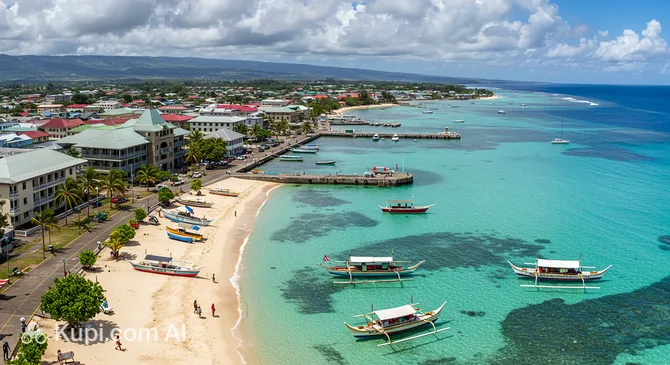
Nuku'alofa. Source: Kupi.com Binoculars

Tonga's natural beauty is a true magnet for tourists. White sandy beaches washed by crystal-clear waters, picturesque coral reefs ideal for diving and snorkelling, and the unique opportunity to watch humpback whales that migrate here to breed from July to October make a holiday here truly magical. For those seeking adventure on the water, the Vava'u Islands, with their main town of Neiafu, offer superb conditions for yachting and exploring hidden coves. The tropical climate ensures warm weather year-round, making Tonga an attractive destination at any time.

Currency

The national currency of Tonga is the Tongan pa'anga (international code TOP). The banknotes often feature portraits of Tongan monarchs and scenes from local life, while the coins are decorated with images of the archipelago's flora and fauna. You can exchange foreign currency for pa'anga at banks and official exchange offices, which are usually located in the capital, Nuku'alofa, and at the airport. It is advisable to avoid exchanging money with private individuals to prevent unfavourable rates or fraud.

Credit cards (mainly Visa and Mastercard) are accepted in large hotels, some restaurants, and shops in Nuku'alofa and on the island of Vava'u. However, in more remote areas and on smaller islands, cash is preferred. Therefore, it is always useful to carry a sufficient amount of local currency, especially if you plan to visit markets, small cafés, or travel outside the main tourist centres. ATMs are also available, but they are limited in number and are mainly concentrated in the capital.

Visa Requirements

For residents and citizens of the UAE, visiting the Kingdom of Tonga for tourism is straightforward. UAE passport holders do not need to arrange a visa in advance and are permitted visa-free entry for up to 60 days. However, to enter the country, you must hold a valid passport with a validity of at least six months from your date of entry. You will also be required to present a return or onward ticket to a country you are permitted to enter and may need to show proof of sufficient funds or a hotel booking for your stay. We also strongly recommend that you have comprehensive medical insurance for your trip.

As visa regulations can change, it is extremely important to verify the latest entry requirements before planning your travel. Please check the official Tonga immigration website or contact the nearest diplomatic mission of the Kingdom for the most current information.

We'll tell you if you need a visa

Specify where you are going, or
Your citizenship
Destination

Time Zones

When planning a trip to Tonga, you will not have to worry about changing time zones within the country. A single, unified time zone is observed across the entire Kingdom of Tonga. It is known as Tonga Time (TOT) and corresponds to UTC+13. This means the local time is 13 hours ahead of Coordinated Universal Time (UTC). For travellers from the UAE, it is useful to know that Tonga is 9 hours ahead of Gulf Standard Time (GST).

This uniformity in time greatly simplifies planning your movements between the archipelago's various islands. It allows travellers to navigate with ease and avoid losing precious holiday hours on time recalculations.

How to Get There

Reaching the Kingdom of Tonga, located in the South Pacific Ocean, is primarily done by air. The country's main gateway is Fuaʻamotu International Airport (TBU), situated near the capital city, Nukuʻalofa.

For travellers originating from the UAE, the journey to Tonga typically involves connecting flights through major hubs in Oceania. Airlines such as Emirates and Etihad Airways, in partnership with carriers like Air New Zealand, Qantas, and Fiji Airways, offer routes from Dubai (DXB) and Abu Dhabi (AUH). Common stopovers include Sydney (Australia), Auckland (New Zealand), or Nadi (Fiji), from where you can catch a connecting flight to Nuku'alofa. The total travel time, including layovers, is generally upwards of 20 hours.

For sea travel enthusiasts, it is possible to arrive in Tonga aboard a cruise liner, as some South Pacific itineraries include stops at the archipelago's islands. However, this is more a part of a longer cruise holiday rather than a regular means of transport to the country. Given Tonga's island geography, there is no land access from other countries.

When planning your trip to Tonga, especially during peak tourist seasons, it is advisable to book flights and accommodation well in advance. This will help secure better prices and availability, particularly if you are travelling during public holidays or local festivals. It is also important to check the latest visa requirements. For UAE passport holders, a visa is not required for stays of up to 60 days, but a passport with at least six months' validity and proof of an onward or return ticket are necessary.

For your reference, here is a summary of the main airports:

Airport Name City Passenger Traffic
Fuaʻamotu International AirportNukuʻalofaMajor
Lupepauʻu AirportNeiafuMedium
Salote Pilolevu AirportPangaiSmall

The Kingdom of Tonga, a pearl of the South Pacific, offers travellers a unique combination of Polynesian culture, stunning natural landscapes, and secluded islands. Here you will find both bustling centres and quiet corners, perfect for a relaxing holiday. The main towns and resort areas are scattered across various island groups, each with its own unique character.

Nuku'alofa. Source: Kupi.com Binoculars

The heart of the country is undoubtedly its capital, Nuku'alofa. Located on the main island of Tongatapu, Nuku'alofa is not only the administrative and economic hub but also a place where you can discover Tonga's royal history, visit lively markets, and see the Royal Palace. For those seeking more secluded and picturesque spots, Neiafu is well worth a visit. This town, located on the Vava'u islands, is famous for its beautiful harbour, which attracts yachters from all over the world and also serves as an excellent starting point for whale watching during their migration season.

Another interesting destination is Pangai, the administrative centre of the Ha'apai island group. This historic town offers a more relaxed pace of life, beautiful beaches, and the chance to immerse yourself in an authentic island atmosphere. Diving and snorkelling enthusiasts will find untouched coral reefs here. Each of these corners of Tonga has its own charm and awaits explorers, offering unforgettable experiences of Polynesian hospitality and natural beauty.

Top Attractions

The Kingdom of Tonga offers not only secluded beaches and azure Pacific waters but also a destination with a unique history and impressive natural wonders. Every traveller will find something to enjoy here, from ancient megaliths to breathtaking marine blowholes and lush tropical forests.

One of the country's most mysterious attractions is Ha'amonga 'a Maui, often called the 'Stonehenge of the South Seas'. This monumental archway, built around the 13th century from massive coral blocks weighing up to 40 tonnes, still sparks debate about its purpose. According to legend, it was erected by the Polynesian demigod Maui, while historians suggest the structure may have served as an ancient astronomical observatory or a gateway to a royal residence.

On the coast of Tongatapu island, near the capital Nuku'alofa, nature puts on a spectacular show at the Mapu 'a Vaea blowholes. During high tide, ocean waves forcefully surge into coastal rocks riddled with tunnels, erupting outwards in dozens of powerful jets of water up to 30 metres high. This spectacle is accompanied by a distinctive whistling sound, which has earned the site the name 'Chiefs' Whistles'. A visit to the blowholes leaves an unforgettable impression of the ocean's raw power.

For lovers of adventure and unique natural sites, a visit to 'Anahulu Cave is a must. This is not just a cave with stalactites and stalagmites, but a true underground oasis. Its main feature is a crystal-clear freshwater pool where you can swim, enjoying the mystical atmosphere and a cool respite from the tropical heat.

On the island of 'Eua lies the country's only national forest park, 'Eua National Park. It is a true paradise for ecotourists and hiking enthusiasts. The park is known for its dense tropical forests, rare bird species, including the red-breasted musk parrot or 'koki', and scenic trails leading to clifftop viewpoints with stunning ocean vistas.

Best Time to Visit

The best time to visit Tonga is during the dry season, which runs from May to October. During this period, the weather is typically sunny and warm, with pleasant temperatures ideal for beach holidays, swimming, snorkelling, and diving. This is also the high season, so there may be more tourists, and prices for accommodation and flights can be higher. One of the main highlights of this period is the migration of humpback whales, which can be seen from July to October, especially around the Vava'u islands. Additionally, the colourful Heilala Festival, celebrating the King's birthday, takes place in Nuku'alofa in July.

The low season, or rainy season, occurs from November to April. At this time, Tonga is hot and humid, with frequent but generally brief downpours. There is also a risk of tropical cyclones, particularly from January to March. The advantages of travelling in the low season can include fewer tourists and lower accommodation prices. However, some tourist services may be limited, and the weather can be less predictable for outdoor activities. If you plan a trip during this period, it is wise to monitor weather forecasts closely.

Traditions

When visiting Tonga, you will immerse yourself in a world of unique Polynesian traditions, where respect and hospitality play a key role. The greeting “Malo e lelei” is your first step to making a friendly connection. Tongans greatly value politeness; show respect when interacting with local residents, especially elders. While direct eye contact is generally acceptable, prolonged staring may cause discomfort. Hospitality here is not just a word but a way of life. It is a great honour to be invited into a Tongan home. A small gift for the hosts, such as a souvenir from your country or some food items, will be appreciated, though it is not a strict requirement. The most important things are sincerity and openness.

Following certain rules for dress and behaviour will help you feel comfortable and show respect for the local culture. In public places, especially when visiting villages or churches, modest clothing that covers the shoulders and knees is recommended. This is particularly important on Sundays, when life on the islands slows down for rest and religious services, and most shops and establishments will be closed. Swimwear is appropriate only on beaches and at hotel pools. At the table, especially at traditional ‘umu’ feasts where food is cooked in an earth oven, it is common to eat with your hands. It is polite to wait for an elder or the host to begin the meal. Since pork is a popular meat in Tongan cuisine, those seeking halal options should be mindful and inquire about the ingredients. It is best to try a little of everything offered, as refusing a dish may be seen as impolite.

To avoid misunderstandings and offending local residents, remember a few key points: do not point at people or objects with your finger (it is better to use your whole hand or a nod of the head), and avoid loud conversations and public displays of strong emotions, such as anger. Excessive public displays of affection are also not customary. Always ask for permission before taking photographs of local people. Important events in the lives of the islanders include public holidays, such as the King's Birthday, and cultural festivals like the vibrant Heilala Festival, which usually takes place in July and showcases the kingdom's dances, music, and crafts. Understanding and respecting these simple rules will make your journey to Tonga truly unforgettable and allow you to connect more deeply with the spirit of "the Friendly Isles".

Entertainment

Tonga offers travellers a variety of ways to spend their time, especially for those who appreciate nature and authentic culture. Active recreation here is primarily centred around the ocean: from thrilling diving or snorkelling by the coral reefs and peaceful kayaking trips between picturesque islands to, of course, unforgettable humpback whale watching during their migration season (typically from July to October). On land, you can go hiking through the tropical forests on some of the islands. The cultural programme includes an introduction to Polynesian traditions, where you can see national dances and songs, visit local villages, and explore historical sites like the ancient royal tombs. It is advisable to dress modestly, ensuring shoulders and knees are covered, when visiting local villages to show respect for the local customs. The capital, Nuku'alofa, is where the main cultural sites are concentrated, although other islands, such as those surrounding Neiafu, offer their own unique experiences.

Evening entertainment in Tonga is generally of a calm and relaxed nature. Nightlife is mainly concentrated in Nuku'alofa, where you can find cosy eateries and restaurants offering local cuisine and occasionally live music. There are almost no loud nightclubs here. For shopping enthusiasts, Tonga offers unique souvenirs: items made from tapa (a traditional fabric made from the bark of the mulberry tree), woven baskets and mats, carved wooden figures, and shell jewellery. The main places to buy souvenirs are the markets, especially in Nuku'alofa. While specific halal certification is not common, the local cuisine is rich in fresh seafood, such as fish and octopus, and vegetable dishes, providing plentiful and suitable options for Muslim visitors. Families with children will appreciate the safe beaches, the opportunity to swim in crystal-clear lagoons, and the chance to get acquainted with the islands' amazing nature, which is in itself an excellent entertainment and adventure for young travellers.

Currency rates

Planning a trip? Excellent! To ensure the financial side of your journey doesn't come as a surprise, it's important to remember that currency exchange rates are constantly changing. Therefore, we highly recommend keeping an eye on the latest rates, both before you fly and throughout your trip. You can use the data below for this purpose; we monitor exchange rates 24/7 and strive to provide the most current information available.

Reached the end of the page?

That means the route is fully explored