Support

Wallis and Futuna

Cities in the country

About the Country

Wallis and Futuna is a surprising and little-explored destination in the heart of the Pacific Ocean, officially an overseas collectivity of France. Comprising three main volcanic islands – Wallis (Uvea), Futuna, and Alofi – this territory offers travellers a unique opportunity to immerse themselves in a tranquil atmosphere and authentic Polynesian culture, preserved far from mass tourism. A special sense of peace prevails here, allowing you to enjoy untouched nature and the warm hospitality of the local residents.
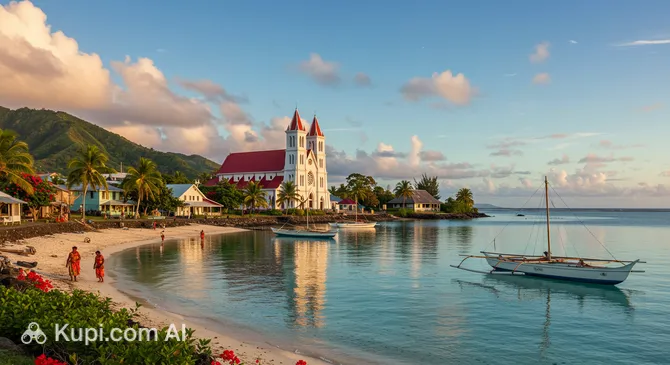
Mata Utu. Source: Kupi.com Binoculars

The natural beauty of Wallis and Futuna lies in its picturesque volcanic landscapes, crystal-clear lagoons encircled by coral reefs, and secluded beaches. The climate is tropical maritime, hot and humid throughout the year, making the islands attractive for those who appreciate an exotic holiday. The territory's capital, Mata-Utu, located on the island of Wallis, is the main administrative and cultural centre where you can experience local life and see the Royal Palace.

The cultural heritage of the islands is deeply rooted in Polynesian traditions. The local people carefully preserve their customs, languages (Wallisian and Futunan), and traditional crafts, such as making tapa cloth (a fabric made from tree bark) and canoes. Besides the capital, the island of Futuna is noteworthy for its wilder landscapes, as is the village of Leava, which is the main settlement on Futuna. A journey to Wallis and Futuna is a chance to discover a corner of the world where time seems to have slowed down, offering a truly unique and memorable experience.

Currency

The national currency of Wallis and Futuna is the French Pacific Franc (CFP), which has the international code XPF. This currency is also used in other French overseas territories in the Pacific, such as New Caledonia and French Polynesia. The CFP franc is pegged to the Euro. Banknotes and coins feature various designs, often reflecting the region's local flora, fauna, and cultural motifs. It is highly recommended to carry a sufficient amount of cash, as opportunities for currency exchange and using bank cards can be limited, particularly outside the main town.

You can exchange foreign currency for CFP francs, primarily at the bank in the capital, Mata-Utu. There are no currency exchange facilities at the airports, so travellers are advised to exchange major currencies like the Euro or US Dollar beforehand or withdraw local currency from an ATM upon arrival. While credit card use is becoming more common in hotels and some shops, many smaller stores do not have payment terminals. There are a very limited number of ATMs on the islands, mainly in Mata-Utu. Therefore, before your trip, you should confirm payment options with your accommodation and ensure you have arranged for enough cash. To avoid fraud, only exchange currency at official establishments like the bank.

Visa Requirements

When planning a trip to the islands of Wallis and Futuna, it is essential to familiarise yourself with the visa requirements in advance. As Wallis and Futuna is an overseas collectivity of France, its visa policy is determined by French legislation. For citizens of the United Arab Emirates, visa-free entry is granted for short stays of up to 90 days.

Regardless of nationality, you will require a valid passport for your journey, which must typically be valid for at least six months after your intended date of departure from the islands. You may also be asked to provide proof of return or onward tickets, confirmation of accommodation, evidence of sufficient funds for your stay, and travel medical insurance. Since visa regulations can change, it is highly recommended to verify the current information before your trip by consulting the official France-Visas website or contacting the French Embassy in Abu Dhabi, which handles all visa matters for the UAE.

We'll tell you if you need a visa

Specify where you are going, or
Your citizenship
Destination

Time Zones

When planning your trip to Wallis and Futuna, you will not need to worry about changing time zones within the country. The entire territory is in a single time zone: UTC+12 (Wallis and Futuna Time, WFT). This means the time is the same across all the islands, including Wallis, Futuna, and Alofi. For travellers from the UAE, it is useful to know that Wallis and Futuna is 8 hours ahead of UAE time (UTC+4).

Thanks to this single time zone, you will not have to adjust your watch when travelling between the islands of the archipelago, which makes planning internal trips and activities much simpler. Just set your watch to the local time upon arrival and enjoy your holiday!

How to Get There

For travellers originating from the UAE, reaching the remote Wallis and Futuna Islands requires significant planning due to the absence of direct flights. The journey typically involves at least two layovers. The most common routes involve flying from Dubai or Abu Dhabi with airlines such as Emirates or Etihad Airways to a major hub in the Asia-Pacific region, such as Singapore, Bangkok, Sydney, or Auckland. From there, a connecting flight is needed to La Tontouta International Airport (NOU) in Nouméa, New Caledonia. The final leg of the journey is a flight from Nouméa to Wallis Island, operated by Aircalin.

The primary way to get to the Wallis and Futuna Islands, located in the South Pacific Ocean, is by air. The main international transport hub is Wallis Hihifo Airport, which is on the island of Wallis, not far from the capital, Mata-Utu. Most international flights to Wallis and Futuna connect through Nouméa (New Caledonia), from where the airline Aircalin operates services to the islands. From Nouméa, connecting flights are available to Australia, New Zealand, Japan, and other countries in the Asia-Pacific region.

Given the geographical location of Wallis and Futuna, arriving by land is impossible. Sea travel for tourists is also very limited; although the islands are visited by cargo ships, there are no regular passenger ferry services connecting them with other countries. On rare occasions, Wallis and Futuna may be included in the itineraries of some cruise liners. Due to the limited number of flights and the remote nature of the destination, it is strongly recommended to plan your trip and book airline tickets well in advance, especially if your travel coincides with peak tourist seasons or local holidays.

For clarity, here is a summary of the main airport:

Airport Name City Passenger Traffic
Wallis Hihifo AirportMata-UtuLow

Nestled in the Pacific Ocean, Wallis and Futuna offer a unique experience for those seeking authenticity and tranquillity away from mass-tourism routes. The main settlements here are not bustling metropolises but rather cosy villages and administrative centres, each preserving its own unique Polynesian character and traditions.

The primary hub of the archipelago is its capital, Mata-Utu, located on the island of Wallis. This is the administrative and cultural heart of the territory, where you can experience the local way of life, see the Royal Palace, and visit the imposing cathedral. Mata-Utu offers travellers the chance to immerse themselves in the daily life of the islanders and learn more about the history and culture of Wallis.

Mata Utu. Source: Kupi.com Binoculars

Besides the capital, other significant places to visit include Leava, the main settlement on the island of Futuna, and the island of Futuna itself. Leava serves as the gateway to the splendours of Futuna, which is known for its dramatic landscapes, volcanic terrain, and the shrine of St Peter Chanel. The island of Futuna is appealing for its unspoilt nature, picturesque bays, and the opportunity to immerse oneself in a traditional way of life that is distinct from what can be seen on Wallis. These locations are ideal for travellers looking to escape the hustle and bustle and enjoy the secluded beauty of the Pacific islands.

Top Attractions

Wallis and Futuna is not just about idyllic beaches; it is a land with a rich history and a distinctive culture. A journey here offers the chance to discover unique attractions, each telling a part of the story of these Pacific islands.

One of the most iconic natural attractions is Lake Lalolalo, located on Uvea Island. This impressive crater lake is almost perfectly circular, surrounded by dense tropical forests and steep cliffs. Its deep, dark waters are considered sacred and are shrouded in many local legends.

[IMAGE entity=attraction id=WF-LAKE-LALOLALO]

In the islands' capital, Mata-Utu, you will find the Royal Palace of Uvea. This is the residence of one of the three traditional kings of Wallis and Futuna. Although access inside is usually closed to tourists, the building itself is an important symbol of the local culture and the unique system of governance that has been preserved on the islands for centuries.

[IMAGE entity=attraction id=WF-ROYAL-PALACE-UVEA]

Among the historical and religious monuments, Mata-Utu Cathedral (Cathedral of Our Lady of the Assumption) stands out. This imposing structure, built from volcanic stone, is not only the main Catholic church of the islands but also a striking example of how European architecture has been adapted to local conditions and materials. The Royal Palace can often be seen nearby, highlighting the close connection between spiritual and secular power. As this is a place of worship, visitors are advised to dress modestly when viewing the site.

[IMAGE entity=attraction id=WF-MATAUTU-CATHEDRAL]

For those interested in ancient history, a visit to Talietumu (also known as Kolo Nui) on Uvea Island is a must. These are the well-preserved ruins of an ancient Tongan fort, dating back to approximately the 15th century. The massive stone walls and platforms bear witness to the former power and turbulent history of the region, linked to Tongan conquests.

[IMAGE entity=attraction id=WF-TALIETUMU]

Best Time to Visit

When planning a trip to Wallis and Futuna, it is important to consider the local tropical climate. Broadly, there are two main seasons: a drier and cooler period, which is considered the high season, and a hot, wet season, which is the low season. The best time to travel will depend on your preferences for weather and tourist numbers.

High season in Wallis and Futuna typically runs from May to October. During this time, the weather is most favourable for a holiday, with less rainfall, pleasant temperatures, and refreshing trade winds. This is the perfect period for beach holidays, diving, snorkelling, and exploring the islands' rich culture. A major event that may occur during this period is Territory Day on 29 July, which is celebrated with traditional dances, music, and "Katoaga" sports competitions. Although Wallis and Futuna is not a mass-tourism destination, there may be slightly more visitors during the high season, and prices for the limited accommodation options may be a little higher.

Low season, or the rainy season, occurs from November to April. During this period, it becomes hotter and significantly more humid in Wallis and Futuna, with frequent, though usually brief, heavy downpours. The main advantage of visiting during this time is the minimal number of tourists, offering a chance to immerse yourself in the unhurried life of the islanders. However, it is worth noting that this is also the cyclone season, particularly from January to March, which could affect your plans. If you are not deterred by changeable weather and are seeking solitude and lush tropical greenery, the low season could be an interesting choice.

Traditions

The culture of Wallis and Futuna is deeply rooted in Polynesian traditions, where community ties and respect for elders are given special importance. Greetings are usually warm and friendly; a standard handshake is perfectly appropriate when meeting someone, especially considering the French influence. Although French is the official language, the locals speak Wallisian and Futunan, and an attempt to learn a few basic phrases will be gratefully received. Hospitality here is not just a word, but an important part of life. It is a great honour to be invited into a local home. A small gesture of appreciation, such as a gift of food items, would be appropriate but is not a strict requirement.

When showing respect for local customs, it is worth remembering certain norms of behaviour. In public places, especially when visiting villages or churches, modest clothing that covers the shoulders and knees is recommended; beachwear is intended exclusively for the beach. The atmosphere at the dining table is usually relaxed, and in some traditional situations, people eat with their hands. Always wait to be invited before you start eating, and do not hesitate to express your gratitude for the meal. It is important to remember that public displays of strong emotion or loud arguments are considered impolite. Also, always ask for permission before taking photographs of local residents.

One of the main celebrations on the islands is Territory Day, which is observed on 29 July and features traditional dances, music, and sports competitions. Christian holidays, such as Christmas and Easter, are also widely celebrated with church services and family feasts. To ensure your journey leaves only pleasant memories, try to be patient (the concept of "island time" is very relevant here) and always treat local traditions and the way of life with respect. Avoid criticism and remember that a smile and a friendly attitude will open many doors for you.

Entertainment

Wallis and Futuna offer travellers a unique experience where entertainment is closely intertwined with nature and local culture. Active recreation here primarily involves exploring the emerald lagoons through diving, snorkelling, swimming, and canoeing. Hiking enthusiasts can discover scenic trails leading to ancient volcanic craters and secluded beaches. Cultural entertainment is centred around Polynesian traditions: you can witness vibrant dances, listen to traditional music, or learn about the art of making tapa cloth and other local handicrafts. While there are few large museums or theatres, the entire island life is steeped in authentic culture, offering a deep immersion into the unique world of Oceania.

Nightlife in Wallis and Futuna is quite tranquil, mainly centred around small local restaurants and eateries where you can try traditional dishes in a relaxed atmosphere. One of the traditional beverages is kava, a ceremonial drink central to Polynesian culture. For travellers seeking halal options, it is advisable to make inquiries at local eateries, which often serve fresh seafood and vegetable dishes. You will not find bustling clubs here, which underscores the secluded and authentic nature of a holiday on the islands. Shopping primarily consists of purchasing unique handmade souvenirs such as items made from seashells and wood, woven baskets, and, of course, the famous tapa cloth. The main places to buy these crafts can be found in the capital, Mata-Utu, and in the smaller villages. Family entertainment is also focused on nature and culture – exploring beaches together, learning about local customs, and enjoying a peaceful retreat from the hustle and bustle of city life will be a wonderful experience for all ages.

Currency rates

Planning a trip? That's wonderful! To ensure the financial aspect of your journey doesn't come as a surprise, it's important to remember that currency exchange rates are constantly changing. Therefore, we strongly advise monitoring the latest rates both before your departure and throughout your trip. For this purpose, you can use the data provided below — we monitor currency exchange rates 24/7 and strive to provide the most up-to-date information.

Reached the end of the page?

That means the route is fully explored