Support

Al-Fujairah International

About the Airport

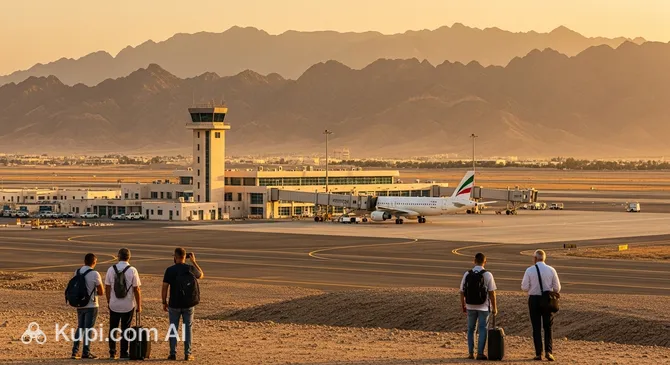
Al-Fujairah International. Source: Kupi.com Binoculars

Al-Fujairah International Airport is a unique aerial gateway where the journey begins not with the bustle of megacities, but with soothing views of the Gulf of Oman and the majestic Hajar Mountains. This transport hub offers tourists an atmosphere of calm and comfort that is rare for the Emirates, turning arrival and departure into a pleasant, relaxed part of the vacation. Here, modern technologies coexist with traditional Arabian hospitality, ensuring guests of the East Coast have the fastest and most comfortable start to their adventures.

IATA Code FJR
ICAO Code OMFJ
City Fujairah
Distance to Centre 1.5 km
Status International
Annual Passengers up to 2 million (estimated capacity)
Schedule Check the official website

Features and Advantages of the Airport:

The main advantage of the airport is its strategic location: the terminal is located practically within the city limits, just a few minutes' drive from the main beach resorts and the business centre. This allows tourists to be at their hotel or on the beach almost immediately after landing, bypassing tiring transfers.

Travelers particularly appreciate the absence of queues. Thanks to the compactness of the terminal and moderate passenger flow, passport control, baggage claim, and customs procedures take a record short time compared to the country's major hubs. The small number of scheduled flights creates an atmosphere of privacy and tranquility, reminiscent of service in the private aviation sector.

The scenic landing deserves special mention. The approach into Fujairah is often called one of the most beautiful in the region, as the route passes over contrasting landscapes — from the rocky ridges of the Hajar Mountains to the azure surface of the coast, providing unforgettable impressions even before disembarking the plane.

Contact Information

  • Official Website: www.fujairah-airport.com
  • Information Desk Phone: +971 9 205 5555
  • Airport Address: P.O. Box 977, Fujairah, United Arab Emirates
  • Email: info@fujairah-airport.com
  • Social Media: The airport has official pages on popular social networks where you can follow news and updates.
  • Lost Luggage Information: In case of loss or damage to luggage, you must first contact your airline representative at the airport. Additional information can be obtained via the general information desk phone.
  • Customer Support Contacts: For assistance and answers to questions, you can use the main phone number or the airport's email address.

How to Get to the Airport

Al-Fujairah International Airport (FJR) is located in close proximity to the city centre of Fujairah, making the journey there fast and convenient. You can get to the terminal from anywhere in the city in several ways, the choice of which depends on your budget, amount of luggage, and personal preferences.

Taxi or Transfer — the simplest and most popular way to get to the airport. The trip from the city centre will take just 5–10 minutes depending on your exact location and traffic conditions. You can use official city taxis or book a car via mobile apps (e.g., Careem). The cost of the trip will be low, approximately 20–30 UAE Dirhams. For greater convenience, you can pre-book a private transfer, especially if you are traveling with family or large luggage.

Public Transport in Fujairah is represented by buses. Although this is the most budget-friendly option, it may not be the most convenient for tourists with suitcases, as finding a direct route to the airport can be difficult. It is recommended to study the route map on the local transport authority's website in advance. Please note that there is no metro or rail service in the city.

Car Rental — an excellent choice for those planning to actively travel around the emirate and beyond. Offices of many international and local rental companies operate in the city. The road to the airport is simple, with clear signs everywhere. To rent a car, most tourists will need an International Driving Permit (IDP) in addition to their national license.

If you are arriving at the airport in your own or a rented car, parking is at your service. Both short-term and long-term parking spaces are available on the airport territory. The cost depends on the duration of parking; current rates are best checked on the official Al-Fujairah Airport website.

Terminals and Map

Fujairah International Airport (FJR) is distinguished by its compactness and simplicity, making it very convenient for travelers. The airport operates one main passenger terminal, which serves all international and domestic flights. Thanks to this, navigating here is intuitively simple, and the risk of getting lost is minimal.

The terminal layout is logical and clear. Departure and arrival zones are located in the same building on different levels or in different parts of it, eliminating the need for long walks or shuttles. Navigation is provided by clear signs in English and Arabic. The entire journey from the entrance to the boarding gate or from the plane stairs to the city exit takes very little time.

The Departure Zone includes check-in counters, passport control, and security screening points. After completing formalities, passengers enter a small but cozy waiting hall with Duty Free shops, several cafes, and the boarding gate. The Arrival Zone consists of the passport control area, baggage claim belts, and customs control. Everything is within walking distance of each other.

One of the key features of the airport is the speed of completing all procedures. Due to the small passenger flow compared to giants like Dubai or Abu Dhabi, flight check-in and screening usually take no more than 20-30 minutes. Nevertheless, it is recommended to arrive at the airport 1.5-2 hours before departure to go through all stages without rushing.

To navigate the terminal, simply follow the standard signs. Since all key points — from check-in counters to gates — are close to each other, you will easily find your way. Fujairah Airport is a perfect example of how a small transport hub can be maximally efficient and comfortable for passengers, especially for those who value their time and dislike the hustle of large airports.

Airport History

Fujairah International Airport (FJR) is not just the emirate's air gateway, but also an important part of its modern history. Opened in October 1987, it became the first international airport on the East Coast of the UAE. Its construction was a strategic step aimed at developing tourism, trade, and logistics in a region that was previously less accessible by air compared to other emirates.

From the very beginning of its existence, Al-Fujairah Airport developed not only as a passenger terminal but also as a key cargo hub. One of its main advantages was the runway with a length of 3750 metres — one of the longest in the region. This allowed it to receive the world's largest and heaviest aircraft, which defined its specialization in cargo transportation and aircraft maintenance.

Throughout its history, the airport has been modernized repeatedly. Works were carried out to upgrade the runway, navigation equipment, and construct a new Air Traffic Control tower, allowing it to meet the most modern international aviation safety standards. Although FJR cannot boast passenger traffic records like the giants of Dubai or Abu Dhabi, it has set its own achievements in the field of cargo operations and servicing unique aircraft.

Interesting fact: Fujairah Airport is often used for training flights and as a base for aviation academies. Its relatively low load of passenger flights creates ideal conditions for pilots to practice their skills. Thus, FJR contributes not only to the economy but also to the training of a new generation of aviation specialists, remaining an important and multifunctional facility on the UAE aviation map.

Services and Amenities

Al-Fujairah International Airport (FJR), located in the UAE emirate of the same name, offers passengers a full range of modern services and amenities. Regardless of the purpose of your trip to Fujairah, you will find everything necessary here to make waiting for your flight as comfortable as possible.

For those who want a snack or to do some shopping, the airport features cafes and restaurants offering both local and international cuisine. In the departure zone, there is a Duty-Free shop where you can purchase perfumes, cosmetics, alcoholic beverages, tobacco products, and souvenirs at competitive prices.

For a more comfortable wait, passengers can use VIP halls and business lounges. They offer a secluded atmosphere, complimentary snacks and drinks, fresh press, and high-speed internet. Free Wi-Fi is available throughout the terminal, and numerous charging stations for electronic devices will allow you to stay connected at all times.

The airport provides all necessary financial services: bank branches, ATMs, and currency exchange points are available. In case of necessity, passengers can contact the 24-hour medical point, where first aid will be provided.

Travelers with children will appreciate the presence of mother and child rooms, equipped with everything needed for baby care. For passengers with reduced mobility, a barrier-free environment has been created: there are ramps, specially equipped toilets, and escort services are provided. It is recommended to book such a service in advance through the airline.

Although there are no hotels directly within the airport building, there are many accommodation options for every taste and budget in the immediate vicinity, in the city of Fujairah. For business travelers, business centres and small conference rooms may be available in the VIP halls, where meetings can be held or work done in a quiet setting.

Where to Eat

When planning a snack at Fujairah International Airport (FJR), it is important to consider its specifics. Unlike the major passenger hubs of the UAE, this airport focuses mainly on cargo and charter flights, so the choice of catering establishments here is extremely limited. Do not expect food courts or a variety of restaurants; the infrastructure is designed to meet the basic needs of passengers waiting for their flight.

Typically, everything comes down to a single cafe located in the departure hall after passing passport control and security (in the "airside" zone). Here you can have a quick snack before boarding. The assortment usually includes ready-made sandwiches, pastries, chips, chocolate, as well as hot and cold drinks — coffee, tea, and bottled water. This is enough to satisfy hunger, but one should not count on a full lunch or dinner with hot dishes.

Specialized dietary options, such as vegan or gluten-free dishes, are practically impossible to find here. Vegetarians may find a simple cheese or vegetable sandwich. All food offered is generally Halal, which is standard for the region. If you have strict dietary requirements, it is strongly recommended to eat in the city beforehand or bring permitted snacks with you.

Prices in the cafe correspond to standard airport rates — they are noticeably higher than in city establishments. Opening hours are directly linked to the schedule of the few passenger flights. The cafe opens before departures and closes after them, so do not count on 24-hour service unless you have a night charter flight.

Tips for Travelers

To ensure your journey through the international airport of Fujairah goes as smoothly as possible, use these practical tips. Despite the fact that it is not the largest airport in the UAE, proper preparation will help avoid unnecessary stress.

Arrival time at the airport. For international flights, the standard recommendation is to arrive 3 hours before departure, and for domestic flights — 1.5-2 hours. Fujairah Airport is usually less busy than giants like Dubai or Abu Dhabi, so queues here are generally shorter. However, during peak seasons, it is better to have a time buffer.

Check-in and Security. To save time, complete online check-in if your airline provides this option. This will allow you to go straight to the baggage drop counter or security check. The screening procedure is standard, but be prepared to remove outerwear, belts, and take all electronics out of your hand luggage.

Seat Selection. If you have the opportunity to choose a seat in advance, consider your preferences. Window seats are great for those who love to admire views, especially during takeoff and landing over the picturesque Hajar Mountains. Aisle seats are convenient if you plan to get up often. Extra legroom seats are usually located by emergency exits but may have restrictions.

Hand Luggage. Remember the generally accepted rules: liquids can be carried in containers of no more than 100 ml each, packed in a transparent bag with a total volume of up to 1 litre. The UAE has strict rules regarding the import of certain medications (especially those containing codeine or narcotic substances), so a prescription is required for potent medicines. It is also forbidden to import materials that offend Islamic values.

Transit Passengers. If you have a long layover in Fujairah, check in advance if you need a transit visa to exit into the city. The airport is small, and the choice of entertainment in the transit zone is limited, so for a long connection, it is worth considering a short trip to explore the city.

Customs Control. Strict customs rules apply in the UAE. Pay attention to limits on the import of alcohol and tobacco products. Importing drones requires prior permission. If you are unsure whether your items need to be declared, always choose the "Red Channel" to avoid possible fines.

Saving Time and Money. Book a transfer from the airport in advance to avoid inflated prices from private drivers. Use free Wi-Fi in the terminal to contact loved ones and order a taxi via an app instead of spending money on roaming. Food and drinks at the airport can be expensive, so bring an empty water bottle to fill after passing security.

In Case of Flight Delay. First of all, contact your airline representative for information on the flight status and your rights (provision of drinks, meals, or a hotel depending on the length of the delay). Keep all receipts for unforeseen expenses — they may be needed to receive compensation from the airline or via travel insurance.

Reached the end of the page?

That means the route is fully explored