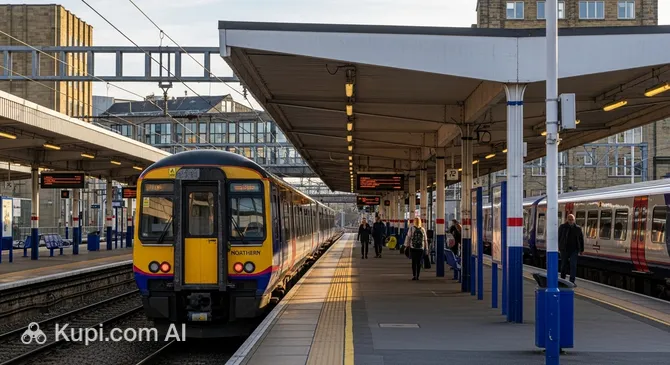
Bradford Railway Station is a key transport hub serving busy connections within the West Yorkshire region and providing convenient links to the neighbouring metropolis. The station features modern infrastructure and high capacity, welcoming thousands of passengers daily travelling between the cities of Northern England. Thanks to its convenient location and regular schedule, it has become an important departure point for tourists wishing to explore the cultural heritage and industrial history of the region. The atmosphere here is business-like yet welcoming, making the start of your journey comfortable.
It is important for passengers to know that navigation through the station is intuitive: clear signs in English are installed everywhere. Entrances are equipped with automatic ticket gates, so keep your ticket handy until you exit into the city. Information boards in the main hall promptly display platform numbers; boarding is usually announced 10–15 minutes before the train departs, allowing you to proceed to the correct track without rushing.
Contact Information
Official Website: It is recommended to use the National Rail website for the most up-to-date schedule.
Helpline: The unified passenger support line for National Rail Enquiries.
Address: West Yorkshire, landmark — the region's central transport interchange.
Opening Hours: The station is open from early morning (around 05:00) until the departure of the last train (around midnight).
Luggage Storage: Availability of lockers should be checked in advance, as this service is often limited at smaller stations.
Accessibility: The station is equipped with ramps and lifts for passengers with reduced mobility; the Passenger Assist service is available (requires advance booking).
How to Get There
The easiest way to get to Bradford Railway Station from the centre of Leeds is by train: it is the fastest and most reliable method. Commuter trains run at intervals of 15–20 minutes, and the travel time is only about 20 minutes. This is an ideal option for tourists, allowing you to avoid traffic.
If you prefer ground transport, scheduled buses run between the cities, although the trip may take from 40 minutes to an hour depending on traffic. A Taxi or transfer from the centre of Leeds will cost more but ensures "door-to-door" comfort in approximately 25–30 minutes. For pedestrians, the station is within walking distance of Bradford's main city attractions if you are already in the area.
Services and Amenities
The station offers a standard set of services for a comfortable wait for your trip. The building houses staffed ticket offices, as well as 24-hour self-service ticket machines that accept cards and cash. Covered waiting areas are provided for passengers, offering protection from the changeable British weather.
Free Wi-Fi is available on the premises (often requires registration), allowing you to stay connected. Toilets are generally paid or require a ticket for entry. For passengers with disabilities, special zones and accessible toilets meeting standard requirements are provided. ATMs are located in the main concourse.
Where to Eat
You can find several spots for a quick snack within the station grounds. Usually, there are chain coffee shops where you can grab hot coffee and a sandwich to go. This is a great option for breakfast on the move before a morning train.
If you have more time, it is worth stepping outside the station: in the immediate vicinity, there are cafés and pubs offering more substantial meals. For a budget-friendly snack, vending machines with water, chocolate, and crisps are installed on the platforms. The average bill for coffee and pastries at the station will be around 5–7 GBP.
Station History
The history of rail transport in this area is rooted in the era of the Industrial Revolution, when the region needed rapid transportation for textiles and coal. Bradford Railway Station (in the context of its link with Leeds) has come a long way from a Victorian structure to a modern transport hub.
In the 20th century, the station underwent reconstruction multiple times to increase capacity and electrify the tracks. A significant stage was the modernisation in the 1970s and subsequent updates in the 2000s, which turned the station into a convenient interchange hub integrated with bus services. Today, it plays a key role in the transport system of West Yorkshire, connecting industrial centres with residential areas.
Passenger Tips
Arrive at the station at least 15–20 minutes before the train departs, especially during peak hours (mornings from 7:30 to 9:00 and evenings from 16:30 to 18:30), to calmly pass through the ticket gates and find the correct platform. Always keep your ticket (paper or QR code on your phone) ready for inspection by conductors on board.
If you plan to travel late at night, try to wait for the train in well-lit zones or waiting halls where there are CCTV cameras and staff. To save money, purchase Advance category tickets online ahead of time. Please note that some trains may be passing through, so listen carefully to the announcements.