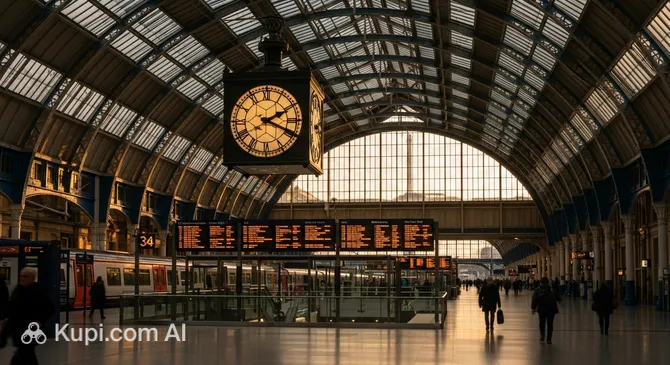
Waterloo Station is not just a transport hub, but a true gateway to London and the heart of rail connections to the south and south-west of England. Located on the picturesque South Bank of the Thames, it is officially recognised as the busiest station in the UK, serving tens of millions of passengers annually. Its majestic architecture, spacious bright concourse, and famous clock make it one of the capital's most recognisable landmarks.
Important for passengers: The station features a huge single-level concourse that is easy to navigate. The traditional meeting point is the large clock hanging in the centre of the hall. Entrances to the Underground (station Waterloo) are located inside the station, while the transfer to Waterloo East station is via a footbridge from the balcony level. Platforms are numbered 1 to 24, so please watch the information boards closely.
Contact Information
Official website: Network Rail / South Western Railway
Opening hours: The station is open 24 hours a day (except Christmas Day), ticket offices are open from 06:00 to 22:30 (times may vary on weekends)
Left Luggage enquiries: Left Luggage service is available in The Sidings area (managed by Excess Baggage Co)
Accessibility information: The station is fully equipped for passengers with reduced mobility (Step-free access), with lifts to all platforms and staff assistance available
How to Get There
Getting to Waterloo station is very convenient from anywhere in the city. The fastest way is the London Underground (Tube). The station is served by the Jubilee, Northern, and Bakerloo lines, as well as the special Waterloo & City line, which will take you directly to the financial centre (the City) in 4 minutes.
Buses and Taxis: The station is surrounded by a major bus hub with dozens of routes. The official taxi rank is located at the Station Approach exit (follow the Taxis signs).
On Foot: You can walk from popular tourist spots: a walk from Big Ben across Westminster Bridge takes about 15 minutes, and from the London Eye observation wheel, it is just 5 minutes.
Services and Amenities
At Waterloo station, everything is provided for a comfortable wait. Numerous ticket offices and self-service machines are located in the main concourse and on the balcony. Free Wi-Fi is available throughout the area (simple registration required).
Amenities include:
Spacious waiting areas with seating (in the centre of the hall and on the balcony).
ATMs and currency exchange points.
Luggage storage (located in The Sidings area).
Paid toilets and showers, as well as free toilets in the new zone.
A specialised Assisted Travel Lounge for passengers with reduced mobility.
Photo booths and charging stations.
Where to Eat
It is impossible to stay hungry at Waterloo station. The main dining zone is located on the balcony level (Mezzanine), offering an excellent view of the departure boards. Here you can find popular burger spots, Japanese cuisine, and traditional British dining venues. The average bill for a substantial meal is 15–25 pounds.
For a quick snack:
In the main hall, there are many kiosks with coffee, fresh pastries, sandwiches, and pasties (Pret, Starbucks, Upper Crust).
In The Sidings retail area, modern coffee shops and lounges operate.
If you have time, you can step out to Lower Marsh (just behind the station), where an excellent street food market operates.
Station History
The history of Waterloo station began in 1848 when it was built as a modest replacement for the Nine Elms station. In the early 20th century, the station was completely rebuilt in the majestic Imperial Baroque style, reopening in 1922. The main entrance, known as the Victory Arch, is a memorial to railway workers who died in the First World War.
The station played a special role in modern history: from 1994 to 2007, it housed the Eurostar terminal, connecting London with Paris and Brussels. After international services moved to St Pancras, the former international terminal was reconstructed and now serves domestic routes, significantly increasing the station's capacity.
Passenger Tips
Passenger Tips:
Arrival Time: During peak hours (morning and evening on weekdays), the station is extremely crowded. Arrive at least 20 minutes before your train to pass through the ticket gates calmly.
Boarding: The platform is often announced 10–15 minutes before departure. Platforms 20–24 are located in the former international terminal (a longer walk), while 1–4 are for Waterloo East.
Tickets: Keep your ticket or card (Oyster/Contactless) to hand — the gates operate quickly.
Safety: Do not leave your belongings unattended. If you lose luggage, contact the Lost Property office.
Waiting at Night: Although the station is open, most shops are closed at night, so stock up on water and snacks in advance.