Support

Baltic Centre for Contemporary Art

About

BALTIC Centre for Contemporary Art is one of the most recognizable landmarks in the north of England, located on the south bank of the River Tyne in Gateshead, which effectively forms a single conurbation with Newcastle upon Tyne. The center's building is a monumental converted industrial facility—a former flour mill that now serves as a home for bold and provocative art projects.
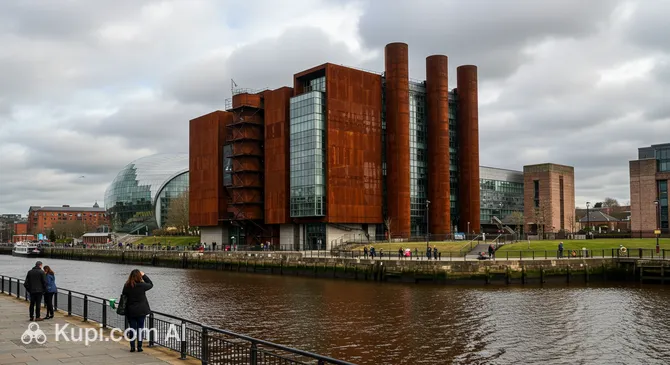
BALTIC Centre for Contemporary Art. Source: Kupi.com Binoculars

It is not just a museum, but a dynamic space with no permanent exhibition. Instead, the venue hosts a constantly changing program of exhibitions and events, showcasing works by contemporary artists from Great Britain and around the world. The majestic brick façade of the building contrasts harmoniously with the ultra-modern interior and the neighboring Millennium Bridge.

Visitors are drawn here not only by the art but also by the architecture of the building itself, as well as the stunning panoramic views from the upper floors. BALTIC is a symbol of the region's cultural renaissance and a magnet for anyone interested in creative industries and unconventional views of the world.

Contacts

To help plan your visit, here is the center's contact information. Here you will find the address, phone number, and official website where you can check the schedule of current exhibitions.

Address S Shore Rd, Gateshead NE8 3BA, UK
Phone +44 191 478 1810
Website http://www.baltic.art/

What to Do

The main reason people come to BALTIC is, of course, contemporary art. The exhibition halls are located on several levels, and the exposition here is constantly updated. You can see installations, video art, sculpture, and performances by leading global artists. Since admission is free, this is a great opportunity to get acquainted with current trends in art without extra costs.

An essential part of the program is visiting the viewing platform on the 4th and 5th floors. This spot offers perhaps the best view of the quayside, the famous bridges across the River Tyne, and the Newcastle skyline. The glass elevators taking visitors up are an attraction in themselves, allowing you to watch the city in motion.

In addition, the center often hosts educational programs, workshops, and meetings with artists. For those wishing to take a piece of art home, there is an excellent book and gift shop with unique designer items. You can complete your visit at the rooftop restaurant, enjoying the cuisine and the sunset over the river.

Getting There

Getting to the BALTIC center is very simple, as it is a dominant feature of the Gateshead quayside. The most picturesque way to get here from the city center is a walk across the famous Gateshead Millennium Bridge. This pedestrian bridge connects the Newcastle quayside with the square in front of the gallery, offering beautiful views along the way.

If you use public transport, it is most convenient to use the Quaylink bus system (routes Q1 and Q2), which stops right at the building. The nearest metro station is Gateshead Metro Station, from which you can walk to the gallery in about 10–15 minutes, following the signs to the Quayside.

History & Facts

The history of the building that now houses the arts center is inextricably linked to the region's industrial past. Originally, it was a huge flour mill built in the late 1940s by Rank Hovis. The building, opened in 1950, functioned for its intended purpose until 1981, after which it was closed and stood empty for a long time, remaining a grim reminder of the industrial era.

In the 1990s, an architectural competition was held for the reconstruction of the site. The winning project proposed preserving the impressive brick walls of the façade but completely rearranging the interior space. The grandiose reconstruction turned the former silo into one of the largest centers of contemporary art in the world, opening its doors to the public in 2002.

Interestingly, despite the status of an "arts center," BALTIC does not have its own permanent collection. The institution's concept is to be a "Kunsthalle," that is, a space for rotating temporary exhibitions. This allows the gallery to always remain relevant and constantly update its repertoire, offering visitors something new every time.

Time Needed

For a full introduction to the BALTIC Centre for Contemporary Art, it is recommended to set aside 1.5 to 2 hours. This time is usually enough to leisurely view the current exhibitions on several floors and go up to the viewing platform.

If you plan to visit the gift shop, have coffee in the café overlooking the river, or have lunch at the rooftop restaurant, it is worth allocating about half a day for the visit. Since admission to the exhibitions is free, many tourists prefer to return here several times for a more detailed study of individual projects.

Working Hours

When planning a visit, please note that the center is closed to the public at the beginning of the week. The gallery does not operate on Mondays and Tuesdays. This is important to consider when creating your travel itinerary.

On other days, the schedule is very convenient. From Wednesday to Sunday, BALTIC's doors are open from 10:00 AM to 6:00 PM. This gives enough time to enjoy the art and views even for those who like to sleep in.

Nearby

The quayside area where the BALTIC center is located is a rich tourist route in itself. A walk around the neighborhood will allow you to see a unique combination of modern architecture and historical monuments, as well as enjoy views of the River Tyne and its famous bridges.

Attraction Category Distance
All Saints' Church Historical site 0.6 km
Swing Bridge Historical site 0.6 km
Guildhall Historical site 0.6 km
Newcastle Castle Tourist attraction 0.8 km
Newcastle Castle Keep Historical site 0.8 km
King Edward VII Bridge Historical site 1.3 km
Dunston Staiths Historical site 2.6 km
Jesmond Dene Waterfall Tourist attraction 3.3 km
Denton Hall Turret (Hadrian's Wall) Tourist attraction 6.2 km

Reached the end of the page?

That means the route is fully explored