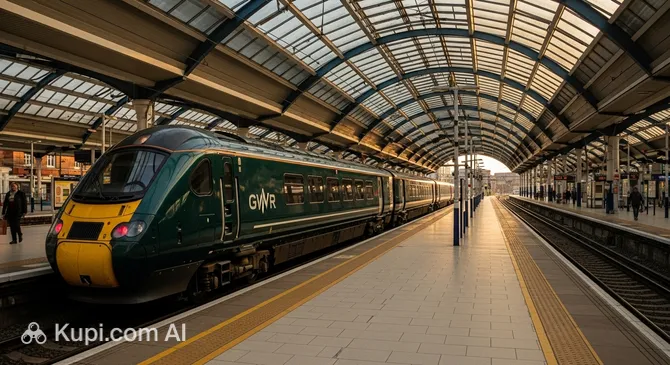
Reading Station is not just a stop, but one of the key transport hubs in the entire United Kingdom. Located west of London, it serves as the main gateway to Wales and the south-west of the country. Following a massive renovation, the station has transformed into a modern, spacious complex capable of serving millions of passengers annually.
It is important for passengers to know that navigation here is intuitive but requires attention: the station has 15 platforms, some of which are divided into sections A and B. A huge footbridge connects all tracks and exits to the city centre and the northern car park. It is an ideal place for transfers, especially if you are heading to Oxford, Bristol, or Heathrow Airport.
Contact Information
Official website: It is recommended to check the current schedule and train status on the National Rail or GWR websites.
Helpline: National Rail Enquiries unified line (usually 03457 48 49 50).
Address: Station Hill, Reading, Berkshire, RG1 1LZ.
Opening hours: The station is open 24/7, however, ticket offices operate according to a schedule (on weekdays from early morning until late evening; hours may be reduced on weekends).
Luggage storage info: For security reasons, there are often no stationary lockers at the station itself; it is recommended to look for luggage storage services in nearby shops or hotels via online platforms in advance.
Accessibility information: The station is equipped for passengers with reduced mobility (Step-Free Access), with lifts to all platforms and a support service (Passenger Assist).
How to Get There
Getting to Reading Station is very simple thanks to its central location. If you are in the city centre, the walk will take just 5–10 minutes along lively streets, following the signs for Railway Station.
For those travelling from outlying areas, the best choice would be local buses from Reading Buses, with most routes converging at the station's main entrances. The station is also connected by a direct RailAir bus service to Heathrow Airport; the journey time is about 45–50 minutes.
Taxi ranks are conveniently located on both sides of the station (at the north and south exits), allowing you to quickly depart to any point in the city without a long wait.
Services and Amenities
Reading Station offers a wide range of services for comfortable waiting and transfers. Here you will find spacious waiting rooms both on the platforms and in the main concourse, protected from the weather.
Traditional ticket offices and numerous self-service machines are available for ticket purchases. Wi-Fi is active throughout the territory (often provided for free by the network operator). For the convenience of travellers, there are clean restrooms, baby changing rooms, ATMs, and photo booths. Special attention is paid to zones for passengers with reduced mobility: lifts and escalators operate everywhere.
Dining Options
It is difficult to stay hungry at the station: the dining infrastructure here is well developed. Inside the concourse and on the platforms, there are popular chain coffee shops such as Starbucks, Costa Coffee, and Pret A Manger, where you can grab a coffee and a sandwich to go.
For pastry lovers, Upper Crust and West Cornwall Pasty Co kiosks are available. If you have some time to spare, you can exit through the south exit directly to city restaurants and fast-food outlets. The average bill for a substantial snack will be around 5–10 pounds. Most outlets open early in the morning to feed the first passengers rushing to London.
Station History
The station's history goes back to 1840, when it was opened as the temporary western terminus of the Great Western Railway. Originally designed by the legendary engineer Isambard Kingdom Brunel, the station had a complex configuration for a long time, creating congestion on the tracks.
A crucial stage was the massive reconstruction completed in 2014. The project, costing hundreds of millions of pounds, radically changed the appearance of the station: five new platforms were added, a giant transfer bridge was built, and the famous railway "bottleneck" was untangled. Today, it is one of the most modern transport hubs in the city's history.
Passenger Tips
Arrive at the station at least 15–20 minutes before departure. The station is large, and moving between platforms via the bridge may take time. Watch the electronic boards carefully: long platforms are often divided into sections, and your train may be standing at the far end.
If you are heading to London, remember that both high-speed trains to Paddington (about 25 minutes) and Elizabeth Line trains (longer, but with more stops in the centre) run from here. During peak hours, the station is very busy, so keep your belongings with you and have your tickets ready in advance to pass through the automatic ticket barriers.