Support

Reading Abbey Ruins

About

The Reading Abbey Ruins are the impressive remains of a once-majestic Benedictine monastery founded in 1121 by King Henry I. Located in the heart of Reading, Berkshire, these ruins are more than just stones; they are a significant monument of national importance and one of the key historical attractions in the United Kingdom. Walking among these ancient walls allows you to touch centuries of history.
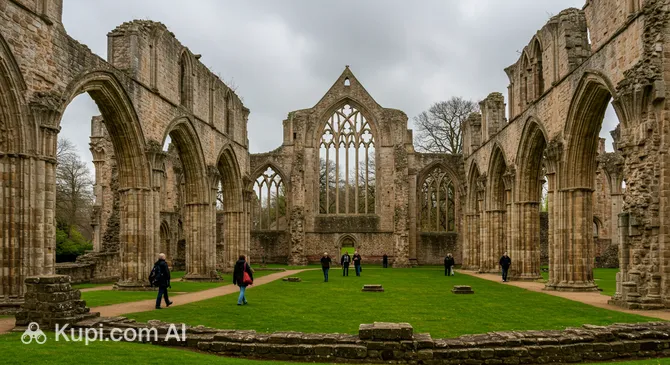
Reading Abbey Ruins. Illustration.
Source: Kupi.com AI

Traveller photos:

In the Middle Ages, Reading Abbey was considered one of the wealthiest and most influential monasteries in England. Its history was full of significant events, but unfortunately, after the dissolution of the monasteries by decree of Henry VIII in 1538, most of the magnificent buildings were destroyed. Materials from the abbey were used to construct other buildings, leaving behind only a reminder of its former glory.

Today, visitors can see the surviving fragments of the walls of the main church, the refectory, the dormitory (the monks' communal sleeping quarters), and other monastic buildings. These ruins give an idea of the scale and beauty of the medieval abbey. In 2018, following a major conservation project called "Reading Abbey Revealed," which cost over £3 million, the ruins were reopened to the public. Now, everyone can explore this amazing place, immersing themselves in the atmosphere of the past and imagining the lives of the monks who once inhabited these walls.

Contacts

To find up-to-date information on visiting the Reading Abbey Ruins, including opening hours and potential events, it is recommended to check official sources. Below are contact details that may be useful when planning your visit.

Additional information can also be found on the Reading Borough Council website or at the local tourist information center.

How to contactContact
AddressAbbot's Walk, Reading RG1 3HW, UK
Phone+44 118 937 3400
Websitewww.readingabbeyquarter.org.uk

What to Do

A visit to the Reading Abbey Ruins offers a unique opportunity to touch history. Guests are free to explore the surviving fragments of this once-grand religious complex. Walking through the grounds, you will see impressive remains of the walls of the main church, the chapter house, the refectory, and other monastic buildings. Information boards are installed throughout the complex, telling the detailed history and architecture of the abbey and helping to reconstruct a picture of its former splendor.

For a more complete immersion in history, a special route has been developed as part of the "Reading Abbey Quarter" project. This trail will take you through the most significant parts of the ruins and link them with other historic sites in the center of Reading. This is a great way not only to see the abbey itself but also to understand its role in the city's development.

Adjacent to the ruins lies the picturesque Forbury Gardens, a beautifully maintained Victorian park. Here you can relax after exploring the abbey and admire the famous "Maiwand Lion" monument. It is also worth visiting the Reading Museum and Art Gallery, located nearby. The museum features exhibits directly related to the history of the abbey, including artifacts discovered during archaeological excavations on its grounds, which will complement your visit.

Getting There

The Reading Abbey Ruins are conveniently located in the heart of Reading, making them easily accessible for visitors. If you are planning a trip from London, the fastest and most convenient way to reach Reading is by train. Trains depart regularly from London Paddington and Waterloo stations, with a journey time of only about 30-45 minutes. This is a great option for those looking to take a day trip and explore the historical heritage of the United Kingdom.

Upon arrival at Reading railway station, the abbey ruins are within easy walking distance. The walk takes no more than 10-15 minutes and allows you to look around the city center. For those who prefer to travel by car, Reading is accessible via the M4 motorway, with exits 10, 11, and 12 leading directly into the city. There are several paid parking lots in the center of Reading; the closest to the ruins are on Cattle Market and Queens Road, so finding a spot should be easy.

Public transportation is well-developed within Reading itself. Numerous bus routes pass through the city center, stopping in the immediate vicinity of the abbey ruins. This is a convenient option if you are staying outside the center or want to combine your visit to the abbey with exploring other parts of the city. Access to the ruins can be found through the picturesque Forbury Gardens or from Abbey Street, allowing you to choose the most convenient route.

Nearest city: Reading

History & Facts

The Reading Abbey Ruins in Reading hold centuries of history, beginning back in 1121. Founded by King Henry I, the abbey was intended not just as a spiritual center, but as an important element in strengthening royal power. The monastery belonged to the Benedictine Order and, thanks to generous donations and privileges, quickly grew into one of the wealthiest and most influential abbeys in England. It housed an extensive library and a school, and Henry I himself found his final resting place before the abbey's high altar in 1136, underscoring its special significance.

During its peak, Reading Abbey was a famous center of pilgrimage. Believers were drawn by a precious relic kept here—the hand of St. James. The monastery also played a notable role in the country's political life, with its abbots often holding high government positions. However, the era of prosperity ended in 1538 when, during the Reformation, King Henry VIII issued a decree for the dissolution of the abbey. The fate of the last abbot, Hugh Cook Faringdon, was tragic; he was accused of treason and executed. After the closure, the monastic buildings became a source of building materials for the town's needs.

Over the following centuries, the majestic ruins gradually fell into decay, and the abbey grounds were used for various purposes. In the 19th century, part of this land was transformed into a public park, known today as Forbury Gardens. It was only in the 20th century that the ruins were granted official status as a monument of national importance. In 2009, access was temporarily closed due to concerns regarding preservation and visitor safety. However, thanks to the massive "Reading Abbey Revealed" project funded by the National Lottery Heritage Fund, the ruins were carefully restored and reopened to the public in 2018, allowing everyone to touch the rich past of this remarkable place.

Time Needed

For exploring the majestic Reading Abbey Ruins and the adjacent grounds, a typical visitor is recommended to set aside approximately 1-2 hours. This will be enough time to take a leisurely stroll through the historic remains, feel the atmosphere of the past, and take memorable photos.

If you want to dive deeper into the history of this significant site, consider a longer visit. For example, if your plans include visiting the nearby Reading Museum and Art Gallery, as well as a walk through the picturesque Forbury Gardens, you should add another 1-2 hours to your main time. Thus, the total time could be 2-4 hours.

For those wishing to fully explore the entire historic Reading Abbey Quarter and follow the specially designed trail, it is better to plan for about half a day, or 3-4 hours. This will allow you to see all the key points without rushing and learn more about the history of the abbey and its influence on the development of Reading.

Working Hours

The Reading Abbey Ruins in Reading are generally accessible to visitors daily, from dawn to dusk, as they are located in an open area. Entry to the ruins themselves is typically free, allowing you to enjoy the historical atmosphere at any convenient time during daylight hours.

While no prior booking or ticket purchase is required for a self-guided tour of the ruins, it is worth noting that special events, guided tours, or exhibitions may be held on the abbey grounds. Separate opening hours and fees may apply for such events. Therefore, if you plan to attend a specific event or join an organized tour, it is highly recommended to check up-to-date information and potential schedules in advance on the attraction's official website or at local tourist information centers.

8:00 – 18:00

Nearby

A visit to the Reading Abbey Ruins is undoubtedly a highlight, but exploring the surrounding area can significantly enrich your experience. By visiting nearby sites, you can dive deeper into the atmosphere of Reading and see how the abbey's history intertwines with modern city life.

Each additional attraction, whether it's a museum, a park, or a lively spot, adds new strokes to the portrait of this corner of the United Kingdom, providing a more complete and multifaceted view of its cultural heritage and daily life. Below is a list of some interesting places located nearby.

NameDistance
Reading Museum0.3 km
Thames Lido0.4 km
Ding Tea0.4 km
Wingstop0.4 km
Reading Oracle Nightclub0.5 km
The Oracle0.5 km
South Street Arts Centre0.5 km

Reached the bottom of the page?

Looks like you know this route inside out