Support

Tudor House & Garden

About

Tudor House and Garden is a superbly preserved example of 16th-century architecture located in Southampton, United Kingdom. This iconic historic building is an important cultural and architectural monument of the Tudor era. Today, it operates as a museum, offering visitors a unique opportunity to immerse themselves in the atmosphere of that time and feel the spirit of medieval England.
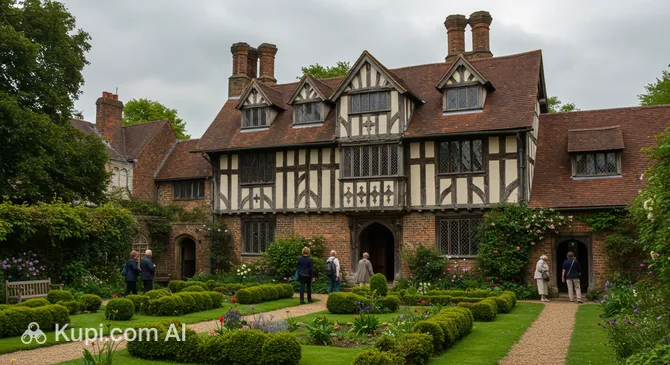
Tudor House & Garden. Illustration.
Source: Kupi.com AI

Traveler photos:

The complex consists not only of the historic house itself but also of a charming garden where plants typical of the Tudor period are carefully cultivated. A walk through this garden perfectly complements the experience of visiting the house, creating a holistic view of the life and daily routine of people of that era.

Tudor House and Garden boasts a rich and complex architectural history. The earliest parts of the structure date back to the 12th century, when a Norman dwelling was located on this site. Later, the building was repeatedly rebuilt and expanded, right up to the Georgian elements of the 18th century. Every corner of this amazing place holds traces of the past, turning a visit here into a fascinating journey through time.

Contacts

To find the current contact details for Tudor House and Garden, such as a phone number or email address, we recommend visiting the attraction's official website. You can also find useful information at tourist information centers in Southampton or on the city's portals.

How to contactContact
AddressBugle St, Southampton SO14 2AD, UK
Phone number+44 23 8083 4242
Websitewww.tudorhouseandgarden.com

What to Do

Visiting Tudor House and Garden in Southampton is a unique opportunity to touch the history of the United Kingdom. Inside the house itself, visitors can immerse themselves in the authentic atmosphere of the Tudor era, carefully studying the architectural features of the building and tracing its evolution through the centuries. One of the main highlights is the amazing 16th-17th century graffiti discovered on the walls during restoration work in 2007, offering a rare glimpse into the thoughts and daily lives of people of that time.

A stroll through the garden adjacent to the house will be an equally fascinating part of your visit. Here, a collection of plants characteristic specifically of the Tudor era has been meticulously recreated. This gives visitors the opportunity not only to enjoy the beauty of historical landscape design but also to learn a lot about gardening and the practical use of various plants in the 16th century. You can imagine what the garden looked like several centuries ago and what scents filled the air.

For those who wish to gain deeper knowledge, the museum likely offers guided tours. Participating in such a tour will allow for a more detailed look at the rich history of Tudor House, its former owners, and the daily lives of its inhabitants across different periods. Guides will tell you about the significance of various rooms, the exhibits presented, and the lifestyle of that distant era, making your visit even more informative and memorable.

Getting There

Tudor House and Garden, being one of the significant historical landmarks of Southampton, is generally very accessible for visitors. Since such sites are often located in or near the historic part of the city, getting there is quite easy, whether you are planning to travel by public transport or prefer other methods of transportation.

One of the most convenient ways to reach Tudor House and Garden is by public transport. In Southampton, as in most cities in the United Kingdom, there is a well-developed network of bus routes. We recommend checking the bus numbers heading toward the attraction and the nearest stops in advance. Information about this can be found on local transport company websites or using online maps and navigation apps.

If you value comfort and speed, you can always use taxi services or popular ride-hailing apps. A trip from central Southampton or the main railway station to Tudor House and Garden is likely to be quick and convenient. For those who enjoy walking, if you are staying nearby, the route to the museum can be a pleasant addition to exploring the city, allowing you to take a closer look at its streets and architecture.

Nearest city: Southampton

History & Facts

Tudor House and Garden in Southampton is not just an old building, but a true gem of history with roots reaching deep into the past. Its history dates back to the 1180s, when a Norman dwelling stood on this site. In the 14th century, the property came into the possession of John Whitegod, a merchant and mayor of the city. However, the appearance we see today was acquired in the early 16th century thanks to the prominent landowner John Dawtrey. Notably, the construction was financed by King Henry VII to strengthen the city's defenses and provide supplies for the Royal Navy.

During the Tudor era, the house belonged to many influential citizens. Among them, Sir Richard Lyster, who held the high office of Lord Chief Justice of England and Wales, stands out. In the 16th and 17th centuries, the building was actively used for commercial purposes, housing the business of a cloth maker. An interesting detail preserved from those times is the graffiti on the walls, discovered during restoration work in 2007. These inscriptions serve as silent witnesses to the bustling commercial life of past centuries.

In the 18th century, Tudor House came into the possession of the artist George Rogers, who made significant changes to its architectural appearance, following the fashion trends of the time. Under his direction, an elegant Georgian wing was added, two large windows appeared, and the facade was plastered and repainted. These transformations reflect the evolution of architectural styles in the United Kingdom and make Tudor House and Garden a unique monument where elements of different eras blend harmoniously, telling visitors a story spanning many centuries.

Time Needed

When planning a visit to Tudor House and Garden in Southampton, it is worth setting aside approximately 1.5-2.5 hours of your time. This is usually enough to unhurriedly explore both the historical house itself and the adjacent garden, immersing yourself in the atmosphere of the past.

Touring the house's interiors, with its antique furniture and exhibits depicting life in the Tudor era, can take about an hour or an hour and a half, depending on your interest in detail and history. Don't forget to also dedicate time to the garden, which is an integral part of the estate. A stroll through the garden, recreated in the style of that era, will add another 30-60 minutes to your visit.

If you have a deep interest in history and like to study each exhibit in detail, or if you are traveling with children for whom interactive elements may be provided, you might need a bit more time. Overall, this place offers a fascinating immersion into the history of the United Kingdom, and it is best to allocate enough time to enjoy it fully.

Working Hours

When planning a visit to Tudor House and Garden in Southampton, it is important to check the current opening hours. Typically, such historic sites may have seasonal schedules or special hours on holidays. It is recommended to check the official Tudor House and Garden website in advance or contact them directly for the most accurate information on visiting times.

It is also worth finding out if advance ticket booking is required, especially during peak tourist season or for group tours. This will help avoid waiting and guarantee your entry at the desired time. Some attractions offer discounts when purchasing tickets online in advance.

DayOpening hours
Monday10:00 – 15:00
Tuesday10:00 – 15:00
Wednesday10:00 – 15:00
Thursday10:00 – 15:00
FridayClosed
Saturday10:00 – 17:00
Sunday10:00 – 17:00

Nearby

Visiting Tudor House and Garden in Southampton is undoubtedly an immersion into the city's rich history. However, to make your journey even more fulfilling and complete, it is worth taking the time to explore the surroundings of this wonderful attraction. Often, it is the nearby sites—whether other historical locations, cozy parks, or colorful city corners—that help form a complete picture of the place and its atmosphere.

Exploring what is nearby allows you not only to broaden your horizons but also to discover hidden gems that might not be part of standard tourist itineraries. This is a wonderful opportunity to gain a deeper understanding of the culture and daily life of Southampton, as well as to optimally plan your time by combining visits to iconic sites with pleasant walks and new discoveries.

NameDistance
Showcase Southampton0.3 km
Wingstop0.3 km
Mayflower Park0.3 km
The Bargate0.4 km
Vehicle Ferry from Southampton0.4 km
West Quay0.5 km
Red Jet Ferry0.5 km

Have you reached the end of the page?

So the route has been studied inside and out