Support

Chinatown

About

London's Chinatown is a vibrant corner of Asia located in the West End. Although it is not in Spitalfields, it is easy to reach and immerse yourself in the unique atmosphere right in the heart of the United Kingdom. A visit promises unforgettable impressions of rich Eastern culture.
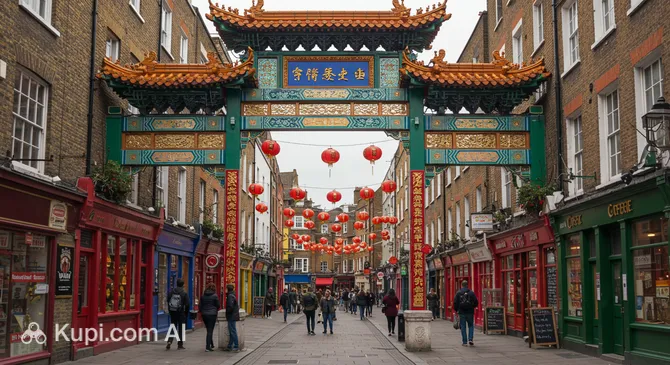
Chinatown. Illustration.
Source: Kupi.com AI

Traveller photos:

This colorful district is nestled between Leicester Square and Shaftesbury Avenue. It’s instantly recognizable by its symbolic details: grand Chinese gates with intricate carvings and countless red lanterns creating a festive mood. A walk down the neighborhood's main thoroughfare, Gerrard Street, is a true journey into another world, filled with the aromas of exotic spices and the sounds of Eastern music.

This quarter is rightfully considered a foodie's paradise. It boasts a huge concentration of restaurants offering authentic dishes from not only China but also Vietnam, Taiwan, and other Asian cuisines. Beyond gastronomic discoveries, Chinatown attracts visitors with its many souvenir stalls, shops selling Asian groceries, and traditional goods, making it the perfect spot for unique shopping and exploring Eastern culture in central London.

Contacts

Since Chinatown is a bustling city district, it doesn't have a single information phone number. However, you can find all the latest information about events, shops, and restaurants on the official website. The most convenient way to reach the area is by public transport.

How to contactContact
AddressGerrard St, London W1D 5PT, UK
Websitechinatown.co.uk

What to Do

The main reason people come to Chinatown is, of course, the food. This area is a true gastronomic kaleidoscope where you can sample both authentic dishes and bold culinary experiments. Numerous restaurants, cafes, and street food stalls offer guests the chance to enjoy genuine Peking duck, a variety of dim sum, aromatic noodles, and exotic desserts. It’s an ideal place for those who want to take a culinary journey through Asia without leaving central London.

Besides restaurants, Chinatown is famous for its shops and stalls. Here you can find unique souvenirs, fresh Asian produce, rare spices, healing herbs, and traditional Chinese medicines. Browsing the local shops is an opportunity not only to buy something unusual but also to dive deeper into the culture while looking at curious goods and breathing in the scent of incense.

Chinatown takes on a special magic during the holidays. The most spectacular event is the Chinese New Year celebration, which takes place between mid-January and February. At this time, the streets are decorated with thousands of red lanterns, and there are colorful parades, traditional lion and dragon dances, and performances by artists. Other festivals are also celebrated throughout the year, such as the Mid-Autumn Festival, making a visit to this district a bright and memorable experience at any time of year.

Getting There

Located in the heart of London’s West End, Chinatown is exceptionally easy to visit. The simplest and fastest way to reach this vibrant neighborhood is by taking the London Underground (the Tube). The nearest stations, Leicester Square and Piccadilly Circus, are just a few minutes' walk away. Once you exit the station, simply follow the crowds or look for the bright red lanterns and the grand Chinese gates that serve as portals to this fascinating world.

If you are already in the city center exploring areas like Soho or Covent Garden, Chinatown is an easy walk away. This stroll allows you to better soak in the West End atmosphere. The district is also served by numerous bus routes that stop on adjacent streets like Shaftesbury Avenue. It's best to avoid driving, as parking in central London is limited and quite expensive. Public transport is not only more budget-friendly but also a much more convenient way to reach your destination hassle-free.

Nearest city: Spitalfields

History & Facts

The history of London's Chinatown began not in today’s West End, but in Limehouse in the East End during the early 20th century. At that time, Chinese immigrants, mostly sailors, began to settle in this port area. They opened small businesses such as laundries and shops, primarily serving the Chinese sailors arriving at the docks and laying the foundations of London's first Chinese community.

A key turning point in the neighborhood's history was the Second World War. The Limehouse area was heavily damaged by bombing, forcing many residents to find new places to live and work. Gradually, the Chinese community began to relocate to Soho, which had previously been known for its coffee houses and European restaurants. It was here, in the post-war years, that the Chinatown we know today began to take shape, evolving from scattered establishments into a full-fledged cultural enclave.

Chinatown's true heyday came in the 1970s. During this time, interest in Chinese cuisine and culture grew in the United Kingdom, fueling the rapid development of the area thanks to an influx of immigrants from Hong Kong. New restaurants, shops, and bakeries began popping up everywhere. Today, it is not just a tourist spot but a vital hub for the Chinese diaspora, featuring supermarkets with Asian products, traditional medicine pharmacies, and cultural centers that maintain the connection between generations and their ancestral homeland.

Time Needed

To get a full sense of Chinatown, it's recommended to set aside 2 to 4 hours for your visit. This is generally enough time to leisurely stroll through its bustling streets, admire the famous gates and red lanterns, and soak in its unique atmosphere.

In a couple of hours, you can see the main streets like Gerrard Street, pop into a few souvenir shops, and have a quick bite at one of the many eateries. If you're planning a more thorough visit, allow for 3-4 hours. This will allow you to not only enjoy a full lunch or dinner at one of the authentic restaurants but also visit Asian supermarkets or shops with traditional goods without rushing.

Of course, the length of your visit can vary depending on your interests. Foodies wanting to try several dishes at different spots, or those who visit during the Chinese New Year celebrations, could easily spend half a day here. However, for a first introduction to this colorful neighborhood during a trip to London, 2-4 hours is the optimal timeframe.

Working Hours

Since Chinatown is an open urban district, its streets are accessible 24/7, year-round. However, if your goal is shopping or gastronomic exploration, you should keep in mind the operating hours of most establishments. Restaurants, cafes, and shops are usually open daily, roughly from 10:00 to 23:00. It's important to remember that during major holidays like Chinese New Year or other festivals, hours may vary.

No advance booking is required to walk through the district itself; entry to the streets is free. Nevertheless, if you plan to visit a specific popular restaurant, especially in the evening or on a weekend, it is highly recommended to book a table in advance to avoid a long wait. Otherwise, this vibrant corner of Asia is always happy to welcome guests ready for new experiences.

Nearby

A visit to Chinatown is an immersion into a vibrant and unique world, but your exploration of Spitalfields and its surroundings won't be complete without paying attention to other treasures located nearby. A walk through the adjacent streets and quarters will allow you to deeper experience the multifaceted atmosphere of this part of the United Kingdom, where Asian exoticism exists side-by-side with classic European architecture and modern entertainment.

In the immediate vicinity of Chinatown, you'll find iconic parks, world-famous museums, cozy bars, and historic sites. Exploring the surrounding area will enrich your journey, adding new colors and experiences. Below is a list of interesting places located nearby, along with the distance to each.

NameDistance
St James's Park1 km
Scarfe's Bar1.1 km
Hunterian Museum1.1 km
Swiss Butter1.1 km
Charles Dickens Museum1.7 km
Arcade London2.4 km
The Lexington2.6 km

Reached the bottom of the page?

Looks like you know this route inside out