Support

Alitak Seaplane Base

About the Airport

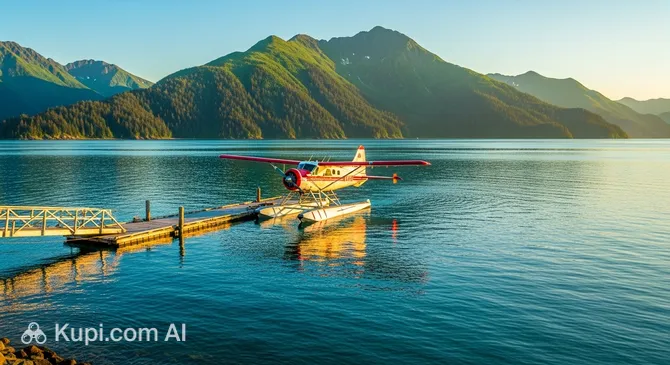
Alitak Seaplane Base. Source: Kupi.com Binoculars

Alitak Seaplane Base is not merely a transport hub, but a true gateway to the Alaskan wilderness, where the journey begins with a breathtaking landing directly onto the water's surface. Located in the picturesque Lazy Bay on Kodiak Island, this airport serves one of the region's oldest fish processing factories and offers tourists a unique seaplane experience. There are no familiar terminals or concrete runways here: only the rugged beauty of northern fjords, the fresh sea breeze, and a sense of complete detachment from the hustle and bustle of the city.

IATA Code ALZ
ICAO Code None
City Akhiok (Kodiak Island, Alaska)
Distance to Center ~11 km (by water or air)
Status Domestic (Seaplane Base)
Passengers per Year Less than 1000 (seasonal flow)
Schedule On request (depends on season and weather)

Features and Advantages of the Airport:

The main feature of Alitak is its format as a seaplane base. Aircraft take off and land directly from the water, turning every flight into a mini-excursion with panoramic views of rocky shores and the ocean. The airport's operation is closely tied to the rhythm of the local community and the fishing season, ensuring the atmosphere here is always authentic and business-like.

Despite its modest size and lack of complex infrastructure, Alitak plays a critically important role in regional logistics. For travelers, this is a rare opportunity to see Alaska as it was a hundred years ago: without asphalt and queues, but surrounded by untouched nature, where the weather dictates the rules and the pilots are true masters of their craft.

Contact Information

Since Alitak Seaplane Base (ALZ) is essentially a water landing zone in Lazy Bay without a permanent terminal or dedicated staff, classic contact information is replaced by details of the managing company and air carriers. The main logistics are provided by local air taxis and the fish processing enterprise.

  • Official Airport Website: There is no dedicated website. Current aeronautical information can be found on the Alaska Department of Transportation and Public Facilities (DOT&PF) portal or the Federal Aviation Administration (FAA) website.
  • Inquiry Phone Number: There is no direct telephone line at the landing zone. For facility management questions (owned by OBI Seafoods), you can contact the manager's office at: +1 907-771-4800. For tourists, the most useful number is that of the main carrier (Island Air Service): +1 907-487-4596.
  • Airport Address: Lazy Bay, Alitak, Kodiak Island, Alaska 99615, USA.
  • Email: There is no direct email provided for passengers.
  • Airport Social Media: There are no official accounts. It is recommended to follow local airline pages for weather and flight updates.
  • Lost Luggage Information: Since luggage is handed directly from the pilot to the passenger on the pier, loss issues are resolved on the spot or through the office of the airline that operated the flight.
  • Passenger Support Contacts: Support is provided exclusively through the dispatch services of air taxis (such as Island Air Service or other private carriers) from whom you purchased your ticket.

How to Get to the Airport

Getting to Alitak Seaplane Base is a non-trivial task, as it is located in a remote part of Kodiak Island where no roads lead. You will not find familiar urban public transport here; logistics depend entirely on small aviation and maritime routes. Traveling here requires advance planning and readiness for the unpredictable Alaskan weather.

Air Travel and Transfer

The only fast and reliable way to get to Alitak is to use "air taxi" services. Flights are operated on small seaplanes (floatplanes) capable of landing on the water in Lazy Bay. The main transit hub for transfers is Kodiak Benny Benson State Airport (ADQ), located in the city of Kodiak. This is where scheduled flights arrive from Anchorage, after which tourists transfer to local lines.

Flight Details:

  • Transport Type: Light aircraft (e.g., De Havilland Beaver or Cessna) equipped with floats.
  • Carriers: The main operator in the region is Island Air Service, alongside other private charter companies.
  • Travel Time: The flight from the city of Kodiak to Alitak takes approximately 40–50 minutes. This time flies by unnoticed thanks to stunning views of mountains and the ocean.
  • Cost: Ticket prices vary depending on the season and load, but average between 200 to 300 USD one way per person. Chartering the entire plane is possible but will cost significantly more.

Public Transport (Buses, Trains, Metro)

In the Alitak area and the nearest settlement of Akhiok, ground public transport is completely absent. There are no railways, metro, or bus routes here. The terrain is wild nature with rare structures connected only by water or air.

Car Rental and Taxis

It is impossible to rent a car for a trip to Alitak, as the road network of Kodiak Island does not reach this part. Roads end far to the north of the island. Classic car taxis do not operate here either.

If you have rented a car in the city of Kodiak, you will have to leave it there. Driving to Alitak is physically impossible due to the difficult terrain and lack of highways.

Water Transport

A maritime route can serve as an alternative to flying. In the summer, it is possible to reach Lazy Bay by private boat or as part of an organized marine expedition. Alitak is also an important point for fishing vessels. However, there is practically no regular scheduled passenger ferry service available for mass tourism. Travel time by water from the port of Kodiak can take several hours and depends heavily on storm conditions.

Parking

Since the airport is a water area, car parking does not exist here. Special pontoons and docks are provided for seaplanes. If you are traveling from Kodiak, you can leave your car for long-term parking at Benny Benson Airport (ADQ) or at paid parking lots in the city.

Useful Recommendations for Travelers:

  • Luggage: Strict weight limits apply on small seaplanes (usually up to 15–20 kg). Soft bags are preferable to hard suitcases as they are easier to stow in compact cargo compartments.
  • Weather: Flights are often delayed or cancelled due to fog and strong winds. Always include a spare day in your travel plan in case of bad weather.
  • Booking: Seats on flights during the summer season (during the salmon run) sell out quickly, so "air taxi" tickets should be booked several months in advance.

Although there are other small airports in the region, such as Ouzinkie or King Salmon Airport, there is generally no direct connection between them and Alitak — all flights are coordinated through the central hub in Kodiak.

Terminals and Map

Structure and Terminals

If you are accustomed to huge waiting halls, jet bridges, and endless Duty-Free shops, Alitak Seaplane Base (ALZ) will surprise you. Here, the concept of a "terminal" is quite nominal. In fact, the entire airport infrastructure boils down to a system of wooden docks and pontoons located along the bay's shoreline.

The airport does not have a permanent terminal building. The entire "terminal" zone is an open area on the pier, adjacent to the fish processing plant buildings and tourist lodges. There is no separation into international and domestic sectors, as all flights are local (within the state of Alaska).

Navigation Scheme and Transfers

Navigating Alitak is extremely simple — it is impossible to get lost here. The passenger's path is a straight line:

  • Arrival Zone: The seaplane lands on the water and taxis to the pontoon. You exit the cabin directly onto the wooden decking of the pier.
  • Departure Zone: You wait for your aircraft on the same pier or in the nearest shelter (usually the factory office or lodge lobby) if the weather does not permit staying outside.
  • Transfers: No shuttles or long walks. The distance from the aircraft to "solid ground" is only a few meters.

Procedure Specifics

The lack of complex infrastructure makes the departure and arrival process as fast as possible, but imposes specific requirements related to small aviation safety.

Check-in and Baggage

There are no check-in counters with conveyor belts here. The procedure looks like this:

  • Meeting the Pilot: The pilot often acts as the check-in agent and loader.
  • Weighing: This is the most important stage. Every passenger and every bag is weighed. Balance and total payload weight are critical for small aircraft, so data must be accurate.
  • Baggage Drop: You hand bags to the pilot, and they place them into the floats or the aircraft's cargo compartment right in front of you.

Screening and Security

There are no metal detector frames or scanners in Alitak typical of large hubs. Pre-flight screening is visual. However, FAA safety rules apply here too: transporting dangerous substances is strictly prohibited. Passport control is also not conducted as flights do not leave the US, but it is best to have identification with you.

Time Frames

  • Arrival for Departure: It is recommended to be on the pier 15–20 minutes before the estimated aircraft arrival time. This is enough time for weighing and briefing.
  • Baggage Claim: Happens instantly after the aircraft moors. You simply take your bag from the pilot's hands.

Recommendations for Navigation and Comfort

Since the "waiting room" is outdoors, weather plays a key role.

  • Footwear: Wooden docks can be slippery from seawater and rain. Wear comfortable shoes with non-slip soles.
  • Clothing: It is always windy and cooler on the pier than on the shore. Even in summer, it is recommended to have a windbreaker or raincoat while waiting for boarding.
  • Safety on the Pier: Be attentive to the operation of forklifts and factory staff, as the pier is a working zone of the enterprise. Do not approach the edge of the pontoon without a life jacket if required by current facility safety rules.

History of the Airport

The history of Alitak Seaplane Base (ALZ) is unique because it is inextricably linked with the history of one of Alaska's oldest enterprises — the Alitak cannery. Unlike city airports built according to government plans, this air harbor emerged evolutionarily, responding to the needs of the fishing industry in a remote corner of Kodiak Island.

Origins: From Steamships to Seaplanes

The official start of active life in Lazy Bay can be considered 1918, when the Alitak Packing Company built a fish processing plant here. In the early decades, maritime vessels were the main transport. Aviation arrived later, during the heyday of "bush pilots" in Alaska in the 1930s and 1940s. It was then that the water surface of the bay began to be used as an improvised runway, allowing mail, medicine, and personnel to be delivered faster than by sea.

Development Stages and Historic Monument Status

The development of the airport proceeded in parallel with the modernization of the plant. While initially pilots landed on the water at their own risk, infrastructure improved over time: reliable docks, radio communication, and navigational aids appeared. An important milestone in the history of the place was the recognition of its cultural value. The complex of factory buildings and the surrounding area, including the hydroport zone, were listed in the US National Register of Historic Places as the "Alitak Cannery Historic District".

Historical Challenges

Life at the airport and settlement was not always cloudless. The region survived several serious tests:

  • World War II: In the 1940s, Kodiak Island became an important military outpost. Although Alitak was far from the main base, aviation activity in the region increased sharply, which contributed to improved mapping and navigation in the area.
  • 1964 Earthquake: The Great Alaskan Earthquake and the subsequent tsunami caused colossal damage to many coastal zones of Alaska. Thanks to its geographical position, Alitak suffered less than others, but these events forced a review of safety standards and the construction of docking facilities.

Modernity and Shift in Focus

In recent decades, the role of the airport has transformed. While previously it served exclusively industrial needs, today ALZ has become an important point on the tourist map. With the growing popularity of ecotourism and salmon fishing, the seaplane base began to receive more travelers eager to see the "real Alaska". The transfer of the plant to the management of large companies (currently OBI Seafoods) brought modern technologies to logistics, making flights more regular and safer.

Interesting Historical Facts:

  • Ancient Heritage: In the immediate vicinity of the seaplane takeoff zone are the famous Alitak Petroglyphs. These rock carvings are over 1,500 years old, making the Alitak area one of the oldest inhabited places in the archipelago. Passengers arriving at ALZ are effectively landing in an open-air archaeological museum.
  • "Living Museum": The airport serves an enterprise that has been operating almost continuously for over 100 years. Many buildings that passengers pass after disembarking have been preserved in their original form since the early 20th century.
  • Echoes of War: In the vicinity of the bay, one can still find traces of observation posts from World War II, which were used to monitor submarine activity in the Pacific Ocean.

Services and Facilities

The infrastructure of Alitak Seaplane Base (ALZ) differs radically from what passengers at modern international hubs are used to. You will not find gleaming shop windows, food courts, or business lounges here. Services and amenities in this location are dictated by the harsh conditions of the wilderness and the specifics of a seasonal fishing enterprise. Travelers should prepare in advance for ascetic conditions and complete autonomy.

Restaurants, Cafes, and Shops

In the generally accepted sense, there are no public catering or retail outlets in the landing zone. There are no chain coffee shops or restaurants here.

  • Dining: Food is provided in an organized manner only for factory employees (in the company canteen) or guests of tourist lodges (as part of the accommodation package). Casual tourists waiting for a flight are strongly advised to carry a supply of water and light snacks, as there may be nowhere to buy them on site.
  • Shops: The only semblance of a retail point might be a small "Company Store" on the factory territory, selling basic necessities for workers (hygiene products, snacks, basic clothing). However, access for transit passengers is not guaranteed and depends on enterprise rules. Duty-Free is completely absent.

Communication and Electricity

Digital detox is a frequent companion to a trip to Alitak, however, minimal means of communication exist.

  • Wi-Fi: There is no public free Wi-Fi network on the pier. Internet connection (usually satellite) exists in the factory office and lodges, but the password is provided only to guests or employees. Connection speed may be low and unstable.
  • Mobile Connection: Cellular coverage in this part of Kodiak Island is extremely weak or non-existent.
  • Charging Stations: There are no special stands for charging gadgets on the pier. If you urgently need to charge a phone, you will have to politely ask a lodge administrator or office employee to use a regular power outlet.

Banking and Financial Services

There are no ATMs or currency exchange points in Alitak. All financial matters must be settled before departing from the city of Kodiak. Local lodges usually accept credit cards for additional services, but having cash US dollars (in small denominations) is highly desirable for tips or emergencies.

Medical Services

There is no full-fledged medical center or pharmacy at the airport. The factory territory has a basic first aid kit and staff trained to act in emergencies. In case of serious injuries or illnesses, medical evacuation by helicopter or plane to a hospital in Kodiak city is required.

Passengers with Children

Specialized mother-and-child rooms or play areas are not provided. Parents should monitor children closely, as the territory is a working zone with open water, equipment, and a lack of railings on many sections of the pier.

Services for Passengers with Reduced Mobility

Alitak is a challenging location for passengers with limited mobility. The infrastructure is not adapted for a barrier-free environment:

  • Boarding and disembarking from a seaplane requires physical activity (climbing narrow steps or from a pontoon).
  • Moving along wooden decks and gravel paths can be difficult in a wheelchair.
  • There are no special elevators or lifts.

If you require assistance, you must notify the air carrier in advance — pilots and staff always try to help, but their capabilities are limited by technical conditions.

Accommodation: Hotels and Lodges

It is impossible to spend the night directly in the "airport building" (which does not exist). However, the Alitak area is famous for its secluded wilderness lodges, for which tourists fly here.

  • Alitak Cannery & Fishing Lodge: A historic lodge located right on the territory of the former cannery. It offers comfortable accommodation with an early 20th-century atmosphere, full board, and organized fishing/tours. It is within walking distance of the aircraft mooring point.
  • Remote Cabins: There are other private guest houses within a seaplane flight radius, but transfer to them requires additional organization.

There are no hotels of the familiar urban type within a radius of dozens of kilometers.

Business Services and VIP Lounges

Nature itself plays the role of a VIP lounge here: waiting for a flight takes place in the fresh air with views of the bay and mountains. Conference rooms are absent, but lodge messes can be used for small meetings or briefings if you rent them for your group.
Where to Eat

When it comes to dining at Alitak Seaplane Base (ALZ), it is important to adjust expectations immediately. Since the airport is not a commercial passenger terminal in the usual sense, but a dock in a remote area, public restaurants, cafes, and coffee shops are completely absent here. You will not find chain establishments, vending machines, or convenience stores with ready-made food.

The catering system in this location is organized exclusively for two categories of people: employees of the fish processing plant and guests of tourist lodges. For transit passengers or independent travelers not staying at the local lodge, there is practically no opportunity to buy food on site.

Dining Options for Lodge Guests (Alitak Cannery & Fishing Lodge)

If you arrived in Alitak as part of a tour with accommodation, your meals will be organized in the lodge's dining hall, located a few minutes' walk from the landing site. This is an atmospheric place steeped in history, where food is part of the adventure.

  • Cuisine and Specialties: The gastronomic concept is built around the "ocean to table" principle. The main specialties worth trying here are the freshest Pacific salmon (sockeye, coho, chinook) and halibut caught in local waters. Dungeness crabs are also often served. Dishes are usually simple, hearty, and prepared in a home-style American fashion.
  • Hours of Operation: Meals are strictly on schedule. Breakfast is usually served early (around 6:00–7:00) before going fishing, lunch may be in the form of packed lunch boxes on excursions, and dinner is a communal gathering at the end of the day (around 18:00–19:00), where guests share impressions.
  • Average Cost: Meals are included in the accommodation cost ("all-inclusive" format). It is generally impossible for a random tourist to buy lunch separately.

Dietary Needs (Vegetarian, Vegan, Gluten-Free, Halal)

Due to the distance from large cities and the complexity of logistics (products are delivered by sea or plane), the selection of specialized products is limited.

  • Availability: The menu is fixed (set menu). There is no separate "a la carte" menu.
  • Halal & Dietary Note: Specific Halal-certified meats are generally not available due to the remote location. However, the menu relies heavily on seafood. If you have strict dietary restrictions (Halal, allergies, gluten-free), you must inform the lodge administration several weeks before arrival. Chefs will try to adapt dishes to your needs, but without prior notification, finding alternatives to meat or gluten on site will be impossible.

Recommendations for Independent Travelers

For those using Alitak as a transit point or arriving for a short time without booking a lodge, different survival rules apply.

Quick Snacks and Water

It is strongly recommended to bring food and water with you. Stock up in the city of Kodiak before departure. There are no drinking fountains in the airport area, and drinking tap water in industrial premises without boiling is not recommended.

What to bring:

  • Nutrient bars, nuts, dried fruits (energy-dense products that do not take up much space).
  • Sandwiches or ready-made meals that do not require heating.
  • A thermos with hot tea or coffee (it can often be damp on the pier).
  • A bottle of drinking water (minimum 1 liter per person), as there may be nowhere to buy it in Alitak.

Sometimes, with prior agreement and the goodwill of the staff, transit passengers may be allowed into the "Company Store" at the factory, where chips, chocolates, and soda are sold for workers. However, one should not count on this as a guaranteed source of food — the store may be closed or access to outsiders may be restricted by enterprise security rules.

Travel Tips

Traveling to Alitak Seaplane Base is a unique experience that differs significantly from flying on regular airlines. There is no hustle of large terminals here, but there are strict rules dictated by flight safety in the conditions of the Alaskan wilderness. To ensure your trip runs smoothly, we have prepared a number of practical tips.

Arrival Time Recommendations

Unlike large airports, you do not need to arrive two hours before departure here. However, punctuality is critically important:

  • Arrive 20–30 minutes early: This is enough time for the pilot to weigh luggage, load cargo, and conduct a briefing.
  • Do not be late: Seaplane schedules often depend on tides. Being late even by 10 minutes may mean the water level changes, making takeoff impossible or unsafe.
  • Stay visible: Wait on the pier or in a place agreed with the pilot. Do not wander deep into the island before departure, as there may be no signal there, and you cannot be found.

Registration and Security Features

The check-in procedure here is as informal as possible, but serious regarding flight physics:

  • Honesty when weighing: You will be asked to step on the scales with your hand luggage or state your exact weight. Never understate the figures. For small aircraft (like Cessna or Beaver), overload or incorrect centering can be fatal.
  • No TSA screening: You do not need to remove shoes or take out laptops. However, the pilot has the right to visually inspect your belongings if there are suspicions of prohibited items.
  • Documents: Keep your identification (passport) handy, although it is rarely checked.

Tips for Choosing a Seat on the Plane

There is no pre-booking system for seats in a seaplane. Seating is directed exclusively by the pilot (PIC — Pilot in Command).

  • Balance is more important than the view: The pilot will assign you a seat based on weight distribution. Arguing is useless — this is a safety issue.
  • Co-pilot seat: If the plane is full and the balance allows, one passenger may be seated in the front, next to the pilot. This is the seat with the best view. Politely ask about this possibility before boarding, but be prepared for a refusal.
  • Use the headset: It is very noisy in the cabin. Be sure to put on the offered headphones with a microphone — through them, you can communicate with the pilot and other passengers, and sometimes listen to negotiations with dispatchers.

Baggage and Hand Luggage: Dos and Don'ts

Luggage rules here are dictated by the limited cabin space:

  • Soft bags: Use duffel bags or backpacks. Hard suitcases on wheels are extremely inconvenient for loading into floats or narrow compartments of a seaplane. The pilot may ask you to repack things if a hard suitcase does not fit.
  • Bear Spray: This is the most important rule. Never, under any circumstances, take a can of bear spray into the aircraft cabin. If it accidentally discharges in flight, it will blind the pilot and lead to a catastrophe. Be sure to hand it to the pilot before boarding — they will stow it in an external cargo compartment in the float.
  • Minimum hand luggage: Take only a camera, sunglasses, and necessary medicines into the cabin. Everything else must be checked as baggage. There is very little legroom.

Recommendations for Passengers with Connections

Since there are no direct flights to the "mainland" from Alitak, your path lies through Kodiak Benny Benson State Airport.

  • Allow a large time buffer: Do not plan a connection in Kodiak "back-to-back" (less than 2–3 hours). The flight from Alitak may be delayed due to headwinds or fog.
  • Single ticket: If possible, buy tickets from Alaska Airlines partners (although this is rare for small airlines). Most often, you will have to collect baggage in Kodiak yourself and re-register for the flight to Anchorage.

Customs Control and Trophy Export

There is no international customs in Alitak, but strict rules of the Alaska Department of Fish and Game (ADF&G) apply.

  • Transporting fish: If you are carrying a catch (salmon, halibut), it must be frozen and packed in special sealed boxes (fish boxes). Do not try to carry fresh fish in a regular bag — it will leak, and you may not be allowed on board or fined for damaging the interior.
  • Licenses: Always have a fishing license with you, as checks can occur even when boarding the plane.

Tips for Saving Time and Money

  • Group charters: If you are flying as a group, chartering the entire plane often works out cheaper per person than buying individual tickets.
  • Own food: Food prices in lodges are high, and there are no shops. Snacks and sandwiches brought with you will save you a decent amount.
  • Light luggage: Every extra kilogram on small planes may be charged at a high rate. Weigh things in advance at home.

What to Do in Case of Flight Delay

In Alaska, they say: "If you don't like the weather, wait 15 minutes." But sometimes you have to wait for days.

  • Patience is the main quality: If the pilot says it is impossible to fly due to fog, believe them. No rush is worth the risk.
  • Have a Plan B: Always have extra money and medication for 1–2 extra days in case of non-flying weather.
  • Entertainment: There is no Wi-Fi or entertainment at the airport. A paper book or downloaded movies on your phone (and a power bank!) will help pass the wait.

Reached the end of the page?

That means the route is fully explored